


Negative online PR needs triage first. Check what is true, save screenshots and timestamps before anything changes, sort each item by source and platform, reply only where a public answer will help, and push removals only where platform policy or legal grounds support it. If the content stays live, move into recovery within 30 days by rebuilding reviews, branded search results, and visible trust signals.
BGR Review handles this from the operational side, where most outcomes are decided. Since 2019, our teams in New York, London and Thornhill have worked with 15,000+ businesses and 1,240+ verified clients, and we manage live cases across Google, Trustpilot, Yelp, Clutch and TripAdvisor where reviews, forum posts and branded search start feeding each other.
That matters because the fix usually sits in evidence, platform routing and timing, not in a polished statement. We run review removal on a pay-after-success basis at $449 per removed review link with $0 upfront, we back review packages with a 30-day free replacement guarantee, and our own 4.9 rating from 2,800 reviews gives you a clear standard for how we judge recovery work.
What negative online PR actually includes
Negative online PR is any public digital content that cuts trust in your brand, whether it sits on a news site, a review platform, a forum, Reddit, YouTube, social media, or a complaint page.
In the cases we handle at BGR Review, the damage rarely stays in one place. A bad article or viral post often pulls in fresh one-star reviews on Google Business Profile or Trustpilot within 24 to 72 hours, and that changes how prospects read everything else they find when they search your name.
The source decides the response path. A Google review goes through platform policy and account-level evidence, a newspaper article usually needs editorial outreach or legal review, and a Reddit thread lives or dies by moderator action, post history, and whether the claims breach site rules. Treat them the same way and you waste the first day.
Most agency guides turn this into a statement-writing exercise. Our removal team works the opposite way: build a source-by-source map first, save the links, screenshots, timestamps, and profile data, then decide what can be removed, what needs a reply, and what you will have to suppress in branded search if removal fails. That is the work that protects enquiries and booked calls.
How to assess the damage in the first 24 hours
The first 24 hours are for evidence and classification, because you cannot choose the right response until you know exactly what is live, where it sits, and whether a platform rule gives you a removal route.
Start with one working sheet. Log every live URL, review link, social post, video, and screenshot with the date found, platform, author name, profile URL, and claim type. In the cases we handle at BGR Review, scattered notes cost time and missed removals; one complete sheet lets you see whether the same wording appears across Google reviews, Trustpilot, Reddit, TikTok, or a copied blog post.
| Bucket | What it includes | Immediate action |
|---|---|---|
| False content | Invented claims, wrong facts, fake transactions | Collect proof and prepare a challenge |
| Opinion content | Harsh but subjective criticism | Draft a response, do not expect removal |
| Policy-violating content | Spam, impersonation, conflicts of interest, harassment | Map to the platform policy before flagging |
Check your branded search results in an incognito browser and record page 1 and page 2 on Google. If a bad article, forum thread, or review profile has already reached page 1, lead flow can drop before you finish a press statement because prospects search your name first and compare what they find against your Google, Trustpilot, Yelp, or Clutch rating.
Preserve evidence before you report anything. Save screenshots, reviewer names, profile links, timestamps, business impact notes, and archived copies, because edits and deletions remove the pattern you need for escalation. We see this every week: a business flags first, the reviewer edits the text, and the strongest proof is gone before a proper platform review starts; that is exactly why our removal work stays evidence-first, with pay-after-success cases billed only after removal at $449 per link.
Which content you should remove, answer, or outrank
You should remove content that breaks a rule, answer content that buyers will believe, and outrank content that is lawful, indexed and likely to stay online.
Push for removal first when you can point to a named breach: Google fake engagement, Trustpilot harmful or defamatory content, Yelp conflicts of interest, impersonation, hate speech, doxxing, or privacy violations. Legal grounds matter too. In the cases we handle from our New York, London and Thornhill teams, removals move fastest when you save screenshots, profile links, timestamps and the exact review URL before flagging. If removal succeeds through our model, you pay $449 per removed link and $0 upfront.
Reply when the post or review is still visible, looks credible and can change a buying decision. Keep it short. A two- or three-sentence factual reply usually cuts harm more than a 300-word defence, which often keeps the issue live on branded search and gives forum threads more text to quote.
Outrank content when the page is lawful, already indexed and the platform will almost certainly refuse removal. That means building stronger branded assets, recovering review velocity on Google or Trustpilot, and improving what shows for your business name.
| Route | Best for | Evidence needed | Typical timeline |
|---|---|---|---|
| Removal | Policy breaches, impersonation, defamation, privacy issues | Screenshots, URLs, timestamps, policy match | Platform-dependent; starts once evidence is filed correctly |
| Response | Visible, believable complaints that buyers will read | Order record, service facts, concise approved wording | Same day |
| Outrank | Lawful articles, forum posts, indexed review pages | Branded content plan, review recovery, on-page updates | Usually weeks, not days |
How review attacks turn a PR problem into a revenue problem
Review attacks turn a PR problem into a revenue problem when bad coverage gets echoed by fresh one-star reviews across the places prospects check before they buy.
In the cases we handle at BGR Review, people rarely stop at the article, Reddit thread or social post that started the issue. They search your brand name, open your Google Business Profile, then compare that picture with Trustpilot, Yelp, Clutch or TripAdvisor before they call, book or request a quote. If those profiles show a cluster of recent one-star posts, the original claim starts to look verified even when the source story is thin, anonymous or false.
Timing changes how the damage reads. Ten one-star reviews in three days looks very different from ten complaints spread over six months, and platforms often treat those patterns differently during moderation because review velocity can signal coordinated behaviour. That is why we tell clients to preserve screenshots, timestamps, profile links and reviewer history as soon as the spike starts, before edits, deletions or account changes strip out the evidence needed for escalation.
Recovery starts early because thin profiles break fast. If you have only 18 Google reviews, a short burst of negatives can pull down your visible average, reduce click-through from branded search, and push prospects to compare you against a competitor with a steadier review base. This is where review operations and PR response meet.
How to handle Google, Trustpilot, Yelp and other review platforms
You handle review platforms by matching each report to that platform’s policy language, evidence standard and business-side workflow, because the same complaint package will work on one site and fail on another.
Google usually removes a review when the breach sits inside the review itself: spam, off-topic content, harassment, impersonation or a conflict named in Google’s Maps user-contributed content rules. Trustpilot disputes often need a cleaner evidential chain showing the reviewer was never a customer, used prohibited language, or posted harmful claims you can document. In the removal cases we handle from our New York, London and Thornhill teams, weak reports fail most often because the business argues unfairness instead of policy.
Yelp and TripAdvisor give you less visibility from the business side, so your internal file matters more than the first form you send. Save the live URL, screenshots, account name, date, order history check, and any message trail before you report anything. Clutch sits closer to verified B2B project evidence, so contracts, invoices and delivery records carry more weight there than a general denial.
| Platform | Common grounds for reporting | Evidence to save | Likely outcome type | Public reply |
|---|---|---|---|---|
| Spam, off-topic, harassment, impersonation | Review URL, screenshots, reviewer profile, timeline | Removal or no action | Helps if brief | |
| Trustpilot | Fake reviewer, harmful claims, prohibited content | Order lookup, customer records, screenshots | Dispute, temporary offline, or removal | Often helps |
| Yelp | Conflicts, harassment, clear policy breach | Profile link, screenshots, contact history | Slow review or no action | Use caution |
| Clutch | Verification failure, false project claims | Contract, invoice, delivery records | Verification review or removal | Usually helps |
| TripAdvisor | Blackmail, non-genuine experience, abuse | Booking data, timestamps, screenshots | Investigation or no action | Keep it short |
BGR Review runs removals across Google, Trustpilot, Yelp, Clutch and TripAdvisor on a pay-after-success basis: $0 upfront and $449 per removed review link. That model forces discipline. If a review is real and policy-compliant, the cheaper move is usually a controlled public reply and a recovery plan, not a dead-end escalation.
What to say in a public response without making the story bigger
A public response should do four things in order: confirm you are aware, state one verifiable fact, offer an offline route, and stop.
That format works because every extra sentence creates fresh material for screenshots, quote-mining and reposts. In the cases we handle at BGR Review, the replies that cause the least follow-on damage are usually the shortest ones, especially on Google and Yelp where long back-and-forth threads sit beside your star rating and affect call decisions before anyone reaches your site.
Never argue facts you cannot prove in public. If the dispute needs names, account history, order data or a timeline, move it to email or phone, log the handoff, and keep the public reply clean: “Please contact our team at team@bgrreview.com with your reference so we can review this directly.”
| Channel | How to write it |
|---|---|
| Google review | Keep it to 50-80 words. One fact, one contact route, no accusation repeated. |
| LinkedIn post | Use a slightly fuller statement. Confirm review is under way, give one checkable fact, move detail offline. |
| Homepage notice | Post a brief service update only. Do not restate the full claim in your own headline. |
Example review reply, 67 words: “We’re aware of this complaint and are reviewing it now. Our records show the order linked to this name was not completed through our support desk, which is why we need to verify the details directly. Please email team@bgrreview.com with your booking or invoice reference so we can investigate and respond through the correct channel.”
What actually happens when you flag harmful reviews
Flagging a harmful review starts the process, but the result usually turns on the evidence you preserve before you click report. In the cases we handle at BGR Review, the strongest packets include the review URL, full-page screenshots, timestamps, the reviewer profile link, order or booking records, communication logs, and the exact policy route being used on Google, Trustpilot or Yelp. A vague complaint rarely survives first review.
Businesses often report too early and too loosely. Then the reviewer edits the post, strips out the line that breached policy, and the platform checks a cleaner version that no longer matches your original complaint. We see this constantly after a bad article, Reddit thread or local news mention: within 48 hours, copycat reviews start landing, some accounts have no transaction record at all, and a rushed owner reply adds fuel because it gets screenshotted and passed around.
Our daily case pattern is blunt. First the negative publicity lands. Then branded search starts surfacing it, review volume shifts, and prospects compare your Google profile against Trustpilot or Yelp before they call your sales line. By the time you notice the drop in leads, the removal window is harder because the platform wants proof tied to specific review text, account behaviour and transaction history, not a general claim that the business is under attack.
Disciplined capture gives you a cleaner path on the first pass and protects you on the second. If the first escalation fails, the original screenshots, timestamps and reviewer history let you reopen with a tighter policy argument or hand the file to legal without gaps. That is exactly why our removal work runs on pay-after-success at $449 per removed review link with $0 upfront: the operational work is in building a file the platform can actually act on.
When legal action makes sense and when it slows you down
Legal action makes sense when you can point to a specific false statement, show real harm, and identify the person or publisher behind it; it weakens fast when the content reads as opinion, parody, or anonymous commentary you cannot tie to a source.
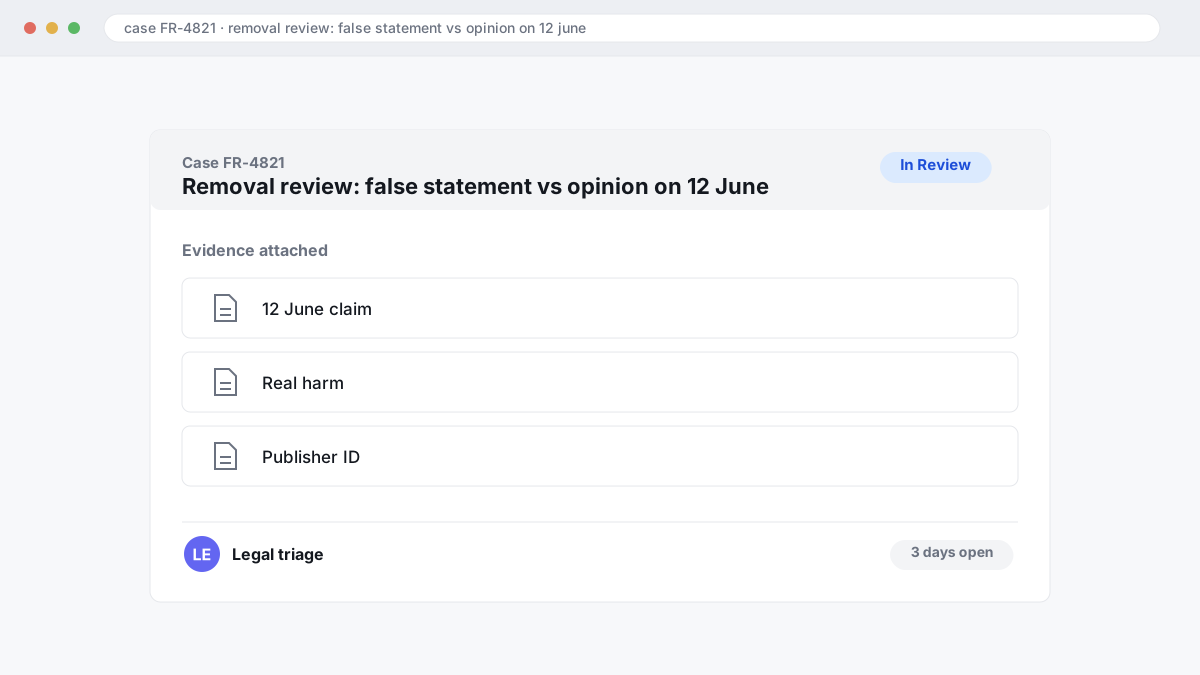
That distinction matters in live cases we handle around review removals and bad press. “This company stole my deposit on 12 June” is a factual claim that can be tested. “I think this business is shady” usually sits in opinion territory, and Google, Yelp, and Trustpilot often leave that content up unless it also breaks a named platform rule such as harassment, impersonation, or conflicts of interest.
A solicitor or attorney letter can move some publishers, bloggers, forum admins, and individual posters. It does not override platform policy. Google and Yelp still judge reports against their own rules, which is why BGR Review keeps legal correspondence separate from the evidence pack we use for escalations: screenshots, URLs, timestamps, account links, and edit history where available.
Legal routes are slower than most owners expect. If your lead flow is already down this week, waiting on counsel alone is risky, so you usually need review recovery and branded search repair running in parallel while legal work develops. Keep public threats out of your replies unless counsel approves every line, because one badly worded threat often gives the story a second news cycle.
How to rebuild branded search results after bad press
Rebuilding branded search results after bad press means improving the pages buyers see first for your brand name when the harmful result still stays indexed.
Suppression is an asset job, not a press release. In the recovery work we handle at BGR Review, the fastest wins usually come from pages you already own or can update this week: your homepage, Google Business Profile, Trustpilot or Clutch profile, LinkedIn company page, and core business listings. If those pages are thin, outdated, or inactive, an old article keeps shaping the click path even when it sits lower on page one.
Fresh positive signals matter because prospects compare sources before they call. A dormant review profile with no new verified activity leaves old negatives doing the selling against you, especially on Google Business Profile and Trustpilot where recent review text and star rating often appear before a user reaches your site. That is why our review packages include a 30-day free replacement guarantee, while removals stay separate on a pay-after-success basis at $449 per removed link.
| Asset type | Examples | 30 / 60 / 90 day recovery goal |
|---|---|---|
| Assets you control | Homepage, LinkedIn company page, owned social profiles | 30: update copy and metadata. 60: publish fresh brand content. 90: strengthen internal links and branded visibility. |
| Assets you can influence | Google Business Profile, Trustpilot, Clutch, business listings | 30: fix profiles and categories. 60: add new review activity. 90: improve snippet quality and consistency. |
| Assets you cannot control | News articles, forum threads, complaint pages | 30: monitor and document. 60: pursue valid removal routes. 90: outrank with stronger branded assets if removal fails. |
How to recover reviews after a reputation hit
Review recovery means rebuilding a credible flow of recent, genuine customer feedback after a reputation hit, so prospects see an accurate picture again when they check Google, Trustpilot, Yelp or Clutch before they contact you.
The order matters. In the cases we handle at BGR Review, you remove what is removable first, then steady the public replies on the reviews that stay live, then restart review requests on the platforms that influence your sales process most. If you push for new ratings before that clean-up, you risk sending fresh customers to a profile still topped by policy-violating posts, unanswered complaints or obvious review attacks.
Recovery works when the requests are verified, platform-compliant and spread consistently over time. A sudden spike of thin, low-detail reviews can trigger moderation issues on some platforms and can look suspicious to buyers even if the reviews remain live. That creates a second trust problem, which is the last thing you need while bad press is still showing in branded search.
Our review packages are built around verified reviews and include a 30-day free replacement guarantee. That guarantee matters during recovery because unstable profiles create extra risk: reviews can drop, filters can move visibility, and your average can swing at the exact moment prospects are comparing sources. Stability gives your PR recovery something solid to work with.
Keep the focus narrow. Ask real customers on the channels that drive enquiries, keep the cadence steady, and make sure each request matches platform rules rather than trying to drown out criticism with volume.
The mistakes that make negative online PR worse
The mistakes that make negative online PR worse are the ones that destroy evidence, multiply visibility, and waste the first 24 hours when you still have options.
Deleting your own posts or comments before you save screenshots, timestamps, URLs, and account handles strips out context you may need for a Google or Trustpilot escalation, a legal review, or your own incident log. In the removals we handle on a pay-after-success basis at $449 per removed link with $0 upfront, missing evidence is one of the main reasons a platform dispute turns weak fast.
Posting the same defensive statement across Google Business Profile updates, Facebook, LinkedIn, X, and review replies creates a trail of duplicate screenshots. That gives critics more material to repost, and it can start ranking for your brand name if people search after seeing the original hit.
Arguing with anonymous reviewers in public usually hardens the reader against you. Even when the complaint is false, a long back-and-forth reads like confirmation, and on Yelp or Trustpilot that exchange can sit under the review while prospects compare profiles before they call.
Waiting a week to choose between removal, reply, and suppression is another common error. Seven days is enough for one bad article to trigger review copycats, branded search clicks, and page-one clutter, which is why we tell clients from New York, London, and Thornhill to make that call on day one, not day seven.
A 30-day playbook for getting control back
A 30-day recovery plan works when you fix the order of operations: evidence first, removals and replies second, asset repair and measurement after that.
| Window | What you do | What you track |
|---|---|---|
| Days 1-3 | Audit every live URL on page one for your brand name, then save screenshots, timestamps, reviewer profile links, archive copies, and source pages before anything gets edited or deleted. Classify each item as removal, reply, or suppression, pause reactive posting, and give one internal owner final sign-off so your Google Business Profile reply, Trustpilot response, and press comment all use the same language. | Page-one URLs, review velocity, average rating, branded search screenshots. |
| Days 4-10 | Submit removals only where platform policy or legal grounds exist, then post short factual responses where the content will stay live. In the cases we handle, weak review flags fail because the business skipped evidence, while a clean file with screenshots and reviewer history gives support teams more to work with; if we take on removals, the model stays pay-after-success at $449 per removed review link with $0 upfront. | Removal tickets submitted, response coverage, internal language approved for sales and support. |
| Days 11-20 | Repair weak branded assets such as your Google Business Profile, Trustpilot profile, company pages, and owned social bios, then restart compliant review generation. BGR Review’s review packages carry a 30-day free replacement guarantee, and you should check branded Google results daily to see whether reviews, articles, and profile pages are shifting. | New review count, asset completeness, daily movement on branded search. |
| Days 21-30 | Measure rating trend, review count trend, lead quality, and page-one search composition, then decide what needs legal follow-up and what needs longer-term suppression through stronger branded assets and fresh coverage. If page one still shows the same harmful result after responses, removals, and review recovery, treat it as a longer campaign rather than a one-week fix. | Conversion rate from branded traffic, lead quality notes, share of page one controlled by owned or neutral assets. |
Where to go from here
Treat negative online PR like an operations problem with three queues: content you can remove, content you should answer, and content you need to suppress over time. A single statement rarely fixes the damage once branded search starts showing a bad article, forum thread, and fresh one-star reviews together. In the cases we handle at BGR Review, the fastest wins usually come from review-platform work first, because prospects check Google, Trustpilot, Yelp or Clutch before they call.
Your next move is simple. Build a live incident list with every URL, review link, screenshot, timestamp, profile link and policy breach note, then sort each item into remove, reply, or outrank. Start with the review platforms where conversion risk is highest and where policy routes exist. If a review looks removable, BGR Review handles negative review removals on a pay-after-success model at $449 per removed review link with $0 upfront, alongside review recovery support and a 30-day free replacement guarantee on review packages.
That process gives you a clear map within days: what can come down, what needs a public response, and where to focus recovery content so branded search stops bleeding leads.