

Quick answer
To win “food near me” searches, work in the order Google’s local ranking system already uses: relevance, distance and prominence. For a food business, that means fixing your Google Business Profile first: choose the right primary category, add accurate secondary categories, keep menu, ordering links, hours and photos current, and remove profile inconsistencies. Then build a steady flow of genuine Google reviews tied to real visits and answer them properly. The local pack shows only three listings, so click-through rate and bookings often move before ranking does. Citations usually sit in maintenance, not first priority.
This page is written for operators deciding where budget actually changes map-pack visibility, calls and bookings. At BGR Review, we handle review acquisition and negative review removal across Google, Trustpilot, Yelp, Clutch and TripAdvisor, with a 30-day free replacement guarantee on review packages and pay-after-success removal at $449 per removed review link with $0 upfront.
The advice here comes from the work itself. A fake Google review rarely goes anywhere if you only hit the in-profile report button; the evidence pack, policy match and timing decide the outcome, which is exactly why generic local seo guides miss the fixes that move demand fastest.
What should a restaurant fix first to show up more often for 'food near me'?
For most restaurants, the fastest local SEO gains come from fixing Google Business Profile relevance, tightening menu and ordering paths, improving review recency, and correcting location-page intent. Citation cleanup and posting help, but they rarely move local pack visibility first.
Most guides tell you to do everything at once. That fails because Google does not weigh every local signal equally for a query like “food near me”. If your primary category is off, your menu and ordering links are missing, or your reviews look stale, fresh posts and minor directory edits will not do much for click-through rate, calls or bookings.
Start with category fit inside your Google Business Profile, then make the conversion path obvious. Your primary category needs to match what you actually sell, your secondary categories need to support it, and your menu and ordering links need to land on the exact menu or order page rather than your homepage. That improves relevance for the local pack and stops searchers dropping out before they convert.
Next, fix review recency. A restaurant with recent, credible Google reviews and replies usually earns more clicks from the map pack before it earns a dramatic ranking jump, because the profile looks active and trustworthy at the moment someone is choosing where to eat. If review velocity is the weak point, BGR Review’s verified review packages start delivery in 24-48 hours and carry a 30-day free replacement guarantee.
Leave local landing pages and citation cleanup for the next pass unless they are clearly broken. A weak location page can hold back branded search demand and conversion rate, and bad NAP consistency can create confusion, but the first visible gains usually appear within a 4-12 week window after the core profile fixes are live. Posts belong in maintenance unless core relevance is still wrong.
Why do some restaurants miss the local pack even with a complete profile?
A complete profile can still miss the local pack because Google weighs relevance, distance and prominence together. If your category match, review signals or location intent are weaker than a nearby rival, profile completeness alone will not win a “food near me” search.
Most guides treat “complete” as the finish line. That fails because a complete profile can still be a weak competitive profile. A restaurant can fill every field, add hours, upload photos and still lose if the competitor two streets away matches the query more closely on cuisine intent, sits nearer to the searcher, and has stronger prominence through fresher reviews and stronger branded search demand. Google’s own local ranking framework names relevance, distance and prominence as the three inputs, not profile completeness on its own.
If your Maps impressions are rising but calls, bookings and order clicks are flat, check the click path before you touch another low-value maintenance task. A profile that ranks but sends users to a slow menu, a dead ordering link or a generic homepage leaks demand capture, so the local pack exposure does less work. In BGR Review’s dataset of 1,485 businesses observed from February to July 2026, enquiry volume followed listing strength closely enough that weak conversion paths showed up fast, especially where the profile did most of the demand capture rather than the website.
How do you build a 'food near me' ranking workflow that matches how Google actually sorts results?
Build your workflow in the same order Google sorts restaurant results: compare the top three local pack rivals closest to you, fix category and menu relevance, tighten review recency and review responses, then improve the pages and links that turn visibility into calls, directions and orders. That sequence usually moves “food near me” demand faster than another random citation clean-up.
Most guides give you a tactic list. That fails because a restaurant can have a complete profile and still lose the map pack on relevance, weak menu intent, stale reviews or missing conversion links. Start with the top three rivals within a 1-3 mile radius for your core searches, then compare only the fields that change visibility and click-through rate first: primary category, menu and ordering links, review freshness, owner replies, and whether the profile pushes a useful action after the click.
Use this audit sheet before you touch anything else.
| Check | What to compare | Why it matters first |
|---|---|---|
| Category match | Your primary category versus the top 3 rivals | Relevance decides whether Google treats you as the right food result |
| Menu intent | Menu URL, ordering link, cuisine terms on profile and local landing pages | Helps queries like “pizza near me” or “vegan lunch near me” convert |
| Review activity | Recent reviews and owner responses from the last few weeks | Fresh sentiment lifts clicks and bookings before rankings fully move |
| Conversion links | Call, directions, booking and order paths | Higher conversions send better demand signals than extra profile edits |
Then run it as an operating workflow, not a one-off audit. Every 14 days, recheck calls, directions, and Google Business Profile queries, then match any rival change that affects relevance or conversions. If your profile gets the click but your local landing pages bury the menu, hours or booking action, you waste demand; if your review responses are absent while rivals answer complaints quickly, you lose trust before the visit starts.
Which Google Business Profile fields actually change 'food near me' visibility and clicks?
The Google Business Profile fields that usually move “food near me” performance first are your primary category, menu and ordering links, opening hours, service details, and recent photos. They help Google match the query and help you win the tap once you appear in the local pack on a mobile screen.
The wrong approach is chasing profile completeness as a score. A restaurant can fill every optional box in Google Business Profile and still miss demand because the fields that capture intent are weak, stale, or missing. The right approach is to fix the assets that answer the searcher’s next question fast: what food you serve, whether you are open now, whether they can order, and what the place looks like today. That is what lifts click-through rate and conversions before a long citation tidy-up does.
This is the order we use when auditing a restaurant profile before review-response or removal work, because it affects both relevance and demand capture.
| GBP field | Main effect | Why it matters for “food near me” |
|---|---|---|
| Primary category | Query matching | Strongest setup signal for relevance inside Google Business Profile |
| Menu URL and ordering links | Clicks and orders | Reduce friction on mobile and turn local pack views into action |
| Opening hours and service details | Trust and conversions | Current dine-in, takeaway or delivery details stop wasted clicks |
| Fresh photos each month | CTR and trust | Active photos and posts freshness usually beat leaving a profile unchanged for a quarter |
Photos and posts freshness matter for a simple reason: food is a visual decision, and stale imagery depresses branded search demand as well as map-pack clicks. Fresh photos each month usually do more than another round of minor profile edits. If your menu has changed, your ordering partner has changed, or holiday hours are wrong, fix those first; they affect visibility, click-through rate, and actual bookings faster than “complete profile” vanity work.
How do primary and secondary categories change whether Google sees you as the right food result?
Primary and secondary categories tell Google Business Profile what you mainly are. Set one primary category to match the part of your menu that drives most revenue, then use secondary categories to cover nearby intents without blurring the profile.
The wrong approach is category stuffing: picking broad or mismatched labels because you serve lots of things. A burger shop that also sells breakfast and coffee should not lead with a vague category just to chase every “food near me” search. Google uses category choice as a relevance signal for the local pack, so a loose setup weakens query matching and can hurt click-through rate even if your photos, reviews and menu links are solid.
The right approach is a tight hierarchy inside your Google Business Profile. If most orders come from burgers, make that your primary category; if brunch matters on weekends, takeaway drives weekday volume, or pizza delivery is a meaningful side line, add those as secondary categories only when the intent is real on the business. A category change can shift visibility within a few days, then settle over the next few weeks as Google re-reads relevance against distance, prominence and user behaviour such as calls, bookings and direction requests.
What should a restaurant's local landing page include to turn nearby searches into orders and visits?
A strong restaurant location page proves local relevance and removes friction before the click turns cold. It should mirror your Google Business Profile details, show the menu and ordering paths clearly, and use restaurant schema so Google can parse the location accurately.
Most guides push a broad city page such as “Best Pizza in Brooklyn”. That fails for visit intent because “food near me” searchers need one real branch, one real address, today’s hours, parking details, and a fast route to reserve or order. Local landing pages work when each physical site gets its own page with the same name, address and opening hours shown on the profile, plus the menu, collection or delivery options, and practical details like wheelchair access, parking, or the nearest landmark.
If your GBP sends a map-pack click to a generic page, you lose orders on the handoff. Link the profile URL to the matching location page, then make the next steps obvious: reservations, call, directions, and menu and ordering links above the fold. On builds we review before any review campaign with our 30-day free replacement guarantee, broken reservation buttons and missing order links are a common reason clicks fail to become calls, bookings or branded search later.
Restaurant schema should state the openingHours, menu URL, price range, and latitude/longitude for that branch. That does not guarantee rankings, but it gives Google cleaner location data than a thin city page and helps the right page support relevance and conversions at the same time.
When do reviews move local SEO fastest, and when are they mostly a conversion play?
Reviews move local SEO fastest when they stay recent, steady and believable. For many restaurants, review work changes map-pack click-through and direction requests before it changes rankings, especially when the restaurants already sit close on distance and category relevance.
The wrong approach is a burst campaign: 15 new Google reviews in a few days, then silence for a month. That can lift prominence signals for a short window, but it rarely fixes weak relevance or proximity, and the pattern looks less natural than a steady review velocity. If you use BGR Review for verified review growth, deliveries start in 24-48 hours and the better outcome usually comes from spacing reviews over time, then protecting them with the 30-day free replacement guarantee if a package item drops.
The right approach is simpler. Add fresh reviews every week, ask for useful detail about dishes, service and atmosphere, and reply quickly. Review responses often move conversions faster than position because the reader sees management quality before they tap for directions or call. A 4.3 profile beside a 4.7 rival in the same local pack can lose the click even if both rank, because the rating gap lowers trust before distance becomes the deciding factor.
If a bad or fake review lands, another citation clean-up usually does less for demand than fixing the review issue. Google may leave the ranking unchanged, but one removed false review, or one calm owner reply where removal fails, can recover clicks and bookings faster than maintenance work elsewhere. That is also where BGR Review's removal model matters: $0 upfront, $449 per removed review link, pay after success.
Can fake reviews hurt local SEO, and what should you do before you report them?
Yes. Fake reviews can cut click-through rate and trust as soon as they appear, and over time they can skew the prominence signals tied to your Google Business Profile. Before you report anything, save the evidence, confirm whether the reviewer ever placed an order or booking, and match the complaint to a ground in Google’s review policy rather than filing on instinct.
The wrong move is emotional reporting: hit “Report review”, write “this is fake”, and wait. That fails because Google often treats a bare flag as weak, especially if the account looks plausible and the review velocity on your profile already looks unusual. Across 12,000+ negative review cases logged by BGR Review from June 2025 to June 2026, roughly 90% of businesses that came to us after a failed attempt had used only the basic in-platform report button, and 70–80% of those initial requests had been rejected.
The right move is evidence-led reporting. Capture screenshots of the review, the profile name, the posting time, any account clues such as no local history or copied wording, plus your till, reservation or delivery records showing no matching transaction; then file against the closest policy issue inside Google Business Profile support. Google removals can land in a few days or drag on for several weeks, and outcomes stay inconsistent.
How do you report spam competitors and fake locations without wasting time on weak cases?
Report a competitor only when you can document a policy breach: a keyword-stuffed business name, a fake address, or a duplicate Google Maps listing. Strong spam competitors and redressal cases use screenshots, Street View, storefront photos and public records, not “they outrank me” complaints.
The wrong approach is filing redressal because a nearby restaurant is annoying, aggressive on discounts or simply beating you in the local pack. That usually goes nowhere. The right approach is matching the listing to a named Google Business Profile rule and proving it: signage that shows the real business name, Companies House or state records, landlord directory photos, or a duplicate CID and address pair in Maps.
Check three things first. Is the name stuffed with terms like “best pizza delivery near me”? Is the address a virtual office, mailbox or co-working suite with no branded frontage? Is there a second listing for the same business, same phone or same menu URL? One removed spam listing can reopen map-pack exposure inside a tight delivery radius because Google has one less profile competing on distance and prominence for the same query.
Weak submissions fail because they rely on the report button alone. In BGR Review’s log of negative review cases with prior self-filed attempts, June 2025 to June 2026, roughly 90% arrived with only the basic in-platform report and no supporting documentation, and 70–80% of those initial requests had been rejected. Different issue, same lesson: evidence decides the case.
When should a restaurant choose local SEO over Google Ads, or run both together?
Choose Google Ads when you need demand this week, and choose local SEO when you want durable local-pack visibility. Many restaurants should run both for a short stretch: use ads to catch immediate searches, then shift spend as your Google Business Profile starts generating steady calls, direction requests and orders.
The wrong move is pushing all budget into broad nonbrand ads while your profile still has weak categories, thin photos, stale menu links or a low review count. That buys clicks, but a lot of those clicks cost more and convert worse than branded searches or map-driven visits, because the searcher has not already seen your rating, opening hours and review responses in the local pack. If you sell takeaway, brunch or late-night food, a cleaned-up Google Business Profile usually improves click-through rate before it improves rank.
This channel split is the practical one:
| Channel | Speed | Best use | Staying power |
|---|---|---|---|
| Google Ads | Traffic can start the same week | Launches, slow periods, new locations | Stops when spend stops |
| Local SEO | Usually builds over months | Map-pack reach, branded search demand, cheaper repeat discovery | Compounds if reviews, menu data and profile freshness hold |
| Both together | Fast plus compounding | Capture demand now while fixing GBP gaps | Lets you reduce paid dependence later |
If your launch budget is tight, pair a limited ad campaign with profile fixes first, then review velocity work second. BGR Review sells review growth and review removal, not ad buying, so this is the honest limit: if your Google Business Profile has obvious gaps, another week of ad spend often does less for conversions than fixing the listing and strengthening review trust, especially when fake negatives are dragging down map-pack clicks.
What changes after a Google review comes down, and what should you do next?
Once a Google review comes down, check your new star average, total review count, and map-pack click behaviour within 7 days, then restart compliant review generation. Removal fixes one trust problem on your Google Business Profile; it does not rebuild prominence, click-through rate, or booking momentum on its own.
The wrong move is to treat a successful takedown as the finish line. That fails because your profile may still sit behind a competitor with a stronger rating gap, steadier review velocity, or fresher review responses, even after one damaging review disappears.
The right move is to replace lost social proof fast with fresh, policy-compliant requests sent after real visits or orders, with no incentives, discounts, or quid-pro-quo language. Google’s review rules prohibit fake engagement, and a clean stream of new feedback does more for conversions than another round of minor listing edits. If the removed review stated false facts, update any public review responses and your internal escalation notes so staff do not keep replying to claims that no longer exist.
How do service-area rules, address display, and legal limits affect restaurant local SEO?
Restaurants usually qualify as storefront businesses, so your address needs to be visible and match the place where people actually dine, collect orders or see signage. Using service-area settings for convenience, or hiding the address to avoid showing a real location, creates suspension risk, weakens trust signals and can break mobile directions.
Most guides treat service area vs storefront rules as a profile preference. Google Business Profile Help treats them as an eligibility issue. A restaurant with on-site service, takeaway pickup or a customer-facing entrance should usually use storefront rules, keep the address displayed, and hold tight NAP consistency across the profile, website and major citations; that setup supports relevance, directions clicks and map-pack conversions. The convenience-based setup fails because Google can question the business model, and even when the profile stays live, mismatched address data confuses users and suppresses branded search demand.
Review and promotion rules also change by country and platform. In the US, the FTC's endorsement guides and its 2024 rule on fake reviews target undisclosed incentivised reviews; in the UK, the CMA and DMCC Act rules cover misleading commercial practices; defamation standards turn on false statements of fact and vary by jurisdiction. This is general information, not legal advice. If a review dispute rests on policy breach, report it through the platform first; if it rests on a legal claim, get local counsel before you push removal.
Where to go from here
Start with a 30-minute audit of the assets that move “food near me” visibility first: your Google Business Profile name, address, phone and categories, your menu and ordering links, your latest 10 reviews and replies, and the landing page tied to that location. You are looking for three things: relevance gaps that hurt the local pack, trust gaps that cut click-through rate, and page gaps that waste branded search demand after the click. Fix those before you spend time on another citation sweep.
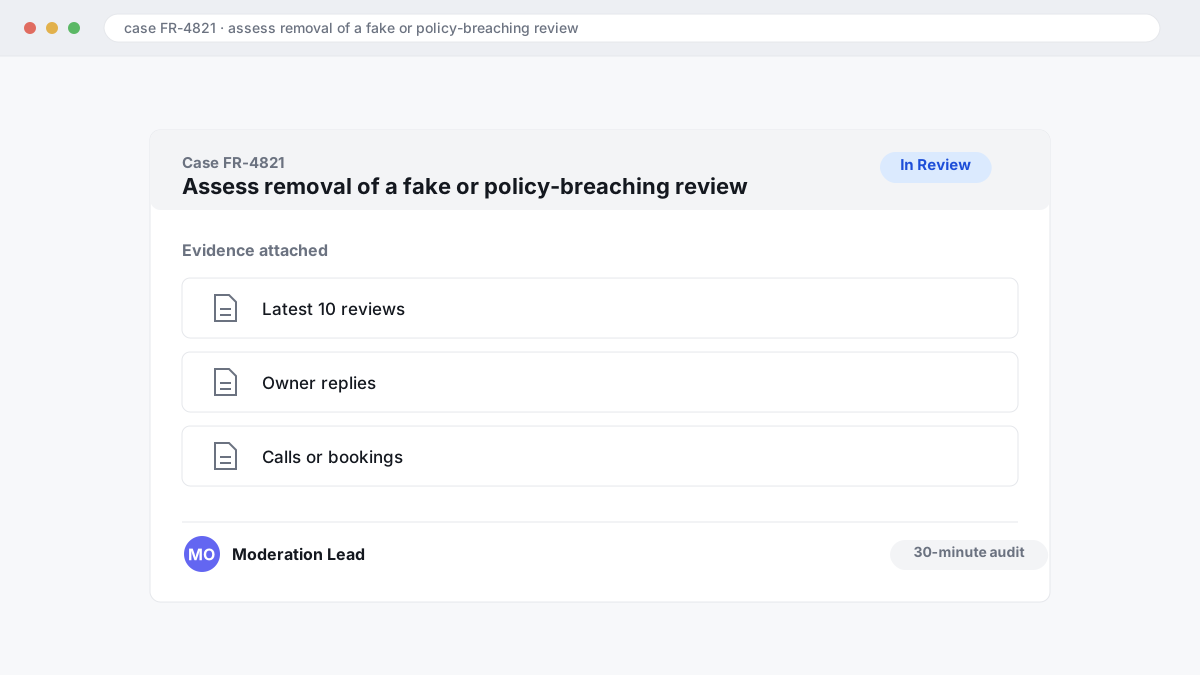
If a fake or policy-breaching review is dragging down calls or bookings, assess removal before you chase more maintenance work. The pattern is clear in BGR Review’s case file of 12,000+ negative review cases logged June 2025 to June 2026: reviews raised within 28 days of posting and backed by an identifiable policy issue resolved successfully in roughly 90% of cases, while comparable cases raised later fell to approximately 25–30%. Timing matters.
Your next step is simple: export the review links, capture screenshots, note the policy issue, and check whether the damage is visibility, conversions, or both. Expect a clearer priority list first, then action on the reviews that are actually suppressing demand.