

Quick answer
Hotel review examples guests trust are concrete, believable, and matched to the platform they appear on. A useful review mentions the room type, cleanliness, noise, staff interaction, location, and whether the price felt fair. A useful reply names the exact issue, gives one next step, and avoids generic apologies. com and Expedia usually limit publishing to verified stays; TripAdvisor applies its own fraud and fake-review rules. Hotels should use post-stay review requests and avoid review gating, which platform policies and consumer-protection rules can prohibit.
These hotel review examples come from reputation work where the real job starts after the review is live: checking whether the profile is on Google, TripAdvisor, Trustpilot or a verified-stay site, pulling booking and CRM records, and deciding whether to respond, request replacement feedback, or file a false-review report. The field that often decides the outcome is the evidence, not the complaint text.
BGR Review handles review generation and removal across Google, Trustpilot, Yelp, Clutch and TripAdvisor, with 15,000+ businesses served and a pay-after-success removal model at $449 per removed review link, $0 upfront. If a fake review has no matching guest record, your evidence pack usually needs timestamps, booking data, staff logs, and screenshots before the platform form has any real chance.
What a useful hotel review includes
A useful hotel review gives another traveller enough detail to picture one real stay: the room, cleanliness, noise, staff, location and whether the price felt fair. The reviews people trust most usually include 2 to 4 specifics from the same booking, such as “standard double on the third floor”, “street noise after 11pm”, “five-minute walk to the station” or “front desk moved us after the air conditioning failed”. Vague lines like “amazing hotel” or “terrible service” do not help much, and they are the kind of copy that platforms such as Google Business Profile, TripAdvisor and Trustpilot struggle to read as genuinely useful.
If you give guests a template, keep it tight. Ask for stay dates, room type and booking channel first, then prompt for one detail on cleanliness, one on staff, one on noise or sleep quality, and one on value. That structure produces credible feedback without sounding scripted, which matters if you later need to defend review quality or use BGR Review’s 30-day free replacement guarantee on a verified review package.
” You get cleaner reviews, and your team gets details it can actually use.
Hotel review examples by platform
Hotel review examples change by platform because each site rewards a different level of detail, proof of stay, and reading context.
| Platform | What guests usually write | Example that fits |
|---|---|---|
| Google Business Profile | Short, fast, location-led comments that can affect local pack click-through and visibility in Google Maps. | "Clean room, easy check-in, and two minutes from the station. Front desk fixed our late arrival quickly." |
| TripAdvisor | Longer reviews with trip purpose, amenities, breakfast, pool, housekeeping, and service detail. | "Stayed for a 3-night family break. Kids used the pool daily, breakfast had decent vegetarian options, and housekeeping replaced towels without being asked." |
| Booking.com / Expedia | Stay-linked feedback tied to verified reservations, usually more specific on room accuracy, check-in, cleanliness, and value. | "Verified 2-night stay. Room matched the photos, bed was comfortable, Wi-Fi held for work calls, and parking was tighter than expected." |
Google reviews tend to be the shortest because guests leave them from Maps or mobile search in under a minute. That brevity matters: if you buy or request Google reviews through a compliant flow, the copy has to sound like something a real traveller would actually type, not a polished paragraph. BGR Review starts delivery on review packages in 24-48 hours, and the strongest Google copy still reads plain.
Verified-stay platforms leave less room for invented detail. com and Expedia already connect the review to a completed booking, so vague praise looks weak and fabricated complaints are easier to challenge with booking records. If a false review gets through on any platform, BGR Review handles removals at $0 upfront and $449 per removed link after success.
Short Google hotel review examples guests will actually use
Short Google hotel reviews work best at 20-60 words, with one concrete detail a guest will remember and another guest can picture before booking.
Google readers scan fast, so “great stay” gets ignored and a detail like late check-in at 11:30 pm, street noise on the second floor, or breakfast eggs being cold at 8 am gets read. This is also the format we ask for on Google campaigns at BGR Review because it looks native on the profile, gives your team something to fix, and avoids the copied tone that triggers distrust.
5-star: “Really smooth stay. We checked in after midnight and the front-desk team still had everything ready in under five minutes. ”
3-star: “Good location and easy check-in, but the room facing the street was noisy until about 1 am. Bed was comfortable. ”
1-star: “Would not book again. We arrived late, around 10:45 pm, and our room was not ready. ”
If you are collecting verified Google reviews through BGR Review, delivery starts in 24-48 hours and review packages carry a 30-day free replacement guarantee, so short, specific wording matters from the first post.
Review examples by guest type and stay purpose
Guest-type review examples work when they reflect the reason for the stay, because a business guest notices different details from a family on a school-holiday break.
If you ask for reviews through a segmented follow-up, the wording gets more believable fast. ” language. Google and TripAdvisor reviews read more naturally when they mention one concrete friction point or win, such as invoice accuracy or pool hours, instead of five vague compliments.
| Guest type | What they usually mention | Usable review example |
|---|---|---|
| Business traveller | Wi-Fi speed, desk space, check-in speed, invoice accuracy | “Checked in late and was in my room within minutes. The desk was big enough to work from, Wi-Fi held stable on video calls, and the invoice was correct at checkout.” |
| Family | Sofa bed comfort, breakfast timing, pool rules, corridor noise | “The sofa bed was already made when we arrived, breakfast started early enough for our plans, and staff explained the pool rules clearly. Noise after 10 pm was low, which mattered with children.” |
| Couple | Privacy, view, quiet room, walkable location | “Good privacy, no noise from neighbouring rooms, and the city view matched the photos. We walked to dinner and back without needing a taxi.” |
| Solo guest | Safety, lighting, reception support, location | “Travelling alone, I cared most about safety. The entrance was well lit, reception was alert at night, and the area felt easy to walk around.” |
Skip details the guest could not have checked, because copied reviews get filtered more often by platform moderation and by your own readers. If a stay was one night, ask for one-night specifics. If it was a work trip, ask about check-in, workspace, and billing before you ask about the bar or spa.
Review examples for luxury, boutique, and budget hotels
Hotel review examples work best when the wording matches the property category, because guests judge a five-star stay, a design-led boutique room, and a roadside budget hotel by different standards.
Luxury reviews usually land on service details: how fast the concierge solved a problem, whether the linens felt premium, how breakfast or dinner compared with the rate, and what happened when something went wrong. ” That service-recovery line matters. It gives your front desk something concrete to reply to, which is the same reason BGR Review pushes verified-platform wording instead of generic praise when helping hotels earn Google or Trustpilot reviews.
” If the language drifts into “best hotel ever,” most readers tune out, and most platforms do too.
What makes a hotel review sound authentic instead of copied
An authentic hotel review sounds like one person describing one stay, with concrete detail, a clear trade-off, and wording that does not read like your own marketing copy.
Real guests usually mix praise with friction: “great breakfast, thin walls” lands better than five lines of perfect approval. Specifics make the difference. Room number style detail, a check-in delay, the name of the beach shuttle, or a note that the air conditioning took time to cool the room all read as lived experience. Google’s Business Profile review policies and Trustpilot’s rules both give platforms room to act on spammy or misleading submissions, and vague praise with no stay detail is easier for filters and moderators to distrust.
Copied-sounding reviews reuse the same adjectives, skip specifics, and repeat your slogan or booking headline. If ten reviews in a short run all say “exceptional hospitality”, “prime location”, and “highly recommended” without mentioning a staff interaction, room feature, or problem, the set looks manufactured. Yelp’s recommendation software is especially harsh on formulaic praise.
If you use review gating or offer incentives without disclosure, even genuine feedback can look manipulated. The US FTC’s 2024 rule on fake reviews and testimonials tightened scrutiny on suppressed negatives and undisclosed rewards, and UK rules under the DMCC Act move in the same direction. If you need volume, ask all guests evenly and keep any BGR Review campaign compliant, with a 30-day free replacement guarantee on review packages rather than selective filtering.
Positive response templates managers can adapt by rating
A positive hotel review reply should match the rating: thank the guest, mention one concrete stay detail, and keep it under 80 words on fast-moving platforms such as Google Business Profile.
| Rating | Response model |
|---|---|
| 5-star | “Thanks for staying with us, [Name]. We’re glad you enjoyed [detail: rooftop bar / late check-in help / sea-view room]. I’ve shared your note with the front-desk team. We’d love to welcome you back on your next trip to [city].” |
| 4-star | “Thanks, [Name]. We’re pleased you liked [detail: breakfast / location / staff welcome]. We also appreciate your note about [improvement point]. We’re reviewing that with the team now and hope to give you a smoother stay next time.” |
If you manage replies at scale, keep the structure fixed and swap only the stay detail and one operational point. That is the same rule we give hotels that use BGR Review for Google and Trustpilot support: public responses should read human, not copied from a template bank.
Skip three things. Do not repeat the whole review, do not oversell the property, and do not promise a fix you have not assigned. Short wins here. A clean 60- to 80-word reply gets read; a 140-word thank-you usually gets skipped.
Negative review response examples for 1-star and 3-star stays
A strong reply to a bad hotel review calms the thread in public, accepts the guest’s experience without arguing, and moves the real fix into a private channel within 24-72 hours so the complaint does not sit unanswered on Google, Trustpilot or TripAdvisor.
| Rating | What your reply should do | Example you can adapt |
|---|---|---|
| 1-star | Acknowledge harm, avoid blame, take it offline | “I’m sorry your stay was this poor, especially the noise and check-in delay. That fell short of the standard we set for this property. Please email our manager at [address] with your booking name so we can review what happened and resolve it directly.” |
| 3-star | Answer the issue directly and name the fix | “Thank you for the balanced feedback. You were right to call out the slow breakfast service. We have changed the weekend rota and added a second host at 8am to reduce queue times. If you stay again, contact us directly and we’ll help you choose a quieter room.” |
Most weak 1-star replies fail because the hotel starts defending itself. BGR Review edits those lines out first. Skip “this is not typical” and skip any hint that the guest caused the problem.
How hotels request reviews ethically across email, SMS, and on-property prompts
Ethical hotel review collection means asking every guest for feedback soon after checkout, without screening out unhappy stays before the review reaches the platform. The clean window is 24-72 hours after departure, while the details are still fresh and the staff names, room issues, and breakfast comments have not blurred together. If you use a managed service such as BGR Review's review packages, the 30-day free replacement guarantee applies to delivery, not to platform rules on solicitation.
| Channel | Best timing | Rule to follow |
|---|---|---|
| 24-72 hours after checkout | Ask all guests, link directly to the platform, no filtering form first | |
| SMS | Same day to 48 hours | Keep it short, one link, consent required under your local messaging rules |
| On-property prompt | Checkout desk or room card | Invite feedback neutrally, never pressure for a 5-star rating |
Review gating is the mistake most hotel teams still make. A survey that sends happy guests to Google and unhappy guests to a private form can breach platform rules and, in some countries, consumer law. The US FTC's rules on endorsements and testimonials and UK rules under the DMCC Act both matter here, but platform policy usually bites first. This is general information, not legal advice.
com, and Expedia each draw the line differently. Google Business Profile policy bans fake engagement and misleading content, so staff should never ask only “satisfied guests” to post. com only allows reviews from guests with a real reservation, and Expedia ties reviews to completed stays in its own ecosystem. If your prompt says “leave us a 5-star review”, rewrite it before you send it.
How review patterns turn into operational fixes
Review patterns become operational fixes when you sort repeated guest comments into themes, assign each theme to one owner, and track one KPI until the complaint rate drops. A hotel that gets the same complaint 3 times in 30 days about noise, housekeeping, breakfast, billing, or staff tone has a process issue, not a one-off bad stay. If you are already collecting Google, TripAdvisor and Trustpilot feedback, group the wording first, then decide whether the fix sits with front office, housekeeping, food and beverage, or revenue and reservations.
Sentiment analysis speeds that up across hundreds of monthly reviews because it clusters phrases like “thin walls”, “hallway noise” and “could hear lifts all night” under one noise label instead of making your team read every line manually. The useful part is the handoff: one owner, one fix, one review KPI. At BGR Review, we see hotels waste review-response budgets when nobody owns the root cause, so the same issue keeps reappearing in the next month’s review batch.
| Theme | Owner | Fix | KPI |
|---|---|---|---|
| Noise | Front office manager | Move families and late arrivals away from light sleepers | Noise mentions per 50 new reviews |
| Housekeeping | Executive housekeeper | Add room-check signoff before release | Cleanliness rating trend |
| Breakfast | F&B manager | Increase refill checks during peak hour | Breakfast complaint share |
| Billing | Revenue manager | Rewrite pre-arrival fee disclosure | Charge dispute mentions |
| Staff tone | Rooms division manager | Coach greeting, apology and checkout scripts | Service-tone mentions |
When false hotel reviews can be flagged or removed
False hotel reviews can usually be flagged or removed only when they breach a platform’s own fake-review or prohibited-content rules, not because they feel unfair. Google Business Profile relies on its prohibited and restricted content policy, Trustpilot uses its flagging and verification flow, and Yelp applies both content rules and its recommendation software; each route asks a different question. If a guest really stayed and the post is opinion, removal often fails even when the review is harsh.
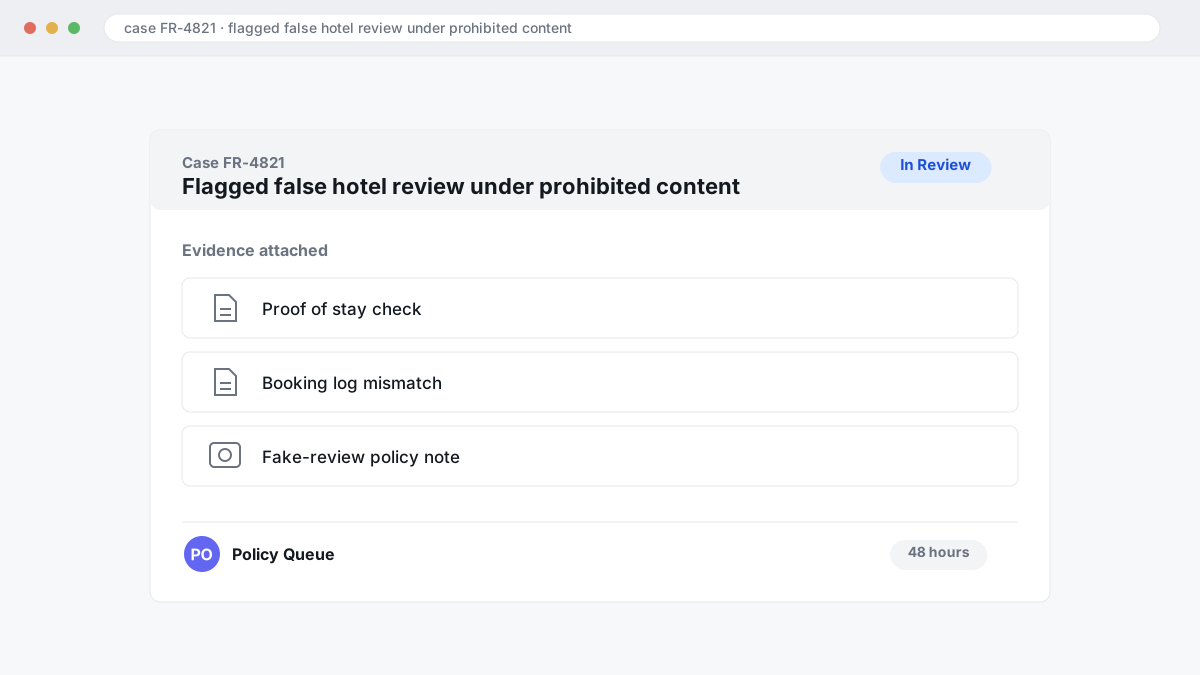
If you are challenging a review, build the evidence pack before you flag it. The useful bundle is simple: reservation records showing no matching guest, CCTV timing that conflicts with the claimed visit, staff incident notes from that shift, and any message trail that places the complaint on a different date or property. The field that tends to decide the outcome is the factual mismatch, not a long narrative. “No booking under this name, date, room number, or payment reference” carries more weight than “this looks fake”.
Most guides skip the hard limit: platforms rarely remove a review for being wrong in parts. They remove when the account is fabricated, impersonated, incentivised without disclosure, duplicated, or otherwise policy-breaking. Country rules matter as well. In the US, the FTC’s rules on endorsements and testimonials cover fake or undisclosed review activity; in the UK, the CMA and DMCC Act rules also bite. This is general information, not legal advice.
That route still depends on policy breach evidence, and sometimes the cheaper option is a public response plus fresh verified reviews rather than a weak removal claim.
A practical review-management workflow for hotel teams
A practical hotel review-management workflow is a 7-day cycle where one named owner collects new feedback, tags it by issue, replies on the right platform, escalates risky items, reports trends, and assigns fixes before the next week starts.
| Step | What your team does each week | Output |
|---|---|---|
| Collect | Pull reviews from Google Business Profile, TripAdvisor, Trustpilot and Yelp, then add guest survey responses from your PMS or email tool. | One inbox, one owner, no missed review links. |
| Tag and respond | Tag by department: housekeeping, front desk, breakfast, noise, billing. Reply within the same 7-day window, because old complaints harden and public threads stay visible. | Clear record of what guests praised or disputed. |
| Escalate, report, fix | Send false-review links or policy breaches to escalation, then give department heads a short weekly report with one action per recurring issue. | Operational change, not just cleaner inboxes. |
Guest satisfaction surveys help you catch issues before checkout, but they do not replace public reviews because future guests never see your internal scores. Use surveys to ask follow-up questions, then ask satisfied guests for a public review through compliant email, SMS or front-desk prompts rather than gating by sentiment, which creates risk under the FTC's fake review rule and UK consumer-protection rules.
Where to go from here
Treat these examples as a working file for your team. Pick 12 that match your property type, split them by platform, then turn them into three things: a request message your front desk can send after checkout, response scripts for 5-star through 1-star feedback, and a flagging checklist for reviews that look false. You should expect cleaner, more believable review patterns first, then faster response times, and then clearer repeat issues you can fix in housekeeping, breakfast, check-in, noise control, or billing.
Start this week with one simple action: review your last 30 public comments and tag each one by topic, rating, and platform. That usually exposes the same friction points staff already suspect, but now you have public evidence attached to them. The same pass also shows which reviews need a response, which need an internal fix, and which may justify a platform report backed by booking data, timestamps, CCTV logs, or staff notes.
The useful outcome is simple: fewer guesses, better requests, tighter replies, and a review profile your next guest can actually trust.