
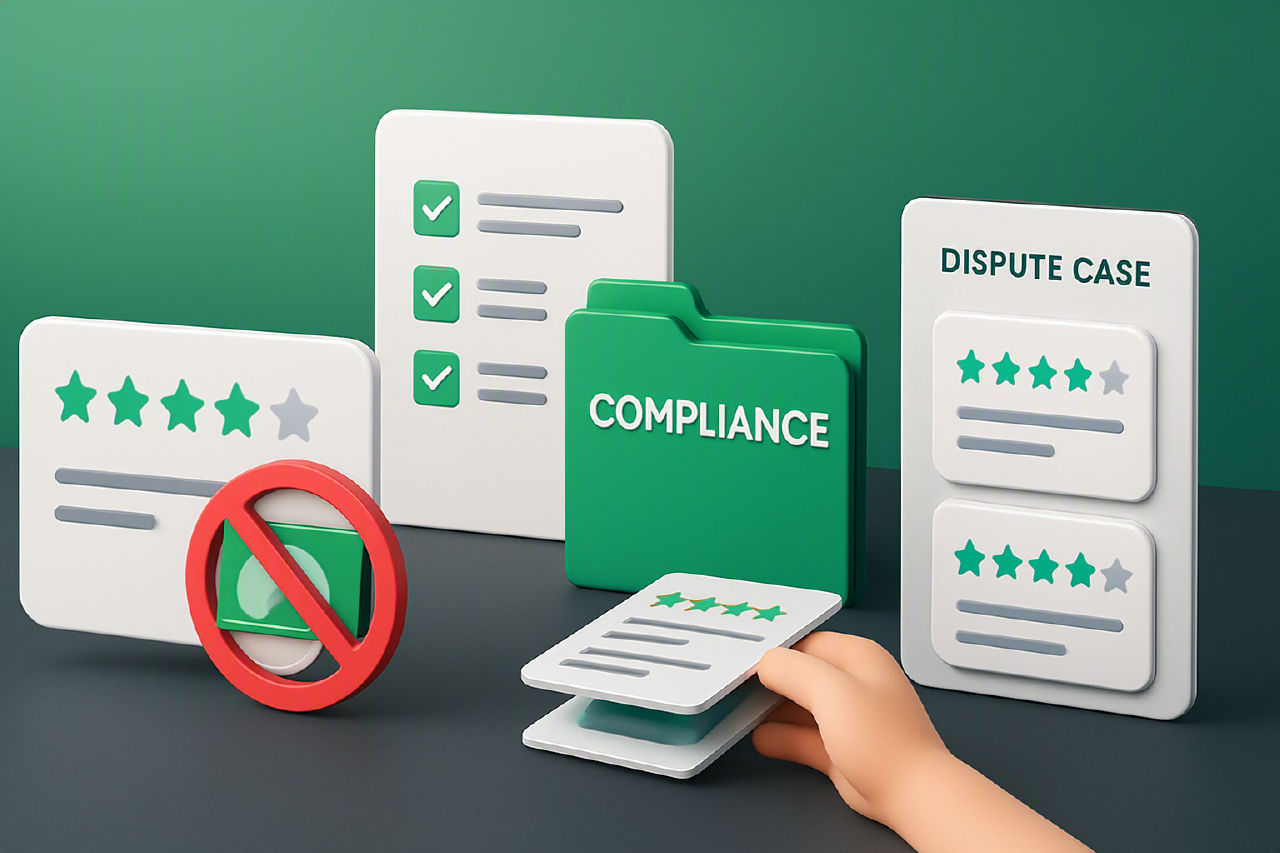
Quick answer
Yes, you can get paid for some review-related work, but public paid reviews are where the problems start. Product testing, market research and user-feedback panels can be legitimate if the payment and relationship are disclosed. Paying someone to post on Google, Yelp or Trustpilot usually breaches platform rules. The FTC Endorsement Guides require disclosure of material connections, and Google’s fake engagement policy prohibits content meant to mislead. For a business, the practical issue is risk: removals, account scrutiny, weaker trust signals and reputational damage if the pattern is exposed.
We handle review acquisition and negative review removal for clients every day, so this page is based on the mechanics platforms actually use rather than side-hustle theory. A weak removal request usually fails for the same reason: it says a review is “fake” but includes no reviewer overlap, no timing spike, no template language match and no order-record gap for the platform team to verify.
If you searched Can I Get Paid to Write Reviews, the key distinction is simple: paid feedback collected in the right setting can be lawful and usable, while paid public endorsements often trigger policy enforcement. That line matters because our removal work is pay-after-success at $449 per removed review link with $0 upfront, which means we see exactly what survives a platform check and what gets taken down.
How people really get paid to write reviews
People do get paid to write reviews, but the legitimate version usually means product testing, research-panel feedback, or affiliate content with disclosure, not posting public star ratings on Google, Trustpilot or Yelp for a seller. The common pay models are simple: a free product to keep, a small test payment in the $5-$60 range, or a flat freelance fee for a blog, YouTube script or buying guide. That distinction matters because BGR Review sells verified review and removal services, and public review platforms draw a hard line between genuine customer feedback and compensation tied to ratings.
Amazon Vine is the clearest example. Vine Voices can receive products for free, but sellers do not pay them cash to leave a positive review, and Amazon presents Vine as an invitation-based programme rather than a review-for-hire marketplace. If someone offers you money to post a five-star Amazon, Google or Trustpilot review from an account with no real purchase, you have moved out of testing work and into review manipulation.
Affiliate publishing sits in the middle. You can earn a flat editorial fee or commission for reviewing software, hotels or gadgets on your own site, but the payment is for the content itself and any endorsement still needs proper disclosure under rules such as the FTC’s guidance. If you want public platform reviews that survive moderation, buying a “review job” from a seller is the wrong mechanism from the start.
When paid reviewing crosses the line into manipulation
A paid public review becomes manipulation when the payment depends on posting a review, keeping it live, changing the star rating, or removing criticism after contact from the seller.
That is the line most side-hustle guides blur. Product testing, user research and private feedback panels can be legitimate because you are being paid for your time and notes, not for publishing praise on Google, Trustpilot, Yelp or TripAdvisor. The problem starts when money, discounts, refunds, free products or affiliate commissions are tied to a public endorsement. In the US, the FTC’s 2024 rule on fake reviews and testimonials targets undisclosed or controlled review activity. Platform rules add another layer on top of that.
Most major review platforms ban incentives connected to reviews, rankings or review-removal pressure. Google Business Profile’s fake engagement policy prohibits content posted to manipulate ratings. Trustpilot restricts incentivised reviews unless they are invited and collected in line with its rules, and Yelp bars compensation tied to reviews through its recommendation and content policies. If you are paying for feedback, keep it off public review profiles unless the platform expressly allows the format. This is general information, not legal advice, and the exact rule changes by country and platform.
What major platforms allow and ban
Major review platforms draw a hard line between legitimate review collection and public reviews shaped by payment, pressure, or selective filtering.
| Platform | Allowed | Banned |
|---|---|---|
| Asking real customers for honest feedback after a genuine transaction. | Fake engagement, including buying reviews, posting reviews for pay, or offering incentives under Google’s fake engagement policy and Google Business Profile review rules. | |
| Yelp | Unprompted reviews from customers who chose to post on their own. | Compensated reviews and active review solicitation; Yelp can apply a Consumer Alert on business profiles it believes tried to buy or pressure reviews. |
| Trustpilot | Invited reviews, including automated invitation flows sent to all customers on the same terms. | Biased incentives, selective invitations, and review gating that screens out unhappy customers before they reach the public platform. |
Most confusion starts with incentives. A discount for “leave us a 5-star review” is the problem, not a neutral request for feedback. Trustpilot’s model gives you more room to invite reviews than Yelp does, but once you reward only positive sentiment or suppress negative send-outs, you move into policy trouble.
If you are comparing review vendors, this is the line that matters. BGR Review sells verified review acquisition that has to match platform rules, and where a competitor has used bought reviews instead, removal cases run on a pay-after-success basis at $449 per removed review link with $0 upfront.
Who pays for product testing, panels, and research feedback
Legitimate buyers of review-style work pay for private feedback, product tests, or recorded usability sessions, not for undisclosed public ratings on Google, Trustpilot, Yelp or TripAdvisor. Brands run home-use tests, research firms recruit panel members, and UX platforms pay you to complete set tasks on a site or app. UserTesting-style jobs usually pay for a 10-20 minute recorded session where you speak your thoughts while trying a checkout, form, or onboarding flow. The output goes to the product team, not to a public review page.
Market research panels work the same way. You answer surveys, join interviews, or test packaging and ads, and your opinion stays inside a research report unless you separately agree to a named testimonial with proper disclosure under rules such as the FTC’s endorsement guidance. That distinction matters. When clients ask BGR Review about reviewer marketplaces before buying managed Google or Trustpilot review packages, we make the same point: private research is standard commercial work; paid public endorsements are where platform policy and removal risk start.
Why public paid reviews are risky for businesses
Public paid reviews are risky because the damage carries on after the reviews are posted, removed, or exposed. If Google, Trustpilot or Yelp strips a batch of incentivised posts, you lose recent review velocity, the date spread on your profile thins out, and older genuine reviews have to carry more of the trust load.
The legal risk sits above the platform risk. In the US, the FTC’s Endorsement Guides and its 2024 rule on fake reviews target undisclosed paid endorsements and deceptive testimonial practices; in the UK, the CMA and the DMCC Act take aim at fake or misleading consumer reviews. Rules vary by country and platform, and this is general information, not legal advice.
If one campaign gets exposed, the screenshots usually outlive the reviews. A freelancer’s job post, a Telegram thread, a spreadsheet of reviewer emails, or matching payment messages can turn into customer complaints, competitor reports, and forum posts that rank for your brand name long after the platform has removed the original reviews. Replacements do not fix that. You have to rebuild trust in public.
Red flags that a paid review job is probably a scam
A paid review job is probably a scam if it promises easy money for public five-star posts without screening, product use, or any check that you are a real customer.
The clearest bait is a listing offering “$200 per day” to leave Google, Trustpilot or Yelp reviews from your own account after a short Telegram chat. Public-review platforms do not treat that as normal market research. Google Business Profile review policy bans fake engagement, and Trustpilot bars reviews written in exchange for payment unless the platform rules are fully met and the experience is genuine.
Check the method before you touch it. If someone asks you to use your personal Google account, buy with a prepaid card, hand over login details, or paste a copied review template, walk away. Legitimate product tests and research panels usually brief you on the item, collect feedback in a survey or portal, and pay for the testing itself.
Upfront fees are another bad sign.
How platforms usually detect incentivised review schemes
Platforms usually detect incentivised review schemes by matching behaviour, not by waiting for someone to confess they were paid. Google and Yelp both lean on automated detection first: Google filters reviews that trip spam signals under its Google Business Profile review policy, and Yelp’s recommendation software routinely suppresses reviews from accounts and activity it does not trust. The common triggers are repeat wording, clustered timing, shared IP or device signals, and the same reviewer accounts appearing across unrelated businesses.
A burst of 10 near-identical reviews inside 48 hours often draws closer scrutiny, even before a manual check starts. The practical giveaway is rarely one review on its own; it is the footprint around it. If several reviewers post from fresh accounts, use the same phrasing, mention the same staff member, and leave similar ratings within a tight window, the platform can connect those dots fast.
What evidence actually helps get paid reviews removed
The evidence that moves a paid-review report forward is proof of inducement tied to a specific policy breach, not a hunch that the reviews “look fake”.
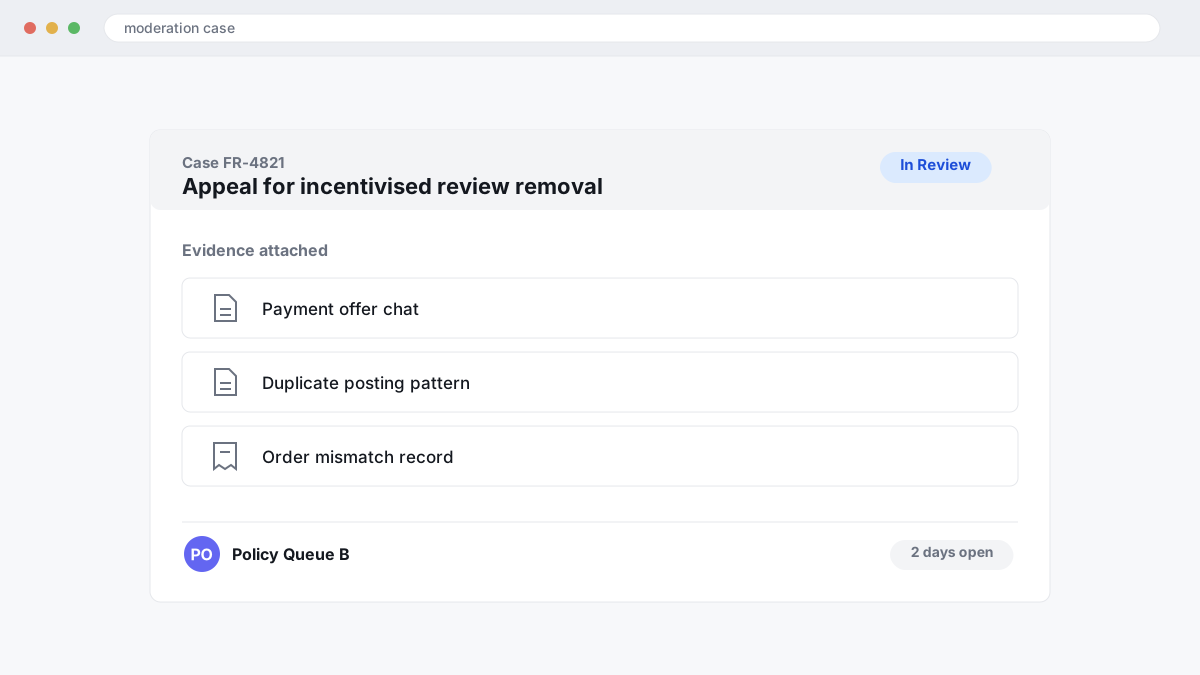
Start with direct evidence: payment screenshots, DM outreach offering cash or gift cards, coupon codes in exchange for a public review, and order messages promising refunds after a review goes live. Then line that material up against the platform rule you are invoking, such as Google Business Profile’s ban on fake engagement or Trustpilot’s rule against incentivised reviews that are not properly allowed and disclosed under its policy flow. A report that says “these accounts sound similar” is weak. A report that says “review 7 matches this Telegram offer, posted 14 minutes after payment, and repeats the same template phrase” gives a moderator something usable.
Use a spreadsheet for 5 to 20 suspect reviews. Track the review date and time, star rating, repeated wording, reviewer profile traits, and any matching outreach or payment evidence. The format matters because appeal forms are cramped, and clear bundles get read faster than loose screenshots.
What actually happens after you flag a suspicious review
After you flag a suspicious review, the first response is often an automated or generic denial, and the real work starts when you escalate with a dated evidence trail.
Google Business Profile flags regularly come back with a stock policy reply first, even when the review looks purchased. The useful step is the second one: keep the original review URL, your first submission date, the case ID from support, and screenshots showing the review text, profile name, star rating and publish date. If the issue involves undisclosed incentives, fake engagement or reviewer identity problems, escalation usually moves through support threads or a legal removal form rather than the first flag alone.
| Platform | What often happens first | Realistic next step |
|---|---|---|
| Generic policy response | Support case or legal form with evidence pack | |
| Trustpilot | Flag review for breach | Provide order-record mismatch or incentive evidence |
| Yelp | Limited feedback on flag | Document profile links and submit a clean chronology |
Timelines vary from a few days to several weeks, and evidence quality decides a lot of that. In paid-review removal work at BGR Review, weak cases usually fail because the business cannot tie the review to a missing order record, copied wording, or a reviewer network; strong cases keep a simple log with dates, screenshots, submission copies and every case number for follow-up. That log matters when support closes a ticket and you need to reopen it without starting from zero.
A simple workflow for businesses dealing with bought reviews
A workable response plan for bought reviews has three moves: save the evidence first, report it against the right platform rule, then replace the trust gap with real customer feedback.
-
Preserve everything before you flag anything. Take full-page screenshots, copy the review URL, capture the reviewer profile, and save any outreach messages, payment offers, coupon codes or Telegram/WhatsApp chats tied to the review. Google Business Profile listings, Trustpilot invitations and seller messages can change fast; once a profile is edited or removed, the strongest proof often disappears with it.
-
Report the exact violation on the platform first, then escalate with policy language if the first pass fails. Cite the named rule: Google Business Profile’s fake engagement ban, Trustpilot’s rules on incentivised reviews, Yelp’s conflict-of-interest guidance.
-
Fill the credibility gap with genuine reviews immediately after removals start. Ask verified customers in your normal post-sale flow, keep the ask channel consistent, and avoid sudden bursts that look manufactured. If you use a review package, the fixed protection is a 30-day free replacement guarantee, not a vague long-term promise.
Safer ways to earn money from review skills
Safer ways to earn money from review skills sit outside public star ratings and focus on research, editorial work, or disclosed sponsorships. You can get paid for freelance product roundups, ecommerce copywriting, user-testing notes, and testing diaries because those jobs produce content for a brand, publisher, or research panel rather than a supposedly independent Google or Trustpilot review.
Affiliate content is allowed only when the commercial link is clear. The US FTC guidance on disclosures expects a clear material-connection statement, and hiding that link in a profile bio or footer is weak practice. If you publish “best of” articles on your own site, label the relationship near the recommendation, not three scrolls later.
Creator marketplaces can also be legitimate if the deal is disclosed as sponsored content and the platform’s ad rules are followed. That works for YouTube, Instagram, TikTok, or a blog post; it does not convert a paid opinion into an allowed public review on Yelp, Google Business Profile, or other review platforms with anti-incentive rules. If you need public reputation help, BGR Review sells compliant review packages with a 30-day free replacement guarantee, but paid public reviewing is still the wrong side-hustle to build around.
How to vet any review opportunity before you accept it
You can vet a review opportunity in five minutes by checking what you are being paid for, reading the platform rule that applies, and walking away from any offer tied to a public star rating.
- If payment is for private feedback, user testing, or a research panel, that is usually a market-research job rather than a public review job.
- If payment is for editorial content, check the disclosure rules first. In the US, the FTC requires clear disclosure of paid endorsements, and rules vary by country and platform. This is general information, not legal advice.
- If payment is for a Google, Trustpilot, Yelp, Clutch or TripAdvisor review, read that platform policy before you accept. Google Business Profile policies, Trustpilot’s fake reviews guidance, and Yelp’s compensated-review rules are clear enough that five minutes can save you an account problem or a reputation mess.
If bought reviews have already hit your business, document everything before you ask for removal help: screenshots, review links, timestamps, reviewer overlaps, template wording, and any order records or payment messages. That evidence decides whether a flag or appeal has any chance.
Where to go from here
Use one rule before you spend money or file flags: if payment depends on a public review going live, your risk climbs quickly on Google, Trustpilot, Yelp, Clutch and TripAdvisor. Product testing, mystery shopping and research panels can be legitimate, but the line is crossed when the reward is tied to a published rating or review text. Rules also vary by country and platform, so treat this as general information rather than legal advice; the FTC in the US and the CMA in the UK both take a hard view of undisclosed paid endorsements and fake review practices.
Your next step is a platform-specific removal assessment. Pull the review URLs, screenshots, dates, order records, refund records, chat logs and any overlap between reviewer names, wording and posting times. That gives you an evidence pack you can actually use. In our workflow, the cases that move fastest are the ones where the policy breach is matched to the right route first, because Google Business Profile, Trustpilot and Yelp ask for different proof and reject vague accusations.
You should expect a platform-by-platform assessment first, a clear view on whether the case is removable, and an honest no when the evidence will not hold.