


Quick answer
NAP in local SEO means your business name, address and phone number matching across your website, Google Business Profile and the third-party listings customers actually use. It still matters because mismatched records trigger duplicate listings, stale directory data and customer confusion, which can drag down local pack visibility, click-through rate and calls. These citations do not work as a standalone ranking boost. The fix order matters more: correct Google Business Profile, your website contact page and schema, core data sources, then remove or merge duplicates. After that, long-tail directory cleanup usually delivers smaller returns and is often manual.
This page is written from live reputation and profile-cleanup work, where the pattern is usually the same: one wrong source record feeds a stale directory, a duplicate Google profile keeps the old phone number, then customers call the wrong line or drive to an old address. We see the practical side of that problem because BGR Review handles both listing-related reputation work and review profile issues, including negative review removal at $0 upfront and $449 per removed link after success.
We also know where DIY is enough and where it stalls. In our removal case files, the weak point is often evidence quality rather than the first report button itself; across 12,000+ negative review cases logged June 2025 to June 2026, outcomes were tracked as success, unresolved or unknown so the process stayed honest about what could and could not be confirmed.
Which citation fixes still matter first when rankings are stuck?
Start with the records Google and customers trust most: your Google Business Profile, your website contact page, and any duplicate listings tied to the same business. Conflicts in those sources muddy your identity fast; an old low-traffic directory with a stale number usually matters later, if at all.
Most guides treat every citation as equal, so owners burn days editing small directories while the real conflict sits in plain view. A mismatched phone number between your Google Business Profile and your site contact page creates stronger Name Address Phone consistency problems than a forgotten niche listing, because Google and searchers hit those two sources first and use them to judge local pack visibility, click-through rate, calls and form fills. If your profile says one number and your footer, schema markup or contact page says another, you have given Google two versions of the same business.
This is the fix order BGR Review uses before any paid citation work, because long-tail cleanup rarely fixes rankings that are stuck at source level.
| Priority | Fix first | Why it matters more |
|---|---|---|
| 1 | Google Business Profile | Main source for map-pack clicks, calls and customer confusion |
| 2 | Website contact details and contact schema | Primary corroboration source for Google and branded search traffic |
| 3 | Duplicate listings on Google and core platforms | Split authority, wrong routing and mixed reviews suppress clarity |
| 4 | Top directories and major data aggregators | They still feed secondary data and can repopulate bad details |
| 5 | Long-tail citations | Worth doing only after core identity sources match |
If rankings are stuck, check for duplicate Google profiles, old tracking numbers left on the site, and inconsistent address formatting before you pay anyone for a full directory sweep. BGR Review sells reputation services, but this part is often a DIY job first: fix Google, fix your site, merge or remove duplicates, then decide whether broader cleanup is worth the time.
Why does NAP consistency still affect local pack visibility if citations matter less than before?
Name, address and phone consistency still helps Google match one business identity across your site, your Google Business Profile and third-party listings, but it does not move rankings by itself. Expect cleaner trust signals and fewer data conflicts first; local pack visibility usually shifts only when stronger factors such as proximity, primary category choice and review strength line up as well.
Most guides jump from that to “citations are dead”, then owners stop checking basics and leave conflicting business data live for months. That fails because Google still has to reconcile the same business across sources, and your website contact schema often acts as the cleanest version of record when a directory shows an old suite number or tracking phone. Google Business Profile Help still expects accurate real-world details, and a mismatch between the profile, the footer and core directories weakens confidence even if the profile stays live.
The right approach is narrower: fix the website, the Google profile and any obvious duplicate or stale listings, then judge whether deeper cleanup is worth paying for. In practice, that kind of work tends to improve click-through rate and conversions before you see a clear ranking jump, because searchers stop hitting wrong numbers, old addresses and inconsistent map results. BGR Review is open about the limit here: if your reviews are weak or your category targeting is wrong, citation cleanup will not do the job that a stronger review profile or better GBP setup does.
How do wrong citations and duplicate listings actually hurt local SEO?
Wrong citations do the most damage when they create duplicate entities or conflict on the core details Google uses to identify a business. That splits reviews, sends calls to the wrong number, confuses customers, and weakens Google's confidence in which record should rank in the local pack.
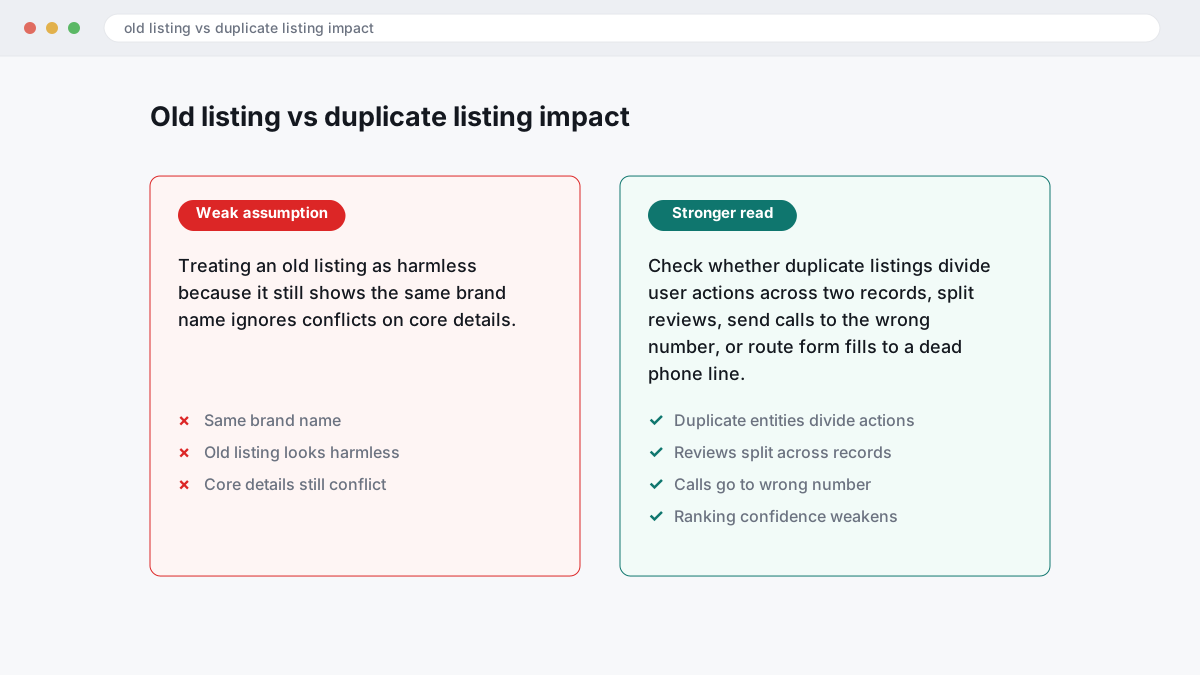
The common mistake is treating an old listing as harmless because it still shows the same brand name. That fails once duplicate listings start dividing user actions across two records: one Google Business Profile gets the clicks, another holds older review profiles, and a third directory entry still routes form fills or calls to a dead phone line. In BGR Review's dataset of 1,485 businesses observed from February to July 2026, trades businesses with complete enquiry-source data attributed 70-80% of calls and bookings to a Google Business Profile or Yelp listing, which means bad listing data can hit conversions before you notice any ranking drop.
A move or rebrand makes this worse. The old address can stay live in structured citations for months, especially where a directory keeps its own database rather than pulling the change from your site, so Google keeps seeing two versions of the same business and customers keep driving to the wrong place. The right move is to consolidate the main entity first: correct the live website details, fix the primary Google profile, remove or merge duplicates, then update the high-visibility citations that still appear for branded search.
How should you audit NAP citations before you touch a single listing?
A useful citation audit starts with one source-of-truth record, then checks the places Google and your customers trust first. Audit before you edit anything, because one pass will expose duplicate listings, ownership gaps, Name Address Phone consistency issues and stale structured citations before you create fresh conflicts.
Editing listings as you find them fails for a simple reason: you end up fixing symptoms, then an older record overwrites the new one or a duplicate keeps ranking for branded search. Build a master sheet first with your legal business name, preferred trading name if you use one, postal address format, main phone number, website URL, and notes on call tracking so your marketing number does not replace the public primary number everywhere. In our own cleanup workflow at BGR Review, the same sheet also carries review-profile URLs for Google, Yelp, Trustpilot and Clutch, because citation confusion often sits beside review-profile confusion and costs clicks, calls and form fills.
Check these sources in order before touching a single listing.
| Source | What to verify | Status to log |
|---|---|---|
| Google Business Profile and Google Maps | Primary NAP, duplicates, wrong pin, ownership access | Correct, duplicate, wrong, claimed, pending update |
| Your website | Header, footer, contact page, location pages, contact schema | Correct or wrong |
| Major directories and maps apps | Apple Maps, Bing Places, Yelp, Facebook, sector directories | Correct, duplicate, claimed, pending update |
| Branded search results | What appears for your business name plus phone or address | Log every visible mismatch |
This audit works because it gives you fix priority before you spend a week inside low-value directories. If you later hand the job to a provider, including BGR Review, that spreadsheet is what reduces wasted paid time and shows where manual intervention is still needed because some platforms update fast while others sit in pending review for days or weeks.
How do you fix NAP inconsistencies without wasting weeks on low-value directories?
Fix your site first: update the visible NAP on your contact page, footer and location pages, then correct your website contact schema so your source record matches everywhere else. Update Google Business Profile next, then your core structured citations and duplicate listings. Only once those records are stable should you decide whether deeper directory cleanup is worth more time or spend.
The wrong approach is submitting your details to every directory you can find on day one. That fails because old records keep feeding bad data back into the ecosystem, and a duplicate Google Business Profile or duplicated directory page can split reviews, map signals and calls while you are adding fresh listings on top. Start by fixing the source records you control, then suppress or merge duplicates before you touch aggregators or second-tier directories. That order works because Google Business Profile, your website contact schema and your strongest structured citations are the references customers and platforms check first.
If you are doing the work yourself, use a short sequence. Correct the website and schema. Update Google Business Profile, including the primary phone and address format you want repeated elsewhere. Claim and fix the major structured citations that actually rank for branded searches in your market, then remove or merge duplicate listings on those same platforms before creating anything new. Google Business Profile Help allows edits, closures and duplicate reporting, but merged or reinstated profiles can keep old fields attached for a while, so check the live profile rather than trusting the dashboard alone.
Recheck the major listings after 2 to 6 weeks because publisher sync delays are common. A directory may show the new phone quickly while still holding the old address in the page source, or an aggregator-fed site may republish stale data after your first correction. That is the point where paying for deeper cleanup can make sense. If the local pack is already improving and branded search clicks are landing on the right profile, stop after the core fixes instead of burning weeks on low-value directories.
Which citation sources deserve manual work, and which ones are mostly busywork now?
Put your manual effort into sources people actually use and platforms that feed other platforms: Google Business Profile, major maps apps, a handful of core directories, and credible local mentions. Submitting your NAP to hundreds of obscure directories usually creates admin work without improving rankings, click-through rate or conversions.
The wrong approach is volume for its own sake. A pile of low-traffic structured citations on forgotten business directories rarely changes local pack visibility, because those listings have little user demand and weak trust signals; the right approach is to fix the places that can send calls, bookings and branded search directly, then decide whether anything else is worth the time. That is the order BGR Review uses before recommending paid cleanup, because a wrong Apple Maps, Yelp or Bing Places listing causes customer confusion faster than a stale listing on a directory nobody visits.
This is the priority split to use before you spend money or assign a team member to manual edits.
| Source type | Manual priority | Why it matters now |
|---|---|---|
| Google Business Profile, Apple Maps, Bing Places, Yelp | High | Visible in search and maps, affects calls, route requests and map-pack click-through. |
| Core structured citations on major directories | Medium | Reinforces identity and can resolve conflicting NAP data. |
| Unstructured citations on chamber sites, local news, local blogs | Medium to high | They add local legitimacy and can support branded search demand when the mention is real and relevant. |
| Long-tail directories and scraper sites | Low | Usually busywork unless they rank for your brand name or show wrong contact details. |
Data aggregators still help distribution, but they are a feed, not a magic fix. You update the source, then publishers may take several weeks to refresh, and some never overwrite a bad record without manual intervention, which is why BGR Review usually treats aggregator submission as a support step rather than the main job.
When is a citation service worth paying for instead of doing cleanup manually?
A citation service earns its keep when you need fast, broad distribution across lots of listings. It does not solve duplicate profiles, business moves and rebrands, or ownership disputes; those still need manual cleanup or specialist help.
The wrong buy is a listings tool because you assume it will fix everything. What it usually fixes is distribution of structured citations: your name, address, phone and opening hours pushed to directories and data aggregators for about $20 to $100+ a month, depending on the provider and location count. That helps when your website, Google Business Profile and major review profiles already agree and you just want cleaner coverage that can support map-pack click-through and reduce customer confusion.
The right call is manual work when the entity itself is broken. A service tool will often keep syndicating the wrong record if the source problem is an old suite number, a duplicate Google listing, a former tracking number, or a rebrand that left two business names live in aggregator feeds. That is where staff time buys control: you can claim listings, request merges, update website contact schema, keep the old brand closed correctly, and stop bad data feeding local pack visibility problems and wasted calls.
This comparison is usually enough to decide whether you should pay for software, use internal staff, or leave the long tail alone.
| Route | Best for | Usually struggles with |
|---|---|---|
| DIY manual cleanup | Duplicates, ownership fixes, moved locations, rebrands | Slow staff time, weak scale across dozens of directories |
| Paid citation service | Fast distribution to structured citations and data aggregators | Duplicate merges, suspended profiles, messy ownership history |
| Specialist help | Cases where Google, directories and old brand records conflict | Overkill for a simple one-location update |
BGR Review sells review growth and pay-after-success removal at $449 per removed review link with $0 upfront, so this is one case where the cheaper route is often correct: if your only issue is broad citation distribution, a basic listings platform can be enough.
How should multi-location brands keep NAP accurate without breaking location-level trust?
Multi-location citation work is a governance job, not a bulk-cleanup job. Each branch needs its own controlled source record for name, phone, URL and categories, plus one approval route for moves, number changes and franchise naming exceptions.
The wrong approach is one brand spreadsheet with a head-office phone number, one homepage URL and a loose list of store names. That fails because your store locator, location pages and Google Business Profile data drift apart by location, and a citation audit then finds the same brand presented three different ways across maps, directories and review profiles. Google Business Profile also expects the real-world business name on the sign under its business name guidelines, so franchise operators who add extra descriptors or city terms without approval create trust problems at the listing level and local pack confusion at the customer level.
The right approach is a governed source record for every location, with four approved fields locked first: trading name, direct local phone, canonical location URL and primary category. Match those fields exactly across the location page, store locator and Google Business Profile for that branch, then keep exception fields outside the live record until someone approves them. That sounds fussy, but it stops the common failure where a call-tracking swap updates the website, the GBP keeps the old number, and calls, bookings and form fills split between two records.
Run changes through one workflow. A moved store needs address, map pin, opening hours and duplicate-listing checks in the same ticket; a franchise naming exception needs proof of signage before publication; a phone change needs the citation audit reopened after the website and GBP go live, because long-tail directory updates often lag and still need manual intervention. If you pay a vendor for cleanup, this is the part worth paying for. Blind bulk submissions are cheap busywork.
What changes when the business is service-area only, has moved, or has rebranded?
Service-area businesses, moves and rebrands create the messiest citation problems because old identity data stays live long after you update the obvious places. Cleanup fails when you change one record and ignore legacy phone numbers, former addresses, old domains and each platform's own rules.
If you run a service-area business, follow Google Business Profile rules first: hide the street address if customers do not visit it, then keep the same service area logic on your website and major directory listings. The common mistake is publishing a home or warehouse address on some structured citations while keeping it hidden on Google Business Profile; that mismatch confuses the map pack, hurts click-through rate, and creates call-routing problems when customers drive to a place you never meant to show.
Most guides imply one update fixes a move. It does not. A rebrand or relocation leaves old phones, old URLs, duplicate listings and unstructured mentions on review profiles and local directories, and data aggregators can keep re-feeding that stale record for months. A 301 redirect helps your website keep relevance and branded search demand, but directory records still need direct edits, merges or suppression. The right order is simple: map every old identity signal first, update Google Business Profile and the site, redirect old URLs, then work through the core listings where conversions actually happen. If your move is clean and limited to a handful of profiles, DIY is usually cheaper than hiring BGR Review for adjacent reputation work.
What usually changes first after citation cleanup, and what should you do next?
After citation cleanup, the first gains usually show up in cleaner branded search results, fewer wrong calls, and fewer conflicting listings. Once the records settle, the bigger lift usually comes from tightening your Google Business Profile, building stronger review profiles, and improving the page that represents each location.
Expecting cleanup alone to move rankings fast is the wrong approach, because citation work mostly removes friction rather than adding a strong new ranking signal. What changes first is customer-facing: your old number stops surfacing, duplicate listings get suppressed, and branded search stops sending people to stale directory pages. Give it 4 to 8 weeks, then check whether local pack visibility is inching up, whether calls are reaching the right line, and whether the duplicate Google Business Profile or stale directory result has actually dropped out.
The right next step is to strengthen the assets Google still leans on most. Set the best-fit primary and secondary Google Business Profile categories, make sure your location page matches the live NAP and contact schema, and push fresh reviews to the review profiles that customers actually read before they click. That is where cleanup starts to pay off. If you want help with the review side after the cleanup phase, BGR Review sells verified review packages with a 30-day free replacement guarantee, and that work usually does more for click-through, calls and bookings than another round of low-value directory edits.
What does a practical citation audit checklist look like for an owner or marketer?
Use a checklist that covers source records, priority listings, duplicate listings, access status and recheck dates. Build it as a handoff document, not a one-off cleanup sheet, so the work survives staff changes, agency swaps and the next move or rebrand.
A one-time citation audit fails because nobody records what was changed, who could edit it, or when a platform actually published the fix. Three months later, the old phone number reappears on a directory, a duplicate Google Business Profile starts pulling reviews, and your map-pack click-through drops because the wrong address still shows on branded searches.
Keep the checklist simple and reusable:
- Source of truth: legal business name, trading name, primary phone, address, opening hours, service area.
- Website contact data: header, footer, contact page and your website contact schema.
- Priority profiles: Google Business Profile, Apple Business Connect, Bing Places, key review profiles and the top directories for your category.
- Duplicate listings: live URL, platform, status, merge/remove request, screenshot evidence.
- Control fields: owner access, edit submitted date, live date and recheck date.
- Evidence: screenshots for disputed duplicates, moved addresses, old phone numbers and any “permanently closed” label.
This format works because the next person can pick it up without guessing. If you later hand the job to a service, a clean audit cuts wasted time faster than any bulk-submission tool, and it gives you proof when Google or a directory keeps stale data live after the first edit.
Where to go from here
Start with a citation audit that checks four things in order: your Google Business Profile, your website contact details and schema, duplicate listings, and the few directories that feed real customer actions. That process usually exposes the actual source-of-truth conflict fast: an old address on the site, a duplicate Google listing with the wrong phone number, or stale data still sitting on core profiles and review platforms.
Expect the first visible changes to be cleaner branded search results, fewer wrong-number calls, and fewer customers landing on old addresses. Ranking movement in the local pack can follow, but some updates propagate slowly through directory networks and data aggregators, and a few records still need manual fixes. If you run multiple locations or a recent move or rebrand, governance matters more than submitting another batch of listings.
If you want help, BGR Review handles citation and profile clean-up as a prioritised audit first, then fixes the conflicts that can affect calls, bookings and form fills before any long-tail directory busywork. Once those core records are clean, review growth and GBP work usually give you the better return.