


Quick answer
Indeed’s 2026 company review changes matter if you hire in public and care about employer reputation, but they did not give employers control over what stays live. Indeed still removes reviews for policy breaches under its employer and review guidelines, not because a post is harsh or damaging. The practical change is in how you manage the profile: catch risky reviews early, save evidence before you flag, and respond quickly to genuine criticism. A documented dispute has a real chance when content is discriminatory, threatening, promotional or clearly not first-hand; repeated generic reports usually fail.
This page is written from live review management work, not from help-centre paraphrasing. Since 2019, BGR Review has worked across Google, Trustpilot, Yelp, Clutch, TripAdvisor and employer-review profiles, and the same pattern keeps showing up on Indeed: weak flags fail because they argue with opinion instead of proving a rule breach.
We sell review acquisition and negative review removal services, so the commercial interest is clear. We also know the limits: no agency can force an Indeed takedown, and where removal work is justified on other platforms, our model is still pay after success at $449 per removed review link with $0 upfront.
What changed in Indeed company reviews in 2026
As of 2026, the Indeed company review update is mainly about how Indeed presents, moderates and lets employers manage reviews, not a new right for employers to delete criticism they dislike.
The changes most employers care about fall into four buckets: the review submission flow, employer profile controls, moderation visibility and the standard for public responses. Indeed’s public help and policy pages are clear on the basics: employees and former employees can still post reviews, employers can still claim and manage their company page, and content still has to breach Indeed’s guidelines before moderation removes it. What the documentation does not spell out in much detail is how those pieces now shape profile perception once newer reviews surface more prominently in the review feed and response handling becomes more visible to jobseekers.
The practical shift is simple. Fresh review activity matters more than old star averages sitting deeper in the profile. If you recruit year-round, three or four negative reviews posted close together can affect applicant confidence before a candidate ever reaches your careers page, especially if your employer profile shows no reply, no updated company information and no sign that anyone is actively managing it.
That is where a lot of generic advice fails. Indeed still does not operate like a pay-to-clean platform, and no agency, including BGR Review, can force removal of lawful negative opinion; our removal work across platforms only runs on a pay-after-success basis at $449 per removed link with $0 upfront, and Indeed cases still turn on policy breach, evidence and timing rather than preference.
How Indeed company reviews work now
Indeed company reviews are employee and former employee reviews attached to an employer profile, usually covering pay, culture, management, work-life balance and interview experience. That sounds obvious, but it changes how you should read them: these are workplace claims and opinions aimed at candidates, not customer-service complaints aimed at buyers. Since BGR Review has operated across New York, London and Thornhill since 2019, this is one of the first distinctions we make before anyone spends money on the wrong platform problem.
Indeed sits in a different lane from Google Business Profile or Trustpilot. Google and Trustpilot mainly reflect buyer experience, so their moderation systems look harder at transaction context, fake engagement and consumer harm; Indeed and Glassdoor revolve around employment experience, which means more latitude for subjective opinion unless a review breaks a named content rule. If you claim your company page, you can usually update business details and respond where the feature is available, but you do not own the reviews themselves.
That ownership point matters. Indeed hosts the profile, the reviewer supplies the content, and removal usually depends on a policy breach rather than your disagreement with the review. That is the same practical reason BGR Review only offers review removal on a pay-after-success basis at $449 per removed link with $0 upfront: no agency can force a platform to delete a lawful negative opinion.
| Platform | Reviewer type | Public response | Typical removal basis |
|---|---|---|---|
| Indeed | Employees, ex-employees, candidates | Usually limited employer controls after profile claim | Policy breach, abuse, privacy, impersonation |
| Customers or public users | Yes, via Google Business Profile | Google Business Profile review policy breach | |
| Trustpilot | Customers or service users | Yes | Unsupported experience, harmful or prohibited content |
| Glassdoor | Employees, ex-employees, candidates | Employer response tools available | Policy breach, confidentiality or eligibility issues |
What Indeed still allows and what it will remove
Indeed removes a company review for policy reasons, not because it is negative, and a bad opinion on its own usually stays live unless it breaches Indeed’s content standards or community rules.
If you want a review taken down, the argument has to be about the content itself. The grounds that usually matter are harassment, hate speech, threats, private personal data such as phone numbers or addresses, impersonation, and content that does not appear tied to a real workplace experience if Indeed’s policy treats it as irrelevant or misleading. Since 2026, that distinction matters more than tone. A hostile review can still survive if it stays inside policy.
What usually remains published is the material employers dislike most: criticism of management, complaints about low pay, comments about poor culture, workload, favouritism, weak training, or a harsh description of leadership. Those points may feel unfair, exaggerated or one-sided. Indeed will often leave them up if they read like subjective workplace opinion rather than abuse or deception.
This is where expectations go wrong. A lawful negative review that does not breach policy is not something any agency can force Indeed to remove, including BGR Review. If you need removals on other platforms, our model is separate and clear: $0 upfront and $449 per removed review link after success, but that does not override Indeed’s rules or create a guaranteed outcome where no policy breach exists.
Can you remove an Indeed review
Yes, you can remove some Indeed reviews, but only when they breach Indeed’s content rules and moderation accepts the report.
Indeed does not remove employer reviews because they feel unfair, harsh or commercially damaging. The workable routes are policy-based: self-service flagging inside the employer profile, support escalation where Indeed gives you a live path to add context, or outside help to turn a weak complaint into a documented submission that points to a specific rule breach instead of arguing with the reviewer’s opinion.
| Route | Who should use it | Expected effort | When it tends to fail |
|---|---|---|---|
| Self-service flagging | You have one review with a clear policy issue | Low | The report says “false” or “unfair” but cites no rule |
| Employer support escalation | You need to add evidence or explain impersonation, threats or confidential data | Medium | No support path is available, or the issue is subjective criticism |
| External help preparing evidence | You want a tighter submission pack and a cleaner escalation record | Medium to high | The review still fits platform policy, so discretion stays with Indeed |
BGR Review sells review removal on other supported platforms on a pay-after-success basis: $0 upfront and $449 per removed review link. Indeed is different. Even with a stronger evidence file, the outcome still turns on policy fit and Indeed’s own moderation decision.
How to flag an Indeed review the right way
A strong Indeed flag points to a specific written policy breach and quotes the exact words, image or personal detail that breaks that rule.
Start by saving the review properly. Copy the review URL, take full screenshots showing the date and profile context, and keep any internal record that proves the claim is impossible or discloses private information. Then map the problem to a named category in Indeed’s review rules, such as harassment, discrimination, threats, impersonation, confidential personal information or promotional content, rather than calling the post “unfair” or “false”.
Your report should be short and literal. Quote the sentence you want moderated, identify the policy issue, and attach the evidence that supports that point. If a review says “HR manager Jane Smith at 14 King Street told me to fake payroll numbers”, your flag is stronger when you isolate the personal information or unverifiable accusation and explain why that element breaches the rule.
Weak flags usually fail for one reason: they argue about opinion. A line like “management was chaotic and pay reviews were poor” may hurt, but it usually stays up because it reads as subjective experience. The reports that stall most often are the ones that say a review is defamatory without tying any sentence back to a published Indeed standard.
Submit one clean report, then wait for moderation instead of filing duplicates the same day. Obvious breaches such as doxxing or threats can move quickly, sometimes within a few days, while subjective disputes often sit longer or close with no action. That timing gap matters more than persistence.
What makes an Indeed review hard to challenge
An Indeed review is hard to challenge when your objection is about tone, anonymity or unfair opinion rather than a clear breach of Indeed’s content rules.
That is where most employer complaints fail. A reviewer can sound hostile, leave a one-sided account, or post under a name you cannot match to a current employee, and none of that automatically proves a policy violation. Since the 2026 update cycle, Indeed still looks for something concrete: personal data, abusive slurs, impersonation, threats, or a factual impossibility you can tie to the platform’s policy language.
The evidence problem is the real blocker. If you cannot show that the review names private medical information, posts someone’s phone number, pretends to be another person, or describes an event that could not have happened at your company, Indeed often defers to the reviewer’s account of their workplace experience. “This is false” on its own usually goes nowhere, and repeated flags with slightly reworded explanations rarely change that outcome.
Use one rule in practice: challenge process breaches and clearly prohibited content, then answer lived-experience criticism publicly if the post stays. That saves internal time, which matters if your team is already handling Google Business Profile, Trustpilot or removal work elsewhere, where BGR Review charges $449 per removed link only after success and $0 upfront.
How to respond to negative Indeed reviews after the 2026 update
A good Indeed response in 2026 is written for the next applicant who reads the thread, not for the reviewer who already posted it.
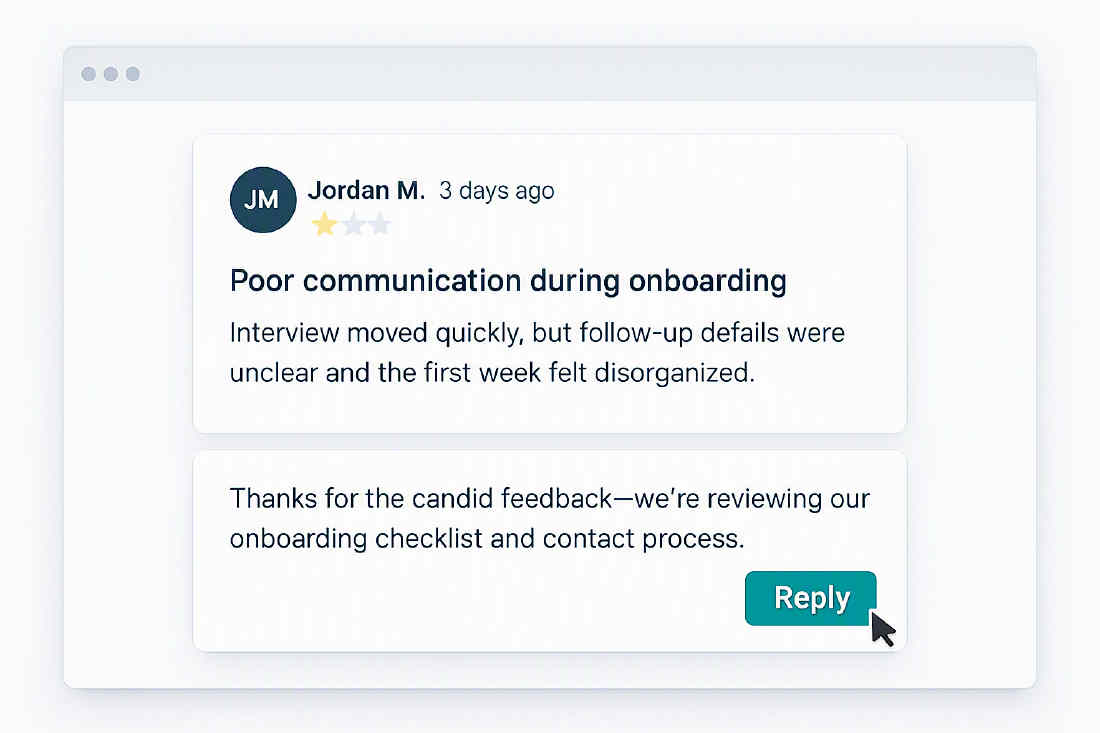
Keep it tight. Four moves usually work best on employer profiles we audit at BGR Review: acknowledge the issue, correct any factual point you can verify, state the real policy or process in plain English, and offer an offline route such as HR or a named support inbox. If a reviewer says pay was late, for example, your reply should say when payroll runs, who handles discrepancies, and where they can send details.
Legal threats, HR jargon and copied templates usually do more damage than the review itself. A line like “this matter has been escalated internally in line with company protocol” reads evasive. So does “remove this false statement immediately”. Indeed leaves a lot of opinion-based criticism live under its community rules, so your public reply often becomes the only thing you still control.
| Style | Length | Tone | Likely effect on candidates |
|---|---|---|---|
| Defensive | 120+ words | Argumentative, legalistic | Makes the employer look thin-skinned and hard to work with |
| Template reply | 40-60 words | Cold, generic | Signals low trust if the same wording appears under multiple reviews |
| Strong response | 60-90 words | Calm, specific | Shows process, accountability and a real person behind the profile |
If you need outside help, BGR Review handles review response strategy alongside removal work, but the cheaper route is often internal: one trained owner, HR lead or marketing manager answering within 2-5 business days with the same structure every time.
What actually happens after you report a review
After you report an Indeed review, the usual path is automated triage first, possible manual moderation second, then a brief decision that often says little beyond remove, no action, or nothing further.
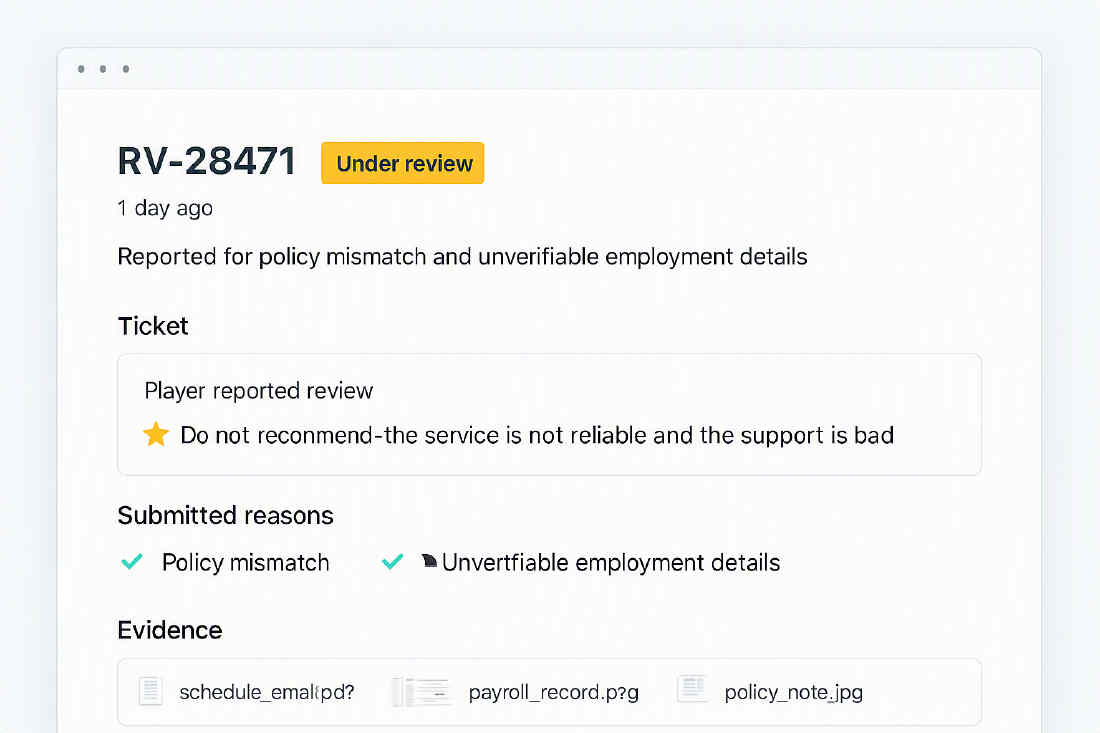
The field that decides most reports is the one where you tie the review text to a named Indeed rule. A short note such as “paragraph two includes a private medical detail about a manager” or “line one contains an insult aimed at a named employee” gives moderation something concrete to test. Generic complaints about reputational harm, unfairness, or “this is false and damaging to our brand” usually go nowhere. Since 2019, across review and removal work from our New York, London and Thornhill teams, that pattern has been consistent on Indeed and on other moderation-led platforms.
The day-by-day reality is uneven. Obvious abuse, threats, hate speech, or privacy issues can move faster because they fit a policy bucket quickly. Disputed facts move slower. If the complaint turns on who was right in an argument about pay, scheduling, management conduct, or why someone left, the platform often refuses to adjudicate the employment dispute and the report drifts without a useful explanation.
Manual review does happen, but you should not expect a detailed ruling or a platform-style case file. You usually get a simple outcome: content removed, content left live, or a request that effectively goes quiet after the initial submission. That is why repeated re-reporting rarely fixes a weak first report.
If the review survives moderation, stop treating the flag as your main lever. Your next best move is usually a measured public response, then a plan to improve review recency with compliant review generation elsewhere in your stack. If you need help on the removal side, our model is $0 upfront and $449 per removed review link, pay after success, because no honest operator can promise that Indeed will remove a subjective complaint.
How Indeed reviews affect hiring and brand perception
Indeed reviews shape hiring outcomes because candidates read them as a live check on what your workplace is like, and recent, specific criticism tends to carry more weight than older generic praise.
That matters at two points you feel quickly: application quality and interview acceptance. A page with fresh complaints about pay, management behaviour or scheduling can push stronger candidates to drop out before they apply, or to decline an interview after they compare your Indeed profile with your LinkedIn page and your public customer ratings. Since 2019, BGR Review has worked with brands that looked healthy on Google and Trustpilot but still had hiring friction tied to unresolved employer reviews.
Your reputation now sits across separate surfaces at the same time. Indeed affects hiring trust, Google Business Profile affects local credibility, Trustpilot or Yelp affects customer proof, and LinkedIn shapes the brand narrative your recruiters rely on. If those signals conflict, candidates usually believe the source closest to the decision they are making, which means Indeed often beats polished employer branding copy.
A practical example is common: you may hold a 4.9 rating from customers on another platform, yet lose candidates because your Indeed page shows repeated claims about poor management and below-market pay with no employer response underneath. That is why review monitoring should sit in one process across HR and marketing, not in two separate inboxes. If you split it, the customer side gets fixed while the hiring side keeps leaking.
Indeed vs Glassdoor vs Google for reputation risk
Indeed and Glassdoor drive talent reputation, while Google shapes customer trust, map visibility and local conversion.
If a negative post stays live on Indeed or Glassdoor, the damage usually shows up in applicant quality, interview drop-off and offer acceptance. If the same brand takes a hit on Google Business Profile, you feel it faster in calls, direction requests and lead volume. That split matters when you are deciding where to spend budget, especially if you already know BGR Review only works on removals at $0 upfront and $449 per removed review link after success.
| Platform | Who usually reviews | Audience and response options | Moderation and commercial risk |
|---|---|---|---|
| Indeed | Current or former staff, often anonymous or lightly verified | Jobseekers; employer responses are possible on profile reviews | Policy-led moderation on harassment, personal data and conflicts; visible negatives hurt hiring more than sales |
| Glassdoor | Employees, candidates and ex-employees inside a career context | Jobseekers and candidates; employer response tools available | Hard to remove when the post is opinion rather than a policy breach; reputational drag sits in recruitment funnel |
| Customers or anyone with a Google account | Shoppers, local searchers; owner replies through Google Business Profile | Google Business Profile review policy is stricter on spam and off-topic content; visible negatives can cut conversion immediately |
A common misstep is pouring money into Google clean-up while leaving employer-review pages untouched for months. We see brands with a defended Maps listing and a weak hiring pipeline because candidates still find a one-star run on Indeed or Glassdoor first. If you are hiring and selling at the same time, triage both lanes together or your recruitment problem will keep feeding your service problem.
What most employers get wrong after an Indeed review update
The biggest mistake after an Indeed review update is treating every negative post as a removal case instead of sorting it into three buckets: removable, answerable, or operationally useful.
That triage changes your next step. A post that appears to breach Indeed’s content rules, such as threats, hate speech, personal data, or obvious impersonation, belongs in the flagging queue. A harsh but subjective complaint about management, pay, scheduling, or culture usually needs a measured employer response. A cluster of similar complaints about one manager or one shift pattern belongs with HR or operations, because no flag will fix the pattern behind it.
Another common error is pushing staff to leave fresh reviews right after a bad post lands. That can create an unnatural burst. The policy wording differs across platforms, but sudden review velocity always draws attention on employer and consumer review sites, and it often makes the profile look managed rather than trusted.
Legal escalation gets overused as well. Unless the review contains a clear policy breach or unlawful content, letters from solicitors rarely move moderation faster than a clean evidence-led report. You will usually get a better long-term result by reviewing the company page weekly, logging each new post in one sheet, and giving one owner in HR or marketing authority to choose flag, respond, or monitor within 7 days.
The practical monitoring workflow for Indeed in 2026
A workable Indeed monitoring workflow in 2026 is simple: monitor, classify, document, respond, escalate only where Indeed’s content rules are clearly breached, then review the pattern every month.
If your brand is actively hiring, check your Indeed profile weekly. If you are not hiring, a monthly check is usually enough, but capture any review mentioning personal data, threats, doxxing, or direct allegations the same day. That same-day step matters because Indeed profiles, employer pages, and review visibility can change before you have a clean record of what was posted.
Use a basic log with five fields: review date, rating, issue type, policy-breach yes or no, and action taken. Split reviews into three buckets: response only, internal HR follow-up, or flag for moderation. Most employers waste time escalating opinion, and Indeed usually leaves opinion alone unless it crosses into harassment, privacy exposure, impersonation, or another named rule in its review guidelines.
One avoidable loss shows up repeatedly in live ORM work: teams fail to screenshot the full review text, profile URL, reviewer handle if visible, and timestamp before edits, deletions, or profile changes muddy the original issue. That missing record kills a lot of follow-up because the strongest evidence is often the first capture, not the later version. We tell clients this before any removal work because our pay-after-success model on removals starts at $0 upfront and $449 per removed link, so weak documentation wastes everyone’s time.
Keep Indeed in the same dashboard as Google Business Profile, Trustpilot, and your review-acquisition work. That lets one team see whether the problem sits in hiring, such as manager conduct or pay complaints, or whether the same wording starts appearing in customer reviews as well. If both tracks move at once, treat it as an operating issue first and a platform issue second.
When to handle Indeed yourself and when to get help
You should handle an Indeed review yourself first when the post appears to breach Indeed’s review guidelines and you can prove the breach with specific evidence.
Start with the platform route if the problem is clear: harassment, threats, disclosure of private information, impersonation, or a review that plainly does not describe a real employment experience. Attach the document or screenshot that matches the breach. A dated roster, termination record, internal ticket, or copy of the exposed personal data carries more weight than a general claim that the review is “false”.
Outside help becomes useful when the pattern is messier. That usually means repeated reviews using similar wording across locations, an Indeed issue arriving at the same time as Google Business Profile or Trustpilot complaints, uncertainty over how to frame an escalation against a named policy, or no one in your team owning responses and weekly monitoring. Those are workflow problems as much as moderation problems.
BGR Review is a commercial provider, so it helps to say that plainly. Since 2019, with offices in New York, London and Thornhill, BGR Review has provided verified review services on major platforms and negative review removal on supported platforms; removal work is pay after success at $449 per removed review link with $0 upfront, and review packages carry a 30-day free replacement guarantee.
If the Indeed post is lawful opinion and stays within platform rules, a reputable provider should tell you that removal is unlikely. The right advice then is to respond properly, improve review recency with compliant review generation on platforms that allow it, and rebuild profile balance instead of paying for a promise no one can force Indeed to keep.
Where to go from here
The 2026 changes on Indeed leave you with the same hard limit as before: you cannot force the platform to remove criticism just because it hurts. What changed is the cost of moving slowly. A weak review left unanswered for three weeks shapes candidate perception fast, especially when your newest employer feedback sits beside fresher Google or Trustpilot sentiment.
Sort every new Indeed review into three buckets: remove, respond, or monitor. Remove means a clear policy breach with evidence attached on day one. Respond means the post stays live, so your reply needs facts, tone control, and no defensiveness. Monitor means you log the issue, watch for repeats, and check whether the same complaint is spreading across hiring and customer platforms.
Your next step is simple: audit the last 90 days of reviews across Indeed, Google Business Profile, Trustpilot, and Glassdoor, then mark where DIY has stalled. If you need help, BGR Review’s negative review removal service works on a pay-after-success basis at $449 per removed review link with $0 upfront, and our review management service helps with evidence, escalation, and cross-platform response planning.