


Quick answer
Defamation is a false statement presented as fact that harms a person’s or company’s reputation. In a review dispute, a lawsuit usually makes sense only if the post alleges verifiably false facts, you can show real damage, and the review will not come down through the platform’s own reporting process or direct resolution first. Opinion, exaggeration and vague insults usually do not qualify. The legal test differs by country and, in the US, by state; UK rules differ again. Preserve screenshots, URLs and dates before you act. This is general information, not legal advice.
We deal with false-review disputes every day at BGR Review, across Google, Trustpilot, Yelp, Clutch and TripAdvisor, and the pattern is usually clear within the first document pack: weak claims get rejected because the business sends a screenshot and a complaint, but no proof tying the review to a false factual allegation or a non-customer. The platform form matters, the wording matters, and the missing field is often the timeline showing what happened before and after the post.
That is the part most generic legal pages skip. We sell review and removal services openly, including pay-after-success removals at $449 per removed review link with $0 upfront, so this guide focuses on the commercial reality of defamation cases: what evidence changes outcomes, when a solicitor or attorney letter helps more than filing, and when court is the expensive wrong move.
How defamation works
Defamation in a review dispute usually means a statement presented as fact is false, damages your reputation, and is not protected by a legal privilege. A one-star post saying “service was slow” is usually opinion; a post saying “this company forged invoices” can cross into libel if untrue and harmful. Online reviews are usually treated as written defamation, and the first practical check is whether the wording alleges a verifiable fact.
Most cases should start with platform reporting, because court action often takes months and legal fees can run into the thousands before you even reach disclosure. Google Business Profile’s prohibited and restricted content policy, Yelp’s content guidelines, and Trustpilot’s reporting flow can remove some policy-violating reviews without a court judgment. If you need outside help, BGR Review handles removals on a pay-after-success basis at $449 per removed review link with $0 upfront.
Defamation and false reviews: when a lawsuit makes sense
Defamation in a false-review dispute matters when a review states false facts that damage your business and the platform route does not fix it.
This guide is for owners and marketing teams dealing with online reviews on Google, Trustpilot, Yelp, Clutch or TripAdvisor, not celebrity rows or press-law disputes. The practical question is narrower: do you have a false statement, enough evidence to prove it, and a better route than going straight to court.
Rules change by country and by platform. US defamation law, UK libel rules, Google Business Profile review policy, and the FTC’s endorsement rules do not line up perfectly, and the UK’s fake-review enforcement changed again under the DMCC Act. This is general information, not legal advice.
What defamation means in a false-review dispute
Defamation in a false-review dispute means a review makes a false statement of fact that harms your reputation, and because the review is written, courts usually analyse it as libel rather than slander. The core split is factual allegation versus value judgment. A line such as “they forged invoices” claims a specific act that can be checked against records, while “terrible service” reads as opinion, even if it is harsh. Google’s Business Profile review policy also separates prohibited deceptive content from ordinary customer criticism, which is why a legal complaint and a platform complaint often reach different outcomes.
The wording matters more than the star rating. If a reviewer says your clinic billed for treatment that never happened, your job is to test whether that is objectively false and damaging, not whether it feels unfair. If the post only says your staff were rude, a defamation claim is usually weak.
The legal elements you usually must prove
A defamation claim usually turns on four points: the statement was published to someone else, it was false, it caused measurable harm, and the reviewer acted with the level of fault your law requires.
Publication is the easy element in a review dispute. A Google review on your Business Profile, a Trustpilot post on your company page, or a Yelp review visible to the public is already “published” because other people can read it; Google Business Profile’s review system makes that point straightforward. The harder fight is usually falsity. “I waited 40 minutes” may be disputed, but “this company stole my deposit” is a concrete fact claim that can be proved true or false.
Harm means more than annoyance.
Fault is where the standard can move. Private businesses often argue negligence, meaning the reviewer failed to take reasonable care with the truth, while public figures or reviews tied to public-interest issues may have to meet a higher standard such as actual malice. The exact test depends on country and court, so treat this as general information, not legal advice.
False fact versus protected opinion in review language
A court usually treats a review as potentially defamatory when it states a specific fact that can be proved true or false, while loose opinion, insult, or obvious exaggeration often gets more protection. “They billed me twice on 12 May” is a factual allegation because invoices, card records, and your CRM can confirm or disprove it. “Rip-off artists” may read as opinion, especially if the rest of the post signals anger rather than a concrete event.
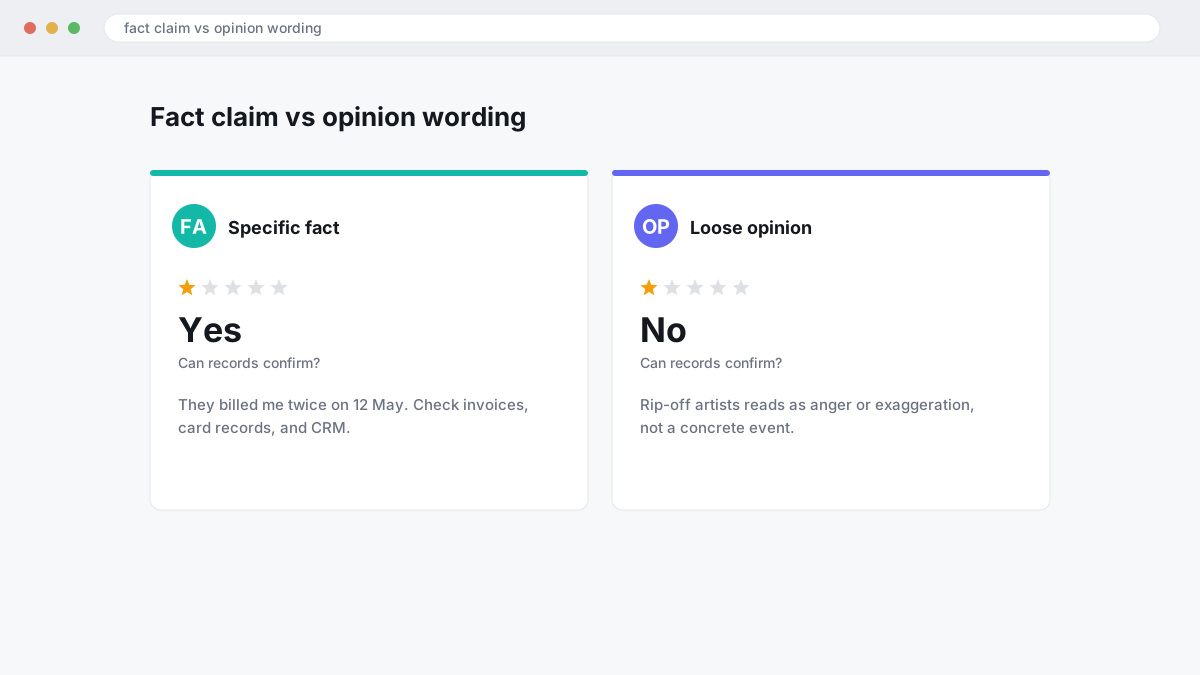
If you plan to challenge a review, save the evidence in a way that preserves context. Your screenshot should show the full text, the star rating, the username, and the date posted, because platforms and lawyers both reject cropped images that hide whether the statement sat inside a one-star rant or a detailed factual complaint. Google Business Profile and Trustpilot both assess the review as published, not as a quote lifted out of context, so a partial screenshot weakens your position fast. In our workflow, weak evidence packs usually fail because the business proves the review hurt, but does not prove the factual claim was false or even exactly what was posted on that date.
Libel, slander, and why online reviews are usually libel
Libel covers defamatory statements fixed in writing or another recorded form, while slander covers spoken statements that are not permanently recorded. A review posted on Google, Yelp, Facebook or Trustpilot will usually be analysed as libel because the words are published in text, stored by the platform and capable of being shared, screenshotted and quoted later.
That category matters because online review disputes usually turn on a written record. Google Business Profile reviews, Yelp reviews and Trustpilot reviews sit on a public page until removed; Facebook Recommendations also leave a visible publication trail. Your solicitor or platform complaint will usually attach the exact wording, date, profile URL and screenshots.
Video creates a messier edge case. A recorded testimonial that includes a spoken accusation can raise slander arguments about speech, but once the video is uploaded, captioned or transcribed, courts often treat it as libel or a mixed publication issue rather than pure slander.
Common defences that can defeat a defamation claim
Common defences matter because a review can damage your reputation and still be legally protected.
Truth is the first one to test. If a reviewer can show the substance of the statement is accurate, a defamation claim usually fails even if the post hurts bookings, leads or search click-through. A one-star Google review saying your staff missed a booked appointment can be ugly and expensive, but if your own calendar, call log or invoice shows the no-show happened, a lawyer's letter will not fix it.
Opinion is the next trap. "Terrible service" or "rude manager" often reads as judgment, not a provable false fact, especially when the review also sets out the customer's experience. Some jurisdictions also protect fair comment on matters of public interest, and privilege can apply to statements made in complaint processes, regulatory reports or court-related settings rather than a normal Trustpilot or Yelp post.
Test each defence before you threaten action. If truth or opinion is going to beat you, platform reporting and response strategy usually make more sense than filing suit.
What evidence businesses need before threatening legal action
An evidence pack for a false-review defamation dispute should prove three things in order: the statement is false, the review caused harm, and the reviewer’s connection to your business does not support what they wrote.
Start with the review itself. Save a full-page capture, not a cropped screenshot, plus the source URL, the date and time you captured it, the reviewer name, profile link, star rating, and any visible profile details such as photo history or other reviews.
- Invoices, booking records, delivery notes, job sheets, call logs, and signed service records that show whether the reviewer was ever a customer.
- Messages, emails, webchat transcripts, refund requests, and CRM notes that fix the reviewer-business timeline.
- CCTV logs, entry records, dispatch data, or staff rotas where the review claims an event that your records contradict.
- Short staff statements dated and signed by the people who dealt with the visit, call, or complaint.
Keep the pack chronological. A weak file dumps screenshots without explaining who said what, when the alleged interaction happened, and which record disproves it; that is one reason platforms reject complaints under policies such as Google Business Profile’s prohibited and restricted content rules. Before legal action, we usually ask for a one-page timeline that links the review date, the claimed incident, your records, and the business impact, because a threat with no timeline reads like pressure rather than proof.
Try platform removal routes before court
Platform reporting should usually come before a lawsuit because fake, impersonated, and policy-violating reviews can often be removed faster through the site’s own moderation process than through court.
| Platform | What usually works | What often fails |
|---|---|---|
| Google Business Profile | Flagging a review under Google Business Profile review policies, then escalating with evidence that the reviewer was never a customer or is impersonating a real person | Short complaints that only say “this is false” with no invoice record, booking log, staff note, or identity mismatch |
| Yelp | Reporting content that breaches Yelp’s content guidelines, especially threats, conflicts of interest, or clear fake-account behaviour | Arguments about unfair opinion, because Yelp gives broad room for subjective criticism |
| Trustpilot | Using Trustpilot’s flagging flow and, where relevant, asking for proof of genuine experience through its verification process | Generic disputes without order data, dates, or a reason tied to a named Trustpilot rule |
A failed takedown still helps if you may need legal action later. Save the review URL, screenshots, timestamps, case IDs, platform replies, and the exact policy ground you used. That paper trail shows you tried the cheaper route first and pinpoints what evidence was missing.
When suing is worth it and when it usually is not
A defamation lawsuit is usually worth considering only when a review makes a specific factual accusation, you can show it is false, the allegation is serious enough to damage trade, and the likely recovery or business need justifies legal spend that often runs into thousands before discovery, subpoenas, or expert work start.
| Scenario | Usual first move | Court value |
|---|---|---|
| “This clinic billed me for treatment I never had” and you have records showing no such person or visit | Preserve records, flag under the platform’s false or misleading content route, then get legal advice | Often worth assessing |
| Anonymous one-star post saying “terrible service” with no facts | Monitor, reply calmly, preserve screenshots and account history | Usually poor value |
| Review alleges criminal conduct, fraud, unsafe practice, or licensing breaches | Move fast on evidence and counsel | Highest priority |
Most owners overestimate what a claim fixes. A lone anonymous rating with opinion language often does less legal damage than the cost of identifying the poster, and platforms such as Google Business Profile and Trustpilot will not remove content just because it is harsh.
Country and platform rules vary, so treat this as general information, not legal advice. In the US you may also need to think about state anti-SLAPP laws; in the UK the seriousness threshold matters; and if the reviewer sits abroad, service and enforcement get harder before the case even reaches disclosure.
What actually happens after you flag a review and escalate
After you flag a false review, the real workflow is usually: lock the evidence, file the platform complaint under the right policy, send a formal notice to the reviewer or platform contact, then decide whether the matter justifies legal escalation.
Start by preserving more than a screenshot. Save the review URL, profile name, date stamp, star rating, business profile ID, and any proof the reviewer was never a customer such as order logs, booking records, CCTV timing, or support transcripts. Then report the post under the named rule that fits the facts, such as Google Business Profile’s prohibited and restricted content policy or Trustpilot’s flagging flow for harmful or illegal content. Weak flags get rejected because the form sees a conclusion like “this is defamatory” with no attached proof of falsity, impersonation, conflict, or non-customer status.
If the platform does nothing, the next step is usually a lawyer’s letter, not a court claim. A precise notice sometimes gets a better result because it gives a moderation team dates, records, and a litigation hold request in one pack. Anonymous-review cases often stall here; if the reviewer identity matters, counsel may need subpoena procedures to seek account or IP data. The end result varies: removal, no action, an edited repost, a settlement, or a longer court fight.
Anonymous, cross-border, and platform-immunity complications
Anonymous and cross-border review disputes are harder because you may need a court-backed identity order, a claim in more than one country, and a strategy that does not depend on suing the platform itself.
If the reviewer hides behind a screen name, a demand letter rarely solves the identity problem. You may need a subpoena in the US, a Norwich Pharmacal order in England and Wales, or another local disclosure route to make an intermediary hand over account data, IP logs, or sign-up records. That only works if the host kept useful data and the request matches its own process; Google Business Profile and Trustpilot usually want a policy-based removal case first, while a lawyer’s letter can help frame the disclosure request more clearly than a premature filing.
Cross-border cases add four frictions fast: jurisdiction, service, language, and enforcement. A reviewer in one country, a platform in another, and your business in a third can turn a simple false-review dispute into months of translation and service work before the merits are even tested. Platform immunity rules matter too: in the US, Section 230 of the Communications Decency Act often blocks claims against the site hosting user content, so your target is usually the reviewer, not the platform.
Defamation laws, consumer rules, and endorsement rules vary
Defamation, consumer-protection rules, and endorsement rules change by country and by platform, so the same review problem can create different risks in the US, UK, and EU. In the United States, an undisclosed paid endorsement can raise issues under the FTC’s Endorsement Guides and the FTC’s 2024 rule on fake reviews and testimonials, while a review that makes a false factual accusation about fraud, crime, safety, or professional misconduct may support a defamation claim. If you are weighing legal action against platform escalation, keep the routes separate: Google Business Profile, Trustpilot, Yelp, and Clutch each apply their own content rules before any court does.
The UK and EU add another layer because misleading-commercial-practice rules can matter alongside defamation. In the UK, the Digital Markets, Competition and Consumers Act 2024 tightened the position on fake and misleading reviews, and EU consumer law also targets deceptive commercial practices.
Where to go from here
Evidence decides these cases first. Save the live review URL, full-page screenshots with date and time, order or booking records, staff notes, refund history, and any proof that the reviewer was never a customer. Then check the relevant platform rule before you act: Google Business Profile reviews, Trustpilot flags, Yelp content guidelines, and TripAdvisor disputes each turn on slightly different facts. If the post alleges a false event and you can show real commercial harm such as lost leads, cancelled bookings, or a supplier raising concerns, move fast. Delay weakens both platform complaints and any legal position.
Your next step should match the facts. A policy breach with clean proof usually goes to the platform first. A false factual allegation that survives flagging often needs a solicitor's or attorney's letter before court makes commercial sense. Cross-border issues can change the route, and this is general information rather than legal advice.