

Quick answer
For roofers, review work that moves leads usually starts on Google Business Profile, because that is where map-pack visibility, star ratings and call intent meet. The highest-impact setup is a consistent post-job request sent within a day or two of completion, using a direct review link and asking for job photos where appropriate. False or policy-violating reviews need fast action under Google’s prohibited and restricted content rules. If removal support is needed, BGR Review works on a pay-after-success model: $0 upfront and $449 only after a review link is removed. Avoid undisclosed fake reviews.
This page is written for roofing firms deciding whether to run review collection and dispute handling in-house or hand it to a specialist. We use the same workflow our team uses in live platform disputes: match the review to a named policy, build an evidence pack around job records and location data, file through the platform route, then decide whether a public response still needs to go up while the case sits in review.
BGR Review has handled review growth and removal work for more than 15,000 businesses, with 12,000+ negative review cases logged between June 2025 and June 2026 and outcomes tracked as removed, unresolved or unknown rather than padded into a success claim. That matters here, because generic guides tell you to get more reviews and stop there; roofing lead flow depends far more on timing, platform mix, review recency and how quickly you deal with the wrong review on the wrong profile.
Why do generic review tips miss what actually changes roofing leads first?
Roofing review strategy works differently because the sale is expensive, seasonal and trust-sensitive. The fastest gains usually come from better ask timing, stronger Google proof and faster bad-review triage, rather than spreading effort evenly across every platform or chasing a bigger raw review count.
Generic local SEO advice says “get more reviews” and leaves it there. That fails for roofers because a homeowner comparing two high-ticket quotes usually checks review recency, the spread of ratings rather than the headline average alone, and whether you reply when something goes wrong before they call. In BGR Review’s dataset of 1,485 businesses observed from February to July 2026, established practices including roofers typically needed 30–50 reviews before profiles performed consistently, which is a useful benchmark but still not the first lever if your close rate from review traffic is weak.
The right sequence starts with the review actions that change calls, form fills and map-pack click-through fastest: recent Google reviews that mention the job, visible replies, and proof that the crew actually completed work people can recognise. Roofing also has operating friction generic guides skip: storm-season demand compresses the buying window, multi-crew handoffs break follow-up, and service-area travel friction means a good profile can still lose the lead if recent reviews cluster too far from the searcher’s area. BGR Review sells managed review growth and pay-after-success removals at $449 per removed link with $0 upfront, so the useful question is simple: which task moves quote requests first, not which one makes the dashboard look busier.
Which review tasks should a roofer do first if the goal is more calls and quote requests?
Start with your Google Business Profile, then tighten review request timing, then triage new one-star reviews the day they land. Those three jobs usually move calls and quote requests faster than opening more profiles or paying for extra software.
Most guides push “more reviews everywhere”. For a roofer, that usually spreads effort across Facebook, Trustpilot or smaller directories while the main conversion bottleneck sits on Google: missing job photos, thin service descriptions, old review recency, or unanswered complaints on the profile people actually click. In BGR Review’s dataset of trades businesses with complete enquiry-source data, observed from February to July 2026, 70–80% of calls and bookings were attributed to a Google Business Profile or Yelp listing, which is why fixing the profile that already feeds your map-pack traffic comes first.
Next, tighten the ask. Review request timing matters more in roofing than most generic local SEO pieces admit, because satisfaction peaks at the final walkthrough, invoice sign-off, or the first dry night after a leak repair. Ask your happiest customers within 24 hours, send a direct review link, and keep the request tied to the crew lead or office staff member the customer already knows; that lifts response quality, and better review traffic tends to close at a higher rate because the caller has already pre-sold themselves on your reliability.
If a new one-star review appears while estimates are live, same-day triage protects close rate from review traffic better than chasing five new positives next week.
How do roofers build a review request process crews will actually use every week?
A roofing review process people will actually follow is short: ask at the final walkthrough, text one direct Google link, then send one email reminder within 48 hours. Add more steps and crews skip them, homeowners delay, and your Google Business Profile loses the review recency that helps map-pack click-through and quote-request conversions.
Ad hoc asking fails because nobody owns the handoff. A technician says “leave us a review sometime”, the job closes, then the office chases a week later after an insurance question or billing dispute has surfaced, which is the worst review request timing you can pick. The scheduled version works because each person has one job: the field supervisor asks face to face on the same day the punch list is signed off, the office sends the text immediately using review link generation from your Google Business Profile, and the office sends one email only if no review appears after 48 hours.
Keep the workflow this tight every week:
- At punch-list completion, the supervisor asks verbally while the result is visible and the customer is still on site.
- Before leaving, the office or dispatcher sends an SMS with the direct Google review link tied to the correct Google Business Profile.
- If there is no review after 48 hours, send one email reminder and stop.
Hold every request until storm-damage supplements, insurance disagreements, and final billing issues are settled. In BGR Review’s dataset of 1,485 businesses observed from February to July 2026, new trades and local service businesses typically saw first reviews around two weeks after launch, which tells you consistency beats clever copy. If you want managed help, this is the kind of simple workflow we build around review packages with a 30-day free replacement guarantee, because complexity kills compliance before it improves branded search or close rate from review traffic.
When should you ask for a roofing review so customers are most likely to respond?
Roofing customers reply when they can see the finished result and the stress has eased. For most jobs, the best review request timing is the final walkthrough or the first invoice message after site cleanup, not the first quote, a mid-job update, or an insurance dispute email.
Most guides tell you to ask right after any contact. That fails in roofing because early contact happens before relief and satisfaction peak. A retail reroof usually converts best on the same day the crew leaves the property clean and the customer has seen the roof from the drive or from photos; an emergency tarp job needs a later ask, once the permanent repair is booked or finished; an insurance-delay job should wait until the claim friction has passed, because the customer often blames the process, not your team. In BGR Review's dataset of 1,485 businesses observed February-July 2026, roofers and other established practices usually saw first reviews between weeks two and four, and profiles tended to perform more consistently after 30-50 reviews, which is why review recency matters more than one rushed ask.
Storm-season demand changes the cadence. If hail or wind events send a burst of completed jobs through your pipeline, spread follow-ups over 7 to 14 days instead of blasting every customer at once; that keeps new feedback landing steadily on your Google Business Profile, which supports fresher social proof for map-pack click-through and calls. If you need help building that follow-up flow or replacing missed review opportunities, BGR Review's review packages include a 30-day free replacement guarantee.
What should a roofing review request text actually say?
Send a short, job-specific text as soon as the roofing work is finished: thank the customer, name the work, and include one direct review link. The best messages read in under 20 seconds, feel personal, and ask once.
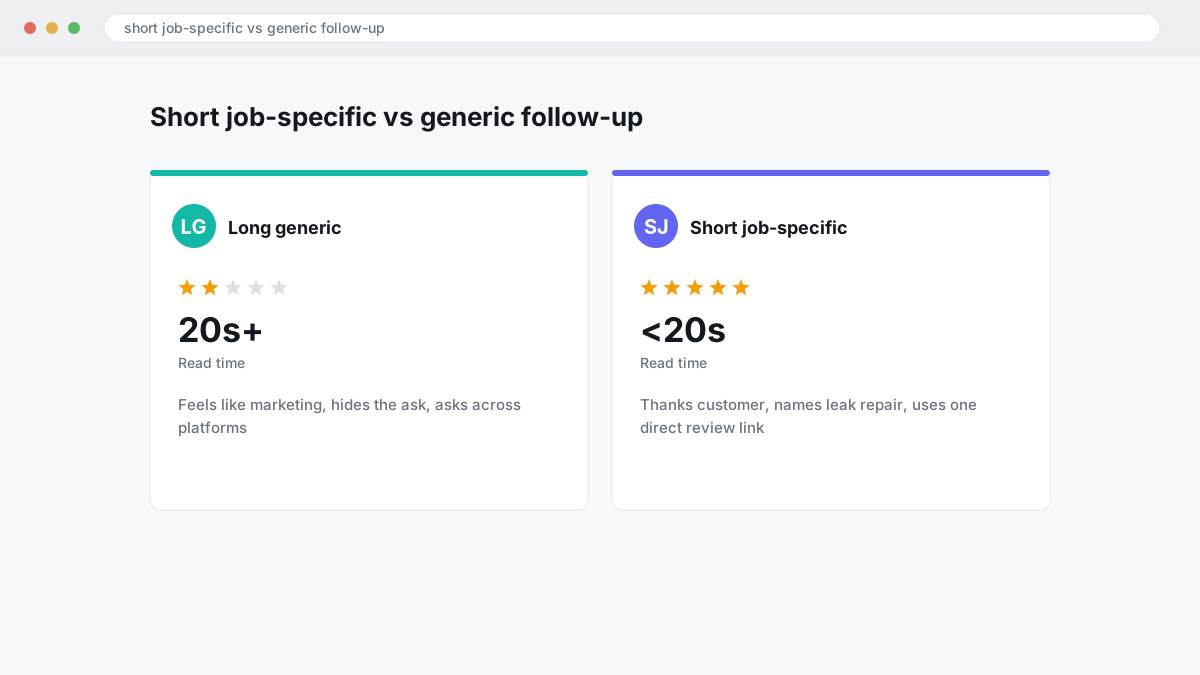
Long generic follow-ups fail because they read like marketing, hide the ask, and make the customer choose where to click. A text that says “please support our business across our platforms” gets ignored far more often than a simple Google Business Profile request tied to the completed job. Keep the SMS under 320 characters, use proper review link generation so the link opens the review box directly, and mention the job type for context: leak repair, flashing fix, storm damage patch, or full reroof.
Hi Sarah, thanks for choosing us for your leak repair on Oak Street today. If the work went well, would you mind leaving a quick Google review here? It helps other local homeowners find us: [direct Google review link]
Send one reminder after 48 hours if they have not replied. More nudges create complaints, especially during storm-season demand when homeowners are already getting follow-up texts from insurers, finance providers, and other trades. If you want this handled for you, BGR Review builds direct Google review links into managed outreach, and review packages carry a 30-day free replacement guarantee.
Should roofers focus on Google only or spread requests across several review sites?
Most roofing companies should start with Google because it shapes map-pack visibility and trust at the moment a homeowner searches. Add Facebook or Trustpilot after your Google Business Profile request flow has run cleanly for 30 days and you are replying to new reviews fast enough to keep pace.
The wrong approach is spreading requests across five sites from week one. It feels safer, but it usually leaves you with thin review counts everywhere, weaker local-pack click-through rate, and fewer high-intent calls from service searches like “roofer near me” or “emergency roof repair”. In BGR Review’s dataset of 1,485 businesses observed from February to July 2026, trades businesses that shared complete enquiry-source data attributed 70–80% of calls and bookings to a Google Business Profile or Yelp listing rather than a standalone website, which is why your review platform mix should start with the place buyers actually click.
This comparison is the practical order most roofers should use.
| Platform | Best use | Use it when |
|---|---|---|
| Map-pack visibility, quote requests, branded search lift | First priority; build review link generation into job completion texts | |
| Referrals, neighbourhood trust, shared posts | After Google requests and responses are consistent | |
| Trustpilot | Broader brand reputation beyond local search | Better for larger roofing brands running wider campaigns |
The right approach is Google-first until the process is stable, then diversify. Google reviews influence local intent most directly, and photo reviews do extra work for roofers because they show completed flashing, shingle lines, clean-up, and before-and-after proof inside the profile the buyer is already viewing. Once that flow is steady for 30 days, add Facebook for referral traffic; add Trustpilot if you need a broader trust layer across ads, sales decks, or multi-city brand searches. If you need help managing volume, BGR Review handles Google, Trustpilot, Yelp, Clutch and TripAdvisor review campaigns, with delivery starting in 24–48 hours and a 30-day free replacement guarantee on review packages.
Is DIY review outreach enough, or does managed help earn its keep for a roofing company?
DIY outreach is enough for many single-location roofing companies when one person owns the process from job completion to follow-up. Managed help earns its keep once multiple crews, uneven handoffs or multi-location oversight make review requests, monitoring and bad-review triage slip.
The wrong move is buying cheap software and assuming automation alone will protect lead flow. It lowers monthly cost, but the process usually fails when nobody checks review recency, nobody adjusts the review platform mix by branch, and a one-star post sits unanswered through a storm-season demand spike while your map-pack click-through rate and close rate from review traffic soften. The better setup is simple DIY if you handle fewer than 20 completed jobs a week at one location and can send every request, reply and reminder from one shared workflow.
This is the comparison that matters before you outsource anything.
| Model | Monthly fee | Coverage and SLA | Data ownership |
|---|---|---|---|
| DIY with basic software | Lower | Usually Google Business Profile first, sometimes Yelp; responses depend on staff availability, often no firm SLA | You should keep CRM contacts, review link generation, reply templates and GBP access in-house |
| Managed review support | Higher | Better for Google, Yelp and wider platform coverage, with agreed response windows and negative-review escalation | Contract should state you own all review data, platform logins, reporting history and customer lists |
If you run multi-crew teams, managed help buys operational consistency, not magic.
How do photo reviews and before-and-after proof change roofing conversion?
Photo reviews carry more weight for roofers than for many local services because buyers want to see the work before they call. One clean before-and-after image, or a single finished-roof shot, makes a review on your Google Business Profile feel more believable and more ready to convert.
The wrong approach is chasing a high star-rating distribution and treating every five-star review as equal. That fails on mobile map searches, where a row of stars without visible job evidence looks interchangeable with three other roofers, and the profile click-through stalls before your quote form or call button gets a chance. In the Google review campaigns we manage, the stronger ask is simple: one roofline photo or one cleanup photo attached to the review.
That works because roofing is judged in seconds. A photo review showing new shingles, flashing lines or a tidy post-job cleanup answers the trust question faster than text alone, while ten random shots usually dilute the point and make the review look staged. If you need help getting that review mix onto Google without overcomplicating the request flow, BGR Review handles verified review delivery with a 30-day free replacement guarantee.
What should a roofer do the same day a bad review appears?
When a bad roofing review lands, handle three things that day: confirm whether the reviewer was ever a customer, post a calm public reply within 24 hours, and pull evidence before you choose removal reporting or service recovery. That order protects your Google Business Profile from a visible unanswered complaint while stopping you from admitting fault you have not checked.
The wrong move is the emotional public rebuttal: naming the customer, arguing about the roof, or claiming the review is fake before you have checked anything. That fails twice. It can depress click-through rate from the map pack because searchers see conflict instead of control, and it weakens your removal position if the facts in your negative review response turn out to be wrong. Check the job record, crew notes, estimate history, call logs and any storm-season scheduling messages first; roofing disputes often come from delayed starts, insurance confusion or a neighbour who was never the buyer.
If the name, address or phone number does not match, move to policy review rather than opinion. Google removals on a Google Business Profile usually stand or fall on whether the review fits Google prohibited and restricted content, such as spam, impersonation, off-topic content or conflicts of interest, not on whether the comment feels unfair. Across 12,000+ negative review cases logged by BGR Review from June 2025 to June 2026, reviews raised within 28 days of posting and backed by an identifiable policy issue resolved successfully in roughly 90% of cases; comparable cases raised later fell to approximately 25–30%.
Your same-day file should be simple: screenshots of the review, customer database search, dispatch record, crew notes, phone log and a short timeline. Then post a neutral reply such as, “We cannot match this review to a booked job.
Can roofers buy reviews without risking Google penalties or legal trouble?
Buying reviews puts a roofer in a risky position because platform rules and advertising law treat fake or undisclosed endorsements as deceptive. The short-term risk is profile distrust, filtered reviews or Google Business Profile action; the longer risk is FTC scrutiny in the United States or a legal dispute where a review makes false factual claims.
The common line is “everyone buys reviews”. That fails for roofers because the exposure compounds over time: a burst of thin five-star posts can hurt map-pack click-through rate if the wording looks templated, and Google’s prohibited and restricted content rules ban fake engagement, impersonation and conflict-of-interest reviews. A supplier, employee, agency account or friend posing as a customer can trip the same problem. If you are paying for outreach, the safer route is to ask real customers for honest feedback and keep the request method clean, whether you generate the review link yourself or use a managed service such as BGR Review’s verified review packages with a 30-day free replacement guarantee.
In the US, the FTC endorsement guides require clear disclosure when an endorsement is incentivised, and the FTC’s 2024 Rule on Fake Reviews and Testimonials tightened enforcement around fabricated or purchased reviews. Country rules differ. In the UK and EU, misleading commercial practices and fake-review enforcement sit under different consumer-protection regimes, and a false accusation in a review can move from platform policy into defamation territory. That is general information, not legal advice.
If a bad review lands, your negative review response still matters even while you assess removal. A calm public reply protects conversions from review traffic and branded search demand; a fake counter-review campaign usually makes the evidence trail worse.
How should multi-location roofing companies handle reviews without breaking GBP rules?
Multi-location roofing brands need review ownership at branch level, not one shared inbox. Each location should request, monitor and answer reviews on its own Google Business Profile, while head office sets the policy, templates and escalation rules.
The wrong setup is one central team sending every customer to one profile or one shared review form. That fails because complaints land on the wrong branch, replies mention the wrong job, and your map-pack click-through drops when a prospect sees confusion in public responses; in BGR Review's dataset of trades businesses with complete enquiry-source data, observed February to July 2026, 70-80% of calls and bookings were attributed to a Google Business Profile or Yelp listing. Give each eligible branch its own workflow, one named owner, and its own review link generation process so the customer who used the Leeds crew reviews Leeds, not the parent brand.
Service-area businesses need extra care. Google Business Profile rules allow a hidden address if customers are served at their location, but the profile still has to represent a real, eligible operation in that service area; do not create city pages for places where no branch exists just to capture nearby searches. Corporate can keep the guardrails tight with approved request copy, one escalation path for legal or policy issues, and a rule that any complaint gets routed to the correct branch within 1 business day.
If you use a franchise or regional manager model, keep reporting central and execution local. That means branch managers request reviews after completed jobs, corporate audits star-rating distribution and review recency across profiles, and any paid help stays profile-specific; at BGR Review, review packages and the 30-day free replacement guarantee are handled per package, not as a pooled national count.
What does a practical 30-day rollout look like for a roofer starting from scratch?
Use a 30-day rollout: fix your Google Business Profile, set one review-request process, watch every new review, and compare calls and quote requests before you buy software or add platforms. Prove the workflow first, then scale spend.
Week 1 is setup. Correct your Google Business Profile categories, service areas, phone number, opening hours and job photos, then generate one direct review link and give it to the person who closes jobs. Generic advice pushes roofers into tools first; that fails because a fancy dashboard cannot fix a weak profile or inconsistent request ownership, and it does nothing for review recency in the map pack. In BGR Review's dataset of 1,485 businesses observed February-July 2026, trades enquiries mostly came through profile listings rather than websites, so your profile hygiene comes before any extra platform.
Week 2 is crew adoption. Send one SMS template from the office within hours of completion, then make the crew lead hand the customer back to that same process before leaving the site. If nobody owns the handoff, requests get missed, reviews land in bursts, and the close rate from review traffic stays flat because prospects see stale social proof instead of fresh, job-linked feedback.
Weeks 3 and 4 are measurement and triage. Track requests sent, reviews posted, average time-to-review, any bad-review response needed the same day, and whether quote requests from Google are closing better after fresh reviews appear.
Where to go from here
Start with your Google Business Profile, because that is where most roofing clicks, calls and map-pack decisions happen first. Check your category, service areas, review link, recent photo reviews and the timing of your ask sequence after a completed repair or replacement. Then look at what is actually dragging lead flow down: thin review recency, a weak platform mix, or one false review that keeps showing up before your best jobs.
If a review looks fake or breaches policy, do not stop at the basic report button. Build an evidence pack first: job records, address mismatch, proof the reviewer was never a customer, screenshots, and the exact policy match under Google prohibited and restricted content. That gives you a real removal assessment instead of guesswork. If the issue is legitimate but unhappy feedback, publish a calm response and fix the operational cause.
Your next step is simple: audit the profile, fix the request workflow, and escalate only the reviews that are actually costing trust, quote requests and branded search demand.