

Quick answer
Reputation management for lawyers means tightening every public signal your firm controls, then fixing the risks that cost clicks and enquiries first: wrong Google Business Profile data, poor review request timing, confidentiality-unsafe replies, weak legal-directory coverage, and reviews that may breach platform policy. Google usually sits at the top of the list because it shapes map-pack visibility, branded search click-through and first-call trust. If a review appears false or breaks a named rule such as Google review prohibited content, removal may be worth pursuing. At BGR Review, removals run on a pay-after-success model at $449 per removed review link with $0 upfront.
This page is written from live review-generation and dispute work, not a generic legal marketing template. The workflow we use is practical: triage the review, preserve screenshots and profile URLs, test policy breach versus genuine service complaint, draft a confidentiality-safe reply, then escalate through the platform’s actual path instead of relying on the basic flag button alone.
That detail matters because reputation management for lawyers breaks in different places than it does for a dentist or plumber. Across 12,000+ negative review cases logged by BGR Review from June 2025 to June 2026, roughly 90% of businesses who came to us after a failed self-filed attempt had used only the in-platform report option with no supporting evidence, and most of those initial requests had already been rejected.
Why do law firms need a different reputation playbook than other local businesses?
Law-firm reputation management needs a different playbook because ethics rules, client confidentiality, and case-stage timing change what you can ask, what you can say in public, and what you should dispute. A tactic that works for a restaurant can create bar-rule problems or privilege risks for a lawyer.
Generic local-business advice tells you to reply fast, ask every customer for a review, and mention the service details to show accountability. That fails for lawyers. A public reply that confirms representation, fee terms, injury facts, criminal allegations, or even that someone attended your office can create a client confidentiality problem; bar advertising and ethics rules can also limit how you use testimonials, comparisons, promises, and direct solicitations, and those limits change across jurisdictions if your firm serves more than one state or country. This is general information, not legal advice.
The safer approach starts inside the law firm intake process and carries through the matter lifecycle. Review requests work better at defined milestones such as a successful consultation, matter close, or settlement completion, because the request matches the client's emotional state and the firm can screen for conflicts, active disputes, and consent issues before sending anything. In BGR Review's dataset of 1,485 businesses observed February to July 2026, established professional practices including lawyers usually needed 30-50 reviews before their profiles performed consistently, which is another reason random post-service emails underperform: they waste the small number of review opportunities that actually matter.
What should a law firm fix first if it wants more calls and consultations?
Start with your Google Business Profile, the pace of new reviews, and how fast you answer negative feedback. Those three usually move local pack visibility, map-pack click-through, and consultation trust faster than redesigning attorney bios or trying to improve every directory at once.
Most firms take the wrong route: they claim ten profiles, tidy low-traffic legal directories, then wait for calls that never move. That fails because prospects usually click where intent is highest, and for local legal searches that is often the Google Business Profile sitting in the local pack. In BGR Review's dataset of 1,485 businesses observed February to July 2026, established professional practices including lawyers typically needed 30-50 reviews before profiles performed consistently; polishing thin directory pages does little if your main profile shows stale feedback, unanswered complaints, or a weak average rating.
The better order is simple. Fix review recency first so the profile stops looking abandoned, lift reply rate so searchers can see you handle complaints, and address average rating by improving review request timing and resolving service issues before they become public. Sentiment monitoring matters here because one cluster of intake-related complaints can drag conversions even when rankings hold; you may keep position but lose calls and form fills once people read the review text.
Measure the result for 8-12 weeks after each change. Track calls, consultation form fills, and direction requests from your Google Business Profile before you spend on secondary legal directories, because stronger Google signals usually change click behaviour faster than broader listing coverage.
Where in the client journey should lawyers ask for reviews without creating friction?
The best moment to ask is just after a positive milestone or at matter closure, when the client is clear on the service they received and emotions have settled. For many firms, a short post-resolution window beats a monthly blast to every former client. In BGR Review’s dataset of 1,485 businesses observed February to July 2026, established professional practices including lawyers usually needed 30–50 reviews before their profiles performed consistently, so timing each request matters more than sending more of them.
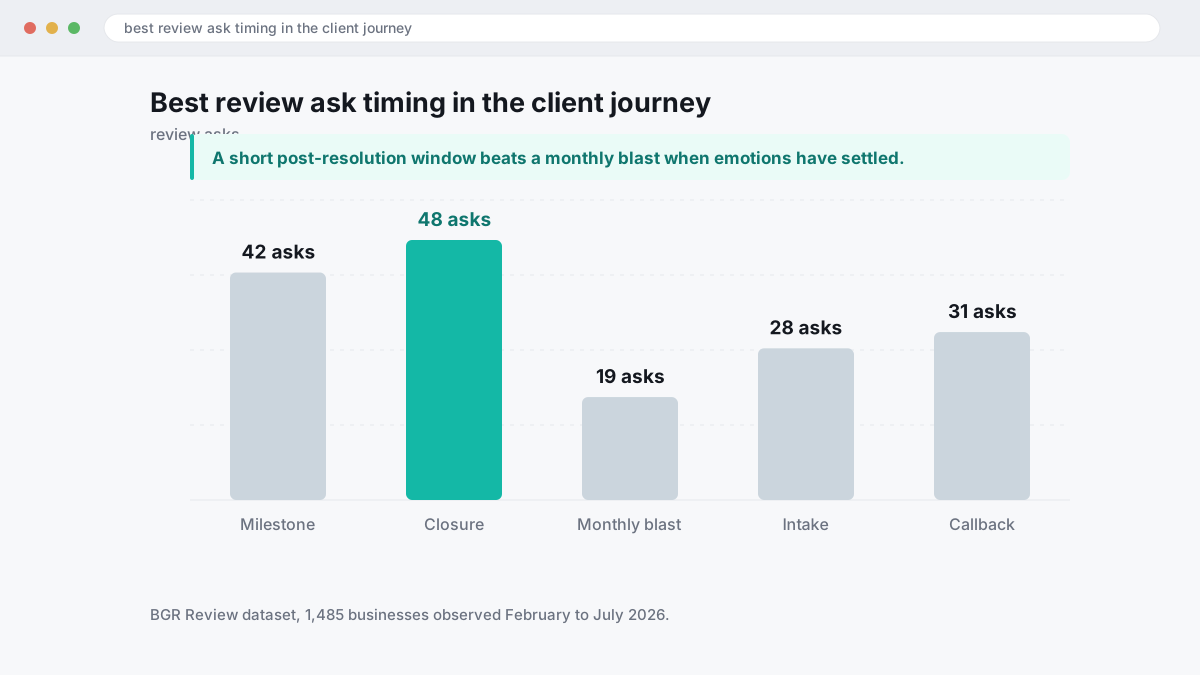
Batch-blasting every past client fails because the law firm intake process and the legal matter itself do not move on the same emotional timeline. A clean intake, a prompt callback and a well-run consultation can justify a satisfaction check early, but the review request should usually wait for a successful milestone: signed settlement papers, completed estate documents, a visa approval, a closed property file. That approach protects practice area reputation because it matches review request timing to what the client actually feels, instead of forcing the same script onto family law, criminal defence, personal injury and estate planning.
Family law and criminal defence need softer timing. Ask too soon after a custody dispute, sentencing or disappointing ruling and you create friction, even if your service was strong. Personal injury and estate planning usually allow a firmer post-resolution ask because the outcome is easier to recognise. If you want outside help building that sequence, BGR Review handles review campaigns and backs review packages with a 30-day free replacement guarantee, but the safer rule is simple: never ask straight after a bad outcome.
How do lawyers manage online reviews week to week without missing urgent issues?
A workable law-firm review system has four steps: monitor, triage, respond, and escalate. The firms that catch problems early use daily alerts, a 24-hour triage rule, and a written handoff the moment a post raises confidentiality, falsity, or conduct risk.
Checking reviews occasionally is the wrong approach. It fails because a one-star post about a named paralegal, a disputed bill, or alleged misconduct can sit on Google Business Profile, Avvo, or a niche legal directory for days, depressing map-pack click-through and putting off consultation requests before anyone in the firm even sees it. Sentiment monitoring fixes that by routing every new review into four buckets the same day: praise, service issue, false claim, or legal-risk category.
This is the weekly control sheet that keeps the review response workflow tight across Google, Avvo and legal directories.
| Review type | First action | Deadline |
|---|---|---|
| Praise | Approve a short public reply and log any repeat compliment about intake or case handling | 48 hours |
| Service issue | Check the matter record, billing notes and intake timeline before replying | 24 hours |
| False claim | Preserve screenshots, reviewer link and case references for possible platform dispute | 24 hours |
| Legal-risk review | Escalate to the responsible partner or compliance lead if it mentions staff names, money or misconduct | Same day, within 24 hours |
Blind flagging wastes time. In BGR Review's log of 12,000+ negative review cases from June 2025 to June 2026, roughly 90% of businesses that came to us after a failed attempt had used only the basic in-platform report button, with no supporting documentation. A documented triage process works because recurring complaints about slow call-backs, missed consultations, or front-desk tone show up across Google, Avvo and directory alerts early enough to fix the intake process before they harden into a reputation pattern.
How should a law firm reply when a review is harsh but confidentiality still applies?
The safest response from a law firm is short, calm and non-specific: acknowledge the concern, do not confirm any attorney-client details, and ask the reviewer to contact you privately. Protecting client confidentiality matters more than trying to win the argument in public.
The wrong move is a point-by-point rebuttal about representation, fees, court dates or what the client allegedly signed. That fails twice. You risk waiving privilege or disclosing protected information, and the reply often reads defensive to the next person comparing firms in the map pack, which can hurt click-through rate and consultation conversions more than the original review did.
The right move is a fixed review response workflow: confirm the review is genuine internally, strip out case facts, post a confidentiality-safe reply, then move the discussion to phone or email. Keep the public reply within 60-90 words. That works because it shows professionalism, protects privilege and gives a prospective client enough confidence to call without turning your Google Business Profile into a case file.
Use this template, then adjust the tone to fit the practice area and complaint:
We are sorry to read that you felt disappointed. We take client concerns seriously, but we cannot discuss any matter publicly because we protect confidentiality for everyone who contacts our firm. Please email our office at [email] or call [number] and ask for [name or team], so we can review your concern directly and respond through the proper channel.
Which review sites deserve attention after Google, and which can wait?
After Google Business Profile, most law firms should put the next block of effort into Avvo and the legal directories that appear when someone searches your firm or an individual solicitor by name. Spreading the same weekly effort across every profile usually wastes time unless that directory keeps showing up for your branded search or for a core practice area reputation check.
Treating all review sites equally fails because they do different jobs. Google usually wins the first visibility check and influences map-pack click-through rate, while Avvo and Justia often shape trust after the prospect searches your name, reads your attorney bio, and compares review tone before calling or sending a form. FindLaw and niche state directories matter more as referral validation, especially when another lawyer has already sent the lead, but they rarely move local pack visibility in the way Google does.
We handle this by weighting platform upkeep to search behaviour, then auditing every active profile quarterly instead of chasing weekly review activity everywhere. That works better for conversions because your team keeps the profiles that affect branded search demand, calls and form fills current, without starving the Google profile that still drives the first impression.
| Platform | Main job | Cadence |
|---|---|---|
| Google Business Profile | Local visibility, map-pack clicks, first trust check | Weekly monitoring |
| Avvo / Justia | Branded trust, lawyer comparison, practice-area credibility | Quarterly audit |
| FindLaw / state directories | Referral validation and profile completeness | Quarterly audit |
When can a false attorney review be removed instead of merely answered?
A false attorney review comes down only when it matches a platform rule or a legal claim, such as impersonation, a conflict of interest, or a provably false statement of fact. Most negative opinions stay live, even when they are anonymous or unfair, so negative review removal depends on evidence, not anger.
The wrong approach is to report a one-star review because it feels dishonest, then write a long public reply that spills client detail. Google does not remove reviews for being harsh, vague or anonymous on that basis alone, and client confidentiality can make an over-defensive reply worse than the review. The right approach is to test the post against Google review prohibited content: fake engagement, off-topic content, harassment, conflicts of interest, or content that makes verifiable factual claims you can disprove.
File the evidence before you click report. Save the review URL, reviewer name, posting date, screenshots, your matter list for the relevant period, intake records, invoices, engagement letters, and any mismatch showing the reviewer was never a client, was opposing counsel, or was a former employee reviewing under a customer identity. That pack matters because, in BGR Review's log of 12,000+ negative review cases from June 2025 to June 2026, roughly 90% of businesses who came to us after a failed attempt had used only the basic in-platform report button with no supporting documents.
False facts give you the strongest path. “Charged me twice on 14 March” can be checked against billing records; “worst lawyer in town” is opinion and usually stays. If a review names a case result, fee amount or attorney-client relationship that never existed, you have something to prove without breaching confidentiality in public. If you want outside help, BGR Review handles removals on a pay-after-success basis at $449 per removed review link with $0 upfront, but the cheaper route is DIY when the post is only rude and does not fit a policy ground. Rules also vary by country and platform, so this is general information, not legal advice.
How does Google decide whether a law-firm review breaks its rules?
Google removes reviews for breaking its prohibited-content rules, not because the review annoys you or damages your intake. For a law firm, the strongest grounds usually sit inside Google review prohibited content: fake engagement, conflicts of interest, impersonation, harassment, or allegations that have nothing to do with a real client experience.
The weak move is reporting a review because it feels unfair. That usually fails inside Google Business Profile because the flag gives Google very little context unless you match the text to a named policy ground. A review from your own staff, an opposing party in active litigation, or a competing firm can fit conflict-of-interest grounds; a rant about a judge, a statute, or the legal system may be irrelevant content rather than feedback about your service.
The stronger route for negative review removal is evidence first, flag second. Use the Business Profile reporting path, preserve screenshots, profile URLs, reviewer-name matches, matter-conflict records, and any public proof that the person is a competitor or adverse party, then appeal only with material Google can verify. Across negative review cases with prior self-filed attempts logged by BGR Review from June 2025 to June 2026, roughly 90% had used only the basic in-platform report button, and 70–80% of those initial requests were rejected. That is why a blind flag so often dies on first pass. If Google rejects a policy-based request, a calm public reply still protects click-through from the map pack while the appeal runs.
Are review requests and testimonials legal for lawyers in every state?
Review requests can be allowed for lawyers, but the safe version changes with state bar advertising and ethics rules, client confidentiality duties, and each platform's policy. The highest-risk move is a testimonial that has been paid for, shaped, or stripped of the disclosure or disclaimer your jurisdiction requires.
The wrong approach is the one generic agencies push: send every client the same polished script, ask only happy clients, offer a gift card or referral credit, then edit the wording into a cleaner testimonial. That fails for two reasons. Bar advertising and ethics rules vary by state, and a script that passes in one jurisdiction can create trouble in another; it also creates a disclosure issue under the FTC Guides Concerning the Use of Endorsements and Testimonials in Advertising when compensation or incentives are involved. Google, Avvo and other profiles each add their own rules on misleading or restricted content. If you are outside the US, UK and EU consumer-protection rules also restrict misleading commercial practices, and the UK DMCC Act has tightened fake-review enforcement. This is general information, not legal advice.
The safer approach is narrower and usually converts better anyway: ask for honest feedback after a clear service milestone in your law firm intake process or matter close, use a neutral request with no reward attached, and get jurisdiction-specific review of the exact script before staff use it. Keep review request timing away from emotionally charged moments such as a lost motion or billing dispute, and never confirm case facts in the request or in a published testimonial unless your confidentiality rules clearly permit it. If you want outside help, keep the compliance review separate from fulfilment; BGR Review sells review packages with a 30-day free replacement guarantee, but your lawyer-advertising script still needs local ethics sign-off before anyone sends it.
What changes when one law firm has several offices sharing one brand?
Multi-office law firms need central control with local execution. The setup that holds together assigns Google Business Profile ownership, reply permissions and escalation contacts by office, so one shared brand voice does not turn into missed complaints or confused service recovery.
One shared login and ad hoc replies fail fast. The wrong office answers the review, a receptionist posts a confidentiality-risky reply, or nobody escalates a complaint about missed callbacks because everyone assumes head office saw it. Proper multi-office location governance fixes that by giving each location its own profile owner, one approved responder group and one named escalation contact for intake, billing and attorney-conduct issues. Keep tone central. Let local teams offer route-specific fixes such as a call back from the office manager or a new intake review that same day.
Monthly sentiment monitoring by office catches weak intake teams before the damage spreads into map-pack click-through and consultation conversions. In BGR Review's dataset of 1,485 businesses observed February to July 2026, established professional practices including lawyers usually needed 30–50 reviews before profiles performed consistently, which makes office-level review volume worth tracking rather than rolling everything into one brand total. Watch three things each month: review count by office, negative-theme clusters and response time. If one branch is attracting complaints about intake delays, fix the intake process there before you spend on more visibility.
Should a law firm build this in-house or hire a reputation management company?
Keep this in-house if one owner or marketing lead can check reviews every day and enforce an approved response workflow. Bring in a specialist when negative review removal, ethics-sensitive replies, or multi-office location governance create delays, inconsistent wording, or missed escalations.
The wrong move is choosing in-house because it looks cheaper on paper, then leaving Google Business Profile, Avvo and directory alerts to whoever has time that day. That fails fast in law firms: one late reply can sit on a profile all weekend, one over-detailed response can create a confidentiality problem, and one unclaimed office listing can drag down map-pack click-through and consultation conversions for the whole brand.
A simple comparison makes the trade-off clearer.
| Model | What you need in place | Where it breaks | What to confirm |
|---|---|---|---|
| In-house | Daily monitoring, approved reply rules, one owner for escalation | Slow response SLA, patchy office-by-office governance, weak evidence packs for removals | Who replies same day, who preserves evidence, who handles legal-risk reviews |
| Specialist partner | External review response workflow and escalation path | Retainer scope may exclude legal-risk reviews or only cover replies, not removals | Monthly retainer terms, response SLA, platform escalation scope, and whether removals are separate |
The right choice is the one that matches workload. If you only need steady monitoring and basic replies, keep it internal.
Where to go from here
Your Google Business Profile, your review request flow and your reply process shape trust before a prospect ever calls your office. If those three assets are weak, you lose map-pack click-through, branded searches stall, and the calls that do come in convert less well because the reader has already seen unanswered complaints or a thin review history.
Start with a simple audit this week. Check your last ten reviews, your last five replies, your request timing after matter milestones, and any review that looks false, off-topic or in breach of platform policy. Preserve screenshots and client-file context first, then separate service issues from removable policy issues before you flag anything.
If false or policy-breaching reviews are blocking trust, the next step is a removal assessment and a tighter review-generation workflow for each practice area or office. Expect a clearer triage path, safer replies, and a review system your intake team can actually run.