


Quick answer
Reputation management for accountants means controlling the search results and review signals a prospect sees before they call: your Google Business Profile, third-party ratings, response quality and any unresolved complaints. For most firms, the fastest lift comes from Google because it drives map-pack visibility and first-contact trust. A workable system has four parts: request reviews after completed work, reply without exposing client confidentiality, monitor mentions each week, and challenge fake or policy-breaching reviews under platform rules. Where removal is justified, BGR Review handles it on a pay-after-success basis at $449 per removed review link with $0 upfront.
This page comes from live review growth and removal work, not ORM theory. We have served 15,000+ businesses, and the practical pattern is consistent: accountants need tighter reply controls than restaurants or retailers because a well-meant response can breach confidentiality, imply a regulated claim, or create a disclosure problem under the FTC endorsement guides and UK/EU misleading commercial practice rules.
On false Google reviews, the in-platform report button rarely carries enough context on its own, which is why weak filings get rejected fast. The process that actually gives you a fair shot is simple but specific: confirm whether the reviewer matches any client record, map the content to a named Google review policy issue, decide whether a neutral public reply helps or harms, then escalate with an evidence pack and stop pushing if the case rests on opinion rather than a clear policy breach.
Why do accountants need a different reputation playbook than other local businesses?
Accountants need a tighter reputation process because review requests, public replies and testimonial use can trigger confidentiality, advertising and disclosure issues. Seasonal demand changes review request timing, who should reply, and which platforms build trust fastest before a prospect decides to call.
Generic reputation advice tells you to ask every happy client straight after service and answer every review with detail. That fails for an accounting firm. Client confidentiality blocks the kind of public back-and-forth a restaurant or roofer can use, and a well-meant reply can still confirm that someone is a client. The safer workflow is narrower: request feedback at controlled points in the client journey, keep public replies brief, and move specifics offline. In BGR Review's dataset of 1,485 businesses observed from February to July 2026, established professional practices including accountants typically needed 30-50 reviews before profiles performed consistently, which makes timing and consistency more important than volume spikes.
Testimonial use is tighter too. A trades firm can live with broad praise about speed or friendliness; an accountant risks crossing into regulated claims about savings, outcomes or tax positions, especially if incentives or disclosure are handled badly. The FTC endorsement guides in the US, plus UK and EU rules on misleading commercial practices, all matter here, and platform rules add another layer, so this is general information rather than legal advice. Sentiment monitoring helps because you need to spot complaint themes early without turning every low-star review into a public argument during tax season, when response capacity drops and the wrong wording can hurt trust more than the original post.
Which reputation signals actually win trust for an accounting firm before a prospect calls?
Most accounting firms win or lose trust before the first call on four visible signals: Google Business Profile stars, how recent the last few reviews are, whether the owner replies properly, and whether the same story appears on other platforms. Trustpilot matters more once you sell tax, advisory or company-formation work across multiple cities and want third-party proof showing on branded searches as well as your local profile.
The wrong approach is chasing a perfect-looking 5.0 and leaving old reviews untouched for months. A spotless profile with no recent activity and no replies often looks managed rather than believed, especially when the star-rating distribution shows only brief praise and nothing mixed. In BGR Review’s dataset of 1,485 businesses observed from February to July 2026, established professional practices including accountants typically needed 30–50 reviews before profiles performed consistently; that is an observed pattern from our research methodology, not a Google rule.
The better approach is believable, recent and platform-consistent proof. A Google Business Profile with fresh reviews, a sensible mix of scores, and owner replies that sound like a real practice will usually lift map-pack click-through and conversions faster than a pristine but static page. If you also market nationally, Trustpilot can strengthen branded search demand because prospects comparing firms often search your name plus “reviews” before they submit a form.
How should an accounting firm manage reviews week to week without letting issues drift?
A usable review system for an accounting firm is a fixed weekly rhythm: send review requests at set client milestones, monitor every live profile, reply by severity, escalate suspicious posts fast, and report trends each month by office, service line and partner.
Ad hoc inbox checking fails because reviews do not arrive in one place and silence looks careless on a Google Business Profile or Trustpilot profile. Your team misses changes in sentiment monitoring, reply ownership gets fuzzy, and a low-star post can sit untouched until it starts shaping click-through from the map pack and branded search. Accountants have a seasonal problem as well, so a rhythm that feels fine in August usually breaks from January to April.
Set two review checks each week as a minimum, then switch to daily checks during January to April when filing pressure, payroll errors and deadline stress produce faster swings in review sentiment. Route every 1-star review, fraud claim, impersonation claim or confidentiality risk into same-day negative review triage, because delay weakens both the public reply and any later removal attempt. In BGR Review's log of 12,000+ negative review cases recorded June 2025 to June 2026, reviews raised within 28 days of posting and backed by an identifiable policy issue resolved successfully in roughly 90% of cases, while comparable cases raised later fell to approximately 25–30%.
Keep the operation in one dashboard, even if it is only a spreadsheet. Track four fields per review source: asks sent, reviews published, review response time, and escalations opened. Add columns for platform, partner, office, sentiment, policy risk and outcome so you can see whether one branch has a reply backlog, whether Google is producing more calls than Trustpilot, and whether a suspicious review needs internal handling or an external removal service at $0 upfront and $449 per removed link.
When should you ask accounting clients for reviews so response rates rise without awkward timing?
The best moment to ask for an accounting review comes straight after a clear client win such as a filed return, a finished audit or an advisory project that solved a specific problem. Ask while a tax issue is still open, during an HMRC deadline rush or when an invoice is being chased, and you drag stress into the review as well as the response rate.
Most firms send the request immediately after any interaction. That fails because accounting work has long stretches where the client feels pressure but has not yet seen the outcome, so your review request timing lands before the value moment. Ask after the success milestone instead: “your return has been filed”, “your audit is complete”, or “the cash-flow plan is now implemented”. In BGR Review’s dataset of 1,485 businesses observed February to July 2026, established professional practices including accountants typically needed 30–50 reviews before profiles performed consistently, which makes the quality and tone of each early request matter to your star-rating distribution.
A simple test beats guesswork. Split one service line at a time for 8 weeks: email for annual accounts, SMS for personal tax, then switch if the first pattern is weak. Keep the copy short, send within 24–48 hours of completion, and pause all requests where there is a complaint, a filing delay or payment friction, because those contacts pull your average down faster than they add volume.
How fast should accountants reply to reviews before trust starts dropping?
Accounting firms should answer negative reviews the same business day and positive reviews within 48 hours. That review response time sets the tone before a prospect calls, because a slow reply suggests weak service recovery and poor client care.
The wrong approach is a long, partner-written defence posted two or three days later after everyone has argued over wording. It fails for two reasons: the delay is visible on Google Business Profile and Trustpilot, and the detail often drifts into client confidentiality risk, fee disputes, filing dates or engagement specifics that should never sit in public. A short holding reply works better: acknowledge the concern, move the matter offline, and keep the language neutral until your negative review triage is complete.
Ownership needs one named reviewer owner, usually a marketing lead, practice manager or office manager, with partner sign-off reserved for escalations involving factual allegations, compliance complaints or possible fake or policy-breaching reviews. That keeps the first response fast and controlled.
What can you say in a review reply without exposing client details or making compliance mistakes?
A safe accounting review reply stays general, avoids confirming any client relationship, and moves specifics offline. The safest pattern is simple: acknowledge the concern, invite direct contact, and log the follow-up internally instead of arguing on Google Business Profile or Trustpilot.
The wrong move is explaining the full story in public: “We filed your March corporation tax return on time and your payroll issue came from missing records.” That fails on client confidentiality first, and it can create a second problem under the FTC endorsement guides and UK and EU misleading commercial practice rules if your reply implies facts a reader cannot verify or makes the complaint look fabricated. The safer line is: “We take service concerns seriously and would like to review this directly. Please contact our office so we can check the matter privately.” You protect privacy and still show prospects you are responsive within a sensible review response time.
The same rule applies even when you are sure the reviewer is genuine. Do not write “as your accountant” or “during your payroll engagement” unless you have clear consent to confirm that relationship. Use neutral wording instead: “We cannot discuss account matters in a public forum, but our team is available to review this directly today.” That works because it acknowledges the complaint without admitting undisclosed facts, and it keeps any tax, payroll, fee dispute or identity issue off the record.
If the review also looks false or policy-breaching, keep the reply short and preserve your evidence for the next step rather than turning the thread into a dispute.
What review response template works for positive, mixed and negative accounting reviews?
The strongest accountant review replies stay brief, specific and safe on privacy. Use one structure for praise, another for mixed feedback, and a tighter three-step reply for complaints so your team keeps a consistent review response time without exposing client confidentiality.
Generic copy-paste replies fail because they read like a bot wrote them and they often confirm facts you should leave private. For an accounting firm, even “glad we helped with your tax issue” can say too much. Short replies tailored by review type work better because they sound human, protect regulated client relationships, and give your team a clear rule: public reply first, internal escalation logged within 24 hours for anything negative.
Use these templates as a starting point, then edit the tone to match the review.
| Review type | Template |
|---|---|
| Positive | “Thank you for your feedback. We’re pleased our tax planning service was helpful, and we appreciate you taking the time to leave a review.” |
| Mixed | “Thank you for your comments. We’re sorry part of your experience fell short. Please contact name / inbox / phone so we can review this directly and respond properly.” |
| Negative | “We’re sorry to read this. We take concerns seriously and would like to review the matter offline. Please contact name / inbox / phone. We have logged this for internal escalation within 24 hours.” |
If you use outside help for review handling, keep the rule practical: no promises, no argument, no client-specific facts in public. That discipline matters on Google Business Profile and Trustpilot alike, and it also makes later triage cleaner if the review turns out to be false and needs a separate removal path.
What should you do after a fake accounting review appears on Google or Trustpilot?
When a fake accounting review lands, check first whether the name, timing and complaint match any client or prospect record, then file a platform-specific report backed by screenshots, timeline evidence and a short policy-ground explanation. Moderators dismiss emotional flags far more easily than a policy-matched evidence pack.
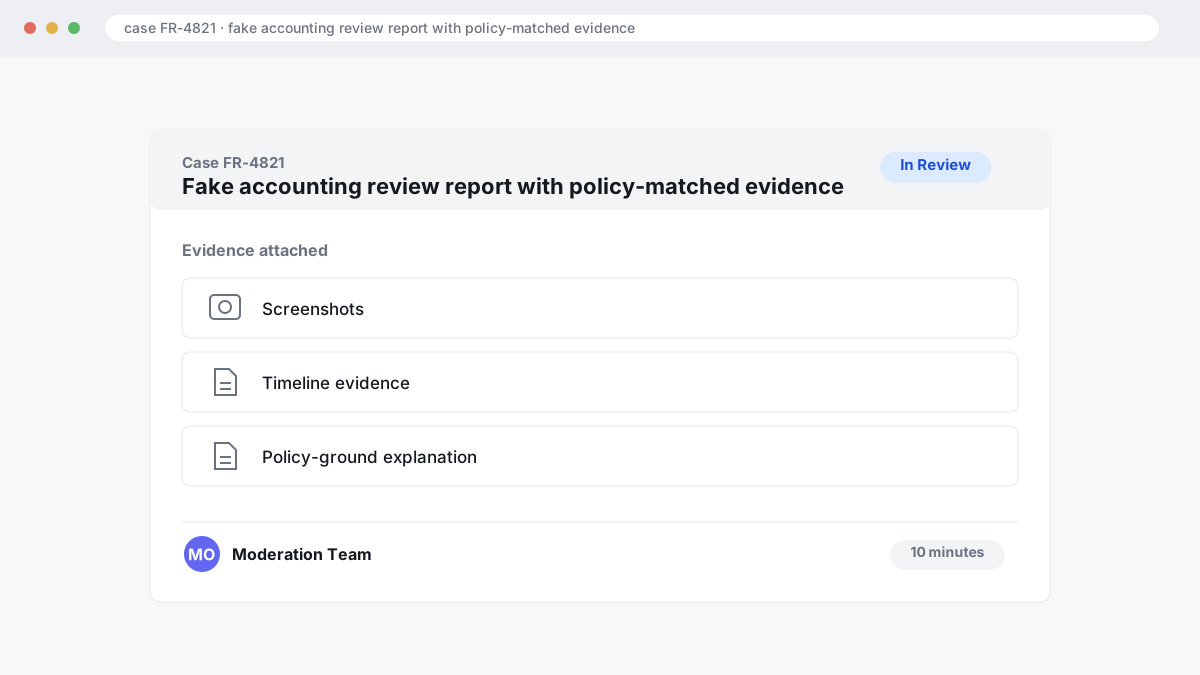
The wrong move is the one most firms make in the first ten minutes: hit the report button on your Google Business Profile or Trustpilot page, write “this is fake”, and stop there. That fails because the platform still needs a reason it can map to a rule, such as impersonation, conflict of interest, fabricated experience or other fake or policy-breaching reviews. In BGR Review’s log of 12,000+ negative review cases from June 2025 to June 2026, roughly 90% of businesses that came to us after a failed attempt had used only the basic in-platform report route, and 70–80% of those initial requests had been rejected.
Build one evidence pack before you file anywhere. Keep the review URL, full-page screenshots, your CRM timestamps, engagement records, email trail, call notes, invoice status and short staff statements in one folder so dates line up. Accountants often discover the reviewer was a non-client prospect, a former employee using a client-style complaint, or no match at all; each route changes which policy you cite.
Google Business Profile and Trustpilot do not assess the same way. Google usually wants the review link, business details and the clearest policy match under its review policy, while Trustpilot’s reporting flow leans harder on whether the reviewer had a genuine service experience and whether you can show no verifiable relationship. If your records are thin, pause and strengthen the file first. A weak case pushed twice rarely gets stronger on the second try.
How do fake-review removals actually work when the first report goes nowhere?
If a fake-review report is rejected, do not send the same complaint again. Rebuild the evidence pack, match the review to a named policy ground such as impersonation, conflict of interest or non-customer content, then escalate through the platform’s formal support route before you even think about legal action.
Most failed first reports are weak on proof. In BGR Review’s negative review cases with prior self-filed attempts, logged June 2025 to June 2026, roughly 90% of businesses had used only the basic in-platform report button with no supporting documents, and 70–80% of those initial requests had been rejected. That does not prove the review is valid. It usually means the report never showed why the post was fake or policy-breaching under the platform’s own rules.
The stronger route is specific. On Google Business Profile or Trustpilot, you attach dated screenshots, the review URL, account or booking records showing no client match, staff declarations if the reviewer names an employee they never met, and a short note that maps the facts to one ground only. First decisions can take a few days. Escalations through support often take several more business days, especially if you are challenging non-customer content or a reviewer with a conflict of interest.
Defamation is a separate track and a harder one. Whether a false allegation about tax fraud or stolen records helps depends on the country, the platform and the exact wording, so get legal advice where needed; UK and EU misleading commercial practice rules may also matter if reviews are fabricated or commercially motivated, but this is general information, not legal advice.
Should an accounting firm handle reputation management in-house or hire a specialist service?
In-house reputation management fits an accounting firm with a disciplined owner, low review volume and a simple local footprint. A specialist service usually fits better when replies need compliance checks, fake-review disputes hit Google Business Profile or Trustpilot, you run more than one office, or nobody has weekly response capacity.
The cheap mistake is pricing this by retainer alone. What matters is monthly workload: collecting fresh reviews, replying inside a sensible review response time, checking sentiment monitoring alerts, and deciding whether a bad review needs a calm reply or a policy-based removal attempt. In BGR Review's case file of 12,000+ negative review cases logged June 2025 to June 2026, reviews raised within 28 days and backed by a clear policy issue resolved successfully in roughly 90% of cases, while comparable cases raised later dropped to approximately 25-30%, so delay carries a real cost.
Use this comparison against the work that actually lands on someone's desk each month.
| Model | What you handle each month | Best fit | Where it breaks |
|---|---|---|---|
| In-house | Owner or manager spends weekly time on Google Business Profile checks, Trustpilot flags, reply drafting and escalation rules | One office, steady review flow, one person owns the process | Tasks drift during tax season, replies slow down, weak removal files get filed with only the in-platform report button |
| Specialist service | External team monitors platforms, prepares evidence packs, tracks sentiment and handles reporting | Multi-office firms, compliance-sensitive replies, disputed reviews, thin internal capacity | Poor fit if you still want ad hoc approvals on every reply |
The right model is the one that gets the work done every week. If you can keep tight ownership, clear escalation rules and regular follow-up, in-house can be cheaper.
How does reputation management pay back for accountants, and which tasks move leads first?
Reputation work pays back for accountants when it changes what a prospect sees before they call or fill in a form: your average rating, the shape of your star-rating distribution, the recency of reviews and whether your Google Business Profile looks actively managed. For most firms, Google-focused fixes, quicker replies and cleanup of fake or policy-breaching reviews move leads sooner than broad sentiment-monitoring projects.
The wrong approach is to measure “brand sentiment” in isolation. That fails because sentiment charts do not tell you whether local SEO improved, whether your map-pack listing earned more clicks, or whether branded-search click-through rose after prospects compared your profile with two nearby firms. The right approach is narrower: start with Google reviews, tighten review response time, fix obvious profile trust issues, and remove weak one-star attacks where there is a real policy match.
Track three things for 8 to 12 weeks: calls from your Google Business Profile, contact-form fills from branded traffic, and branded-search click-through in Search Console. In BGR Review’s dataset of 1,485 businesses observed February to July 2026, established professional practices such as accountants typically needed 30–50 reviews before profiles performed consistently. Local firms usually feel the lead effect here first. Wider brand lift comes later.
How should multi-office accounting firms split review ownership between head office and branches?
Multi-office accounting firms get better results when head office owns the rules and each branch owns the execution. Central policy, templates and escalation standards keep replies consistent, while local teams handle review requests, responses and Google Business Profile upkeep for their own office.
The wrong setup is one national reputation queue covering every location. It fails because a branch in Manchester cannot wait behind a London backlog while a local prospect is comparing map-pack listings, and a generic responder will miss office-specific context such as parking complaints, receptionist praise or delays in tax return turnaround. Each office needs its own Google Business Profile, its own review target and one named reply owner who checks new feedback on a fixed weekly schedule.
Head office should standardise what must stay standard: confidentiality rules, approved response templates, escalation thresholds for fake or policy-breaching reviews, and who decides whether a case goes to legal counsel or a platform appeal. That model works for local SEO because branches build location relevance through reviews tied to the right address, service area and staff experience, while the firm still speaks with one compliant voice.
Reporting also needs to split by branch and by service line. If you mix tax, audit and advisory sentiment into one national average, you hide the branch that is winning on audit but slipping on personal tax follow-up. In BGR Review's dataset of 1,485 businesses observed from February to July 2026, established professional practices including accountants typically needed 30–50 reviews before profiles performed consistently, so branch targets should be set per office rather than pooled across the group.
Where to go from here
Start with a 30-minute audit of three things: your Google Business Profile, your review request timing, and every unresolved negative review still sitting on your list. Check whether your category, services, opening hours and reply history are current; then trace exactly when clients are asked for feedback, because accountants usually get better response rates after a return is filed, an annual account is signed off, or a tax issue is resolved, not during the work itself.
Next, split the backlog into two piles. Keep routine work in-house: asking happy clients for compliant reviews, replying inside your confidentiality limits, and watching sentiment changes across Google and Trustpilot. Escalate policy issues: impersonation, reviews from non-clients, duplicate attacks, or posts that breach platform rules.
That audit gives you a cleaner profile, a clearer local SEO plan, and a realistic list of cases worth pushing.