

Quick answer
Consumer behavior is the way people notice options, compare them, decide and buy, and online reviews change that process early. Most buyers use shortcuts to cut risk: star rating, review volume, review recency, price cues, replies from the business and platform trust signals on Google Business Profile, Yelp or Trustpilot. BrightLocal’s Local Consumer Review Survey has consistently shown that online reviews shape local buying choices. In practice, that means your rating profile often affects clicks, calls and bookings before your website copy does. The fastest fixes usually come from improving rating credibility, fresh review flow and response quality first.
This page treats Consumer Behavior as an operating problem because that is how it shows up in live accounts: falling map-pack click-through, fewer calls after a negative review spike, or a high average rating dragged down by old feedback and unanswered complaints. BGR Review handles review acquisition, dispute work and removals across Google, Trustpilot, Yelp, Clutch and TripAdvisor, with removal charged only after success at $449 per removed link and $0 upfront.
The practical detail matters. A basic flag usually fails because the report contains no policy ground, no screenshots, no transaction record and no identity mismatch evidence, so platforms treat it as unsupported rather than false. That is why this page focuses on the parts that change behaviour first: rating distribution, recency, response rate, authenticity signals and what you should fix in order.
Where do reviews change behavior first in the buying journey?
Reviews change buying behaviour at three visible points in the buyer journey: whether someone clicks your profile, whether they keep you on the shortlist, and whether they call, fill in a form or book. The biggest shift usually happens in consideration and purchase, because ratings, review text and recent customer experience cut uncertainty faster than any brand slogan on your website.
Most textbook stage models stop at awareness, consideration and decision. That fails on local search intent because the real actions happen on a Google Business Profile, Yelp listing or Trustpilot page, where social proof sits beside the phone button, directions and opening hours. A buyer searching “emergency plumber near me” does not read a positioning statement first; they scan stars, open two or three reviews, and decide whether your map-pack listing deserves the click-through or whether they should keep comparing.
The practical way to read this is simple. At awareness, reviews affect the click from the local pack or branded search result. At comparison, they decide whether you stay on the shortlist after the buyer reads recent comments and checks whether your profile looks active. At purchase, they influence the contact action itself: a call from Google, a booking from Yelp, or a form fill after someone leaves the profile and lands on your site.
In BGR Review’s own dataset of 1,485 businesses observed from February to July 2026, trades businesses with complete enquiry-source data attributed 70–80% of calls and bookings to a Google Business Profile or Yelp listing rather than a standalone website. That is why high-intent buyers often check reviews within minutes of landing on a profile. If the review layer looks stale, thin or disputed, the comparison continues elsewhere and your conversion path ends before the first enquiry.
Why do review signals change clicks and enquiries more than generic brand messaging?
Review signals move buying behaviour faster than brand copy because they come from third parties, sit beside your competitors, and take seconds to scan. A buyer can size up risk from stars, review recency, reply quality and complaint themes without opening your service page.
The wrong approach is leading with claims like “trusted”, “best value” or “quality service” and expecting that copy to carry the decision. That fails because local search intent is short and practical: the buyer wants a roofer, dentist or agency that looks safe enough to contact now, and social proof answers that faster than any homepage headline. On a Google Business Profile, star rating, review count and whether you reply to complaints create an instant comparison set; your own copy only confirms what the buyer already suspects, which is where confirmation bias starts to work for or against you.
The right approach is to treat the review profile as the decision page and tighten the signals buyers compare first. In BGR Review’s dataset of trades businesses with complete enquiry-source data, observed from February to July 2026, 70–80% of calls and bookings were attributed to a Google Business Profile or Yelp listing rather than a website. That is why fresh reviews and visible replies usually change click-through rate, calls and form fills before brand messaging does.
Which review patterns make buyers feel safe enough to choose you?
Buyers trust review profiles that look credible, not spotless. A natural star-rating distribution, specific wording and steady recent activity usually beat a perfect-looking page filled with thin praise or months of silence.
The wrong approach is chasing a wall of clean 5-star comments with no rough edges. That fails because social proof works by resemblance: people believe other buyers when the profile reads like real life, with a few 4-star reviews, minor complaints and details that sound lived-in. On Google Business Profile, Trustpilot and Yelp, review authenticity shows up in the texture of the page — named staff, a product model, a delivery date, a result after service — not in a mathematically perfect average.
A credible-looking profile gives the buyer enough friction to trust it. A mixed star-rating distribution says real customers are speaking, while recent reviews reduce the fear that standards have slipped; in BGR Review's dataset of 1,485 businesses observed from February to July 2026, new trades and local service firms usually saw first reviews around two weeks after launch, and roughly 90% of those early reviews were positive. That is an observed pattern in our data, not a platform rule, but it matches what buyers do on local search pages: they scan the newest comments first, then look for specifics that confirm the average rating.
If your latest ten reviews only say “great service” or “highly recommend”, the profile looks managed rather than believed. If those same reviews mention “Jake fixed the leak in one visit”, “the Invisalign quote matched the final invoice” or “the booking form reply came the same day”, hesitation drops because the buyer can picture the outcome before they call, book or fill in a form.
How do ratings, recency and replies change buying decisions on local search pages?
On a local search page, most buyers check three signals before they do anything else: your average rating, how recent the latest reviews are, and whether you reply. Those cues shape click-through rate, calls, direction requests and form fills long before your website copy gets a chance.
The weak approach is to chase map-pack visibility and ignore what happens after the profile appears. That fails because local search intent is usually immediate and comparative: on Google Maps, a buyer often scans three profiles side by side, not ten blue links, and picks the one that looks current and low-risk. In BGR Review's dataset of trades businesses with complete enquiry-source data, observed February to July 2026 within a wider sample of 1,485 businesses, 70-80% of calls and bookings were attributed to a Google Business Profile or Yelp listing rather than a website.
The better approach is to treat review recency and response rate as conversion signals. A fresh review from this week tells the buyer you are still active; a profile where the newest feedback is six months old can look abandoned even if the rating is high. Replies matter most after a complaint, because a calm public answer shows how you handle service failures, refunds or missed appointments before the buyer ever contacts you.
Google Business Profile users do not need a perfect five-star average to convert. They need enough recent, believable feedback to reduce hesitation, plus visible owner replies that show accountability. If your rating is strong but your latest reviews are old and your response rate is patchy, you may still hold position in the local pack while losing the click, the call and the booking to a nearby competitor who looks more current.
When does a weak star-rating distribution hurt conversion even if the average looks fine?
An average rating can hide the pattern that buyers actually judge. A 4.3 profile with a run of recent 1-star complaints often converts worse than a steadier 4.5 because people read the shape of the feedback before they trust the number at the top.
The wrong approach is to defend the displayed average and assume the buyer journey stops there. It fails because a weak star-rating distribution creates risk: five-star praise at one end, one-star complaints at the other, and little in the middle to make the profile feel believable. On Google Business Profile, Trustpilot or Yelp, buyers usually open the latest negatives first, check whether the same issue repeats, and use that as a shortcut for consumer sentiment. If three 1-star reviews land within 30 days and all mention missed appointments, hidden fees or rude staff, the negative review impact is tied to one unresolved operating problem, not random bad luck.
The better approach is to read underneath the average and fix the repeated complaint before you try to lift the headline score. A balanced spread of 3-star, 4-star and 5-star reviews with clear public replies looks more authentic, supports map-pack click-through, and usually helps conversions such as calls, bookings and form fills because the buyer can see the issue was addressed rather than buried. If the review pattern points to a policy breach instead, that is where BGR Review’s pay-after-success removal model applies: $0 upfront, $449 per removed review link.
Which review fixes usually improve conversions first?
The quickest conversion gains usually come from three moves: restore review recency, answer unresolved negatives, and close obvious trust gaps against nearby competitors. More review volume is slower to pay back when your newest feedback is older than 90 days and your issue response is weak.
Most guides push volume first. That fails because a profile with 200 reviews can still lose calls, bookings and form fills if the last review is four months old and two recent complaints sit unanswered in the local pack. In BGR Review's dataset of 1,485 businesses observed from February to July 2026, trades firms with strong profile activity drew most enquiries through listing platforms rather than websites, which is why stale review recency often hurts conversions before your landing page copy does.
Fix the trust blockers first. If your latest review is older than 90 days, prioritise fresh verified feedback before chasing a bigger lifetime count; if a negative is unresolved, reply within 24 to 72 hours where possible, because response rate changes how buyers read negative review impact in real time. A short, specific public reply that names the issue and the next step does more for click-through and enquiry intent than ten extra reviews arriving weeks later.
Then carry recurring praise into the places buyers check after the profile click. If reviewers keep mentioning “fast turnaround”, “clear pricing” or “clean handover”, use that language in your service page copy, FAQ answers and ad messaging so the same social proof appears from map-pack impression to form fill.
What should you do after a bad review spike changes buyer sentiment?
After a bad review spike, work in this order: find the complaint that repeats, fix the operating cause, then make the recovery visible with public replies and fresh genuine reviews. If you only polish the wording of your responses, consumer sentiment usually keeps sliding because the next buyer sees the same problem repeated.
Start with a 7- to 30-day review audit, not a full-year average. Pull every new review from Google, Trustpilot, Yelp or the profile that drives your enquiries, group them by theme, and separate one-off complaints from a sudden pattern. If the same issue appears three times or more inside that window, treat it as an operating fault and update your frontline script straight away: missed call-backs, late arrivals, unclear pricing, weak handover, whatever the reviews actually say.
The wrong approach is reply-only damage control. It fails because the negative review impact stays visible in the buyer journey: a low response rate, four vague owner replies, and no fresher positives tell the next prospect that nothing changed. The right approach is operational repair plus visible recovery. Post calm, specific replies, ask recent happy customers for genuine reviews once the fix is live, and watch sentiment weekly for at least a month so you can see whether recency, response rate and complaint themes are actually improving.
How can you tell whether buyers are reacting to price or to trust?
If your close rate is weak, separate price sensitivity from trust friction by checking where buyers drop out: strong click-through and enquiry volume with quote declines usually means price resistance, while weak click-to-lead performance points to credibility problems before price is even discussed.
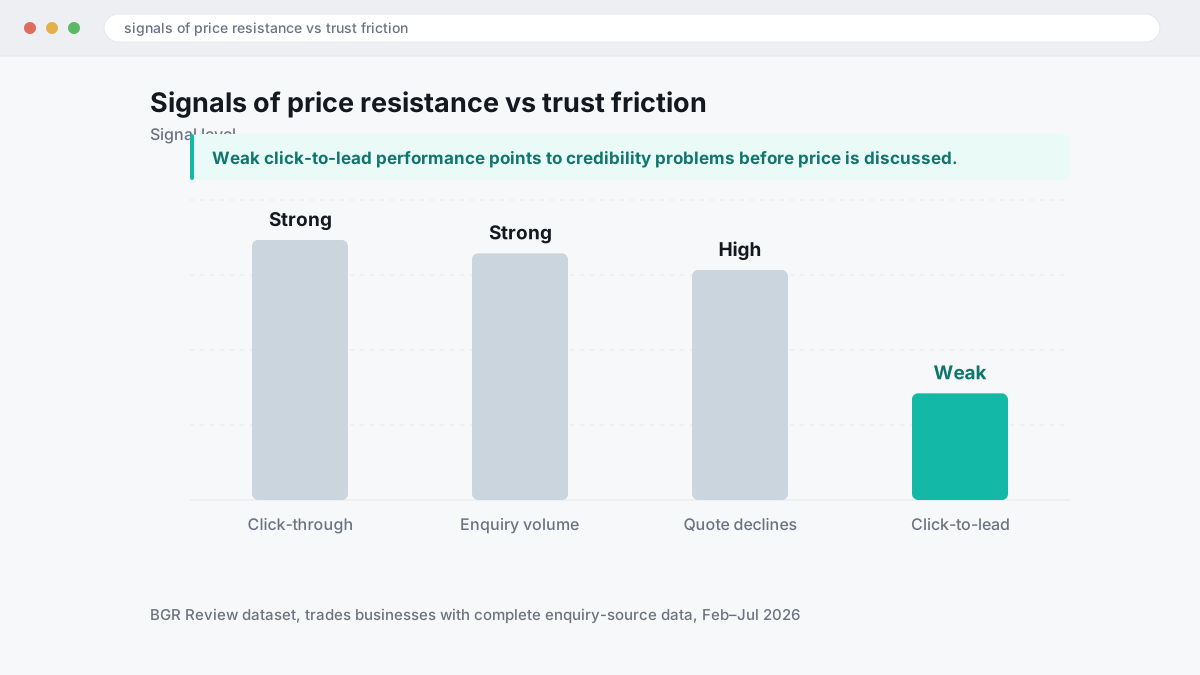
The wrong read is to blame price every time sales slow. That fails because buyer behaviour changes earlier in the journey. In BGR Review's dataset of trades businesses with complete enquiry-source data, observed February to July 2026, 70–80% of calls and bookings came from a Google Business Profile or Yelp listing, so weak clicks, short calls or poor form-fill rates often reflect review recency, star-rating distribution or low response rate rather than an expensive quote.
The better check is simple: compare review themes against lost-deal reasons for at least 4 weeks. If consumer sentiment in recent reviews stays positive and objections cluster around budget, timing or cheaper competitors, you are dealing with price sensitivity. If prospects mention “not sure”, “saw mixed reviews” or “wanted more reassurance”, confirmation bias is doing the damage — one recent complaint can make every neutral signal look risky. Fix trust first, then judge the quote.
Is in-house review management enough, or does a reputation service earn its cost?
In-house review management fits a simple setup: one location, one owner, and enough time to check, reply and report every week. A reputation service earns its cost when response speed, multi-platform coverage or policy disputes outgrow that capacity, so the real question is workload rather than the lowest monthly spend.
The cheap internal route fails when you treat reviews as an occasional admin task. Your response rate drops, local search intent goes unmet on Google and Yelp, and valid platform reports get rejected because nobody matches the complaint to the Google Business Profile review policy or Trustpilot’s flagging rules. If you only need steady monitoring, public replies and a basic request process, keep it in-house. If you are juggling several locations, mixed star-rating profiles and review authenticity checks across Google, Trustpilot and Yelp, specialist support usually works better because the queue is shorter and the reporting is deeper.
This comparison is the one that usually matters before you choose.
| Option | Best fit | Trade-off | What BGR Review adds |
|---|---|---|---|
| In-house | Single location, low review volume, one person can reply weekly | Slower response time, weaker policy knowledge, thin reporting | DIY may be enough if no removal dispute exists |
| Service support | Multi-location, several platforms, recurring disputes or compliance risk | Higher cost than staff time alone | Fixed price per removed link |
Are incentivised reviews legal, and where do the rules change?
Incentivised reviews are not automatically unlawful, but undisclosed rewards, review gating, and deceptive solicitation can breach platform rules and advertising law. The line moves by country and by platform, so this is general information rather than legal advice.
The wrong approach is offering a discount or gift card only to happy customers, then filtering out unhappy ones before they post. That manufactures social proof and damages review authenticity, which is exactly what the US FTC’s rules on endorsements and testimonials target when compensation is not clearly disclosed, and what Google Business Profile and Yelp both restrict through their policies against misleading review practices and gating. If you are paying any agency for review generation, ask how disclosure is handled and whether the process sends every customer to the same public review page.
The right approach is simple: invite all customers, do it at a consistent moment in the buyer journey, and keep the ask neutral. That works because the proof stays believable; a mixed but recent profile with real replies converts better than a polished page that looks filtered, and it is far less likely to trigger a platform issue that later forces cleanup.
The legal edge also changes outside the US. A false factual allegation in a review can raise defamation issues, while fake or suppressed reviews can fall under misleading-commercial-practice rules in the UK and EU; platform enforcement still follows the platform’s own policy first.
What should a consumer behavior analysis template include for review-led decisions?
A useful consumer behavior analysis template ties one review signal to one buyer reaction and one business response. If you cannot connect rating, review recency, consumer sentiment and reply activity to map-pack clicks, calls, bookings or form fills, the sheet belongs in a classroom rather than your weekly review meeting.
Most academic worksheets fail because they log attitudes without telling you what to do next. An operating dashboard works because it follows the buyer journey row by row: discovery in Google Business Profile or Yelp, comparison on your review profile, then decision after a prospect reads two or three recent complaints and checks your response rate. For local services, review it weekly; for lower-frequency purchases such as legal, dental or agency buying cycles, monthly is usually enough. In BGR Review's dataset of 1,485 businesses observed February-July 2026, trades businesses with complete enquiry-source data attributed 70-80% of calls and bookings to a Google Business Profile or Yelp listing, which is why review-led behaviour analysis should start on listing pages before website copy.
Put these columns in one sheet so the owner, marketer or branch manager can act from the same view.
| Buyer stage | Review signal to track | Buyer reaction and metric | Owner action |
|---|---|---|---|
| Discovery | Average rating, star-rating distribution, competitor benchmark | Map-pack click-through rate drops or rises | Fix rating gaps first; compare against 3 local competitors on Google |
| Comparison | Review recency, complaint themes, review authenticity signals | Calls, bookings or form fills stall after profile visits | Request fresh verified reviews and separate valid complaints from policy breaches |
| Decision | Response rate and reply quality | Prospect hesitation, price sensitivity, branded search follow-up | Reply publicly, resolve specifics, and escalate removable reviews where policy applies |
The template earns its keep when one bad week changes the next action. If complaint themes shift from “slow response” to “overpriced”, you are looking at trust and price sensitivity together, so compare your replies, recency gap and competitor benchmark before cutting prices.
Where to go from here
Your buyers usually judge you on four signals before they read your website: average rating, the spread of those star ratings, how recent the last few reviews are, and whether you reply. Fix those first. If your map-pack clicks, calls or bookings have slowed, run a review audit this week: sort the last 20-30 reviews by theme, mark which complaints are valid, flag anything that appears to breach platform policy, and check how long it has been since you earned and answered a review.
If the drop followed a negative review spike, expect the audit to give you a clear order of work. Public replies come first. Operational fixes come next. Rating and recency recovery follow after that. Removal only belongs in the plan where a review breaks a named rule, because platforms will refuse plenty of reports that are simply unfavourable rather than inauthentic.
If fake or policy-breaching feedback is blocking demand, the next step is a removal assessment.