


Quick answer
You cannot remove genuine Amazon reviews just because they hurt sales, but Amazon may remove reviews that break its Community Guidelines or were posted in the wrong place, such as seller feedback used to complain about a product. Start with the review’s Report abuse link, then use Seller Central if the issue is a policy breach, false factual claim, or channel mismatch. Send one clean evidence pack: review URL, ASIN, screenshots, order details, and a short policy-based explanation. If the first report fails, escalate through the correct route instead of filing repeated vague complaints.
This page is written for operators who need the actual removal routes for amazon reviews, not recycled policy summaries. The first decision is always classification: product review, seller feedback, or claim about fulfilment, because Amazon often rejects reports that use the wrong channel even when the complaint itself is valid.
At BGR Review, we handle review removal work across major platforms and log outcomes as removed, unresolved, or unknown rather than forcing every case into a win-or-loss claim. Across 12,000+ negative review cases logged June 2025 to June 2026, the pattern was consistent: weak reports usually lacked screenshots, order context, or the exact rule being cited, and repeated submissions without new evidence rarely improved the outcome.
Which Amazon route fits your problem before you report anything?
Sort the issue into a product review, seller feedback, or a separate claim before you file anything. Amazon acts on policy category, not on how damaging the post feels, and the wrong route is one of the fastest ways to burn a valid report.
Most guides blur product reviews vs seller feedback. That is where avoidable rejections start. A one-star product review complaining that the item arrived late often stays live because Amazon treats it as a customer opinion on the order experience, while fulfilment, dispatch, packaging and delivery problems belong in seller feedback, where you work from Seller Central rather than trying to force a product-review removal.
This route split is the practical starting point.
| Issue | Correct Amazon route | Why that route fits |
|---|---|---|
| Comment on product quality, fit, performance | Product review workflow | Amazon assesses it under the Amazon Community Guidelines for reviews |
| Complaint about shipping, packaging, dispatch, customer service | Seller feedback workflow in Seller Central | It relates to the selling experience, not the product itself |
| Defamation, false factual accusation, IP or legal claim | Separate claim or escalation route | It usually needs more than a standard abuse report |
The wrong approach is filing everything through the first report link you find, then sending follow-ups two or three days later when nothing happens. In BGR Review’s case file of negative review cases with prior self-filed attempts, logged June 2025 to June 2026, roughly 90% had used only the basic in-platform report button with no supporting documentation, and 70–80% of those first requests had been rejected. The right approach is route-matched reporting first, because Amazon’s internal review teams check different policy buckets, and a clean first submission gives you a better chance of protecting conversions before the complaint starts pulling down click-through from your listing.
How do you tell a removable policy breach from a review Amazon will likely leave live?
A review is realistically removable when you can point to a named Amazon Community Guidelines breach such as abuse, undisclosed incentives, conflicts of interest or off-topic content; a harsh but genuine opinion about delivery, quality or value usually stays live.
The wrong approach is arguing that a review is unfair because it hurts conversions. That fails because Amazon generally leaves opinion alone, even when the wording is brutal and your product page click-through and sales rate dip after it lands. The right approach is to separate dislike from breach: does the post contain harassment, promotional spam, an incentivised review, a clear conflict, or content unrelated to the product experience.
The Verified Purchase badge matters, but only as a credibility signal. It can make moderation stricter because the reviewer did buy through Amazon, yet it does not excuse policy violations; a verified buyer can still post abuse, disclose they were rewarded, or act for a rival. Competitor sabotage is more plausible when the text reads like a seller dispute, repeats catalogue terms oddly, or pushes shoppers to another listing rather than describing actual use.
Across 12,000+ negative review cases logged by BGR Review from June 2025 to June 2026, reviews raised within 28 days and backed by an identifiable policy issue resolved successfully in roughly 90% of cases, while comparable cases raised later fell to approximately 25–30%. That is our observed case file, not an Amazon promise, and it is why we only pitch our $449 pay-after-success removal route when the breach is specific enough to prove.
How do you report an Amazon review without weakening your case?
Use the review’s Report abuse link first, then back it up with policy-matched evidence in Seller Central if you have seller access. Short, verifiable reports work better than emotional complaints because they give Amazon a clear rule to assess and give you a record to follow up against.
The weak approach is the one most sellers take under pressure: “This review is unfair, malicious, and hurting our sales.” That usually fails because it tells Amazon how the review affects you, not which part of the Amazon Community Guidelines the content breaks. In BGR Review’s case file of negative review disputes with prior self-filed attempts, logged June 2025 to June 2026, roughly 90% had used only the basic in-platform report route with little or no supporting documentation, and 70–80% of those first requests had been rejected. A rejection at that stage does not prove the review is valid.
The stronger approach is narrower. Open the review, click the Report abuse link, save the exact review URL, then describe the breach in 2 to 4 sentences using Amazon’s own policy language: abuse, harassment, promotional content, personal information, or a claim that is factually false and verifiable. Write like this: “This review alleges [specific claim]. We dispute it because [documented fact]. The content appears to breach the Amazon Community Guidelines section on [policy issue]. Supporting records are available.”
If Seller Central applies, log the case ID and take screenshots immediately after submission. Include the review text, star rating, ASIN, order lookup result if relevant, and the report confirmation screen. That preserves the trail if the listing loses visibility, conversions dip, or you need to escalate later without changing your account of what was reported first.
What should your Amazon review removal evidence pack include before you hit submit?
A usable evidence pack gives Amazon something it can verify quickly: the review URL, the ASIN, the date you captured it, full-page screenshots, and the exact Amazon Community Guidelines issue you are alleging. The point is to prove a policy breach through records Amazon can check, not to argue that the review feels harsh or unfair.
Most failed submissions rely on cropped screenshots and a short complaint through the Report abuse link. That usually fails because the moderator still has to work out which listing, which review version, and which rule you mean. In BGR Review's case file of negative review cases with prior self-filed attempts, logged June 2025 to June 2026, roughly 90% came with only the basic in-platform report and no supporting documentation, and 70–80% of those first requests had been rejected. The stronger approach is one pack, submitted once, with the review text quoted, the product page URL, the reviewer name as displayed, capture date and time, and a one-line policy label such as incentivised review, abuse, or defamation and false factual claims.
If the review suggests a non-customer, add the order-history mismatch, relevant buyer-seller message logs, and any account-pattern notes that are objectively visible, such as repeated one-star posts across similar competing listings. If the post makes counterfeit or wrong-product allegations, attach invoices, authenticity records, batch or serial documentation, Brand Registry material where available, and dated photos of the shipped item and packaging. Generic screenshots tell Amazon a dispute exists; policy-linked evidence shows why the content should come down, which protects conversions and click-through from search results more effectively than a long rebuttal left under the review.
Which review patterns suggest competitor sabotage or undisclosed incentives?
Pattern-based evidence matters more than suspicion: competitor sabotage and incentivised reviews usually show up as timing clusters, repeated wording, missing Verified Purchase badges, and bursts of account activity that do not match normal buying behaviour on similar ASINs.
The wrong approach is reporting a harsh review because it “feels fake”. Amazon often leaves those live, and in BGR Review’s own file of negative review cases with prior self-filed attempts logged June 2025 to June 2026, roughly 90% of businesses had used only the basic in-platform report button, while 70–80% of those initial requests were rejected. The stronger approach is to map the pattern: three one-star posts landing within hours across near-identical products, the same phrasing about defects or scams, reviewer accounts that suddenly become active, and no sign of a buyer relationship.
Undisclosed free products, refunds, gift cards or direct payments also raise a cleaner policy issue than “bad faith”. Amazon Community Guidelines prohibit certain compensated or manipulative review activity, and the FTC’s endorsement rules in the US require material connections to be disclosed; rules vary by country, so this is general information, not legal advice. If you can show non-buyer patterns plus incentive signals in one evidence pack, Amazon has something concrete to assess instead of a guess.
How should you handle counterfeit or wrong-product allegations that can damage sales fastest?
Treat reviews that say your item is counterfeit, fake, or the wrong product as a first-priority risk before routine negativity. They cut trust at the point of purchase, and Amazon usually responds better when your report includes ASIN-linked invoices, authenticity proof, and Brand Registry context instead of a blunt denial.
The wrong approach is to answer these allegations the same way you would handle a 2-star complaint about late delivery or poor packaging. Low-star dissatisfaction often stays live because it reads as opinion; authenticity allegations can hit conversions much faster because they challenge whether the product should be bought at all, and they can depress click-through from your listing even when rank holds. If the review says “counterfeit”, “fake”, or “received a different item”, open the case in Seller Central with the exact ASIN, order ID if available, and the sentence that makes a factual claim rather than a general complaint.
The right approach is evidence first, argument second. Attach invoices from your supplier, brand authorisation letters, batch or lot records, GS1 or packaging documentation where relevant, and anything that ties authenticity to that ASIN rather than to your catalogue in general. If you are enrolled in Brand Registry, include that context because Amazon treats brand protection issues differently from ordinary buyer dissatisfaction, especially where the allegation could affect listing trust across multiple offers. In BGR Review's dataset of 12,000+ negative review cases logged June 2025 to June 2026, reviews raised within 28 days and backed by an identifiable policy issue resolved successfully in roughly 90% of cases; beyond 28 days, the observed success rate fell to approximately 25–30%.
How long should you wait, and when is a follow-up actually justified?
Wait several business days before you chase Amazon, because the moderation timeline for a review report usually runs slower than sellers expect and a follow-up helps only after the first submission had the right route, the right policy match and usable evidence.
Daily chasing is the wrong move. If you keep resubmitting through the Report abuse link or opening fresh notes in Seller Central, you often create a mess of partial explanations that makes the original issue harder to read. In BGR Review’s case file of 12,000+ negative review cases logged June 2025 to June 2026, most rejected requests that came to us after a failed attempt had been filed with minimal support, and repeated weak submissions rarely fixed that.
The cleaner approach is to log four things once: report date, case ID, status notes, and one follow-up deadline. If there is no movement after several business days, send one concise follow-up that references the original case and adds nothing except the missing proof or the exact Amazon Community Guidelines point you relied on. That keeps internal review clear and gives you a usable record if you need escalation later.
What should you do if Amazon rejects removal or never acts on the first report?
If Amazon rejects your first report, do not resend the same complaint with stronger wording. Rebuild it around the clearest Amazon Community Guidelines issue, attach the proof the first report missed, cite any earlier case or ticket reference, and shift to mitigation if the review is harsh but still allowed.
The wrong move is opening Seller Central and filing the same claim again as “fake”, “defamatory” or “unfair” without changing the policy ground. That usually fails because Amazon’s moderation timeline is driven by what the reviewer can verify against policy, not by how strongly you object. In BGR Review’s dataset of negative review cases with prior self-filed attempts, logged June 2025 to June 2026, roughly 90% had used only the basic in-platform report route with little or no supporting documentation, and 70–80% of those first requests had been rejected.
The stronger move is narrower. If the first report said “false review”, the second should say something Amazon can test: product review posted on a seller-service dispute, personal information, abusive language, or a factual claim contradicted by order records, catalogue details or message history. Add a short timeline note: date posted, date reported, date of reply from Amazon, and what evidence is newly attached. If Seller Central shows a prior case ID, reference it once and explain what has changed since that submission.
If Amazon still leaves the review live, stop chasing removal on the same facts. Post a calm factual response, correct any wrong-product or fulfilment point you can prove, and log future related reviews in one file with dates, screenshots and order links. That record matters if similar allegations stack up and start hurting click-through from your listing, conversions on the product page, and later branded search for the item name.
When does DIY reporting make sense, and when does managed removal help more?
DIY reporting fits one review that clearly breaches Amazon policy and comes with clean evidence. Managed help makes more sense when the problem spreads across multiple ASINs, includes counterfeit claims, or follows a rejected report that now needs tighter documentation and disciplined escalation.
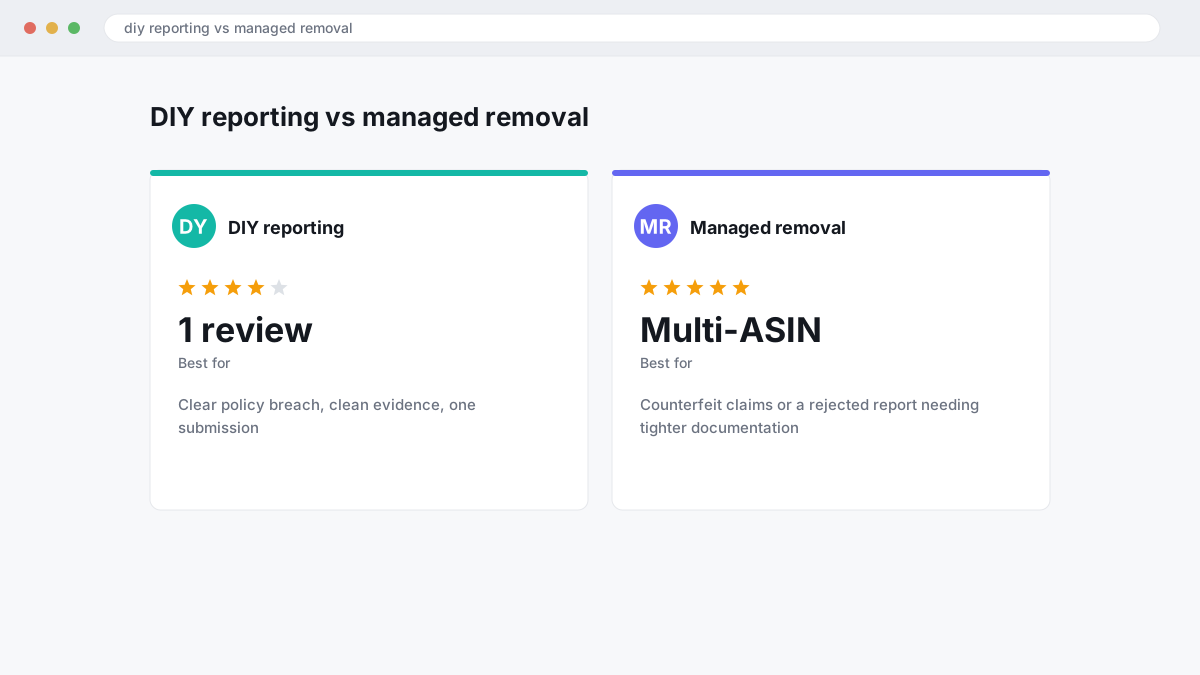
The wrong move is to treat every bad post the same and keep hammering the Report abuse link from the product page. That usually weakens your file. If the breach is obvious in Seller Central or on-page, and you can show the exact policy issue in one submission, DIY is often the cheaper route because Amazon's moderation timeline may resolve a clean report without extra back-and-forth. In BGR Review's log of 12,000+ negative review cases from June 2025 to June 2026, roughly 90% of businesses who came to us after a failed attempt had used only the basic in-platform report button with no supporting documentation, and 70-80% of those first requests had been rejected.
This comparison is usually enough to decide whether to keep it in-house or hand it off.
| Option | Best fit | Effort and speed | Documentation and escalation |
|---|---|---|---|
| DIY | Single review, obvious policy breach, one ASIN | Low effort; wait through Amazon's normal moderation timeline before following up | Use the correct Seller Central route once, attach clear proof, avoid repeat reports |
| Managed removal | Repeat attacks, multi-ASIN issues, rejected first attempt | Higher prep, but less wasted chasing if the first route already failed | Tighter evidence pack, cleaner escalation discipline, and at BGR Review removal is $0 upfront and $449 per removed review link |
If sales are slipping across several listings, or one accusation starts affecting click-through rate, conversions and branded search at the same time, managed help usually earns its cost by stopping random follow-ups and keeping the escalation focused. If you only have one removable breach, do it yourself first.
Where do Amazon policy lines end and legal risk begin when you want a review removed?
Amazon review removal sits on two different tracks: platform policy under the Amazon Community Guidelines, and legal risk such as defamation or undisclosed paid endorsements, and the right track depends on the exact words in the review, your evidence, and your country.
The wrong approach is to call every damaging review “illegal” in the first report. That usually fails because Amazon moderates against its own rules first, not against your broad accusation, so a harsh opinion like “this product is rubbish” often stays live while a false factual claim like “this seller shipped a used item and admitted it” can raise a different issue if you can prove it is untrue. Rules also vary by country and platform, so treat this as general information, not legal advice; in the US, undisclosed incentivised reviews can trigger FTC scrutiny as well as platform enforcement, while UK and EU consumer-protection rules take their own view of misleading commercial practices.
The better approach is to split the claim before you file anything: quote the Amazon Community Guidelines if the review looks like abuse, promotion, off-topic content or an incentivised review, and reserve legal language for specific, provably false factual statements. If the review alleges conduct you can disprove with order records, delivery logs or product authentication, frame the false statement cleanly and keep the evidence tight; if it is opinion, focus on rebuttal, suppression risk and conversion protection instead.
What should you do next if the review stays live and sales are still at risk?
If the review stays live, stop treating it as a one-off flag and run a tracked workflow instead. Triage the highest-risk allegations first, log every report route and status change, and use public mitigation carefully so you do not create fresh policy issues or review suppression risk.
The wrong move is filing the same complaint repeatedly from Seller Central, then posting a defensive reply that asks the buyer to edit or remove the review. That usually fails because Amazon sees duplicate reporting, while a poorly worded public response can make a bad allegation more visible and can trigger moderation on your own account activity. Start with counterfeit or wrong-product allegations, safety claims, and false factual statements that can hit conversions fastest and reduce click-through from branded search.
The better move is a case log: review URL, ASIN or order link, report route used, evidence file name, submission date, Amazon response, and next action. If Amazon leaves the review live, keep the public reply short, factual and buyer-safe: state the product batch, order-check step, or refund path without pressuring the reviewer to change anything.
Where to go from here
Sort the review before you touch the report button. Check whether you are dealing with a product review, seller feedback or a claim that belongs in a buyer-seller message or A-to-z dispute, then match the exact issue to Amazon Community Guidelines or the relevant Seller Central policy. Build one evidence pack first: order ID, ASIN or seller order details, dated screenshots, the review URL, and the single policy reason that fits best. That usually gives you a cleaner first submission and protects you from creating contradictory reports that slow moderation.
If Amazon rejects the first request, treat that as a routing problem before you treat it as a dead end. Generic re-filings rarely help. In BGR Review's case file of 12,000+ negative review cases logged June 2025 to June 2026, roughly 90% of businesses came to us after using only the basic in-platform report with no supporting documentation, and many of those first attempts had been rejected. The next concrete step is either a corrected escalation through the right Amazon route or a managed removal service that will handle evidence, escalation and refusal recovery.