

Quick answer
To rank on Google Maps, tighten the signals Google can verify inside your Google Business Profile and on your location page: correct primary category, complete services, matching name-address-phone details, local relevance on the site, and a steady flow of verified reviews. Google Business Profile Help says local ranking relies on relevance, distance and prominence, so the biggest gains usually come from category corrections, duplicate suppression, review generation and stronger city or service pages. If fake or policy-breaching reviews are hurting trust or clicks, deal with those before you chase new visibility.
This guide comes from live profile work, review campaigns and removal disputes we handle every week for businesses across New York, London and Thornhill. The pattern is usually obvious from the backend: a category edit can take days to settle, duplicate suppression can change map movement before the public listing fully refreshes, and a burst of reviews often lifts calls faster than rankings if the profile was already relevant.
We also see where DIY steps fail. Across 12,000+ negative review cases logged from June 2025 to June 2026, most rejected requests had been filed with only the in-platform report button and no evidence pack, which is why this page focuses on what you can actually fix inside a normal reporting cycle rather than generic local SEO theory.
How Google Maps rankings actually work
Google Maps rankings are Google's local results ordered mainly by relevance, distance and prominence, the three factors Google Business Profile Help names for local ranking. Relevance is how closely your profile matches the search, distance is how near you are to the searcher or the place named in the query, and prominence is the trust Google has in the business based on signals such as reviews, links, citations and brand recognition. The local pack usually shows 3 businesses before a user opens the full map. That shortlist changes fast. A plumber searching from one postcode on mobile can see a different 3-pack from what your office sees on desktop a few streets away.
Maps visibility is unstable because the result set shifts by query wording, device, live location and primary category. “Emergency plumber” and “boiler repair” can trigger different competitors even when the searcher stands in the same spot. In BGR Review's February-July 2026 dataset of 1,485 businesses, trades firms that shared complete enquiry-source data attributed 70-80% of calls and bookings to a Google Business Profile or Yelp listing, which is why small ranking moves matter. Most guides flatten this into one position number. That misses how local search actually behaves.
Set up your Google Business Profile correctly first
A Google Business Profile ranks better on Google Maps when every core field is complete, accurate and stable before you chase reviews or links.
Fill in the basics first: one primary category, any genuinely relevant secondary categories, opening hours, local phone number, website URL and service list. Leave weak fields blank only if they do not apply; do not pad them. Google uses these fields to decide whether your listing matches a search, and a wrong primary category can drag visibility down faster than an empty post ever will.
Use one primary category only because that field carries the most weight. Secondary categories help when they reflect real work you already offer, but stuffing in extras usually creates relevance conflicts, especially after a major edit. A plumber who adds “Bathroom Remodeler” as primary can lose traction on emergency plumbing searches even if the business does both.
If your profile is unverified, under reverification or in reinstatement review, map visibility can stay flat for weeks. That lag catches owners out. After a category edit or address-related verification request, the profile often remains live while rankings soften, then recover only after Google finishes processing the trust checks in the Google Business Profile verification and suspension workflow.
Choose categories and services that match buyer searches
Your primary category is the strongest relevance signal inside Google Business Profile, so it needs to match the search that pays you, not the broad label you prefer internally.
If your best enquiries come from “emergency plumber”, “bridal makeup” or “roof repair”, start with the closest primary category Google actually offers, then use service entries to catch those longer searches. A London salon that chooses “Beauty salon” as primary but sells bridal work often ranks less cleanly for wedding-intent searches than a profile built around the specific service mix buyers type into Google Maps. Google’s own Business Profile Help treats categories as profile labels, not a place to stuff keywords, so adding extra words to the business name will not fix a weak category choice.
If you keep changing categories, Google can lose confidence in what your profile should rank for. Rankings often wobble for several days after a category edit, and the movement can take 7-14 days to settle if the edit also changes services or landing-page relevance. That is where relevance drift starts: you may gain visibility for one term and disappear for the query that actually drives calls.
Pick one primary category, add only real services you actually sell, and leave the setup alone long enough to judge the result.
Build location signals Google can trust
Google Maps trusts location signals when your business name, address and phone number match exactly across your Google Business Profile, your website and the directories Google can crawl. Small mismatches matter: “Suite 4” on your site, “Ste 4” on a directory, and an old tracking number on a citation can split the entity Google is trying to verify. In our own onboarding for review campaigns that start in 24-48 hours, NAP cleanup is one of the first checks because review growth lands better on a profile that already looks consistent.
A real address in the city you want to rank in is stronger than vague service-area wording. Google Business Profile Help allows service-area businesses to hide the address, but hidden does not mean absent from Google’s trust model; the underlying address still needs to be legitimate, staffed or operational according to the profile rules, and close enough to the market you want to appear in. A mailbox, virtual office or keyword-stuffed area list is weak fuel for Maps visibility and can create reinstatement risk later.
If you run a service-area business and hide your address, build nearby proof elsewhere. Put the same NAP in your website footer and contact page, keep the service area realistic, earn reviews that mention the city or neighbourhood naturally, and clean up the main directories before you spend money on promotion. Across BGR Review’s February-July 2026 dataset of 1,485 businesses, local service and trades profiles that built early review signals and reached 20-30 reviews in the first three months were associated with better local visibility, with other ranking factors active at the same time.
Turn reviews into a ranking and conversion advantage
Reviews help your Google Maps profile in two ways at once: they support prominence signals that affect local visibility, and they raise click-through and call rates when searchers compare you with the listing beside you.
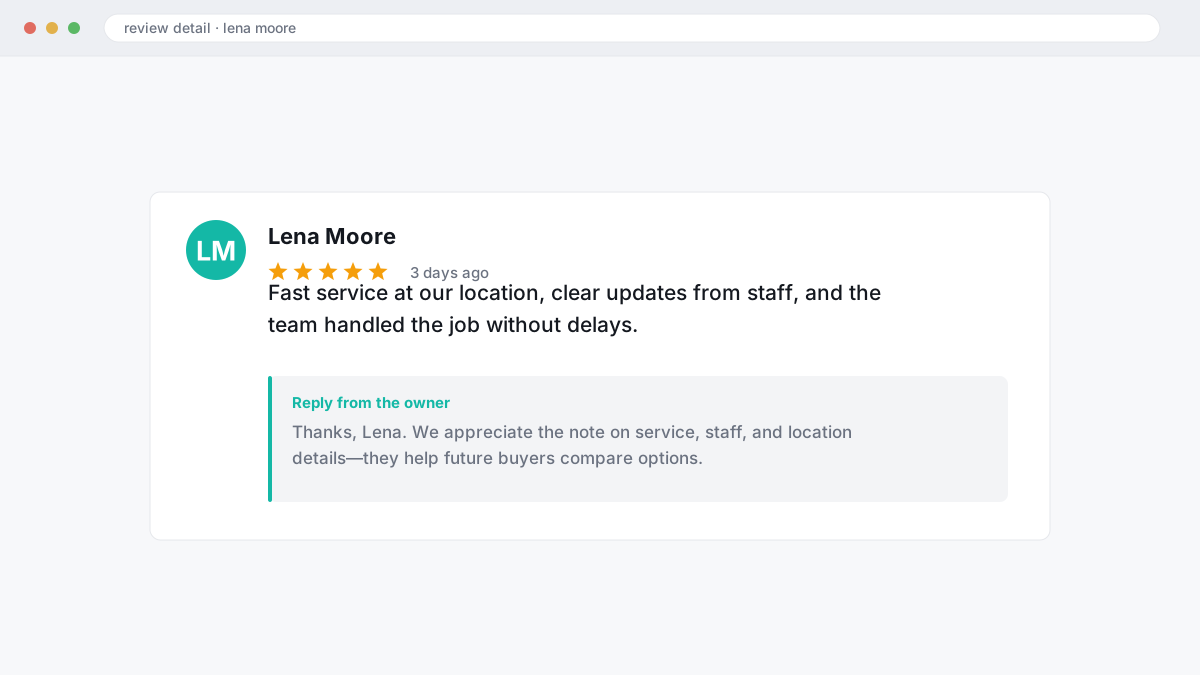
Most guides reduce reviews to star rating. Google reads more than that. The text of a review gives context about services, staff and location, while recent reviews tell both Google and the buyer that the profile is still active. In BGR Review's own dataset of 1,485 businesses observed between February and July 2026, trades firms that reached 20–30 reviews over the first three months were associated with improved local visibility, although other ranking factors were active at the same time.
Ask for the review within 24 hours of the job, visit or delivery. That is the window where the service is still fresh, the customer remembers the exact work, and response rates are usually strongest. Keep the ask simple: send the direct review link, ask for honest feedback, and never script keywords into the request because Google’s fake engagement systems are built to catch forced patterns. If you use BGR Review for review growth, delivery starts in 24–48 hours and review packages carry a 30-day free replacement guarantee.
Reply to every review, including the awkward three-star one. A reply adds fresh activity to the profile, gives you another chance to mention the service in natural language, and often recovers damaged conversions when a buyer sees you handled the complaint properly. The worst move is silence. A weak review with a calm, specific reply usually converts better than a weak review left unanswered.
Publish photos, posts and updates that support prominence
Fresh photos, short-lived posts and timely profile updates help your Google Maps listing look active, which can lift engagement signals even before rankings shift. Stale galleries do the opposite. In live Google Business Profile clean-ups, the profiles that improve fastest usually replace old stock-style images with current exterior shots, team photos and real job or menu images that match what a searcher will see on arrival.
If your business changes visually, runs weekly jobs, or depends on local footfall, add new photos every week. Restaurants, salons, clinics and trades firms benefit most because the profile keeps reflecting current reality. Google Posts do not stay prominent for long, so treat them as short-cycle activity: event posts for dated promotions, offer posts for active deals, and standard updates for service changes, holiday hours or new stock.
Post what a buyer can verify. Before BGR Review starts any review campaign with delivery beginning in 24–48 hours and a 30-day free replacement guarantee, we check that the gallery, hours and recent updates do not contradict the customer experience the new reviews will describe.
Make your website support your Maps rankings
Your website helps your Google Maps visibility when its location pages confirm the same category, services and place signals shown on your Google Business Profile.
If your profile is set to Roofing contractor in Manchester, your local landing page should say the same thing in the title, heading, copy and service blocks instead of drifting into generic wording like “property solutions”. Google cross-checks those entities. A mismatch between GBP category, on-page service language and city terms slows trust, especially after profile edits. Keep each main service tied to a real service area or city page, and make sure the page matches the phone number, address or service-area setup shown in your profile.
Schema markup gives Google cleaner local data to parse. Use LocalBusiness markup with your business name, address or service area, openingHours, telephone, URL and geo-relevant details. Add the coordinates only if they are accurate. We tell clients to treat schema as confirmation, not decoration: if your markup says one thing and your profile or footer says another, the page becomes less useful, not more.
Mobile speed matters because map visits often turn into calls, taps for directions and short page visits. In BGR Review’s own dataset of 1,485 businesses observed from February to July 2026, trades businesses that shared complete enquiry-source data attributed 70–80% of calls and bookings to a Google Business Profile or Yelp listing. That traffic lands on phones first. A slow page, hard-to-tap call button or buried opening hours wastes ranking gains you already earned.
Earn local authority beyond your profile
Off-profile authority is the trust Google builds from mentions, links and brand signals that sit outside your Google Business Profile. Links from a local chamber of commerce, a city news site, a trade association or a supplier directory strengthen prominence because they confirm that your business exists in the place and category you claim. Google Business Profile Help and Google Search Central both point back to prominence as a local ranking factor, and these are the sources that usually move the needle after your profile basics are already clean.
If you changed your business name, phone or address, citation consistency matters more than most guides admit. Old directory entries, stale chamber pages and mismatched Apple Maps or Bing listings can keep feeding conflicting data for weeks after the edit, which is why map movement often lags behind a clean-up. In BGR Review’s dataset of 1,485 businesses observed from February to July 2026, trades profiles gained visibility faster when trust signals stacked up across listings and mentions, rather than relying on the profile alone.
Offline authority counts as well. Branded searches, unlinked press mentions, event sponsorships and association member pages reinforce legitimacy, especially for firms that already generate calls by name rather than by category.
Fight spam listings and fake reviews without risking suspension
Fighting spam on Google Maps means removing false signals with evidence and policy-based reports, not trying to outmanoeuvre abuse with edits that can get your own profile suspended.
If you find an obvious spam listing, save the proof before you touch anything: profile URL, business name, address, phone, website, screenshots, Street View, and the live result that shows the breach. Then use Suggest an edit for clean cases such as a fake address, duplicate listing, or a business operating outside its stated category. Google can accept the edit and leave rankings unchanged for days, or suppress the listing first and reflect the map movement later, so judge the result by the profile status rather than same-day position changes.
Why do most review flags fail? The report button alone rarely gives Google enough to act. Google Business Profile review removals work best when the review clearly breaches a named prohibited-content rule such as spam and fake content, conflict of interest, off-topic content, harassment, or profanity. Across 12,000+ negative review cases logged by BGR Review from June 2025 to June 2026, reviews raised within 28 days and backed by an identifiable policy issue resolved successfully in roughly 90% of cases; beyond 28 days, the observed success rate fell to approximately 25–30%.
Avoid mass edits, review spikes, fake check-ins, Q&A stuffing, or adding city names to your business title unless that is the real-world name. Those shortcuts trip spam signals faster than they improve visibility. If you need help with a fake review, BGR Review handles removals on a pay-after-success basis at $449 per removed link with $0 upfront, but the cheaper route is DIY when you have a clear policy breach and fresh evidence.
Track rankings the right way across neighborhoods
Tracking Google Maps rankings properly means measuring visibility across a service area grid, because one position check from one street tells you almost nothing about how you appear three blocks away.
Use grid tracking across ZIP codes, postcodes or named districts instead of a single citywide screenshot. A plumber can sit in the top 3 near the office and drop out of the local pack a few miles away, especially after a category edit or a review burst. At BGR Review, the reporting that actually helps clients act is weekly or fortnightly grid snapshots tied to service zones, then compared against profile changes such as new reviews, photo uploads and duplicate suppression.
| What to track | Why it matters |
|---|---|
| Grid positions by ZIP code or district | Shows block-by-block visibility, not one vanity ranking |
| Calls, direction requests, website clicks | Confirms whether ranking movement is producing leads |
| Profile edits by date | Helps you link movement to a real change instead of guessing |
Measure conversions beside rankings inside your Google Business Profile performance data. If calls rise while one grid point falls, you may be winning in the districts that matter. If you need outside help, keep reporting simple: rankings, calls, directions, clicks, and the exact change made. BGR Review sells review growth and pay-after-success removals at $449 per removed link with $0 upfront, so those are the actions we tie back to movement rather than dressing up one screenshot as progress.
A practical Google Maps improvement workflow
A practical Google Maps improvement workflow is a 60-day sequence that fixes trust signals first, then adds review and content activity, then measures movement by neighbourhood instead of guessing from one search.
| Window | What to do | What to check |
|---|---|---|
| Week 1 | Correct primary and secondary categories, remove NAP conflicts, fix hours, complete services, and fill weak profile fields such as description, booking link and service areas. | One phone number, one business name format, matching hours on GBP and site pages. |
| Weeks 2-4 | Request new reviews, upload fresh photos, publish profile updates, and refresh local landing pages with the same service and location language buyers use. | Steady review velocity, recent images, updated copy, no sudden review spike. |
| Month 2 onward | Track grid ranks across nearby postcodes, flag map spam, suppress duplicates, and tighten conversion pages so calls and forms convert the visibility you earned. | Movement by area, spam removals submitted, duplicate status, call and lead quality. |
Weeks 2-4 matter because Google reacts better to believable activity than to bursts. In BGR Review’s dataset of 1,485 businesses observed from February to July 2026, new trades and local service firms typically saw first reviews around two weeks after launch, and reaching 20-30 reviews over the first three months was associated with better local visibility. If you use outside help for review generation, keep the pace controlled; our own review packages start delivery in 24-48 hours and include a 30-day free replacement guarantee, but category fit and location relevance still decide whether rankings move.
Month 2 is where you stop editing and start measuring. Use a grid tracker, check live calls against rank changes, and file spam reports with evidence rather than a bare report button; across 12,000+ negative review cases logged by BGR Review from June 2025 to June 2026, most rejected requests came from minimal in-platform reporting with no supporting documentation. If the profile is suspended, fix reinstatement first, because new photos, posts and reviews will not rescue a disabled listing.
Platform rules and legal limits businesses should know
Platform rules and review law set the boundary for what you can ask for, publish and dispute, and the details change by country and platform, so this is general information rather than legal advice.
In the US, the FTC Endorsement Guides require clear disclosure when an endorsement is paid for or incentivised, and the FTC's 2024 Rule on Fake Reviews and Testimonials tightened the risk around fabricated or concealed review activity. Google's Business Profile policies also prohibit fake engagement and misrepresentation.
If a review states false facts rather than opinion, defamation may be a live issue, but the route depends on the wording, evidence and jurisdiction. In the UK and EU, consumer-protection rules on misleading commercial practices also matter, including the UK's DMCC Act framework and parallel EU unfair-practice rules. A one-star opinion is usually hard to challenge in law; a false claim that you never served the customer is a different category.
What actually happens after you flag spam or request a merge in Google Maps?
After you flag spam or request a merge, Google can publish a visible edit within days, ignore the submission without comment, or push it into a deeper review queue. The cases that move best tie screenshots to the relevant Google Business Profile or Google Search spam policy, then log the submission date, response date, and outcome before any escalation.
The wrong move is to submit one report, assume silence means "still under review", and keep filing fresh reports with different wording. That usually buries the trail you need for spam fighting and redressal. Simple edits such as a bad category, closed status, or obvious duplicate profiles can change quickly on the map, but a redressal case against keyword stuffing, fake locations, or ineligible service-area business behaviour often takes weeks because Google routes it through a separate review path.
Merge requests work when the evidence shows two listings represent the same real-world business. Matching NAP details, ownership proof inside Google Business Profile, the two profile URLs, and photos of the same storefront or signage give support something concrete to act on. If the listings conflict on name, address, phone, or site URL, Google often refuses the merge or triggers a verification check, and that can spill into suspensions and reinstatement work if the surviving profile now looks inconsistent.
Documentation changes the outcome. In BGR Review's record of 12,000+ negative review cases logged June 2025 to June 2026, roughly 90% of businesses who came to us after a failed attempt had used only the basic in-platform report button, with no supporting documentation, and 70-80% of those initial requests had been rejected. A rejection does not prove the listing or review is valid; it usually means the first file gave Google too little to act on.
Where to go from here
Open your Google Business Profile and check four things in this order: primary category, duplicate listings, review history, and the page your profile links to. If the category is vague or recently changed, leave it alone long enough to settle before judging the result. If you find a duplicate, suppress that first. If reviews have stalled, build a steady request process from real customers instead of pushing for a spike that can trip Google’s spam filter. If the linked page is thin or points to your homepage when a location or service page would fit better, fix that next.
Your next action should be to decide what the real blocker is. If your profile is clean but competitors keep outpacing you on volume and recency, review generation is usually the constraint. If one or two false reviews are dragging trust down or triggering support time, removal comes first. Expect profile clean-up and page fixes to show before any wider ranking lift does. Maps movement usually follows the clean-up, not the other way round.