

Quick answer
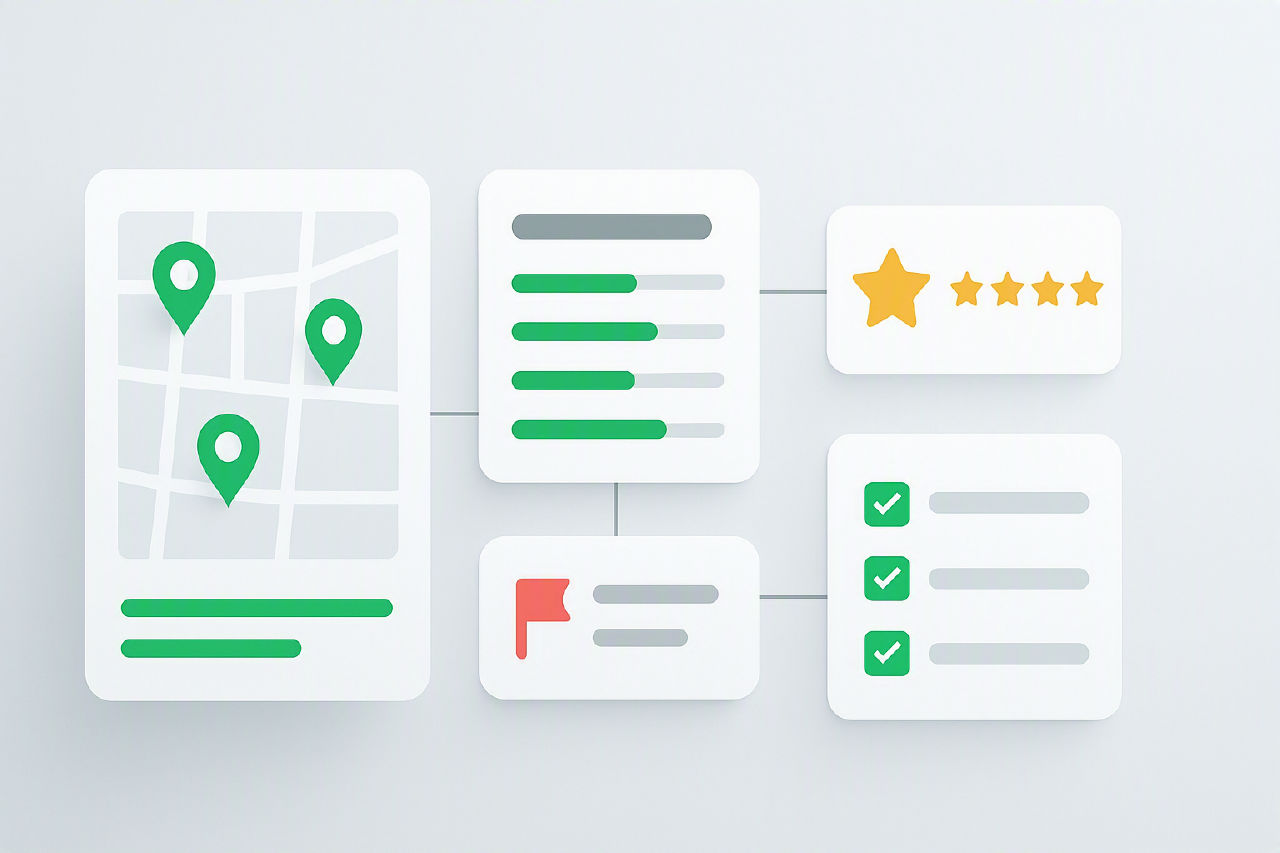
To rank higher on Google Maps in 2025-2026, work the three local signals Google still anchors on: relevance, distance and prominence. For most businesses, that means a correctly categorised Google Business Profile, complete services and location data, policy-compliant review growth, and local landing pages that reinforce the place and service intent. Reviews affect both visibility and conversions because they shape prominence and click-through from the local pack. Avoid fake Google reviews. Google’s fake engagement policy can lead to review removal, filtering and profile trust issues. Fix categories, reviews and landing pages before spending on citations.
This page is written for people deciding where the next budget line goes after rankings stall, reviews disappear, or a profile drops after an edit. We handle that work directly at BGR Review: verified review campaigns with a 30-day free replacement guarantee, and negative review removal on a pay-after-success model at $449 per removed link with $0 upfront.
One detail most generic guides miss: a failed review report usually fails because the business used only the in-profile flag and attached no evidence pack, no policy match and no screenshot trail. That is the gap between theory and the jobs owners actually pay to fix.
How do you rank higher on Google Maps without wasting months on low-impact tasks?
Rank higher on Google Maps by fixing your Google Business Profile first, choosing the categories that match what you actually sell, earning recent policy-safe reviews, strengthening your location page, and then reporting obvious spam. Distance still caps how far you can reach, but relevance and prominence gaps are often fixable inside a 30 to 90 day window.
The wrong approach is random local SEO activity: change the business name, add a few photos, buy citations, post once, then wait. That fails because Google says local visibility is shaped by relevance, distance and prominence, and random edits rarely improve all three in the right order. Start with profile health and verification, make sure your core fields are complete, set the right primary category, add only useful secondary categories, then fix website signals that support the listing. If your profile is healthy, the local pack usually responds to cleaner relevance before it responds to cosmetic edits.
Reviews come next because prominence is built from trust signals, not from review count alone. Generic guides treat reviews like a volume contest; that is where profiles get filtered, stalled or exposed to policy problems under Google’s fake engagement rules and the FTC’s 2024 rule on fake reviews in the US. If you use outside help, keep it policy-safe and recent, with a steady request flow and a 30-day free replacement guarantee on review packages rather than a one-off burst that looks unnatural.
Website work should support the map listing, not drift into a six-month rebuild. Tighten your local landing page, keep NAP consistency, and make sure the service terms on the page match the category terms on the profile. Check spam last, then act fast: if a fake competitor listing or keyword-stuffed profile is blocking your map pack visibility, a structured report matters more than another round of minor edits, just as bad-review removals work better with evidence than with a basic report button alone.
Which Google Business Profile fields actually change Maps visibility first?
The fields that usually move Maps visibility first are business verification, your primary and secondary categories, address or service area setup, core services, hours, and the website landing page linked from your Google Business Profile. Completeness helps, but wrong or missing fields can suppress relevance fast, even before reviews or links have any chance to lift the local pack.
A fully completed but misaligned profile fails because Google Business Profile is built to reflect the real business, not the keyword you want to rank for. A locksmith who selects “Emergency locksmith” as a primary target, lists boiler repair inside services, uploads stock photos, and sets a citywide service area without matching the real operation sends mixed relevance signals and weakens click-through rate when searchers land on the wrong page. An accurately completed profile works because every field supports the same story: verified business, correct category set, real hours, real services, real attributes, real photos, and a landing page that matches the offer and location.
Hours, attributes and photos matter earlier than most guides admit because they shape trust before they shape position. If your profile says “open now” and answers calls, you convert more map-pack clicks into bookings; if holiday hours are wrong, you waste demand you already earned. This is why BGR Review usually tells clients to fix profile accuracy before any review push or a paid package with our 30-day free replacement guarantee, because extra reviews on a mismatched profile increase scrutiny more than conversions.
How should you choose categories so Google understands what you actually sell?
Your primary category should name the service you most need to rank for, and your secondary categories should cover genuine supporting services only. Stuffing every plausible option into Google Business Profile weakens relevance, creates mixed signals, and can trigger edits or suspension reviews.
The wrong approach is broad labelling. A roofer picks “Contractor”, a cosmetic dentist picks “Dentist”, a law firm piles on five practice-area categories, and then wonders why the local pack keeps favouring tighter profiles. Google reads categories as a core relevance signal, so “what you sell most” beats “what you could do if asked”. Before BGR Review starts any Google review work with its 30-day free replacement guarantee, category fit is one of the first checks, because extra review velocity cannot rescue a profile that points at the wrong service.
Secondary categories help when they describe real revenue lines with matching evidence on the profile and site. If your primary category is “Plumber”, adding “Drainage service” or “Water heater installation service” can widen eligible searches if those services appear in your service list and local landing pages. Adding unrelated or marginal services does the opposite. It muddies relevance.
If you are unsure, check the top-ranking competitors for your exact service and town, then compare category choices one by one. You are looking for missed fits, not permission to over-expand. If three leading profiles in the same area all use a narrower primary category than you do, that is a stronger clue than any generic guide. Change the category only when the service is real, documented, and central to conversions such as calls, bookings, and form fills.
Why do Maps rankings stall even when review count keeps growing?
Review growth lifts prominence, but it does not repair weak category targeting, thin local landing pages, hard distance limits, or a spam-heavy result set. When your Google Maps visibility stalls, the next lift usually comes from fixing the blocked signal, not running another review sprint.
The wrong approach is treating more reviews as a cure-all. That fails because reviews are one input inside a local pack result that still weighs relevance, distance and profile support from your site; if a rival is closer to the searcher, uses the cleaner primary category, or sends Google to a stronger city or service page, your extra stars often improve click-through rate and conversions before they improve position. In BGR Review’s dataset of 1,485 businesses observed from February to July 2026, new trades and local service businesses that reached 20–30 reviews in the first three months were associated with better local visibility, but other ranking factors were active at the same time.
The better approach is steady review velocity plus stronger page and profile alignment. A consistent flow of recent reviews with specific service terms, place names and real job detail helps prominence more than a burst that lands over a few days and then stops, especially if Google’s systems start discounting low-trust activity. If you are already using a review package, BGR Review starts delivery in 24–48 hours and backs packages with a 30-day free replacement guarantee, but the ROI move at this stage is usually to tighten categories, improve the matching landing page, and deal with spam rivals that still outrank you on weaker merits.
What improves Google Maps rankings fastest when you need payoff, not theory?
The fastest gains usually come from fixing categories and profile errors, earning recent policy-safe reviews, strengthening the matching location page, and reporting obvious spam inside Google’s local system first. Links and citations still matter, but they rarely beat a bad primary category, weak review velocity, or a fake competitor clogging the local pack.
The wrong move is pouring budget into slow-burn authority work while your Google Business Profile tells Google the wrong thing. A category correction can change relevance faster than a link-building campaign because it affects the query-profile match immediately; if you are a “roof repair” business sitting under a broad or wrong primary category, Google may keep showing you for weak terms and miss the money queries that drive calls, bookings and form fills. The right move is to fix the primary category first, tighten secondary categories, and make sure the linked local landing page repeats the same service language rather than generic brand copy.
Reviews shift trust faster than citations when the profile is already basically sound. In BGR Review’s dataset of 1,485 businesses observed from February to July 2026, new trades and local service businesses typically saw first reviews around two weeks after launch, and reaching 20–30 reviews over the first three months was associated with better local visibility, though other factors were active at the same time. Recent authentic reviews often lift click-through before they lift position because searchers read freshness and detail as proof, and that improves conversions once you are already in or near the map pack.
Spam and competitor abuse can block visibility even when your own profile is clean. The slow approach is accepting fake keyword-stuffed listings, duplicate profiles or ineligible service area businesses as “competition”; the faster approach is documenting the violation, filing the proper spam report, and only then deciding whether you need outside help. If a false review is part of the problem, BGR Review handles removals on a pay-after-success basis at $449 per removed review link with $0 upfront, but blatant listing spam often creates the quickest visibility gain because one bad actor can distort the whole local pack.
How do reviews help Maps rankings without putting your profile at risk?
Use a steady, non-incentivised review process tied to real customer moments, and avoid gating, employee reviews, or bulk bursts from the same network. On a Google Business Profile, Google can filter reviews, ignore suspicious patterns, or escalate abuse signals when review policy violations sit behind the acquisition method.
Most guides treat review generation as a numbers job. That fails because review manipulation leaves a footprint: five reviews landing after six quiet months, identical phrasing, reviewers with no local history, or a wave from the same office Wi-Fi. A safer setup is simple: ask every eligible customer after the job is complete, send one reminder, and keep the request language neutral so you are not selectively soliciting only happy customers. If you use outside help, be clear about the commercial interest — BGR Review sells verified review services, but Google Maps visibility still depends on policy-safe collection rather than raw volume.
Review velocity matters because Google expects a believable pattern, not a campaign spike. In BGR Review’s own dataset of 1,485 businesses observed from February to July 2026, new trades and local service firms usually saw first reviews around two weeks after launch, and reaching 20–30 reviews over the first three months was associated with stronger local visibility while other ranking factors were active at the same time. That kind of steady pace supports local pack trust, lifts click-through rate, and tends to convert better than a profile that looks manufactured.
Owner responses help, but they sit behind acquisition hygiene here. A measured reply can improve trust and conversions after the click, yet it will not rescue a Google Business Profile built on incentivised, fake, or gated review requests. If your map pack visibility is flat, fix the request process before you spend time polishing response templates.
Can reviews get you suspended on Google, or just filtered and ignored?
Yes, review abuse can add to suspension risk when it sits alongside wider policy breaches such as fake engagement, deceptive representation or repeated spam signals. Google usually filters suspicious reviews first, but a filtered review is a warning sign, not a harmless miss.
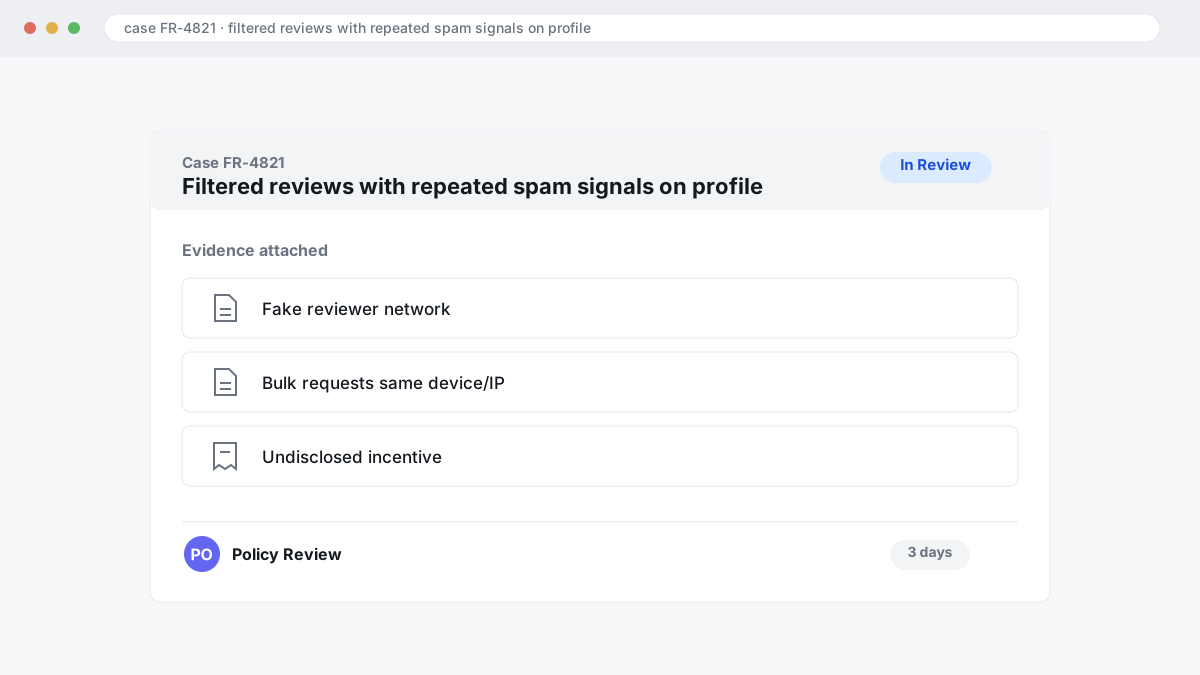
The wrong approach is to treat disappearing reviews as routine and keep pushing harder. That fails because repeated review policy violations leave a trail: fake reviewer networks, review gating, bulk requests from the same device or IP pattern, and undisclosed incentives that breach the Google Business Profile review policy and, in the US, the FTC’s rules on endorsements and testimonials. A profile already under friction from business verification issues, address edits or category changes carries more risk if the review pattern also looks manipulated.
The safer approach is boring and it works: ask every real customer, ask at a consistent point in the job cycle, disclose any incentive where local law requires it, and stop the moment review velocity stops matching real trading activity. If a review gets filtered, audit the request method before asking for replacements. Country and platform rules vary — Google, Trustpilot and Yelp enforce differently — so this is general information, not legal advice.
How do you beat spammy competitors in Google Maps without copying their tactics?
Beat spammy rivals by documenting clear violations, filing precise evidence, and improving your own profile while Google reviews the report. The strongest targets are fake locations, duplicate listings, and keyword-stuffed business names because they distort relevance signals and local pack visibility.
The wrong move is copying the abuse. If you add city names to your business title, create extra listings, or use an address that fails business verification, you can trigger the same clean-up later during a profile edit, a reverification request, or a support review under Google Business Profile’s business representation guidelines. That backfires fast: a profile can hold position for a while, then drop when Google rewrites the name, merges duplicates, or asks for fresh proof of presence.
The better route is a documented spam report. Google’s spam and competitor abuse redressal process works best when you submit dated screenshots, the exact profile URL, map pins showing the claimed address, Street View or building directory evidence, and a short note tying the issue to a named rule breach. Basic reporting fails a lot: across 12,000+ negative review cases logged by BGR Review from June 2025 to June 2026, roughly 90% of businesses that came to us after a failed attempt had used only the in-platform report button with little or no supporting evidence, and 70–80% of those first requests had been rejected.
Focus your time where abuse changes rankings most.
| Abuse type | Why it wins clicks | What to submit |
|---|---|---|
| Keyword-stuffed name | Inflates relevance for service + city queries | Screenshot of profile name, website branding, signage |
| Fake address | Fakes distance and map proximity | Map pin, Street View, directory or suite evidence |
| Duplicate listing | Splits reviews and occupies extra local pack space | Both URLs, matching phone, category, and NAP details |
Keep building your legitimate signals while the report sits in queue: complete categories, accurate service areas, and steady policy-safe review requests.
What should a multi-location Google Maps rollout change after the first three branches?
After your first three branches, Google Maps rollout needs local control backed by central standards. Give each location its own Google Business Profile settings, branch-level categories, review request workflow, hours, local landing pages and clear ownership permissions, because duplication and messy edits cause more damage than slow rollout.
The wrong model is one master profile template copied across every branch with the same primary category, near-identical descriptions and cloned city pages. It saves time, then weakens local relevance: Google sees thin local landing pages, mixed service signals and NAP consistency problems when one branch updates its phone number or opening hours and the others do not. The right model keeps central rules for naming, UTM tagging and permissions, while each branch earns its own reviews, uses the categories that match that branch's real service mix and points to a page written for that location.
Governance starts mattering once more than 3 locations need edits. Put one person in charge of Google Business Profile ownership, keep branch managers on limited permissions, log every category or hours change, and set an escalation path for suspensions, duplicate listings and spam reports before rollout expands again. That structure protects map-pack visibility, click-through rate and conversions, because a single bad bulk edit can suppress branded search demand across every branch tied to the same process.
What do you check first after a Google Maps ranking drop?
Start with the last 30 days, not a fresh optimisation sprint. Check recent Google Business Profile edits, category changes, suspensions, business verification status, review loss and any website or tracking outage before you touch the profile again, because sudden drops often come from your own changes or from one search area rather than a broad Google Maps update.
Most guides tell you to react by rewriting the description, adding more photos and pushing for new reviews. That fails because it stacks noise on top of the real fault. In a proper ranking drop diagnostics workflow, the first checks after a GBP edit are simple: confirm the primary and secondary categories did not change, check for duplicate listings or a merge, confirm no owner or manager was removed, look for missing reviews, then check whether a support ticket, reinstatement request or spam redressal form is already open before you change anything else. If a review disappeared after a legitimate delivery from us, we only discuss replacement under the 30-day free replacement guarantee after those checks are done.
Then compare the loss by query and by place, because a local pack drop in one postcode is different from a profile-wide collapse. Track your position for the exact terms that fell, from the actual neighbourhoods that used to trigger calls, bookings or form fills, and note which competitors replaced you in the map results. Algorithm shifts do happen, but profile-level changes usually explain abrupt falls faster than theory does; if your branded searches still hold while non-branded service terms vanish, that points to relevance, category or verification trouble rather than market-wide prominence loss.
When does DIY Google Maps SEO stop making financial sense?
DIY still makes sense when one location can keep its Google Business Profile accurate, request reviews every week, maintain local landing pages, and run a proper monthly audit without slipping. Paid help starts to make financial sense once a ranking drop, spam and competitor abuse, a suspension, or a multi-site rollout turns slow internal execution into the more expensive option.
The wrong comparison is “agency fee versus free”. Free usually means your own labour, delayed fixes, and weak ranking drop diagnostics after an edit or merge issue.
This is the cleaner comparison to run before deciding:
| Route | Best fit | Cost shape | Speed and risk |
|---|---|---|---|
| DIY | One location, stable rankings, someone owns weekly reviews and monthly GBP audits | Lower cash outlay, higher internal labour | Fine for routine fixes; slow if spam reporting, reinstatement or duplicate cleanup drags on |
| Managed help | Suspensions, spam fights, review-policy issues, multi-location governance | Direct fee, less staff time | Lower recovery risk because evidence, support tickets and escalation get handled in order |
Most guides push the cheapest upfront route. The lower-cost route to recovery is the one that restores visibility fastest and stops more bad data spreading across more locations.
What should your first 90 days on Google Maps look like if rankings are flat?
If rankings are flat, use the first 90 days in order: fix profile accuracy, tighten categories, strengthen page support, collect policy-safe reviews, then escalate spam or recovery work. That sequence cuts wasted effort and shows whether the blocker is relevance, prominence or distance.
Doing everything at once fails because you cannot tell whether a category edit, a weak website link or bad review acquisition is driving the stall. In days 1-14, audit your Google Business Profile before you touch content: primary and secondary categories, business name, phone, service list, website URL, booking link, verification state and duplicate listings. For service area businesses, check that your service areas match where you can actually deliver; stuffing nearby cities into the profile rarely helps and can muddy relevance.
This is the sequence that usually gets movement faster than random local SEO chores.
| Timeline | Priority |
|---|---|
| Days 1-14 | Fix categories, GBP fields, broken links and review-request risk. Avoid gated asks, employee reviews and sudden batch drops that can be filtered under Google's fake engagement rules. |
| Days 15-45 | Build or repair local landing pages for core services, tighten NAP consistency across major citations, and add clearer evidence on-page: service detail, area coverage, trust signals and contact data that match the profile. |
| Days 46-90 | Track map-pack positions, review recency, calls, bookings and form fills. |
Reviews still matter, but staged execution beats a volume sprint. In BGR Review's dataset of 1,485 businesses observed February-July 2026, new trades and local service businesses often saw first reviews around two weeks after launch, and reaching 20-30 reviews in the first three months was associated with better local visibility while other ranking factors were active at the same time. If review count rises and rankings stay flat, stop chasing more volume and check page relevance, citation accuracy, duplicate suppression and competitor spam first.
Where to go from here
Start with a tight audit, not another round of generic local SEO tasks. Check your primary category, secondary categories, duplicate listings, suspended or pending edits, missing reviews, and obvious competitor spam before you touch local landing pages or citation clean-up. That order matters because Google Maps ranking drops often come from profile changes, review loss or map spam, and broad site work will not fix any of those.
If reviews are part of the problem, pull a list of every disputed review URL, the posting dates, the policy issue, and any evidence you have. Expect a clear split at the end of that process: reviews that fit a named Google policy route, reviews that need a response rather than a removal attempt, and issues caused by the profile itself. That gives you a clean next move instead of more guesswork.