

Quick answer
Review management for contractors is a repeatable post-job process: ask for feedback as soon as the work is marked complete, track new reviews across Google Business Profile and relevant third-party review sites, reply quickly, and escalate fake or policy-breaking posts using the right platform route. Google usually comes first because it drives local pack visibility and quote enquiries. Removal is evidence-led, not luck-led. At BGR Review, negative review removal runs at $0 upfront and $449 per removed review link, and review packages carry a 30-day free replacement guarantee.
We handle this as an operating workflow, not a content exercise. The useful trigger is job completion timing: the crew closes the job, the SMS request goes out, a no-reply follow-up lands later, and any negative review gets triaged before someone posts a rushed public argument that weakens the removal case.
That detail matters because platforms behave differently. Google usually needs a policy-fit evidence pack beyond the basic report button, Yelp's recommendation filter can bury perfectly real feedback, and a removal request often fails because the first submission includes no invoice, no address match, and no proof the reviewer was never a customer.
Why do contractor review systems break after the crew leaves the jobsite?
Contractor review generation usually breaks at handoff, not intent. If nobody owns the request inside 24 hours of job completion, replies fall away, the crew has moved to the next site, and you start asking after the customer has mentally closed the job.
Random monthly asks are the wrong workflow because they ignore job completion timing. By the time the office sends a batch message, a roofing customer may still be waiting on a punch-list item, a remodeling client may be arguing over a final invoice, and the only people motivated to answer are the ones at the extremes. That skews your star-rating distribution toward five-star enthusiasm and one-star frustration, with very little in the middle.
A closeout-triggered request works better because it matches the point when the customer still remembers the crew, the clean-up and the result. In BGR Review's dataset of 1,485 businesses observed from February to July 2026, new trades and local service businesses typically got their first reviews around two weeks after launch, and roughly 90% of those early reviews were positive. The practical lesson is simple: ask at closeout, not at month-end.
The break usually happens because no one owns follow-up after the first message. You need one named person to send the request, one follow-up if there is no reply, and a hold on asking until the punch list and billing friction are actually resolved.
How should contractors manage reviews from job completion to published feedback?
A workable contractor review process has one owner, one timeline, and one escape route for complaints. Ask at handoff, send a same-day SMS, follow with email after 48 hours, and intercept problems before they turn into a public one-star review on your Google Business Profile.
Generic reputation advice says “get more reviews” and leaves the jobsite gap wide open. That fails for contractors because review request timing matters more than intent: once the crew leaves, the homeowner gets distracted, the office assumes someone else asked, and the only person motivated to post later is often the unhappy one. The fix is operational, not creative: make one person responsible after closeout — dispatcher, office manager, or CRM automation triggered the moment the job is marked complete.
The sequence should stay fixed. The tech or project lead makes a brief in-person ask during handoff, the office sends a same-day text with a direct Google Business Profile link and a short review request template, then a 48-hour email follows if there is no response. Keep the wording plain: mention the completed job, thank the customer, give one link, and do not scatter them across five third-party review sites on the first touch.
Track the workflow weekly in one sheet or dashboard: sent, opened, clicked, posted, and unresolved complaints. That last column matters most, because a complaint with no callback is what later becomes a damaging public review, lower map-pack click-through, and weaker lead conversion from branded search or local listings. If you want outside help, BGR Review sells review packages with a 30-day free replacement guarantee, but the contractor-side system still has to start with clean closeout ownership.
Which review platforms deserve a contractor’s effort first?
Most contractors should put Google Business Profile first, then add one secondary platform your buyers already use in your area. Google drives local pack visibility and high-intent calls, while third-party review sites usually help branded search, click-through rate and quote conversion more than map rankings.
Trying to push every platform at once is where review collection gets diluted. In BGR Review's dataset of trades businesses with complete enquiry-source data, observed from February to July 2026, 70-80% of calls and bookings were attributed to a Google Business Profile or Yelp listing rather than a standalone website, so a Google-first workflow usually moves the map pack before anything else does. That matters because the extra visibility lifts clicks from nearby searchers who are already comparing star-rating distribution, response quality and recency.
This is the practical order most contractors should use.
| Platform | Priority | What it actually does |
|---|---|---|
| Google Business Profile | First | Direct effect on local pack clicks, calls and form fills for local-service searches. |
| Yelp | Selective second | Useful in some metros, but the Yelp recommendation filter can hide reviews that look solicited or come from low-activity accounts. |
| Trustpilot | Secondary | Supports branded research and conversion once a prospect searches your company name; little value for Maps performance. |
| Angi, Houzz, HomeAdvisor | Case by case | Helpful as supporting credibility on third-party review sites, especially for researched or higher-ticket jobs, but they rarely beat Google for local lead capture. |
Yelp deserves effort only if it already sends leads in your metro or your category is strong there. Trustpilot, Angi, Houzz and HomeAdvisor are usually better used as selective proof points that help conversions after the click, not as the centre of your review system.
How much do reviews really help contractors win calls, quote requests, and booked jobs?
Reviews help contractors most at the conversion stage. They raise trust before the call, steady shortlist decisions on higher-ticket work, and reduce hesitation on quote forms, so you should judge them over an 8- to 12-week window by calls, quote requests, booked jobs, and close rate.
The wrong approach is treating reviews as a vanity metric and chasing a bigger total without checking what happens after the click. That fails because lead conversion usually moves before ranking does: a healthier star-rating distribution, a run of recent reviews, and two or three credible owner replies can lift call intent from a Google Business Profile or third-party review site even when your position in the local pack stays the same. In BGR Review’s dataset of 1,485 businesses observed February to July 2026, trades businesses with complete enquiry-source data attributed 70–80% of calls and bookings to a Google Business Profile or Yelp listing rather than a website, which is why review quality affects conversions directly.
The right approach is to treat reviews as a conversion input and measure them like one. Pull a baseline for 2 weeks, then track 8 to 12 weeks of call volume, quote form completion, booking rate, and close rate after new feedback starts landing; split branded search leads from map-pack clicks if you can, because both often rise together but at different speeds. If your average rating is high but the distribution looks thin, old, or packed with one-line praise, buyers still hesitate; fresh, detailed job reviews and calm owner responses often decide the shortlist before anyone phones your office.
Should contractors handle review management themselves or use a service?
DIY review management fits a low-volume contractor when one office lead can send every request, watch every reply, and answer every review. Managed help earns its keep once missed follow-ups, multi-location routing, or fake-review escalations start wasting time and costing lead conversion.
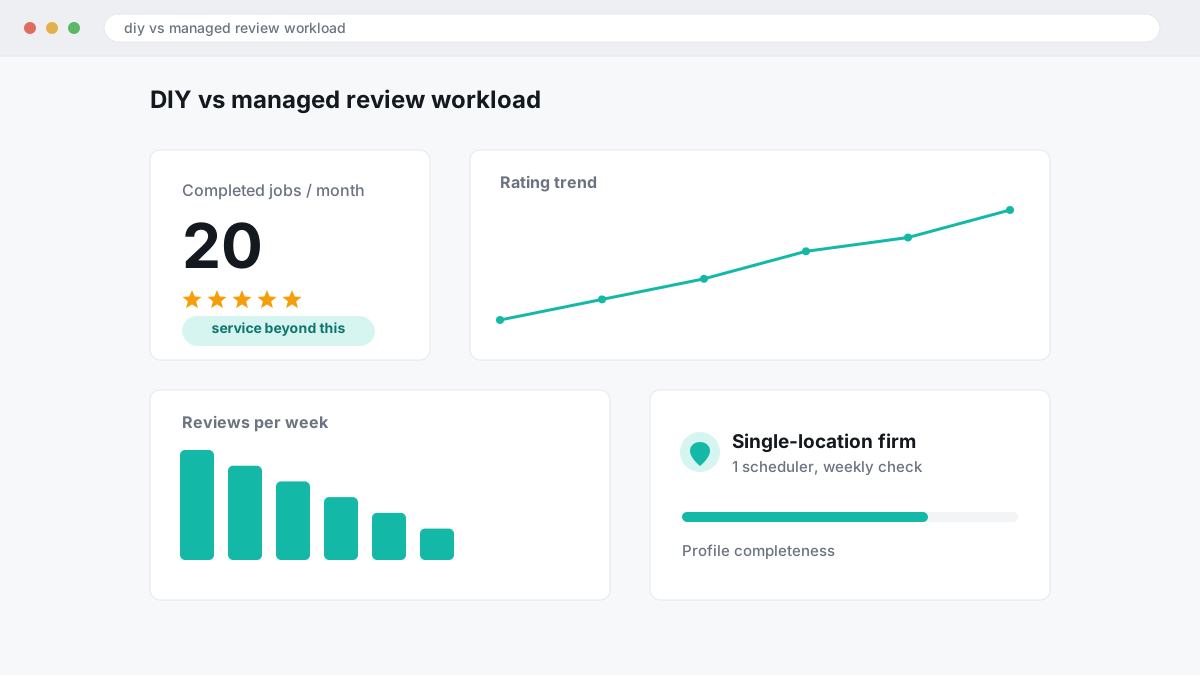
The cheap mistake is assuming lower cash cost means lower total cost. For a single-location firm with one scheduler and fewer than 20 completed jobs a month, a simple job-complete SMS and one weekly check of Google Business Profile can be enough; beyond that, follow-ups slip, negative review response gets delayed, and branch-level accountability disappears. In BGR Review's dataset of trades businesses with complete enquiry-source data, observed February-July 2026, 70-80% of calls and bookings came through a Google Business Profile or Yelp listing, so missed review activity hits the channels that produce the enquiry in the first place.
This comparison is usually clearer in a simple workflow table.
| Model | Best fit | Operational load | Risk points |
|---|---|---|---|
| DIY | One office, under 20 monthly jobs, one person owns requests and responses | Several admin hours each month across sending, chasing, replying, and logging | Missed follow-ups, weak reporting, higher compliance risk if staff drift into review gating or awkward incentives |
| Managed help | Multi-location contractors, multiple crews, recurring review issues | Lower internal drag because monitoring, response handling, escalation, and reporting sit outside the office team | Higher cash cost, but fewer dropped tasks and cleaner routing by branch |
The better approach is to keep DIY until volume breaks the owner-led system, then move the repetitive work out. BGR Review sells managed review support and negative review removal, so the trade-off is plain: you spend more cash, but you reduce admin drag, keep response times tighter, and get an escalation route when a platform issue moves beyond a basic flag. If a fake review needs removal, our model is $0 upfront and $449 per removed review link; if all you need is a weekly request routine for one branch, paying for full management is often unnecessary.
What review request templates work for contractors without sounding pushy or scripted?
Contractor review requests work best when they are short, specific and sent as soon as the job is signed off. A same-day SMS with one Google Business Profile review link and the exact project type usually beats a generic email sent two or three days later.
The wrong approach is the batch message your office sends to every customer: “Thanks for choosing us. Please leave a review.” It fails because it reads like automation, gives no cue about the completed work, and lands after the job-completion timing window has cooled. In BGR Review’s dataset of 1,485 businesses observed from February to July 2026, new trades and local service firms typically saw first reviews appear around two weeks after launch, which fits what contractors already know: speed matters most right after the crew packs up and the result is visible.
Use project-specific review request templates instead. Mention the job type, name the technician or crew leader, add one direct link only, and close with thanks. One link matters because extra choices slow the click, which hurts review completion before it helps your Google Business Profile or map-pack click-through.
Copy these as written, then swap in the project and crew details.
- SMS: Hi [Name], thanks again for choosing us for your roof repair today. If you have 30 seconds, could you leave a Google review for Mike’s crew here: [direct link] We appreciate it. - [Company]
- SMS: Thanks for having us complete your bath remodel, [Name]. If the finish looks right to you, please share it in a Google review for Sarah’s team: [direct link] Thank you. - [Company]
- Email: Subject: Thanks for choosing [Company] for your siding replacement
Hi [Name], thank you for trusting [Company] with your siding replacement. James and the installation crew enjoyed working on your home. If you’re happy with the result, would you leave a Google review here: [direct link] Thanks again for the work. - [Company]
Can contractors ask for Google reviews without crossing legal or platform lines?
Yes, you can ask for reviews after a completed job, but you cannot screen for happy customers only, suppress negative feedback, or use undisclosed incentives. Google Business Profile rules and consumer-protection laws vary by country, so this is general information rather than legal advice.
Most guides say “ask your best customers first”. That is review gating, and Google has long barred it in its prohibited and restricted content policy for Google Business Profile because it distorts what the profile shows. The wrong approach is sending the review link only after a customer gives a positive NPS score, tells the office they are pleased, or replies “great job” to an SMS. That fails because it creates a biased star-rating distribution, raises platform risk, and leaves you exposed when an unhappy customer posts publicly anyway.
The safer approach is simple: send the same review request to every completed job, on the same trigger, with the same wording, whether the work was a boiler install, reroof, or emergency callout. That works because your process is fair, your map-pack click-through looks credible, and your team is not making judgement calls on who counts as “happy enough” to be asked. If you use BGR Review to build verified review flow, the system should follow that rule across Google, Trustpilot and other third-party review sites.
If you offer any incentive that could affect endorsement independence, the FTC endorsement guides require clear disclosure in the US. UK and EU rules also restrict misleading commercial practices, including fake or manipulated review collection, and enforcement can sit outside platform policy. A small thank-you can still create disclosure risk. Hidden rewards are where contractors cross the line fastest.
What should a contractor do when a one-star review is real but damaging?
When the review is genuine, your job is recovery and damage control, not a public fight. A factual reply within 24-72 hours, a clear offline next step, and an internal fix usually protect Google Business Profile clicks and lead conversion better than a defensive exchange.
Most contractors make the problem worse by arguing point by point in public. That fails because the next reader is judging your tone, not the history of the job, and a long negative review response can expose details you should never post on a Google Business Profile: payment disputes, medical information, access codes, or the customer’s private address. Keep the reply short, confirm you take the complaint seriously, correct any clear factual error without sounding combative, and move the conversation to phone or email the same day.
A workable reply sounds like this: “We’re sorry this job fell short. We’ve reviewed the project notes and want to resolve it directly. ” Then log the root cause internally by crew, job type, and location. If three one-star complaints tie back to one install team or one branch, that is an operations problem, not a review problem.
What if a contractor gets a fake review from a non-customer or competitor?
Fake-review removal works best when you tie the post to a named policy breach, not when you say it feels unfair. Pull your customer records, dispatch logs, job history and location details first, then file the report with one clean timeline instead of a rushed complaint.
The wrong move is emotional reporting: “This person is lying”, “We never do bad work”, “Please remove this now.” That usually fails on Google Business Profile because support teams look for policy grounds such as impersonation, conflict of interest or irrelevant content, not your frustration. Across negative review cases with prior self-filed attempts in BGR Review’s records from June 2025 to June 2026, roughly 90% came in with only the basic in-platform report button used and no supporting documentation; in that same group, 70–80% of first requests had been rejected.
The right move is a dated evidence pack. Match the reviewer name, date, service address and claimed job details against your CRM, invoicing, call logs, route sheet and crew diary; if nobody attended that address or the timeline does not exist in your records, say that plainly and attach the proof. Your public negative review response should stay short and neutral: state that you cannot match the reviewer to any booked job, invite them to contact you with an invoice or work-order number, and avoid accusing them of extortion or naming a competitor in public.
If the first report fails, escalate once through platform support with the same dated file rather than rewriting the story from scratch. In BGR Review’s dataset of 12,000+ negative review cases logged June 2025 to June 2026, reviews raised within 28 days of posting and backed by an identifiable policy issue resolved successfully in roughly 90% of cases; beyond 28 days, observed success fell to approximately 25–30%. That is why speed matters on Google Business Profile, and why fake review removal works better as documented policy enforcement than as an argument.
How does review management change for roofing contractors and other high-ticket trades?
Roofing firms need a tighter review process because the spend is high, the timeline slips more often, and buyers read every one-star complaint before they request a quote. Generic “please review us” messages sent days later miss the real trust points, so job completion timing, project detail, and fast recovery carry more weight here than they do for a low-ticket service call.
The wrong approach is to use the same review flow you would use for gutter cleaning or a small repair: one generic SMS after the crew leaves, no routing by job type, and no check on whether the customer is waiting on an insurance claim, a punch-list item, or final debris cleanup. That fails because high-ticket buyers judge lead conversion through specifics. A review that says “full replacement after hail claim, site left clean, final walkthrough done” does more for quote requests than a vague five-star line, and a one-star post about missed cleanup or change-order confusion can pull your star-rating distribution down in a way shoppers actually notice.
The better system sends different asks based on the completed job: leak fix, insurance-backed repair, or full roof replacement. In BGR Review’s dataset of 1,485 businesses observed February to July 2026, roofers usually needed 30–50 reviews before profiles performed consistently, which is why storm-driven volume should trigger tighter routing rather than a blast to every customer at once. Ask for the review after the final walkthrough and cleanup confirmation, not when the last shingle goes on.
How should multi-location contractors route reviews to the right branch and team?
Multi-location contractors keep review quality under control by sending each customer to the exact Google Business Profile for the branch that completed the job, routing complaints to that branch manager within 1 business day, and reporting results by location instead of as one blended score.
One shared link for all branches looks simpler, but it fails fast. Reviews land on the wrong profile, the wrong branch wins the star lift in the map pack, and the manager who can fix the complaint never sees it in time. For multi-location contractors, each estimate email, invoice and completion SMS should use the location-specific review link tied to that branch’s Google Business Profile, so the right team gets the rating, the right reply history, and cleaner lead conversion signals.
Monthly reporting should split three things by branch: review count, average rating and unresolved negative reviews. In BGR Review’s dataset of 1,485 businesses observed from February to July 2026, trades businesses that shared complete enquiry-source data attributed 70–80% of calls and bookings to a Google Business Profile or Yelp listing, which is why branch-level reporting matters more than a blended head-office dashboard. If one branch slips, you want that visible before it drags down branded search demand and call volume in that service area.
What should a contractor do in the next 30 days to build a review system that sticks?
Start with one platform, one owner, one request sequence, and one weekly scorecard. Contractors usually get better results from a 30-day rollout tied to job closeout than from a big software setup that nobody on the crew uses after week two.
Week 1: pick Google Business Profile first, then add one third-party review site only if your trade actually wins work there. Set one owner in the office, build direct review links, and make the trigger simple: job marked complete in your CRM or invoice tool. In BGR Review's dataset of 1,485 businesses observed February to July 2026, trades businesses with complete enquiry-source data attributed 70-80% of calls and bookings to a Google Business Profile or Yelp listing, so this step affects lead conversion fast.
Big-bang rollouts fail because nobody owns the follow-up, review request templates stay in draft, and complaints bounce between estimator, office and crew lead. Week 2: send one SMS and one email on every completed job. Weeks 3 and 4: answer new reviews within one working day, route service complaints to one manager, and keep a fake-review escalation log with the review URL, screenshot, reviewer name, job record check and platform action taken.
Where to go from here
Your next move is simple: tighten the review trigger on job completion, send one SMS request while the crew has just finished, set one follow-up for non-responders, and assign one person to answer every new review within 24 hours. That fixes the part most contractor teams leave loose. It also gives you cleaner star-rating distribution, better map-pack click-through, and stronger conversions from calls and form fills because the prospect sees fresh proof tied to real completed jobs.
If a fake, irrelevant or clearly policy-breaching review is already hurting lead flow, assess removal before you spend more on ads or Local Services. The useful check is narrow: which platform holds the review, which policy it appears to breach, what evidence you can prove today, and whether the review is still within the early window where action tends to work better. In our removal work, the cases that move fastest usually have a clear policy issue and a proper evidence pack, not just an in-platform flag.
If you do it yourself first, document everything before you click report.