


Quick answer
Citations are mentions of your business name, address and phone across directories, map apps, review platforms and industry sites. In 2026, they still affect local SEO, but the job is source control rather than raw volume. Start with Google Business Profile, then match the same core details on Apple Business Connect, Bing Places, Yelp and the main data aggregators in your market. Google Business Profile guidelines require your business name to reflect your real-world branding, so inconsistent naming, old numbers and duplicate listings create ranking friction and waste leads.
This guide comes from live listing and reputation work, where the delays usually start after the obvious fixes: an old agency still owns the profile, postcard or phone verification stalls, a duplicate stays live in Apple Maps, or a corrected source record takes weeks to flow downstream. Those are the parts generic posts skip.
BGR Review handles managed review and reputation work for 15,000+ businesses and 1,240+ verified clients, so the handoff between listings, review platforms and lead tracking is part of the process, not an afterthought. If you are deciding between DIY and a provider, this rewrite is built around the practical points that change calls, clicks and booked leads.
Why do most citation guides waste time on volume instead of source control?
Citation work pays off when you treat it as source control, not a race to submit 50 directories. Lock your primary profiles, remove or suppress duplicates, and account for update lag before you expand; otherwise you push bad data further out and make the clean-up slower.
Most guides tell you to blast long-tail listings first. That fails because Google Business Profile, your Apple and Bing records, and any duplicate versions of them shape local pack visibility long before a thin directory profile does. If your Google Business Profile still shows an old phone number, an old practitioner listing, or a duplicate storefront, every extra submission just multiplies the conflict. In BGR Review’s citation clean-up work, the first step is always ownership and source verification before any submission list is touched, because old agency logins and unclaimed profiles waste more time than the actual edits.
The right sequence is narrower. Set Google Business Profile as the working source of truth for name, address, phone, category and hours, then fix duplicates on the major platforms, then push outward. Data aggregators help later, but they also introduce lag: a corrected source record can take weeks to filter into downstream directories, and changing everything at once makes it harder to tell whether a bad listing is a fresh scrape or an old feed still catching up. That is why BGR Review tracks edit dates and verification status before expanding distribution.
Which citations move visibility and leads first for a local business?
Your highest-return citation targets are usually the core profiles first: Google Business Profile, Apple Business Connect, Bing Places and your Yelp business listing. They change map accuracy, branded click-through and customer trust faster than low-traffic directories that rarely send a visit, call or booking.
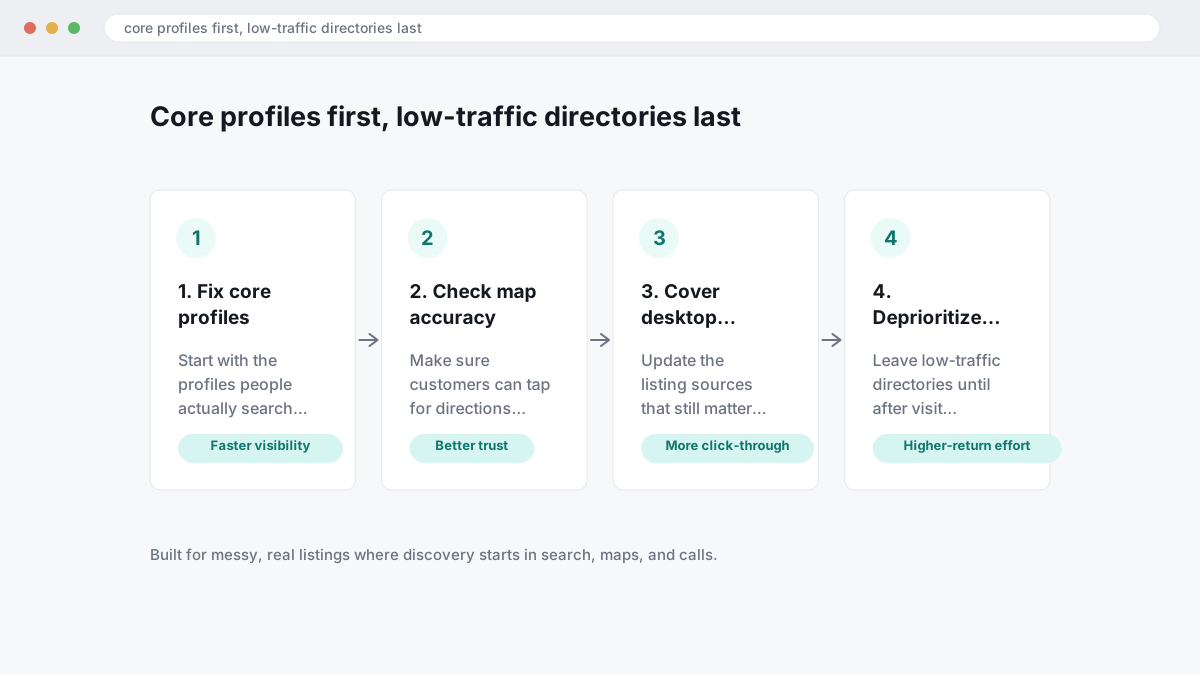
Most guides spread effort evenly across 50 or 100 directories. That fails because discovery starts where people actually search, tap for directions and call from the listing. Google Business Profile drives local pack visibility and branded searches, Apple Business Connect fixes what iPhone users see in Apple Maps, Bing Places still matters for desktop and Copilot-driven lookups, and Yelp can produce direct leads in service categories; in BGR Review's dataset of trades businesses with complete enquiry-source data, observed February to July 2026, 70-80% of calls and bookings were attributed to a Google Business Profile or Yelp listing.
The better order is simple: lock the core profiles first, make every field match exactly, then expand. Exact means business name, primary phone, street format, website URL, opening hours and business categories align across Google Business Profile, Apple Business Connect, Bing Places and Yelp before you touch second-tier directory submissions. If one core profile still shows an old suite number, tracking number or outdated service area, you create branded-search confusion and weaker map-pack clicks while downstream sites copy the wrong source.
Second-tier directories still matter, just later. At BGR Review, if you hire help for reputation work, the useful spend goes into source control and clean-up before volume, the same logic behind our pay-after-success removal model at $449 per removed review link with $0 upfront: fix the records that affect visibility and lead flow first, then build out the long tail.
How should you build citations in the right order when listings are already messy?
Build in this order: inventory every live listing, standardise your NAP consistency, business categories and website URL, claim the core profiles, fix duplicates, then expand into industry and local directories. That sequence stops bad source data spreading and gives you a cleaner base for tracking calls, clicks and booked leads later.
Most guides tell you to start submitting from scratch. That fails fast. If an old agency already created a Google Business Profile, Yelp business listing or Bing Places profile with the wrong phone number, suite format or homepage URL, every new submission adds another conflicting record. Start with a citation audit instead: search your brand name, old numbers, old domains and old addresses, log every live profile, then choose one canonical version of your business name, address, primary phone, main landing page and core business categories. At BGR Review, this is the same source-control step we run before any listing or reputation work because cleanup after publication always takes longer than cleanup before it.
Claim the core profiles before you touch data aggregators or niche directories. For most local businesses, that means Google Business Profile first, then Apple Business Connect, Bing Places and Yelp, because those profiles affect map-pack visibility and lead flow before a long tail of directory links does. If you skip ownership and push data into aggregators first, update lag and duplicate creation get worse, especially when an old listing still has a live verification route tied to a former staff member or agency login.
Use three tiers. Tier 1 is the core platforms you can verify and control directly. Tier 2 is industry-specific listings that match your service type and category structure. Tier 3 is supporting local directories, chambers and city portals. If you are paying a provider before Tier 1 is clean, you are paying to spread errors; that applies whether you do it yourself or hire a service like BGR Review, which openly sells review and reputation work and keeps its guarantees specific: 30-day free replacement on review packages, and negative review removal only on a pay-after-success basis at $449 per removed link with $0 upfront.
Where does NAP consistency actually break, and which mismatches matter enough to fix?
NAP consistency means your business name, address and phone need to match closely enough across the sources that matter to avoid confusion. The mismatches that usually damage trust and local pack visibility are old phone numbers, outdated addresses and duplicate variations on core profiles, not every stray comma or "St" versus "Street".
Most guides send you chasing punctuation. That fails because Google Business Profile, Apple Business Connect, Bing Places and major directory records can usually tolerate minor formatting differences, while an old tracking number or pre-move address creates a different business entity. The right fix is source control: lock your real phone, current address and canonical business name on your main profiles first, then mirror that format in your website footer and schema markup so downstream directories have one version to copy.
If you run a service area business, hidden addresses need extra care. Google Business Profile rules for service area businesses do not allow you to show an address at your listing unless customers can visit during stated hours, so exposing a hidden home or warehouse address in citations creates conflict instead of consistency. Rebrands are slower again: mixed name variants often linger across directories for 6 to 12 months, especially when an old agency still owns logins or a Yelp business listing keeps an earlier suite field live.
Can bad citations and duplicates suppress local visibility even without a manual penalty?
Bad citations usually hurt through confusion rather than penalties. Duplicate listings, wrong business categories, and stale contact details split signals across platforms, weaken relevance, and send people to the wrong place even when Google never applies a formal action.
Most guides fixate on penalties, then tell you to submit more directory listings. That fails because the drag usually comes from signal splitting: one profile gets reviews, another gets clicks for directions, a third keeps the old phone number. Google Business Profile, Apple Business Connect, Bing Places and Yelp all feed user signals back into local discovery in different ways, so duplicate listings can dilute local pack visibility before you see any obvious ranking drop. You often notice it first in conversions: fewer calls, wrong-way driving requests, and branded searches that end on an outdated profile.
Wrong categories create a quieter problem. If a directory syndicates you as “marketing agency” when your Google profile is set up as a plumber, relevance weakens on category-led searches and the mismatch can keep respawning downstream. An inaccurate map pin does the same kind of damage. It does not trigger a warning, but it lowers trust fast when a customer taps for directions and lands at the wrong entrance or an old office.
Fix the source record, suppress the duplicate, then correct the category and map location on the profiles that drive calls first. If you pay for outside help, do that before any review campaign, because BGR Review’s 30-day free replacement guarantee applies to review packages, not to leads lost from a bad pin or split profile history.
How do you fix duplicate citations before they keep respawning elsewhere?
Fix duplicate listings by finding the source record first, then using each platform’s merge or suppression route. If you remove visible copies on downstream directories and ignore the upstream source, the duplicate usually returns on the next sync from data aggregators or a stale platform record.
The common mistake is deleting whatever you can see in search results and calling the job done. That fails because the wrong name, address or phone number still lives in the source record, an old bulk upload, or a forgotten agency-managed profile, so the bad citation keeps feeding fresh copies into Google, Bing Places and smaller directories. Ownership is what slows this down most: the duplicate often sits under an old login, while the live listing sits under another.
Start with the record that is pushing data outward, then work down the chain. If the duplicate came from a data aggregator, fix or suppress it there before you touch niche sites; if it lives natively on a platform, use that platform’s own merge path and keep proof of the correct NAP, website and category ready for verification. A clean spreadsheet beats memory here, because you need the listing URL, status, owner email, submitted date and the next review date for at least 30 to 90 days.
This is where platform differences matter.
| Platform | What usually works | What causes reappearance |
|---|---|---|
| Yelp business listing | Request a merge for true duplicates and keep the stronger live profile active | A second claimed listing or mismatched suite, phone or category |
| Bing Places | Use duplicate suppression or claim correction, then verify the surviving profile | Microsoft data re-syncing from an unchanged source record |
| Smaller directories | Update after the source is fixed | Aggregator feeds overwriting your manual edit |
Yelp and Bing do not handle duplicates the same way, so a copy-paste workflow wastes time. Yelp often keeps one listing live and folds signals into it, while Bing can suppress a duplicate but still surface it again if the upstream feed was never corrected. If you want the clean-up to stick, monitor the re-sync window for 30 to 90 days and recheck the same URLs, not just branded search results.
How do data aggregators help, and when do they just slow down clean-up?
Data aggregators speed distribution, but they do not fix your whole listing footprint. They push clean business data to many downstream sites, yet claimed profiles, duplicate records and publisher-specific update delays still need direct manual work.
Most guides tell you to submit one feed and wait. That fails because major platforms such as Apple Business Connect and Bing Places still reward direct ownership, direct verification and direct edits, especially when an address, phone number or category has changed. An aggregator can improve coverage on smaller directories, but it will not usually overwrite a profile you, an old agency or a franchise account already claimed.
The right approach is split control. Use data aggregators to spread a clean source record outward, then log into the platforms that matter and fix those manually first. That works because you control the records that drive calls and map-pack clicks, while the feed handles the long tail in the background.
Update lag is where clean-up slows down. A source record may be corrected today, while downstream publishers refresh on their own cycle weeks later, and some never pull the new data until the next match event. If a duplicate in Bing Places or a bad Apple Business Connect entry is already live, the aggregator feed rarely suppresses it on its own, so paying for distribution before duplicate cleanup usually means you wait longer and still end up doing manual work.
How do you measure citation ROI instead of counting listings?
Measure citation ROI through attributable actions, not listing counts. Add UTM tracking where a directory lets you use a custom website URL, compare calls and booked leads before and after the core fixes, and split direct referral visits from assisted branded-search conversions.
The wrong report says you built 40 citations. That fails because a live listing on a weak directory can produce nothing while a corrected Google Business Profile, Apple Business Connect, Bing Places or Yelp business listing can change click-through from the local pack and lift call volume within the next reporting window. In BGR Review's own dataset of trades businesses with complete enquiry-source data, observed February to July 2026, 70-80% of calls and bookings were attributed to a Google Business Profile or Yelp listing rather than a standalone website, so raw listing totals tell you very little about lead flow.
The right report tracks actions before and after the fixes: calls from tracked numbers, direction requests inside Google Business Profile, form fills, and booked jobs in your CRM. Use UTM tracking on directory links that allow it, keep naming consistent, and separate three buckets in reporting: referral sessions, local-pack clicks that later convert direct, and branded searches that rise after your profile data and review platforms look cleaner.
Review platforms often assist conversions even when analytics shows little referral traffic. A prospect can read Trustpilot, Yelp or Clutch, search your brand later, then click your main site or call from maps; if you only count last-click directory sessions, you will understate the value of citation work and miss the branded-demand lift that follows better source control.
When is manual citation work smarter than paying for a service?
Manual citation work fits a smaller footprint with awkward exceptions. A service fits when you need speed across many listings. Compare them on duplicate control, category accuracy, ownership recovery and maintenance load, then on price.
The cheapest tool usually loses because software can submit data fast while leaving the hard parts untouched. Your citation audit still needs a person to check duplicate listings, wrong business categories, old agency logins, closed locations and tracking clutter such as broken UTM tracking on website links. If you have one location and a short list of core profiles, manual work often wins because you can claim directly, suppress duplicates properly and keep source records clean instead of spraying the same data everywhere.
Services earn their fee when scale is the problem or when clean-up is blocking lead flow. Ask one question early: are they directly claiming and editing key profiles, or pushing updates through data aggregators and waiting for downstream sites to catch up. Syndication helps coverage, but it is slower on exceptions, weaker on category fixes, and poor at stubborn duplicates that keep respawning from an old source record.
This is the buying decision most teams actually need to make.
| Approach | Works best when | Trade-off |
|---|---|---|
| Manual claiming and clean-up | One to nine locations, messy profiles, ownership issues, duplicate suppression | Slower, but you keep full control over exceptions and UTM tracking |
| Software subscription | Stable data, broad distribution, routine updates | Lower monthly cost, weaker on direct claiming and one-off clean-up |
| Managed project | Multi-location rollouts or listings already damaged by bad syndication | Higher upfront project cost, less internal time spent chasing fixes |
BGR Review sells reputation services, so the practical advice is simple: pay for a managed citation project when your staff would spend weeks untangling access, duplicates and aggregator conflicts. Do it yourself when the footprint is small and the real value comes from careful edits on a handful of profiles.
What changes when you manage citations for ten, fifty, or hundreds of locations?
Multi-location citation building fails at the governance layer before it fails at the submission layer. Set one approved standard for trading name, address format, business categories, landing-page URLs and ownership rules in a central source file, or local edits will keep reintroducing errors across dozens of listings.
Most guides treat scale as a software job. That breaks fast. A bulk upload can push the same bad suite number, the wrong Google Business Profile category, or a homepage URL to 50 locations in one go, and then each mismatch starts feeding duplicate listings, map-pack confusion and weaker click-through from the wrong landing page.
The workable setup is dull and strict. Run a citation audit first, lock the editable fields for hours, primary and secondary categories, phone numbers and location-page URLs, and decide who can change what. Service area businesses need even tighter rules because staff often try to add hidden addresses, extra cities or keyword-stuffed names that conflict with platform guidelines and trigger reversions later.
Franchise networks usually drift when local operators log into Yelp, Bing Places or Google Business Profile and “fix” a listing without updating the master record first. One branch adds holiday hours, another swaps to a call-tracking number, a third changes categories, and your next bulk sync republishes stale data. If you outsource, insist the provider works from one approved source file with named owners per platform; that is the intake structure BGR Review uses before any multi-location build starts.
What should a citation audit checklist include before you touch another listing?
A usable citation audit starts with ownership, exact NAP consistency, categories, destination URLs, duplicate status and a clear priority tier in one sheet. If those fields are missing, you cannot sequence fixes, and you cannot tell later whether the work changed map-pack clicks, calls or booked leads.
Most guides tell you to keep a directory list. That fails because a list does not show who controls the login, which profile sends traffic first, whether a duplicate is still live, or whether the homepage and schema markup point to the same business identity. The sheet that actually works tracks ownership, priority and outcome together, which is the format we ask for before any paid listing clean-up or review work at BGR Review.
Use this order before you touch a single listing:
- Tier 1: Google Business Profile, Apple Business Connect, Bing Places and your Yelp business listing. Record owner email, exact business name, primary category, phone, landing page, hours and duplicate status.
- Tier 2: key industry and local directories that rank for your branded search or send referral clicks. Add status fields for submitted, verified, corrected and suppressed.
- Watchlist: low-value sites, old agency-built profiles and aggregator-fed listings. Monitor them after source fixes because update lag can keep bad data live for weeks.
- Site check: confirm the homepage footer, contact page and schema sameAs links match the Tier 1 records exactly.
Where to go from here
Treat your citations like infrastructure. Start with one source record for your business name, address, phone, categories and service area, fix ownership on Google Business Profile, Apple Business Connect, Bing Places and Yelp, then suppress duplicates before you add anything new. That order matters because duplicate listings, old agency logins and verification delays are what usually hold back local pack visibility, click-through rate and lead flow.
Your next step is simple: run a citation and reputation audit against the listings that already exist. You should expect a usable output, not a spreadsheet dump: live listings by platform, NAP mismatches, duplicate risks, missing categories, review-platform gaps, ownership problems and a priority order for fixes. Add UTM tracking to the links you control so you can tie map-pack clicks to calls, form fills and booked jobs.
If your listing estate is messy, BGR Review handles this by starting with source-control fixes, duplicate mapping and ownership recovery, then tracking what changes after the clean-up. Expect some lag. A corrected source record can take days or weeks to flow through downstream directories.