


Quick answer
A cease and desist for online defamation is a formal demand to stop publishing false factual claims, remove the post or review, and preserve evidence such as screenshots, timestamps and account details. It is not a court order, so it only works if the facts are strong, the wording is precise, and you are ready to escalate when ignored. In review disputes, the best route is usually dual-track: send the letter and file a platform report tied to a named rule, such as Google Business Profile’s prohibited and restricted content policy, using the exact review URL.
We handle this in the order platforms and solicitors actually need it: capture the live review, pull the direct link, map the statement to defamation or a policy breach, then decide whether a notice, a platform escalation or a paid-after-success removal case is the fastest route. The field that often decides the outcome is simple: the exact review URL and a short explanation of why the claim is false fact rather than opinion.
That matters because most failed self-filed reports are thin. In BGR Review’s case file covering 12,000+ negative review cases logged June 2025 to June 2026, roughly 90% of businesses who came to us after a rejection had used only the in-platform flag with no supporting evidence.
When does a cease and desist actually help with an online defamation problem?
A cease and desist letter helps fastest when the statement is plainly false, the harm is documented, and you demand a specific remedy by a short response deadline such as 7 to 14 days. It is a demand letter, not a court order, so it has force through clarity and risk, not automatic legal enforcement.
Most guides treat a cease and desist as the fix for online defamation. That fails with false reviews because platforms do not remove posts just because you sent a letter; Google Business Profile, Trustpilot and Yelp each look for their own policy breach or a clear legal basis. In BGR Review's log of 12,000+ negative review cases from June 2025 to June 2026, reviews raised within 28 days of posting and backed by an identifiable policy issue resolved successfully in roughly 90% of cases, while comparable cases raised after 28 days fell to approximately 25–30%.
The better approach is narrower. You send the notice to pin down the false factual claim, state the remedy you want, and set a response deadline, then you use the same facts inside the platform complaint and escalation path. That works because defamation arguments land better when the statement, evidence pack and requested action all match; if you need removal help, BGR Review's model is pay after success at $449 per removed review link with $0 upfront, which is often more practical than sending letters into a dead inbox.
Why do generic cease and desist guides fail on false reviews and forum posts?
Most cease and desist guides fail because platforms do not remove a post just because your business sends a legal-sounding demand. False-review disputes usually turn on the evidence pack, the platform policy you cite, and the reporting route you use alongside any letter.
Generic templates blur defamation, copyright and trademark into one page of legal prose. That fails on review sites and forum posts because Google Business Profile, Trustpilot and Yelp assess their own content rules first, not your accusation alone. In BGR Review's dataset of 12,000+ negative review cases logged June 2025 to June 2026, roughly 90% of businesses who came to us after a failed attempt had used only the basic in-platform report button with no supporting documentation, and 70–80% of those initial requests had been rejected.
The stronger path starts with the publication channel, not the threat. A review removal workflow works when you match the facts to the right policy ground, then attach an evidence pack that proves it: no customer record, impossible timeline, proof of impersonation, or screenshots showing the same post copied across profiles. That gives the platform moderator something they can action under named rules, and it gives your cease and desist letter the same factual spine if the author, host or solicitor later reads it. Legal notice still has a place. It works far better after the evidence-and-policy match is already in motion.
Is the post a damaging false statement or just an opinion you cannot force down?
You can usually challenge a review only when it makes a checkable false statement of fact that damages your reputation. Pure opinion, rhetorical abuse, and taste complaints are far harder to force down through a cease and desist or a defamation claim. In law, written defamation is usually called libel, so a Google review, Trustpilot post, forum thread, reposted screenshot, or captioned image can all fall into the same bucket if the statement is published to other people. “The food was awful” sits on the opinion side of opinion vs fact. “They reused syringes” asserts a fact you can test against records, staff logs, and basic reality.
The wrong approach is to treat every nasty post as defamation and threaten a lawsuit. That fails because platforms and solicitors look for falsity first, then publication, reputational harm, and usually measurable damage such as lost calls, bookings, form fills, weaker branded search demand, or a hit to map-pack click-through after the allegation appears. The right approach is narrower: isolate the exact sentence that is verifiable and false, then tie it to harm. In BGR Review’s case file of negative review cases with prior self-filed attempts, logged June 2025 to June 2026, roughly 90% came with only the basic report button and no supporting documentation, and 70–80% of those initial requests had been rejected. Broad outrage rarely moves a platform. A specific false factual allegation sometimes does.
What evidence should you gather before you send anything?
Build your evidence pack before you send a cease and desist. Save the review URL, the username, posting timestamps, account details visible on the profile, and full-page screenshots, then pull the records that disprove the claim so the same file can support a platform report and any later solicitor or court step.
Send first and document later is the mistake that weakens a libel complaint. Reviews get edited, usernames change, forum threads move, and a screenshot that crops out the URL or date is far less useful when Google Business Profile Help, Trustpilot flagging, or a solicitor asks what exactly was published. Across negative review cases with prior self-filed attempts in BGR Review's records from June 2025 to June 2026, roughly 90% had used only the basic in-platform report button with no supporting documentation, and 70-80% of those first requests had been rejected.
The stronger approach is to preserve proof before contact. Keep the full page, then save the business records that contradict the statement: invoices, appointment logs, CRM notes, signed work orders, delivery records, refund history, and call recordings where lawful in your country. If the post says “they never turned up”, your attendance log matters more than your opinion about the reviewer’s motives.
Log damages as they happen. Note map-pack ranking drops, fewer calls, lost leads, cancellations, branded search queries that now surface the allegation, and emails from prospects asking whether the claim is true; if the matter later moves into BGR Review’s pay-after-success removal process at $449 per removed link with $0 upfront, this timeline helps prioritise which links are costing you the most.
How do you write a cease and desist letter that sounds credible without overreaching?
A credible cease and desist letter quotes the exact words, shows why they are false, states the harm, asks for a defined remedy, and sets a 7-14 day response deadline. It sounds serious because it is precise, not because it makes grand threats you cannot carry through.
The weak version says you have been “defamed online” and demands everything disappear immediately. That usually fails because the reviewer, the platform, or a solicitor cannot tell which statement you mean, whether it is fact or opinion, or what you will actually do next. In the review-removal files that reach BGR Review after a failed self-filed attempt, the problem is often the same: broad claims, thin evidence, no clean link between the words used and the policy or legal ground relied on.
The stronger cease and desist letter works line by line. Identify the statement verbatim, add the URL, profile name, review date, and screenshots, then explain why it is false with one piece of proof per point: “states you were never a customer; attached booking log shows no matching name, phone, or invoice.” Then demand a remedy that matches the problem: remove the post, correct the false factual claim, preserve relevant messages and account data, and confirm there will be no republication elsewhere.
Keep the response deadline realistic. Seven days suits a live review that is hurting map-pack click-through and conversions now; 14 days is more defensible if you are following a formal pre-action protocol through a solicitor. Rules vary by country and platform, so this is general information, not legal advice.
What should a defamation cease and desist template include so you can adapt it fast?
A useful cease and desist letter template is modular, not generic. It should let you drop in the publication details, the exact false statement, the evidence pack, the remedy you want, a response deadline, and a short caveat that rules vary by country and platform.
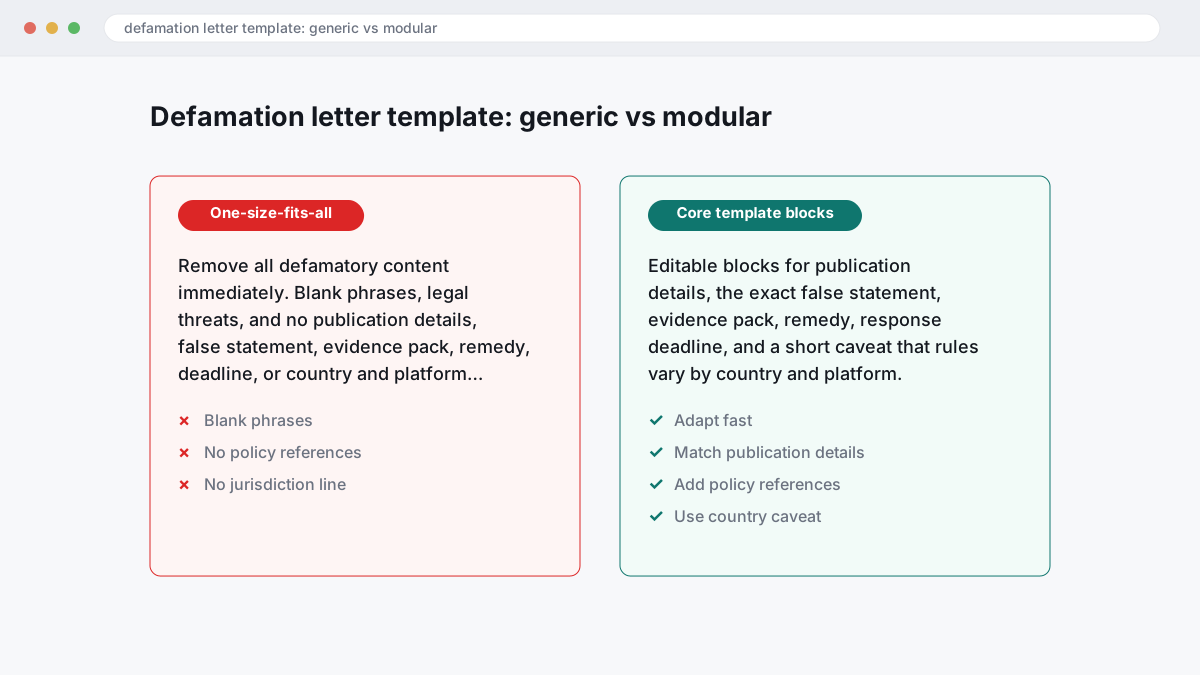
The wrong approach is a one-size-fits-all template full of legal threats and blank phrases like “remove all defamatory content immediately.” That fails because Google reviews, Trustpilot posts, forum threads and social comments each need different publication details, different policy references, and sometimes a different jurisdiction line. The better approach is a core template with editable blocks, because you can adapt it fast without sending a notice that overreaches or misses the platform issue.
Use these blocks in order:
- Parties: your business name, sender, recipient, and any known reviewer identity or account handle.
- Publication: platform, profile or thread URL, date posted, review title, and location of the statement.
- False statements: quote the exact words and answer each one with the corrected fact.
- Evidence: list screenshots, invoices, booking records, staff logs, and attachments in your evidence pack.
- Demands: remove the post, stop repeating it, and confirm correction where appropriate.
- Deadline: give a clear response window, often 7 days for a live review.
- Optional lines: preservation of evidence, attached screenshot index, and notice that platform rules and local law vary.
Add one sentence that this is general information, not legal advice, because defamation, libel, platform policy and jurisdiction differ by country and by site.
What changes first after you send notice, and where should you put effort next?
After you send notice, the first visible changes are usually silence, a quiet edit, or the post disappearing, then the platform starts reviewing your report. If nothing moves fast, the best next step is usually evidence-led platform escalation inside the review removal workflow, not a second letter with harsher wording.
More legal language often fails because platforms do not judge tone; they judge platform policy. A Google Business Profile flag tied to impersonation, off-topic content or a conflict-of-interest issue can move faster than solicitor correspondence, especially if you attach the same screenshots, transaction records and timeline you used in the notice. In BGR Review's log of 12,000+ negative review cases recorded June 2025 to June 2026, reviews raised within 28 days of posting and backed by an identifiable policy issue resolved successfully in roughly 90% of cases; beyond 28 days, comparable cases fell to approximately 25–30%.
Put effort into the next response deadline, not into sounding angrier. If the poster has 48 hours to correct or remove the statement, use that window to file the platform report, post a calm owner reply, and queue follow-up evidence so trust, map-pack click-through and conversions can recover as soon as the review is edited or removed.
Should you send the letter yourself or pay a lawyer to do it?
A self-sent cease and desist letter is usually faster and cheaper. A solicitor-sent notice carries more weight when the facts are disputed, the damage is serious, or the target is likely to ignore you, so the right choice turns on your evidence, urgency and budget.
The wrong move is paying a lawyer for every false review the moment it appears. If the post contains an obvious falsehood, you have clean screenshots, invoice records, booking logs and a clear mismatch with the platform policy, a DIY letter often does enough to force a deletion, correction or useful reply while you keep your money for escalation. Across 12,000+ negative review cases logged by BGR Review from June 2025 to June 2026, reviews raised within 28 days and backed by an identifiable policy issue resolved successfully in roughly 90% of cases; that is our observed outcome profile, not a platform rule.
The other bad move is sending an aggressive template full of legal threats you cannot follow through on. That is where solicitor review helps: it strips out weak facts, fixes jurisdiction mistakes, and lines the notice up with the right pre-action protocol if the matter may move to court. A lawyer-sent cease and desist letter also lands better where the poster is a repeat attacker, the allegation accuses you of fraud or crime, or the reviewer sits in another country and jurisdiction becomes the first argument instead of the last.
If your budget is tight, start with the cleanest route first. If the case is already serious, a solicitor’s letter costs more upfront but reduces protocol errors that later slow platform escalation, map pack recovery and the calls or form fills you are trying to protect.
What if the reviewer hides behind a username or throws the post across borders?
Anonymous and cross-border cases get harder fast because platforms rarely disclose a user’s identity without formal legal process, and the rules change by jurisdiction. In the US, Section 230 often shields platforms from liability for user-posted content, so your claim usually sits with the reviewer, not the site hosting the post.
Most business owners assume a platform will hand over the person behind a username if they send a cease and desist. That usually fails. Google, Yelp and Trustpilot can review a report against their own platform policy, but identity disclosure commonly requires a valid court order or another formal process the platform accepts, especially where the reviewer account gives you nothing beyond a screen name and a posting date.
The workable route is narrower. You map the post to the right jurisdiction first, preserve the URL, profile handle, timestamps and any linked social accounts, then decide whether you have a defamation issue, an FTC endorsement issue in the US, or a misleading commercial practice issue under UK or EU consumer rules; those are different claims with different pressure points, and this is general information rather than legal advice. If the platform refuses to identify the anonymous reviewer, the next move is usually solicitor-led disclosure steps or a court application, while the parallel track stays focused on policy-based removal.
That split matters for cost and speed.
How do you turn a defamation notice into an actual review-removal workflow?
To remove a false review, turn the legal complaint into platform language: identify the policy ground, attach evidence that matches it, and file through the right route. A demand letter helps when it strengthens that evidence trail; it rarely works when you send the same notice everywhere and hope the platform treats defamation as enough on its own.
That blanket approach fails because each platform policy looks for different triggers. Google prohibited content focuses on things like spam, fake engagement, off-topic content, conflicts of interest and harassment in its Google Business Profile review policy; Trustpilot reporting asks you to pick a rule category and support it through its dispute flow; Yelp content guidelines lean hard on first-hand consumer experience and relevance. A libel allegation may be true in legal terms and still get rejected in-platform if you file it under the wrong ground or attach no proof.
Across 12,000+ negative review cases logged by BGR Review from June 2025 to June 2026, roughly 90% of businesses who came to us after a failed DIY attempt had used only the basic report button, with no supporting documentation, and 70-80% of those initial requests had been rejected. The fix is a review removal workflow, not a louder complaint.
Use this platform map before you file anything.
| Platform | Best policy ground | Evidence and appeal route |
|---|---|---|
| Google prohibited content: fake engagement, off-topic, harassment, conflict of interest | Screenshots, order logs, staff rosters, CRM history, timeline mismatch. Start with the GBP review report, then escalate via Business Profile support if the named rule is clear. | |
| Trustpilot | Trustpilot reporting categories tied to harmful, misleading or non-genuine content | Invoice records, customer lookup, communication history, identity mismatch. Use the business dashboard report flow and answer the category-specific prompts fully. |
| Yelp | Yelp content guidelines: no first-hand experience, promotional or irrelevant content | Proof the reviewer was never a customer, duplicate-post evidence, conflict material. File through Yelp’s reporting path and keep the explanation tightly tied to guideline language. |
The legal notice still has a job. Attach it where it proves falsity, identifies the statement as fact rather than opinion, and gives a response deadline; do not use it as a substitute for platform-specific evidence. That is the point where a takedown request starts moving instead of sitting in a generic moderation queue.
What should you do if they ignore the letter completely?
If they ignore your notice, act as soon as the response deadline passes: send one measured follow-up, preserve the silence, and move to the next channel that fits the facts — platform appeal, solicitor notice, claim notice, or an urgent injunction review if the harm is accelerating. Repeating the same threat after day 7 or day 14 usually weakens your position rather than improving it.
The wrong move is a chain of softer reminders with no new evidence, no proof of service, and no clear next step. That fails because platforms such as Google Business Profile and Trustpilot do not remove review content because a letter exists; they look for a policy breach, and a court or solicitor later looks for a clean paper trail. Send one follow-up after the missed deadline, attach the original notice, state that there has been no response, and keep records showing when and how you served it, what was ignored, and where the review is still harming map pack click-through, branded search demand, calls or form fills.
The right move is formal escalation. If the review breaches platform policy, push the appeal with the evidence pack; if the facts support defamation, move into the relevant pre-action protocol in your jurisdiction and have a solicitor send the next letter or claim notice.
When can a cease and desist backfire and make the situation worse?
A cease and desist backfires when your facts are thin, your demands outrun the evidence, or the recipient republishes the dispute to a wider audience. The usual damage is self-inflicted: you expose a weak defamation claim, trigger complaints to the platform, or threaten steps you cannot realistically fund or enforce.
The wrong approach is the chest-beating letter that calls a genuine customer a liar, demands payment, and promises an injunction in three days. That fails because online review disputes turn on supportable facts, opinion versus fact, and jurisdiction; a reviewer in another country may sit outside the forum you had in mind, and a court will expect the right pre-action protocol before any defamation claim moves forward. A sloppy notice can also be uploaded to Reddit, Trustpilot or Google updates, which hurts branded search demand, map-pack click-through, and conversions more than the original post.
The better approach is a short, accurate notice tied to evidence you can show now: what statement is false, what record disproves it, what platform policy may apply, and a reasonable response deadline. Rules differ by country and platform, including consumer-law risk around attacking genuine customers, so treat this as general information rather than legal advice.
Where to go from here
Your next move is to stop treating the letter as the whole remedy and sort the case into two tracks: legal leverage and platform leverage. Build the evidence pack first: screenshots, review URL, profile details, transaction records, contact history, and a short note showing which part is false fact rather than opinion. That file will tell you whether you have a defamation problem, a platform-policy problem, or both.
Expect different outcomes from each route. A cease and desist can pressure an identified poster, preserve your position for a solicitor, and set a response deadline, but it will not make Google, Trustpilot or Yelp remove a review on its own. A platform appeal can remove content faster when you can point to a named policy breach, especially if you file early; in BGR Review's case file of 12,000+ negative review cases logged June 2025 to June 2026, cases raised within 28 days with an identifiable policy issue resolved successfully in roughly 90% of cases.