


Quick answer
Brand reputation research for 2026 is only useful if it tells you what to fix first. The signals that usually move click-through, map-pack visibility and conversions fastest are review volume, review recency, star-rating distribution, owner responses and whether policy-breaking reviews can actually be removed under a platform’s rules, such as the Google Business Profile review policy or Trustpilot’s flagging process. This page turns raw data into a buyer’s decision guide for in-house teams, software buyers and agency shoppers. Where it helps, we anchor the advice to BGR Review’s operating context: 15,000+ businesses served and negative review removal at $0 upfront, $449 per removed link.
This page is written for operators using research to decide budget, workflow and platform priority, not for someone collecting textbook definitions. We deal with the practical points generic stat roundups miss: which metrics change calls and bookings first, how Yelp’s recommendation filter distorts visible review volume, and why a weak flag often fails before any human review.
The detail comes from live process work. A proper removal file usually starts with screenshots, timestamps, profile URLs, policy matching and a clean submission sequence; if you only hit the in-platform report button and add no evidence, the request often dies at the first automated check.
Which reputation metrics change revenue first in 2026?
The reputation metrics that move revenue first in 2026 are the ones that change buyer behaviour at the profile level: review recency shifts trust fastest, star-rating distribution shapes click choice, and review volume starts to matter once you already have fresh activity. Popular metrics like broad sentiment summaries and share-of-voice reports sit later in the queue because they rarely change calls, bookings or form fills this week.
Most research roundups get this wrong by dumping dozens of numbers into one chart. That fails because a Google Business Profile visitor does not read your full sentiment analysis before deciding whether to tap Call, visit your site, or move to the next listing in the map pack. If your average sits under 4.2 stars, click resistance usually sharpens, and the problem is often the distribution underneath the headline score: too many recent 1-star and 2-star reviews clustered together will suppress conversions before any long-form theme analysis gives you a useful answer.
The better order is simple. Fix review recency first, then inspect rating spread, then build review volume. In BGR Review's own dataset of 1,485 businesses observed from February to July 2026, new trades and local service businesses that reached 20-30 reviews over the first three months were associated with stronger local visibility, while other ranking factors were active at the same time. Fresh reviews improve click-through from the local pack before they improve your brand story.
Track the commercial signals nearest to the click. In BGR Review's dataset of trades businesses with complete enquiry-source data, observed from February to July 2026, 70-80% of calls and bookings were attributed to a Google Business Profile or Yelp listing rather than a website. That is why your weekly scorecard should watch leads, bookings and branded-search clicks before broader awareness metrics. If those three are flat, another sentiment dashboard will not rescue the month.
How should you turn raw reputation research into a weekly decision workflow?
Use your reputation data as a weekly triage system: compare this week against your baseline, find the biggest trust gap, give it one owner, and fix the metric most likely to lift clicks, calls or bookings in the next 30 days. A scorecard works best when it stays short: average rating, total review volume, review recency, owner response rate, and the top two complaint themes pulled from recent sentiment.
Dashboard watching is the wrong approach because it creates meetings without changing conversion impact. If your Google Business Profile holds its rating but review recency slips, map-pack click-through usually softens before rankings visibly move; if complaint themes shift from “slow callback” to “missed appointment”, you have an operations issue, not a reporting issue. In BGR Review’s dataset of trades businesses with complete enquiry-source data, observed February to July 2026, 70–80% of calls and bookings were attributed to a Google Business Profile or Yelp listing rather than a website, so a stale profile costs real enquiries fast.
A simple cadence keeps this usable.
| Business type | Check cadence | Action when a metric moves |
|---|---|---|
| Volatile local brand | Weekly | Drop in recency: trigger fresh review requests; fall in response rate: assign owner responses within 48 hours |
| Lower-volume B2B | Monthly | Low review count: build a request list from closed jobs; repeated sentiment themes: fix the service step causing them |
The right approach is one action per metric shift. If rating falls, investigate the reviews behind it. If review count stalls, fix request timing. If owner responses slow down, set a named responder. If complaint themes repeat across Google, Trustpilot or Yelp, change the underlying process first and the profile second.
How many reviews are enough before volume starts helping rather than merely decorating the profile?
Review volume starts affecting revenue when it removes buyer doubt and brings your profile up to the local competitive set. A Google Business Profile with 18 reviews at 4.8 often loses clicks, calls and map-pack trust to a nearby rival showing 180 reviews at 4.6.
The wrong approach is chasing a big round number because it looks impressive in a report. That fails because Google Business Profile performance is local, not national: your review volume only matters against the three rivals already taking the top visible positions for your main queries, with similar relevance and distance. In that comparison, a 150-review gap usually hurts local search visibility and click-through rate more than a 0.1-star gap, because the lower-count profile looks less tested.
The right approach is competitive sufficiency. In BGR Review's own dataset of 1,485 businesses observed February to July 2026, established practices such as dentists, lawyers, accountants and roofers typically needed 30-50 reviews before profiles performed consistently, but that is a floor, not a target. If the top three visible rivals each sit above that, your next 10-20 reviews do commercial work; if you are already level on volume, recency and owner responses usually move conversions faster than chasing vanity totals.
Why does star-rating distribution tell you more than the headline average?
Star-rating distribution matters because two businesses can share a 4.6 average while one shows a stable run of 4- and 5-star feedback and the other shows a fresh cluster of 1-star reviews. The average stays the same for a while; trust and conversion drop first.
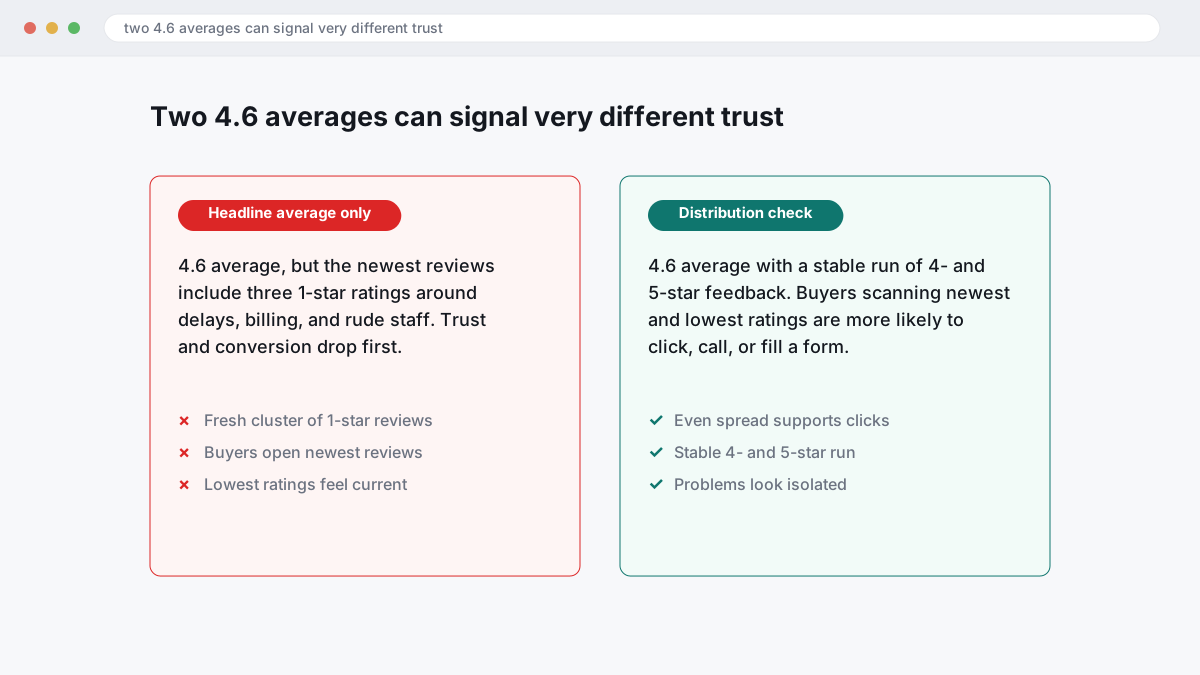
Most guides stop at the headline score. That fails because buyers on Google Business Profile and Trustpilot rarely decide from the number alone; they open the newest reviews and scan the lowest ratings to test whether the problem looks isolated or current. A 4.6 built on evenly spread ratings usually supports clicks, calls and form fills better than a 4.6 with three recent 1-star reviews around delays, billing or rude staff, because the objection pattern is already visible before you speak to the lead.
The useful read is the rating pattern: where the low scores sit, whether they are recent, and whether the complaints repeat the same sentiment theme. That shows service inconsistency, team-level failures and which response you need first — fix operations, answer publicly, or prepare a removal route if a review breaches platform rules. This is the same diagnostic BGR Review uses before recommending more review generation with a 30-day free replacement guarantee or moving straight to negative review removal on a pay-after-success basis at $449 per removed link with $0 upfront.
How recent do reviews need to be before customers and Google still see the business as active?
Review recency is usually the first freshness signal a buyer notices. On a Google Business Profile, where the newest reviews sit at the top, a profile with no meaningful new feedback for 90 days often looks less active than a slightly lower-rated competitor that keeps recent reviews coming.
Recency targets should match how often people normally buy from your category.
| Category | What starts to look stale | What usually looks active |
|---|---|---|
| Restaurants | A quiet spell beyond 30 days | Fresh reviews most weeks |
| Hotels | Long gaps beyond 30-60 days | Steady monthly flow tied to stays |
| Clinics | Thin recent feedback beyond 60-90 days | Regular monthly patient reviews |
| SaaS vendors | No new proof for a quarter or more | Quarterly review flow across key platforms |
The wrong approach is to lean on lifetime reputation alone: 300 old reviews, a strong headline rating, and no recent activity. That fails because buyers read current relevance from the latest dates, and local search visibility can soften when nearby competitors keep adding fresh owner responses and new feedback to their Google Business Profile.
The right approach is a review request rhythm that fits your sales cycle. In BGR Review’s dataset of 1,485 businesses observed from February to July 2026, agencies and digital service firms built reviews more slowly, with first reviews usually arriving between weeks four and eight; that is why a SaaS vendor does not need restaurant-level frequency, but it still cannot leave the profile untouched for months.
How should hotels, clinics, SaaS firms, and multi-location brands read the same reputation data differently?
Category-adjusted benchmarks beat one blended average because hotels, clinics, SaaS firms and multi-location brands convert on different review signals, at different speeds, on different platforms, and a single target will hide the metric that is actually dragging bookings, calls or demos.
One benchmark for all usually fails because review volume and recency do different jobs by category. Hotels live on fast booking windows, so stale feedback and repeating sentiment themes about cleanliness, check-in or noise can cut click-through from Google Business Profile, TripAdvisor and the map pack before the average score changes much. Elective clinics move slower. In BGR Review’s dataset of 1,485 businesses observed February to July 2026, established practices including dentists and similar professional services typically needed 30-50 reviews before profiles performed consistently, which is a better starting benchmark for clinics than a hotel-style monthly volume target.
SaaS buyers read deeper. A long sales cycle pushes them toward review depth, reviewer credibility and verification cues on Trustpilot, G2-style profiles and case-specific owner responses, because branded search traffic often compares vendors side by side before a form fill happens. Multi-location reputation needs the same discipline: judge each branch on its own review volume, recency and sentiment themes first, then roll up brandwide numbers. A chain with a 4.6 average can still lose conversions if three high-revenue locations have thin, old reviews while lower-value branches keep the average looking healthy.
What should a reputation audit checklist include before you present findings internally?
A decision-ready reputation audit uses one worksheet with three time views, splits location problems from brandwide problems, and records who owns each profile, what changed over the last 90 days and 12 months, and what a competitor snapshot makes impossible to ignore.
Loose notes fail because they mix Google Business Profile errors, review gaps, and complaint themes into one narrative that nobody can assign. The fix is a single sheet per brand with two levels: location-level issues for each branch, then a brandwide roll-up for multi-location reputation, shared owner responses, duplicated listing errors, and recurring sentiment themes that keep hurting calls, bookings, form fills, and map-pack click-through.
Use this worksheet structure before you present anything internally.
| Check | 90-day view | 12-month view | Competitor snapshot |
|---|---|---|---|
| Platform ownership | Who controls Google Business Profile, Trustpilot, Yelp, booking logins | Any ownership changes, lost access, unmanaged profiles | Which rivals have claimed and fully completed profiles |
| Listing accuracy | Name, address, phone, hours, category, service areas | Repeated edits, duplicate locations, merged listings | Category choices and profile completeness |
| Rating trends and review gaps | Average, new review count, recency gaps, response rate | Trend line by location, missing months, star-distribution shifts | Who is adding fresher reviews and winning more clicks |
| Unresolved complaint themes | Open issues by theme: delays, billing, staff, product faults | Repeated themes across sites versus one branch only | Whether competitors are exposed on the same themes |
Keep removable review candidates out of the main scorecard and place them in a separate dispute column with link, platform policy match, evidence status, and last action date.
When is review software enough, and when does a managed service justify the extra cost?
Review software is enough when you only need invite automation, basic monitoring, and a clean queue of new feedback. Managed help earns its keep when Google Business Profile, Trustpilot, and Yelp all need different handling, or when response coverage, policy judgment, and dispute escalation start affecting calls, bookings, form fills, and map-pack click-through.
The wrong approach is buying a tool and assuming tool access equals execution. That fails once review authenticity questions appear, a Google Business Profile needs owner-response coverage over weekends, or a Yelp recommendation filter buries perfectly real reviews because the reviewer account looks weak and nobody adjusts the request flow. The right approach is matching the operating model to the workload: software for request timing and alerts, managed help for response workflows, platform-specific flags, and escalation support that keeps branded search and conversions from sliding while the issue sits open.
This is the comparison worth checking before you sign anything.
| Check | Software only | Managed help |
|---|---|---|
| Setup fees | Usually billed upfront for access and onboarding | Ask what is included beyond setup: replies, dispute prep, escalation handling |
| Seat limits | Often tied to users, locations, or profiles | Better fit for multi-location reputation where head office needs one workflow |
| Response SLA | Your team owns it | Useful when missed owner responses start hurting trust on Trustpilot and Google |
| Escalation support | Usually a help-centre article and a report button | Fixed price per removed link |
If you run one location with low review volume, software is often enough. If you run several locations, need platform-by-platform response rules, or face legal-risk reviews that may touch false factual claims, endorsement disclosure, or policy breaches, managed help usually costs less than leaving a weak flag, a slow reply, or an unanswered Trustpilot complaint to damage local search visibility.
Which reputation fix usually pays back first when leads or bookings start slipping?
The first fix is the narrowest bottleneck between visibility and conversion. If your profile still reads mostly positive but looks stale, restore review recency first; if recent 1-star clusters dominate attention, repair the rating distribution problem first; if specific complaints sit unanswered, post owner responses before you spend another pound or dollar on acquisition.
Most teams chase every metric at once: more review volume, a higher average, more platforms, more ads. That fails because the map pack click-through problem usually sits in one visible place. In BGR Review's dataset of 1,485 businesses observed February to July 2026, trades and local service firms that built early review momentum reached first reviews in about two weeks, and 20-30 reviews over the first three months were associated with stronger local visibility while other ranking factors were active too. If your Google Business Profile or Trustpilot page has gone quiet for months, fresh legitimate reviews usually pay back first because they improve click confidence before they change position.
A different bottleneck needs a different fix. If buyers see a recent cluster of 1-star reviews at the top of the feed, the conversion impact comes from the shape of the star-rating distribution, not the headline average, so adding a few new positives without fixing the operational cause rarely moves bookings. If the complaints are detailed and public, unanswered silence does more damage than the review itself; a clear owner response can recover calls and form fills because it answers the objection in public.
What should you do after negative review damage has already cut trust or visibility?
After a visible review hit, triage in this order: check whether the post breaks platform rules, publish a controlled public reply, match the review to your customer record, then rebuild trust with legitimate recent feedback after the underlying issue is fixed.
Most owners jump straight to negative review removal and wait for the platform to clean up the damage. That fails when the review is a valid complaint, or when your first flag carries no evidence beyond the in-platform report button. In BGR Review's case file of 12,000+ negative review cases logged June 2025 to June 2026, reviews raised within 28 days of posting and backed by an identifiable policy issue resolved successfully in roughly 90% of cases; comparable cases raised later fell to approximately 25-30%.
If the stakes are high, work inside a 24 to 72 hour window. On your Google Business Profile, post an owner response that stays factual, avoids blame, and signals a next step, then pull the booking record, call log, invoice, message trail, CCTV timestamp, or proof that no transaction took place. Weak flags usually fail before any human review because the platform sees no policy match, no supporting context, and no reason to override the original publication.
Recovery also depends on reading sentiment themes correctly. If three recent reviews mention missed appointments, rude staff, or billing confusion, messaging will not restore map pack clicks, branded search demand, or form-fill conversions until the service issue changes. Remove what is removable, answer what is valid, and only then ask for fresh compliant reviews under BGR Review's 30-day replacement-backed packages if you need help restoring review recency.
Which review services stay compliant, and where do policy or legal risks start?
Compliant review help sticks to legitimate collection, monitoring, owner responses, and evidence-led disputes. Risk starts when a provider promises guaranteed positive reviews, uses fake accounts, hides incentives, or sells negative review removal with no valid policy ground behind it.
The wrong approach is buying manufactured praise and calling it “reputation management”. That fails because review authenticity is the point of the platform rules: the FTC’s rule on fake reviews and testimonials took effect in October 2024 in the US, and undisclosed incentives can create endorsement problems before they create extra conversions, calls or map-pack clicks.
Platform risk changes by site, so you need the rule set before you buy help.
| Platform | Main risk point | Compliant route |
|---|---|---|
| Google Business Profile | Fake, gated or policy-breaching reviews can trigger removal or account scrutiny under Google’s review policy. | Ask all real customers, avoid selective gating, and challenge reviews with evidence tied to a policy section. |
| Yelp | Yelp’s recommendation filter can bury solicited or low-trust reviews even if they are positive. | Focus on service quality and profile completeness; do not force review request campaigns that chase short-term local pack gains. |
| Trustpilot | Invites, flagging and verification follow a formal process, so weak claims stall fast. | Use documented invitations, keep records, and dispute only where the reviewer or content fails Trustpilot’s rules. |
Harsh opinion rarely makes a defamation claim. A review saying “slow service” usually stays up; a review claiming a false factual event, fake transaction or invented staff misconduct is different, but laws vary by country and platform, so treat this as general information rather than legal advice. If you are paying for removals, ask the provider to name the policy ground first; if they cannot, you are usually buying a rejected flag and no lift in branded search, click-through rate or conversions.
What evidence actually moves a review dispute faster on Google, Yelp, or Trustpilot?
The disputes that move fastest rely on proof a platform can verify: a transaction mismatch, impersonation evidence, a conflict-of-interest link, or a false factual claim backed by records. Broad complaints like “this review is unfair” rarely move a Google Business Profile, Yelp, or Trustpilot case forward.
Emotional write-ups usually fail before any real review because they do not map the review to a named rule. In BGR Review’s case file of negative review cases with prior self-filed attempts, logged June 2025 to June 2026, roughly 90% came to us after using only the basic in-platform report button, and 70–80% of those initial requests had been rejected. That does not prove the review was genuine; it usually means the submission gave no policy match, no timeline, and no evidence a reviewer could not have been a real customer.
A useful negative review removal pack is short and structured. Start with the review URL, posting date, business name, and a one-line policy-ground summary, then attach the records that prove it: timestamps, booking logs, invoices, call records, screenshots, staff rota entries, and profile captures showing impersonation or a false location claim. On Google, clear policy matching matters most because the form works best when the evidence points directly to a Google review policy issue. On Yelp, review authenticity and account history carry more weight, and the Yelp recommendation filter can suppress content that looks low-trust even when it is not removed outright. Trustpilot usually responds better when the dispute explains why the reviewer cannot be verified or where the factual statement conflicts with order records.
Rules change by platform and sometimes by country, especially where consumer law, defamation standards, or disclosure rules apply, so this is general information rather than legal advice.
Where to go from here
Start with the blockers that change clicks and enquiries first. If your Google Business Profile, Trustpilot or Yelp page has missing photos, weak categories, stale review recency, unanswered complaints or obvious policy issues, fix those before you chase more volume. Generic research pages dump numbers. They rarely tell you that a hidden visibility problem, a Yelp recommendation filter issue or a policy-violating review can suppress map-pack click-through rate and conversions long before star average becomes your main problem.
Your next step is simple: audit one profile at a time, list every review that may breach platform rules, then separate those from issues that need better review request timing, owner responses and follow-up systems. If harmful reviews are the blocker, the right next move is a removal assessment with evidence attached, not another weak flag button submission. Expect a clear yes or no, the policy route that applies, and where the case is likely to fail.