

Quick answer
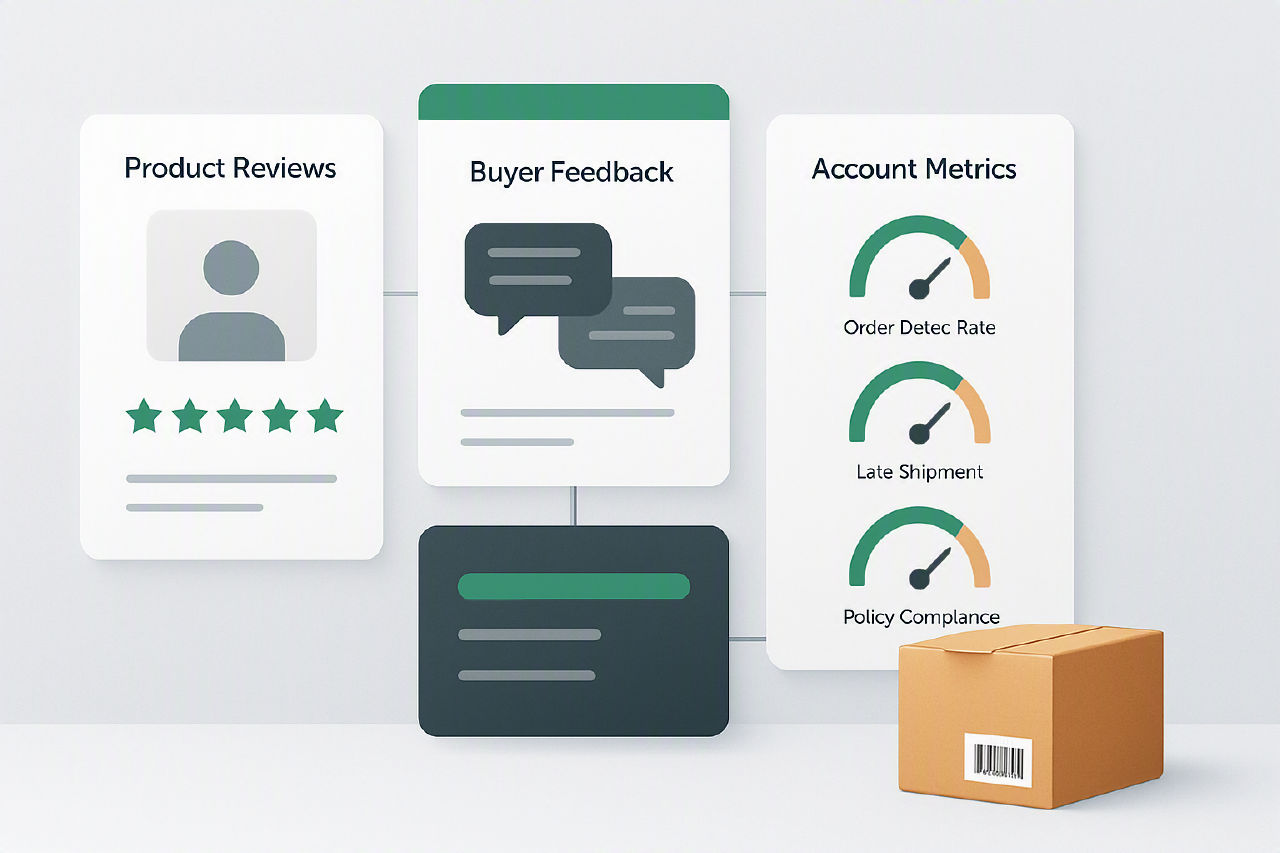
If you mean Amazon seller reputation, treat it as three separate jobs: seller feedback, product reviews and account-health disputes. Each runs on different rules and different commercial impact. Amazon’s Request a Review tool can only be sent from 5 to 30 days after delivery, and seller feedback removal usually succeeds only on narrow policy grounds such as obscene language, personal information, or a product review posted in the feedback field. Your first wins usually come from fixing fulfilment faults, tightening review-request timing, and disputing removable feedback before paying any outside service.
This page is written from live reputation handling, where the first step after a negative alert is never “remove it” but classify it: feedback, review, A-to-z Guarantee spillover, or an account-health signal that affects Order Defect Rate and Buy Box eligibility. In practice, the outcome often turns on small evidence points generic guides miss, such as whether the comment names the parcel damage itself, whether Buyer-Seller Messaging shows a missed response window, and whether the text belongs under product reviews rather than seller feedback. BGR Review handles review growth and negative review removals across Google, Trustpilot, Yelp, Clutch and TripAdvisor, with removal charged only after success at $449 per removed link and $0 upfront, so the advice here stays tied to process and payoff rather than sales copy.
Which Amazon reputation problem should you fix first before sales or account health slip?
Separate seller feedback, product reviews and account-health issues first, because Amazon scores them in different systems. Negative seller feedback can feed Order Defect Rate, poor product reviews cut listing conversion, and a policy miss can push suppression or suspension before either one improves.
The wrong approach is to treat every negative signal as one review problem and start chasing stars everywhere at once. That fails because seller feedback changes how buyers judge you as a merchant, while product reviews change how they judge the item on the listing page; one hurts seller trust, the other hurts conversion, and neither should distract you from account health if Amazon is flagging defects. Amazon states that Order Defect Rate must stay under 1% to keep a selling account in good standing, and that single threshold matters more than cosmetic reputation work if recent orders include negative feedback, A-to-z Guarantee claims or chargebacks.
The right approach is to classify each issue by trust, conversion or policy risk before you act. At BGR Review, the first triage step after any negative alert is exactly that: if the problem sits in seller feedback, you protect merchant credibility; if it sits in product reviews, you work on listing conversion and star-rating distribution; if it touches account health, you move there first because lost visibility costs more than a weak review profile. Buy Box pressure belongs in the same triage, but keep the cause straight: reputation helps, yet Amazon also weighs price, fulfilment method and seller metrics, so a feedback fix alone will not recover Buy Box share if fulfilment speed or landed price is the real blocker.
What improves Amazon conversion fastest when reputation is the bottleneck?
The fastest conversion gains usually come from fixing listing-level trust signals before anything else: star-rating distribution, fresh product reviews, image quality and Buy Box stability. Seller feedback matters most when it starts to affect account trust or makes the merchant behind the offer look risky.
Most guides push seller feedback first. That fails when the shopper never reaches your offer with enough confidence to buy. On most listings, the visible product reviews and their star-rating distribution do the first commercial job: they shape click-through from search and they decide whether the page feels safe once the buyer lands. A listing with a decent average but a heavy cluster of recent 1-star and 2-star product reviews usually leaks conversions faster than one extra seller feedback point can recover.
Freshness matters. If your last meaningful review flow came months ago, an old lifetime average stops carrying the page because shoppers read the newest complaints first, and that changes conversions before it changes anything else. The right order is simple: fix the listing experience that caused the bad reviews, restart a compliant recent-review flow, then deal with merchant-level trust signals. If you pay for outside help, keep it policy-safe; BGR Review sells verified review packages with a 30-day free replacement guarantee, while removal work stays separate at $0 upfront and $449 per removed review link after success.
Buy Box loss can wipe out all of that work. If your offer keeps losing the Buy Box, better reviews may lift trust yet still fail to lift sales because the conversion happens on someone else’s offer. Check Buy Box share over the last 30 days before you blame reputation alone.
How do you improve Amazon seller feedback without crossing Amazon’s messaging rules?
Improve Amazon seller feedback by sending only compliant post-delivery messages through Buyer-Seller Messaging, then reviewing every 1- to 3-star event by defect type each week so you fix the service failure behind it before account health starts to slide.
The wrong approach is to ask only after perfect orders. That feels safe, but it hides the reason your seller feedback is weak: repeat fulfilment and support problems keep hitting the same orders, so the next bad rating arrives anyway. The workable route is broader and stricter at the same time: use Amazon’s approved post-order contact flow for delivered orders, keep the message neutral, and avoid any language that steers the buyer toward a positive rating or asks them to change an existing one.
Buyer-Seller Messaging is for necessary order communication, and Amazon treats promotional or manipulative follow-up as a risk point. Send one post-delivery outreach after confirmed delivery, keep it tied to the order experience, and then stop unless the buyer replies or the order needs support. If you use Amazon’s built-in request tools elsewhere in your workflow, keep the timing consistent so your seller feedback trend reflects your operation, not random sending habits.
Each 1- to 3-star feedback event should trigger an operational review the same week. Classify it first: late shipment, return friction, damaged delivery, missing item, or support delay. Then push a fix request to the owner of that process, because account health usually worsens through repeated defects and complaints long before a team admits there is a pattern.
Track the pattern monthly, not by gut feel. Put seller feedback beside late shipment rate, return reasons, refund speed, and response time in one sheet; if negative comments rise while support delays or fulfilment misses rise with them, fix that queue first. That improves feedback more reliably than cherry-picking “happy” orders for outreach.
What feedback request template can you send safely, and when should you send it?
The safest Amazon follow-up is a single neutral request sent through Request a Review between 5 and 30 days after delivery, or a policy-safe Buyer-Seller Messaging note that asks every buyer the same way and asks for nothing beyond an honest response.
The wrong approach is segmenting “likely happy” buyers and sending warmer wording, refund hints, coupon offers, or a direct ask for positive seller feedback. That fails for two reasons: Amazon treats incentives and pressure as review manipulation, and selective outreach skews your star-rating distribution in a way that can create avoidable risk if account health is already tight. Request a Review is safer because Amazon controls the wording and timing window for you.
If you use Buyer-Seller Messaging, keep it plain and identical for every order. No discount, no “five stars”, no request to contact you instead of leaving feedback, and no off-platform ask to email, WhatsApp or review elsewhere. The template BGR Review usually gives clients who want a policy-safe starting point is: Hello, your order has been delivered. If you have a moment, please share honest seller feedback on your Amazon experience. If there is a problem with the order, you can also reply here and we will help. Send it once, after delivery is confirmed, and leave the chasing to your service process rather than your messaging.
When will Amazon remove negative feedback, and how do you build a report that matches the rule?
Amazon removes seller feedback when it fits a stated policy ground, not when it simply feels unfair. Your strongest report names the exact feedback removal criteria, includes the order ID, and shows that the comment contains product-review-only content, obscene language, personal information, or an Amazon-controlled fulfilment issue on an FBA order.
The weak approach is arguing that the buyer was rude, unreasonable, or “wrong”. That usually goes nowhere because seller feedback is judged against policy categories, not tone or your side of the story. If the comment says “great product but stopped working after two days”, that belongs in a product review, not seller feedback; if it complains that Amazon shipped late on a Fulfilment by Amazon order, tie your report to fulfilment responsibility instead of debating the buyer’s attitude.
One clean submission beats three emotional ones. Quote the relevant rule in plain text, paste the feedback verbatim, attach the order ID, and add screenshots that show FBA handling where relevant, or show the exact personal data or profanity you want reviewed. Across 12,000+ negative review cases logged by BGR Review from June 2025 to June 2026, roughly 90% of businesses that came to us after a failed self-filed attempt had used only the basic in-platform report button with no supporting documentation, and 70–80% of those first requests had been rejected.
This matters beyond one rating hit. A removable feedback item can drag down seller feedback, increase pressure on account health conversations, and sharpen scrutiny if you are already dealing with A-to-z Guarantee claims or a rising Order Defect Rate.
What should you do after Amazon rejects a feedback-removal request?
After Amazon rejects a feedback-removal request, stop sending the same report, re-check the order against Amazon’s feedback removal criteria, and decide whether new evidence, a different support route, or a public reply is the only realistic next move.
The wrong move is filing identical appeals three or four times with the same one-line explanation. That usually fails because the first rejection already tells you the report did not match a policy bucket such as product-review content posted as seller feedback, obscene language, or personally identifiable information. Change the file before you change the route: pull the order timeline, Buyer-Seller Messaging history, delivery scan, refund record, and any note showing the issue sits with Fulfilment by Amazon rather than your team.
Check context before you appeal again. An open or settled A-to-z Guarantee claim, a goodwill refund, or repeated concessions on the order can change how support reads the complaint and can feed into wider account health review even if the feedback stays live. If removal is still unavailable after a proper re-check, post a short factual public response and move on to prevention.
Should you manage Amazon reputation in-house or use a review service?
Keep this in-house if your order volume is steady, your support lead can review seller feedback every week, and your team has time to document disputes properly. Bring in specialist help when feedback disputes, policy risk, or multi-ASIN review issues start outrunning what one internal owner can track without gaps.
Outsourcing just because reviews exist is the wrong trigger. It fails because Amazon reputation work is split across seller feedback, product reviews and account health, and a general VA or customer service rep often treats them as the same problem. That leads to fast replies but weak removal requests, especially when the team does not match the complaint to Amazon’s feedback removal criteria before filing.
The better trigger is complexity. If one support lead can still answer buyers quickly, send compliant follow-ups, and check whether a comment is really about fulfilment, product condition or service, keep control in-house. If disputes are piling up, rejections need recovery work, or you need someone to escalate with evidence discipline rather than hit the report button again, outside help usually works better.
This is the comparison that matters before you choose.
| Option | Monthly cost shape | Response time and risk |
|---|---|---|
| In-house | Uses existing payroll hours; no agency fee, but staff time grows with order volume and dispute count | Fastest on buyer messaging; higher policy-risk exposure if the team misreads feedback removal criteria or misses account health signals |
| Managed help | Fixed price per removed link | Slower than an internal same-hour reply on simple messages, but stronger on removal triage, escalation discipline and weekly reporting |
One operational point matters here. Across 12,000+ negative review cases logged by BGR Review from June 2025 to June 2026, roughly 90% of businesses that came to us after a failed attempt had used only the basic in-platform report button, and 70–80% of those initial requests had been rejected. That does not prove the feedback was valid. It usually proves the evidence pack was thin.
How does Amazon reputation strategy change for private label brands?
For a private label brand, reputation work should centre on product reviews, star-rating distribution and listing trust, because merchant feedback carries less weight on conversion than it does for a reseller and will not rescue a weak launch.
Most guides treat a private label account like a reseller account and push seller feedback first. That fails because your buyer usually decides from the listing page: review count, recent review flow, the spread between 5-star and 1-star sentiment, image quality, A+ content and whether the offer keeps the Buy Box without stock gaps. If inventory drops in and out during launch, review recency dries up, ranking softens and conversions fall even when the average rating still looks respectable.
The safer approach is to build launch momentum in the right order: stable stock, clean listing content, then policy-safe review generation. Brand Registry helps you control titles, images and branded content, but it does not create compliant review demand on its own; you still need Amazon-approved routes such as Request a Review, and in some cases Vine, instead of any form of review manipulation.
When should you use Amazon Vine, and what can it fix that seller feedback cannot?
Use Amazon Vine when a new ASIN needs early product reviews on the listing; it does nothing for seller feedback, so it cannot repair a weak merchant reputation or solve the trust problems that cut conversion before account health slips.
The wrong approach is using Amazon Vine to try to fix complaints about dispatch, packaging, returns or support. That fails because Vine influences listing-level review coverage, while seller feedback sits against your merchant profile and affects how buyers read your reliability before they convert. BGR Review sells verified review support on Google, Trustpilot, Yelp, Clutch and TripAdvisor, but Vine is different: Amazon controls the programme, the invitation flow and the review placement inside its own ecosystem.
The right approach is narrower. Use Amazon Vine for a launch, a relaunch, or a dormant ASIN that has thin review coverage and an unhelpful star-rating distribution because there are too few signals on the page. Early review volume can improve click-through from search results and help the listing convert once shoppers land, but only if the product itself is sound.
A weak product stays weak under Vine. If the item has quality issues, unclear sizing, misleading images or repeat defects, Vine will simply produce more visible criticism, and that broader rating spread can depress conversions faster than a low review count. Fix the product first; use Vine after that.
Is buying Amazon reviews illegal or just against policy?
Buying or arranging Amazon product reviews can be both a policy breach and a legal risk: Amazon prohibits incentivised or manipulated reviews, and in the US the FTC’s Endorsement Guides require clear disclosure when an endorsement is paid for.
Most guides treat undisclosed paid reviews as a platform problem. That misses the real exposure. Review manipulation can trigger listing suppression, account-health damage and suspension risk inside Amazon, especially if you use Buyer-Seller Messaging to ask for a positive review, offer compensation, or steer unhappy buyers away from leaving public feedback. Amazon’s rules apply across sellers and products, so the same conduct can harm your seller account even when the review sits on a single ASIN.
The safer approach is simpler: earn genuine product reviews through Amazon-approved routes, keep any post-purchase contact neutral, and do not tie money, refunds or replacements to review outcomes. That works because it removes the inducement problem at the source. If money, free goods or discounts are involved, US law adds another layer: the FTC Guides Concerning the Use of Endorsements and Testimonials in Advertising require disclosure, and hidden compensation can become a regulatory issue as well as an Amazon enforcement issue.
Rules also vary by country and platform. In the UK and EU, misleading commercial practices and fake-review rules can apply; false factual reviews can also raise defamation issues where a reviewer states something untrue as fact rather than opinion. This is general information, not legal advice. If the review is false, gather the order record, message history and delivery evidence first, then assess policy removal before you escalate it legally.
What should you track for the next 30 days to know whether reputation work is paying off?
For the next 30 days, track your seller feedback rate, Order Defect Rate, product-review velocity, conversion and Buy Box share in one weekly sheet. If the same failure pattern shows up twice, fix the operational cause before you ask for more feedback or product reviews.
Counting only new reviews is the wrong scorecard. It fails because reputation work can look busy while conversion stays flat, the Buy Box slips, or your Order Defect Rate moves towards Amazon’s 1% account-health threshold. The right read is side by side: seller feedback tells you how buyers rate fulfilment and service, product reviews tell you whether the listing is convincing, and conversion plus return reasons tell you which one is actually costing sales.
Use one weekly table so you can compare before and after each change.
| Metric | Check weekly | What a bad move means |
|---|---|---|
| Seller feedback rate | Negative feedback count and themes | Service or dispatch issue repeating |
| Order Defect Rate | Direction of travel | Escalate fast if it trends towards 1% |
| Product-review velocity | New reviews by ASIN | Listing trust is not rebuilding |
| Conversion / Buy Box / returns | Before vs after changes | Offer, stock, price or listing issue |
If negative feedback clusters repeat, or the same return reason keeps appearing after listing edits, stop chasing volume and escalate the root cause.
Where do policy and legal lines get crossed on Amazon reputation work?
Amazon reputation work crosses the line when you use undisclosed incentives, fabricated reviews, invented evidence, or legal threats with no basis. Rules vary by country and platform, so this is general information rather than legal advice, and the first checks should be Amazon community guidelines, the FTC endorsement guides in the US, and whether the complaint contains false statements of fact.
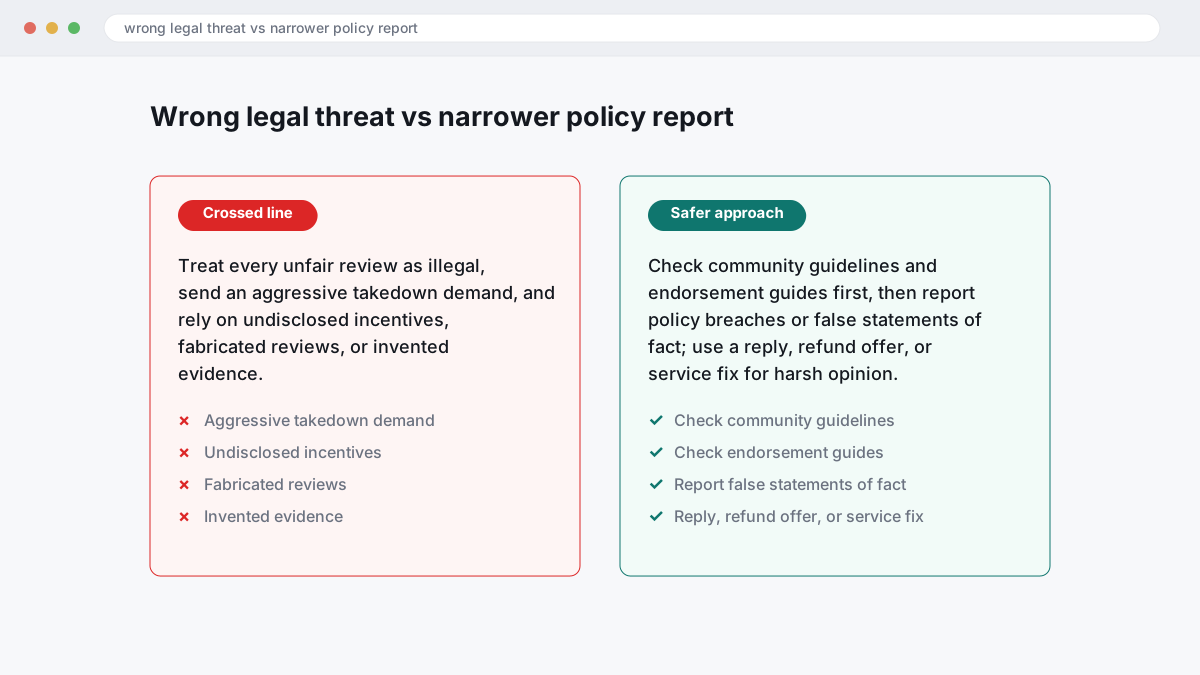
The wrong approach is treating every unfair review as illegal and sending an aggressive takedown demand. That usually fails because Amazon allows plenty of harsh opinion, and opinion needs a reply, refund offer, or service fix more often than a threat. The right approach is narrower: report policy breaches to Amazon when a review is incentivised, manipulated, abusive, or supported by false evidence, and reserve legal escalation for defamation and false statements such as a made-up safety incident, a fake delivery claim, or an accusation tied to the wrong order.
The FTC endorsement guides matter when a seller pays for reviews, offers gifts without disclosure, or uses affiliates who post as ordinary buyers. Amazon can treat that as review abuse under its community rules even before a regulator cares. If you bring in outside help, keep the brief clean: no fabricated buyer accounts, no disclosure gaps, no pressure tactics.
Where to go from here
Start with a three-column audit of your Amazon presence: seller feedback, product reviews and account health. Pull the last 90 days of negative events, then label each item by lane before you touch anything. That single step stops the common mistake generic guides make, where a fulfilment complaint gets treated like a product-review problem or a policy warning gets ignored until it affects the Buy Box.
Once each issue sits in the right lane, the next action usually becomes obvious. Policy-fit seller feedback can go through the removal route with order evidence; product reviews usually call for listing fixes, star-rating distribution checks and compliant follow-up through Request a Review or Buyer-Seller Messaging rules; account-health issues need fast escalation because late action can turn one defect into a wider performance problem.
Expect clarity from the audit before you expect recovery. That is what saves time, protects conversions and avoids spend on the wrong fix.