


Quick answer
If you sell on Amazon in 2026, the safest review rule is consistent and narrow: ask every genuine buyer the same way, at the same stage, and never offer cash, discounts, refunds, gifts, replacements or any other benefit for a review. Amazon already gives you a compliant route in Seller Central through the Request a Review button, which sends a standardised message. Your job is to tighten message templates, remove risky product inserts, log every review-request action, and keep screenshots, order IDs and message records ready if a warning lands or reviews disappear.
Generic guides repeat policy text. They rarely show what triggers enforcement, what evidence Amazon can actually check, or which seller actions are safe, risky or pointless.
At BGR Review, we handle review acquisition and review-removal work across Google, Trustpilot, Yelp, Clutch and TripAdvisor, and the same pattern shows up after a platform warning: isolate the trigger first, pull message logs and inserts, stop any automation touching review requests, then submit a narrow evidence pack instead of a broad defence. That process detail matters because a vague appeal usually fails for the same reason a weak removal request fails elsewhere — no clear policy link, no dated proof, and too much irrelevant material.
How do you separate safe review work from risky or pointless seller habits?
Safe Amazon review work uses neutral requests, approved channels, and records you can verify later. Risk climbs when you target only satisfied buyers, offer anything of value, or create sudden review spikes that Amazon can connect to messages, inserts, refunds, or listing edits.
Most generic guides paraphrase the Amazon Community Guidelines and stop there. That fails the moment Amazon flags review manipulation across a chain of events rather than one message, which is why BGR Review tells clients to keep dated screenshots, order IDs, message exports and every insert version for 12 months before any warning arrives.
This is the faster way to sort activity into safe, risky and wasted work.
| Seller habit | Risk level | Why it lands there |
|---|---|---|
| Neutral review ask through an Amazon-approved route | Safer | It requests feedback without steering for a positive outcome or offering compensation. |
| Asking only buyers who praised support or requested a refund resolution | Risky | Selective outreach changes star-rating distribution and can look like review manipulation when matched to account activity. |
| Coupon, rebate, gift, replacement or future discount tied to a review | Banned | That is an incentivised review route and a direct policy problem. |
| Printing “leave us a 5-star review” on product inserts | Banned | Physical inserts are evidence Amazon can connect to removed reviews and seller warnings. |
| Refreshing old inserts, screenshots and order records after a warning | Pointless | If the evidence was not preserved at the time, your defence usually turns into assertion rather than proof. |
Which review actions can sellers still take without breaking Amazon rules?
Compliant review activity on Amazon stays neutral, uses Amazon-approved channels, and treats every buyer the same. You can ask for an honest product review, but you cannot steer for positive sentiment, offer anything in return, or contact buyers outside permitted workflows to influence ratings or review text.
The wrong approach is a sentiment-steering ask such as “If you loved it, leave 5 stars, and contact us first if anything is wrong.” That fails because it tries to shape the outcome before the buyer writes anything, which cuts against Amazon’s review manipulation rules and the Amazon Community Guidelines. The safer approach is narrower: one neutral request per order, sent through approved Amazon workflows, asking for an honest product review with no rating prompt, no conditional wording, and no attempt to divert unhappy buyers away from the review page. That works because the request is channel-approved and non-selective.
Use this checklist before your next send. It is the same housekeeping BGR Review applies when we audit review-request flows for clients who also use our 30-day free replacement review packages on other platforms.
- Send one request per order through Seller Central tools, including the Request a Review button where it fits your process.
- Keep the wording neutral: ask for a review of the product or order experience, never “positive feedback only”.
- Audit templates, product inserts, automation rules, and any agency-run messaging every 30 days.
When should you use Seller Central messages or the Request a Review button?
The safer route is usually the Request a Review button because Amazon controls the wording, format and send logic. Seller Central messaging can work, but only if it stays neutral, tied to the order, and inside Amazon’s buyer-seller messaging rules after delivery rather than before arrival.
Most guides tell you to “ask politely” through custom messages. That fails because custom copy is where sellers drift into review manipulation: asking only happy buyers, hinting at a five-star outcome, adding links, or sending too early while the parcel is still in transit. The Request a Review button avoids most of that risk because Amazon sends its own standard request, and the buyer sees an Amazon-controlled prompt instead of a seller-written nudge.
If you use Seller Central messaging, keep it strictly transaction-related: delivery issue, usage help, replacement, return, or a neutral follow-up once the order shows delivered. Do not send review asks before confirmed delivery, and do not combine support with pressure for feedback. For sellers who come to BGR Review weighing paid review help against DIY compliance, this is usually the first filter we apply: if Amazon already gives you a controlled request tool, use that first and keep custom messaging for real order support only.
Why do product inserts and off-platform review asks create more risk than they seem to?
Product inserts turn risky when they push sentiment, promise compensation, or send buyers into an off-Amazon review funnel. A card inside the box is easy for Amazon, a buyer, or a competitor to preserve as evidence, and a later packaging change does not erase the original insert.
The wrong approach is a “helpful” card that asks for a positive review, offers a refund, discount, gift, or warranty extension, or uses a QR code that lands on your own page first and then filters unhappy buyers away from Amazon. That looks like review manipulation because you are shaping who reviews and what they say before they reach the platform. The safer version is plain packaging support: setup steps, contact details for product help, or a neutral note that the buyer can leave honest feedback on Amazon without any reward or condition.
QR codes are where sellers get careless. A QR code that opens a support page is usually defensible; a QR code that asks buyers to rate their experience, choose stars, or claim something before being redirected creates a record of steering. If Amazon sends a warning, the first document we ask for at BGR Review is the exact insert version and the QR destination history, because a printed insert remains evidence even after the listing, landing page, or packaging artwork changes.
Which account patterns make Amazon treat review growth as manipulation?
Amazon looks for review patterns that do not fit normal buyer behaviour. The main triggers are abrupt review velocity jumps, repeated reviewer overlap, refund-linked asks, and variation setups that let one product inherit ratings it did not earn.
The wrong approach is forcing a spike after a slow period with staff outreach, family purchases, rebate groups or a post-purchase refund that quietly depends on leaving feedback. That fails because Amazon does not judge a review in isolation; it looks at account links, timing clusters, order-to-review gaps and whether the growth matches actual demand. A sudden burst can lift click-through rate for a few days, then drop conversions when reviews are removed and the listing loses trust.
The safer approach is steady demand-led growth from genuine orders, using only Amazon-approved request routes covered earlier and letting review velocity track sales velocity. At BGR Review, the first diagnostic check sellers ask us for is simple: compare the review curve against your order curve and campaign dates. If reviews jump but sales, sessions and branded search demand do not move in step, Amazon has a cleaner review manipulation signal than you think.
Variation abuse creates the other obvious trigger. If you merge unlike products so a weaker child ASIN inherits star-rating distribution from a stronger one, Amazon can treat that as manipulation because the reviews no longer describe the item being sold. The short-term gain in conversions usually reverses once the variation is broken, ratings are split, and account scrutiny increases.
Is incentivised reviewing ever allowed, and where do legal risks go beyond Amazon policy?
Incentivised reviewing carries the highest penalty risk because Amazon policy and consumer law both pull against it. Rules vary by country and platform, and this is general information rather than legal advice.
The wrong approach is easy to recognise: you send a gift card, rebate, refund, free replacement or discounted product after purchase and tie it, directly or indirectly, to a review. That fails because Amazon treats incentivised reviews and review manipulation as a policy problem, while the FTC endorsement guides require clear disclosure when compensation affects an endorsement. In the UK and EU, undisclosed incentives can also fall into misleading commercial practices under consumer-protection rules, which creates a second risk outside Amazon itself. When BGR Review checks Amazon warning cases before deciding whether a removal or recovery route is realistic, hidden compensation is one of the first things we ask about because it weakens every later defence.
The cleaner approach is simpler. Send a neutral review request through approved channels, and keep any customer appreciation gesture completely separate from review behaviour.
| Scenario | Why it fails or works |
|---|---|
| “Leave a review and we’ll send a £10 gift card” | Compensated endorsement. High Amazon policy risk and likely disclosure issues under FTC, UK and EU rules. |
| “Here is a goodwill refund for the delay” with no review ask | Usually a customer-service gesture, provided you do not connect it to rating, wording or review submission. |
| Free product sent to a creator who posts praise without disclosure | Paid endorsement problem. Disclosure duties sit outside Amazon policy as well. |
That distinction matters before launch. A thank-you gift after a complaint can support retention and repeat orders, but once it is linked to public feedback, you move from service recovery into compensated endorsement territory, and the compliance risk becomes much harder to unwind.
Which review fixes usually improve sales first once compliance is stable?
The review fixes that lift sales first usually improve trust before they add volume. Start with your star-rating distribution, recent negative themes and visible listing credibility gaps, then think about broader review acquisition or outside support.
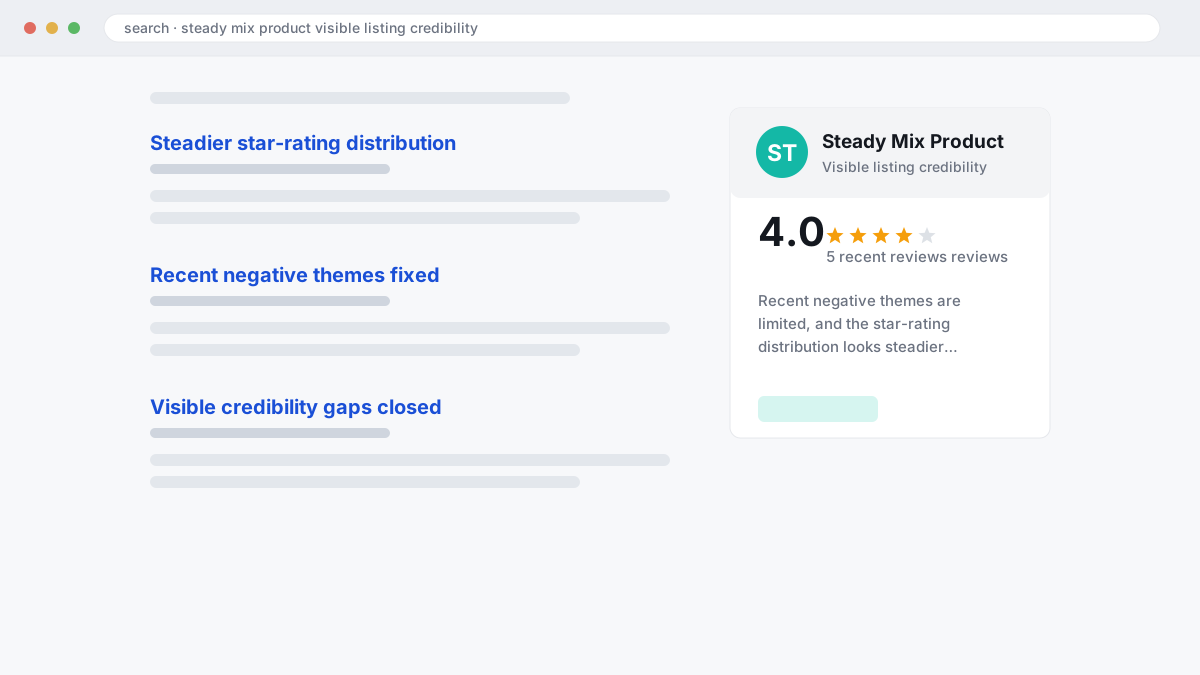
Most guides push “get more reviews” first. That fails when your last five reviews contain a fresh defect theme, because shoppers react to the recent cluster faster than they react to a respectable total count. A weak rating mix also drags click-through from search results and cuts conversions on-page; a product with a lopsided run of 1-star and 5-star feedback often looks less credible than one with a steadier spread, even before the average rating changes.
If you want a practical order, use a 30-day sprint. In week one, isolate the negative pattern and fix the product, fulfilment or listing claim causing it; in weeks two to four, tighten the page elements that carry trust alongside reviews, such as image accuracy, bullet-point claims, answered customer questions and returns clarity. That combination usually moves sales faster than chasing raw count because the shopper sees a cleaner reason to buy now, not just a bigger review total.
If you are weighing paid help, leave broad acquisition until this cleanup is stable. BGR Review’s review packages include a 30-day free replacement guarantee, but even with support, fixing the rating mix and trust gaps first is the higher-ROI move.
Should you use Amazon review software or a managed service for compliance work?
Amazon review software fits routine, policy-safe request automation. A managed service is stronger when you need insert audits, trigger diagnosis, removed-review recovery, or an appeal route after warnings and account risk.
Automation-only is the wrong choice once Amazon has already acted. A tool can schedule compliant prompts through Seller Central messaging or help your team use approved request flows consistently, but it usually stops at sending and logging. That fails when the real problem sits in an old product insert, a follow-up sequence that nudged only happy buyers, or a warning that now needs a tight appeal evidence pack instead of a broad defence. The better route is software for clean routine work, then hands-on support for audits, evidence collection, and recovery when reviews disappear or policy notices land.
This is the practical trade-off.
| Option | Price shape | Workflow depth | Recovery support |
|---|---|---|---|
| Review software | Usually lower monthly SaaS cost | Request timing, templates, message logs, basic automation | Limited; rarely builds evidence or handles warning response |
| Managed compliance service | Higher human-led cost; at BGR Review, removal work is $0 upfront and $449 per removed review link after success | Insert audit, policy mapping, log review, narrow evidence submission | Stronger for removed reviews, seller warnings, and appeal drafting |
Tools are cheaper because they scale the safe part. Services earn their cost when enforcement starts, your internal team is overloaded, and every hour spent pulling message history or packaging screenshots delays sales recovery, branded search demand, and conversions.
What wording can you use in a compliant Amazon review request right now?
A compliant Amazon review request is brief and neutral: thank the buyer, identify the order, and ask for honest feedback. Do not ask for a positive review, offer compensation, or steer only happy buyers to respond; Amazon’s review-manipulation rules and the Amazon Community Guidelines give Amazon room to act when the wording nudges sentiment.
The wrong approach is the common “If you loved it, please leave us a 5-star review” line, often sent through Seller Central messaging after delivery. It fails because it pushes a rating outcome instead of asking for genuine product feedback. The safer route is either Amazon’s own Request a Review button or a plain message that makes one ask only. BGR Review sells review packages across platforms, but for Amazon this is the cheaper DIY move because custom persuasion copy adds risk without adding compliance.
Hi [Name], thanks for your order of [Product]. We hope it arrived as expected. If you have a moment, we’d appreciate your honest product feedback on Amazon. Thank you for your time.
Keep it under 80 words, send it once, and leave out discounts, refunds, replacements and any mention of star ratings.
What should you do the day Amazon removes reviews or sends a policy warning?
Freeze every review-related workflow at once and preserve evidence before anything changes. Your first 24 hours should go on three jobs: stop any further breach, find the likely trigger, and save records Amazon can verify without guesswork.
The wrong move is to keep campaigns running while you “monitor” the warning. That fails because the same Seller Central message flow, product insert, agency sequence or post-purchase automation can keep generating fresh violations, which pushes a review removal issue closer to account suspension. The right move is immediate containment: pause all review emails, Request a Review automations, insert print runs and any off-Amazon follow-up that could conflict with the Amazon Community Guidelines.
Then pull evidence before systems overwrite it. Download message logs, order records, SKU lists, insert artwork, fulfilment notes and screenshots of active templates the same day; if an agency or software vendor touched the workflow, export their settings too. In BGR Review’s negative-review case file covering 12,000+ cases logged June 2025 to June 2026, most rejected first attempts arrived with thin evidence, and the gap was usually missing records rather than a weak argument.
Trace the trigger across people and tools, not just one email. Check staff scripts, CRM triggers, packaging changes, variation-level offers and any outside contractor who touched buyer messaging; if you later need removal help, BGR Review works on a pay-after-success basis at $449 per removed review link with $0 upfront.
How do you build an appeal pack Amazon can verify quickly after review enforcement?
A usable Amazon appeal evidence pack shows three things fast: what triggered enforcement, what you changed, and why the issue will not happen again. The quickest reversals rely on dated screenshots, order IDs, Seller Central message logs, product-insert copies, and a simple corrective-action timeline Amazon can verify against its own records.
Most sellers send an emotional letter about unfair treatment. That fails because Amazon reviews policy breaches against evidence, not tone. If a review warning or account suspension relates to review manipulation under the Amazon Community Guidelines, say exactly which source caused it: a message template, a QR insert, a rebate offer, a vendor campaign, or a variation listing problem. Then show the fix completed, with dates.
Your pack should include the original violation source, the removed or edited asset, and the control that replaced it. Add screenshots of the old insert, the corrected insert, affected ASINs, order-level records, message logs from Seller Central, and any vendor contracts or agency instructions that touched review generation. If a third party caused the breach, include the termination email or revised scope.
For account suspension appeals, Amazon needs ownership and system change, not broad promises. Name the person responsible for each action, the date each risky automation was paused, and the rule added to stop recurrence, such as legal sign-off on inserts or a ban on off-platform review requests. That is also the point where some sellers ask BGR Review to sanity-check the evidence pack before wider reputation work on Google, Trustpilot or Yelp, because a narrow, verifiable file moves faster than a long defence.
What should you optimise next after review compliance is fixed?
Once your Amazon review compliance is clean, move to the conversion levers buyers notice on the page straight away. Better images, sharper A+ Content, clearer FAQ copy, cleaner pricing and the complaint themes in your newest reviews usually lift conversions faster than another round of review-request tinkering.
The wrong move is to keep chasing more reviews after the policy fix, especially if your star-rating distribution already shows a trust gap in the 3-star and 4-star comments. That fails because extra traffic hits the same blockers: weak hero images, vague size or compatibility copy, thin comparison charts, and unanswered objections that later turn into returns. The better move is a weekly review of conversion rate, return reasons and recent review themes, then update the listing before you expand traffic through ads or external campaigns.
Replying to reviews has value, but it usually matters less than fixing the listing defect buyers mention repeatedly.
Where to go from here
Start with a compliance audit before you send another review request. Pull your last 30 days of Amazon activity, then check three things in order: request timing, message templates in Seller Central, and any product inserts or post-purchase automations that could be read as steering, incentivising or filtering feedback. Match each step against Amazon Community Guidelines, the Request a Review button rules and the FTC endorsement guides, then log what you changed and when. That gives you a clean baseline before review velocity, star-rating distribution or a warning email turns into an account suspension risk.
If warnings, removed reviews or suspicious patterns are already showing, pause scale and move to a review-risk assessment. The useful output is narrow: the likely trigger, the evidence Amazon will actually read, and the actions you should stop first. In practice, that means isolating the trigger, pulling message logs and inserts, freezing risky automations, then submitting a tight appeal evidence pack instead of a broad defence. Where BGR Review helps, we handle that as a managed assessment first and only push remediation once the evidence supports it.