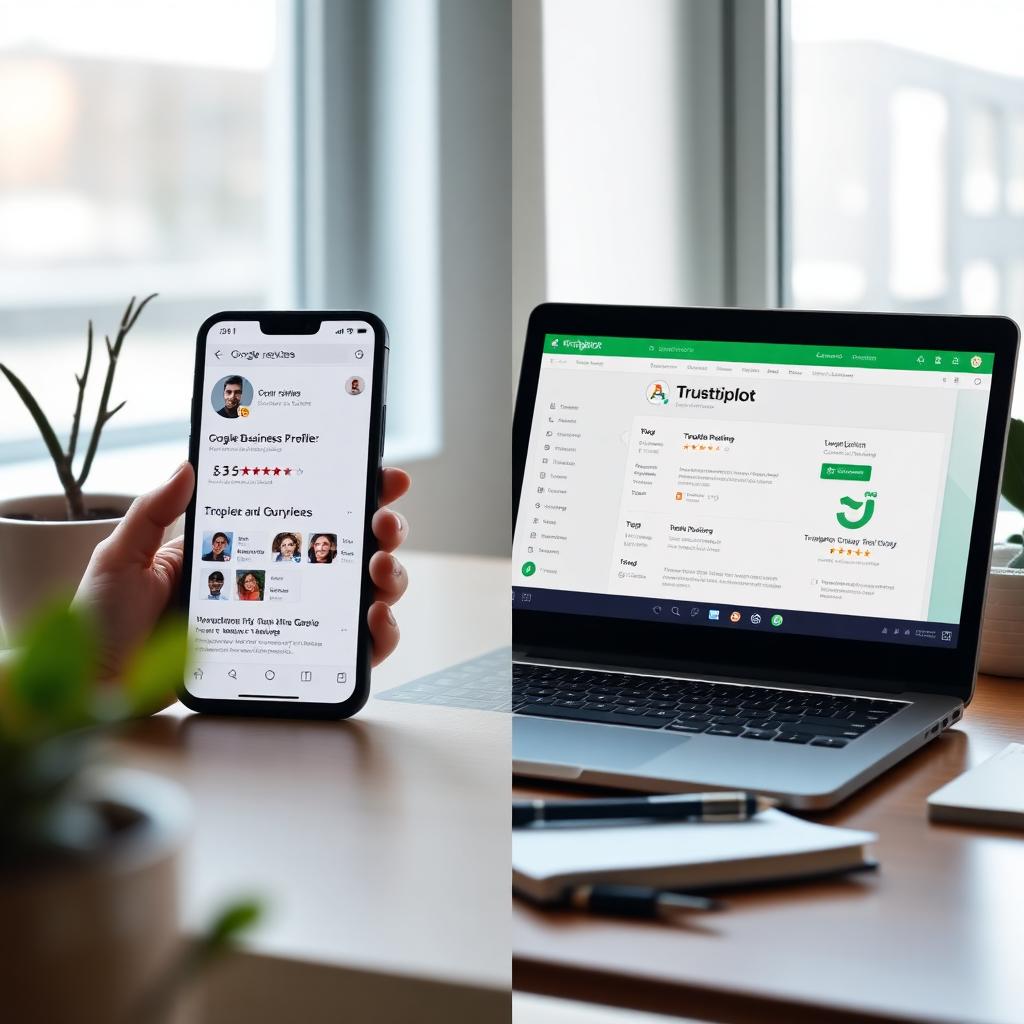
Business owners keep asking the same question: what does it actually cost to get more Trustpilot reviews? The honest answer is that there are three separate cost lines — the Trustpilot plan itself, the cost of sending invitations, and the cost of the staff time to respond and moderate. Add them up and you get the real cost per review, which is what matters for budgeting.
This guide breaks down every 2026 pricing signal we could verify — Trustpilot's own tiers, per-invitation math, integration costs, and the fully-loaded blended cost per verified review — so you can decide whether to grow reviews in-house, use a compliant service, or leave the profile on auto-pilot.
The three cost lines nobody separates
- **Trustpilot plan cost** — the monthly SaaS fee for invitation volume, TrustBox widgets, Google Seller Ratings, and product reviews.
- **Invitation delivery cost** — email sending, SMS if used, and the integration or API cost to trigger invitations from your order system.
- **Human cost** — 3-6 minutes per week per 10 reviews for responses, plus flagging and appeals when reviews violate Trustpilot's guidelines.
Almost every 'Trustpilot is too expensive' complaint online is really a complaint about one of these lines being wrong-sized for the business — usually a $999/month Advanced plan sold to a business sending 400 invitations/month, when a $259 Standard plan would have covered it with headroom.
Trustpilot's own pricing tiers in 2026
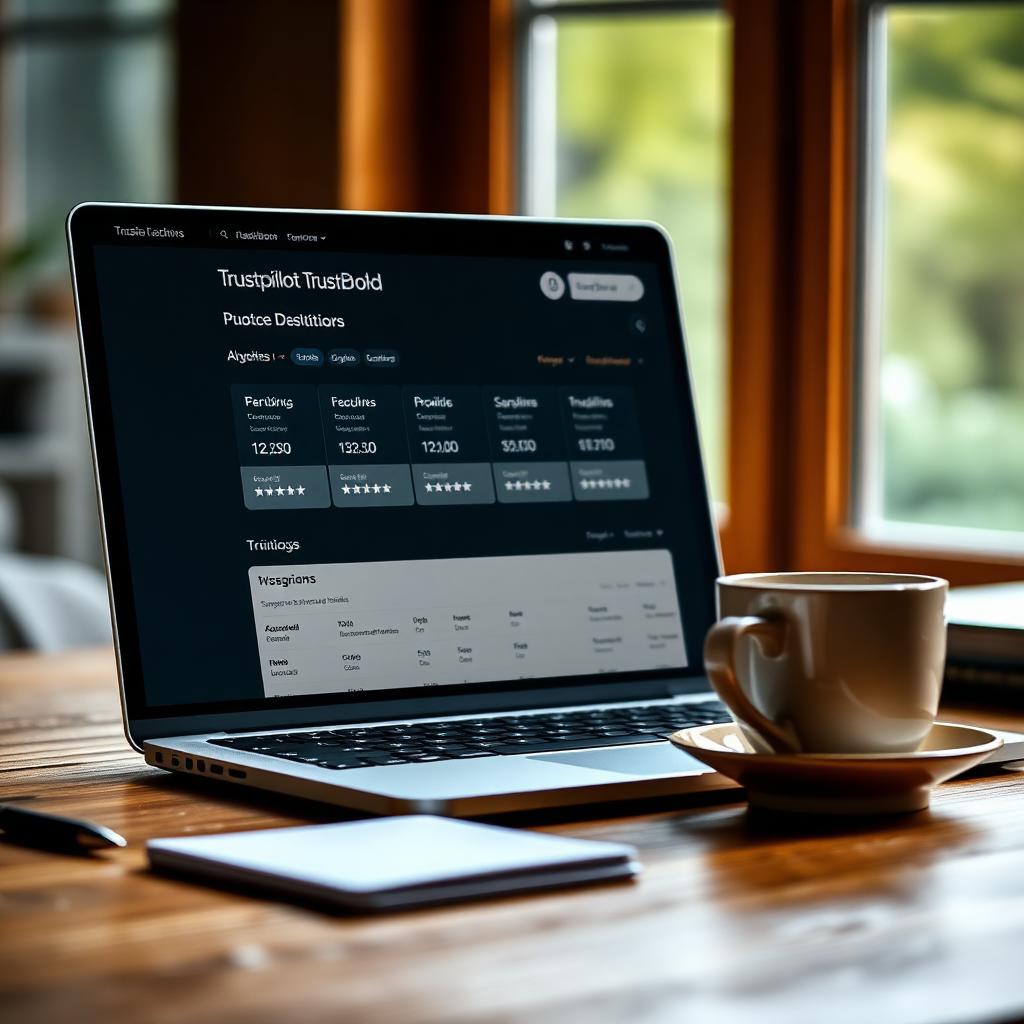
Trustpilot no longer publishes public per-tier pricing on its own site — everything routes through a sales call. Based on quotes documented by G2, Capterra, and independent review-industry benchmarking through the first half of 2026, here is the working range:
- **Free plan** — $0/month. ~100 automated invitations/month, one basic TrustBox widget, no Google Seller Ratings, no product reviews. Fine for a business collecting fewer than 20 reviews/month organically.
- **Standard** — ~$259-$299/month billed annually. Higher invitation cap (typically 2,000-3,000/month), multiple TrustBox widgets, Google Seller Ratings eligibility, basic API access.
- **Plus** — ~$599-$699/month. Product Reviews add-on, richer analytics, review tagging, advanced widgets.
- **Premium / Advanced** — ~$999-$1,499+/month. Highest invitation cap, custom integrations, dedicated CSM, competitor benchmarking, enterprise features.
- **Enterprise** — quote-only, typically $18,000-$60,000+/year for multi-location or high-SKU retailers.
The real cost per verified review
Divide monthly cost by verified reviews collected and you get the number that actually matters for ROI. Using industry benchmarks from Trustpilot's own state-of-reviews reports (invitation-to-review conversion typically 5-12% for e-commerce and 3-8% for service businesses), here is a realistic 2026 range:
- **Free plan, 100 invitations, ~7% conversion** = ~7 reviews/month. Plan cost per review: $0. Staff time cost per review: ~$3-$5. Blended: ~$3-$5.
- **Standard $259/month, 2,000 invitations, ~7% conversion** = ~140 reviews/month. Plan cost per review: ~$1.85. Staff time cost per review: ~$2-$3. Blended: ~$4-$5.
- **Plus $599/month, 5,000 invitations, ~6% conversion** = ~300 reviews/month. Plan cost per review: ~$2.00. Staff time cost per review: ~$1.50-$2.50. Blended: ~$3.50-$4.50.
- **Premium $1,299/month, 15,000 invitations, ~5% conversion** = ~750 reviews/month. Plan cost per review: ~$1.73. Staff time cost per review: ~$1-$2. Blended: ~$2.75-$3.75.
The pattern most owners miss: cost per review drops as volume rises, but only if invitation conversion holds steady. If the invitation trigger is wrong (invitations sent at checkout instead of after delivery), conversion falls to 2-3% and the cost per review doubles.
Hidden costs Trustpilot rarely mentions in sales calls
- **Integration setup** — a Shopify, WooCommerce, or BigCommerce connector is included on paid plans, but custom integrations (Magento, NetSuite, custom CRMs) typically cost $2,000-$8,000 in developer time.
- **Response staff time** — Trustpilot's own data shows businesses that respond to 100% of reviews outrank silent competitors, but a 48-hour response SLA costs roughly one hour of staff time per 15-20 reviews.
- **Moderation and appeals** — reporting a policy-violating review takes 10-15 minutes. High-conflict industries (moving, telecom, weight loss) can spend 3-6 hours/week on appeals alone.
- **Legal removal costs** — a specialist Trustpilot review removal case runs $300-$1,200 per successful removal in most markets, and no reputable provider guarantees success. See our Trustpilot removal guide for the compliant channels.
- **Downgrade friction** — moving from Premium to Standard mid-contract almost always requires waiting for the renewal window. Budget for a full year at the tier you commit to.
Why 'buy Trustpilot reviews at $5 each' is more expensive, not cheaper
Marketplaces still list Trustpilot reviews at $5-$15 apiece, and it is genuinely tempting math versus a $4 fully-loaded compliant review. The problem is that the sticker price is not the total cost of ownership.
- **FTC fines** — up to $53,088 per violation under 16 CFR Part 465 (Rule on the Use of Consumer Reviews and Testimonials, effective October 2024).
- **UK penalties** — up to 10% of global annual turnover under the Digital Markets, Competition and Consumers Act 2024, enforced by the CMA since April 2025.
- **EU enforcement** — up to 4% of annual turnover per member state under the Omnibus Directive, plus mandatory verification claims audits.
- **Consumer-warning banner** — Trustpilot's biggest deterrent is not the fine, it is the yellow public banner ('This company has been engaging in review manipulation') that stays on the profile for 6-12 months and typically cuts conversion 20-40%.
- **Cluster deletion** — when Trustpilot detects a coordinated fake-review batch, it removes the entire batch, not just the flagged individual reviews. The money spent on the batch is a total loss.
The compliant way to lower cost per review
The single highest-leverage change most businesses can make is not the pricing tier — it is the invitation trigger. Sending invitations after fulfillment (not at checkout) typically doubles conversion, which halves the effective cost per review without spending a dollar more.
- **Invite after fulfillment**, not at checkout. Conversion for post-delivery invitations is 6-12%; checkout invitations sit at 2-4%.
- **Invite 100% of eligible customers**, not just fans. Selective invitation is technically 'review gating' and violates Trustpilot's guidelines — the profile can be filtered when detected.
- **Use the free BCC/AFS channel** for the first ~100 invitations/month before upgrading. Many small businesses discover they never actually needed a paid plan.
- **Respond to every review inside 48 hours.** Trustpilot's own 2026 consumer research puts response rate above star rating as a purchase-decision factor.
- **Automate the invitation, personalize the response.** A generic 'thanks for your review' reply is worse than no reply — it signals a bot.
For businesses that would rather outsource the whole workflow — invitation infrastructure, moderation, response templates, and removal appeals for policy-violating reviews — see our compliant Trustpilot growth service or our step-by-step safe review growth playbook.
Frequently asked
Q.How much does Trustpilot cost per month in 2026?
The Free plan is $0. Paid Trustpilot Business plans start around $259/month for Standard, scale to roughly $599-$699/month for Plus, and $999-$1,499+/month for Premium/Advanced. Enterprise contracts are quote-only, typically $18K-$60K+/year. All paid plans default to annual billing with auto-renewal.
Q.Is Trustpilot really free?
The basic profile and up to about 100 automated invitations per month are free. Beyond that — TrustBox widgets, Google Seller Ratings, higher invitation caps, product reviews, and API access — you need a paid Business plan.
Q.How much does one Trustpilot review actually cost a business?
Blended cost per verified review typically lands between $1.50 and $8, depending on plan tier, invitation conversion rate, and staff response time. Cost drops as volume rises, but only if the invitation trigger is set to post-fulfillment rather than checkout.
Q.Can I buy Trustpilot reviews for $5 each?
You can find sellers offering them, but paying for review content violates FTC 16 CFR Part 465 (up to $53,088 per violation), the UK DMCC Act 2024 (up to 10% of global turnover), and the EU Omnibus Directive. Trustpilot also detects batch patterns, removes the whole cluster, and adds a public consumer-warning banner to the profile.
Q.What is the cheapest legal way to grow Trustpilot reviews?
Stay on the Free plan, use the BCC or Automatic Feedback Service to invite 100% of eligible customers after fulfillment, respond to every review inside 48 hours, and only upgrade to Standard when you consistently exceed 100 invitations/month for two months running.
Q.Does Trustpilot offer discounts?
Trustpilot's sales team routinely discounts annual contracts 10-25%, especially at end-of-quarter and for multi-year commitments. Always negotiate — the published tier prices are the starting position, not the final price.
The honest budgeting rule for Trustpilot in 2026: pick the plan tier that matches your worst month, fix the invitation trigger before you fix anything else, and treat the sticker price of any 'buy reviews' offer as a fraction of the real total cost. A well-run Free or Standard plan beats a poorly-run Premium plan on cost per verified review every time.