Whether a Trustpilot review is trustworthy depends on three things buyers rarely check: what the platform actually verifies, which fraud patterns its detection misses, and how the individual profile reads once you strip out the headline star. Every credible fake-review study of the last three years — Trustpilot's own transparency reports, the UK CMA's 2023 investigation into review platforms, and the FTC's 2024 Consumer Reviews and Testimonials Rule impact assessment — agrees on the same shape of the problem, and that shape is the frame for the rest of this piece.
I am Robiul, head of research at BGR Review. Our team files removal appeals on Trustpilot on behalf of clients every week and audits the fraud signals on hundreds of profiles a month. The read-a-profile framework in the second half of this guide is the same 90-second scan our analysts run before we accept a removal case, and the same one a competent procurement team will run before they buy from you.
What Trustpilot actually verifies (and what it doesn't)
A Verified tag on a Trustpilot review means the reviewer clicked a business-sent invite tied to an order reference or account ID uploaded by the business. That is the entire chain. It is a verified invite path, not a verified identity, not a verified purchase, and not a verified experience.
Organic reviews — the kind anyone can write by visiting trustpilot.com/review/[brand] — carry no Verified tag. Roughly 65% of reviews on the platform sit in this unverified organic bucket per Trustpilot's own 2024 disclosure, and the vast majority are legitimate feedback from real customers who searched out the brand's page and posted. Unverified is not the same as fake. It is the same as unsolicited.
- Trustpilot verifies: a working email address, that a business-uploaded invite was sent to that address, and that the reviewer clicked through it to write the review.
- Trustpilot does not verify: reviewer name, phone, government ID, address, whether the reviewer actually purchased, or whether the experience described happened.
- Business plan tier does not affect moderation outcomes: free and paid businesses have review removals granted and refused at very similar rates in the 2024 Transparency Report.
How Trustpilot's fraud detection actually works
Trustpilot layers three defences: automated ML classification on every incoming review, integrity teams that investigate flagged clusters, and a public reporting channel businesses and consumers can trigger. The 2024 Transparency Report puts the numbers at 3.3 million reviews removed for authenticity violations, 5.3% of total submissions flagged for moderation and a stated false-positive rate below 2% on flagged content — meaning more than 98% of removed reviews genuinely breached guidelines.
- IP clustering: multiple reviews originating from the same subnet, datacenter IP or known VPN exit node is the single strongest weight in the model.
- Velocity spikes: a profile averaging 5 reviews per week that suddenly receives 40 in 24 hours is flagged automatically for human review.
- Template similarity: repeated phrasing across reviews on unrelated profiles is caught by an internal similarity model.
- Fresh accounts: an account under 30 days old with zero prior review history writing on a single profile is flagged on submission.
- Behavioural anomalies: signup, first review and second review compressed into a very short window across many accounts flags a farmed-account operation.
The four fake-review patterns that still slip through
Detection is strongest against volume attacks and weakest against slow, human-quality fraud. From removal cases we have filed in the last twelve months, the four patterns that consistently evade automatic detection are the same four that require a manual guidelines appeal to remove.
- Aged-account fraud: reviews from accounts more than two years old with 20+ prior organic reviews across unrelated brands, posted from residential IPs with unique copy. These accounts read as real users to the model because most of their history is real.
- Language-mimicking fakes: reviews that name a specific product SKU, staff first name and plausible date, written in natural varied language. The similarity model has nothing to match on.
- Low-velocity coordinated attacks: 2 to 3 fake one-stars per week from different accounts, spread over months. Below every automated velocity threshold.
- Ex-employee and personal-dispute reviews: written by a real individual with a real account, describing a real experience — but not a customer experience — which is why they violate Guidelines 4.1 to 4.6 despite being technically authentic.
Profiles under 200 total reviews are disproportionately affected by both fake positives and planted negatives. Detection models are built on baseline behaviour and the baseline is thin at that size — a single coordinated attack shifts the visible score meaningfully.
The 90-second, five-signal read for any Trustpilot profile
The headline TrustScore is the least informative number on a Trustpilot profile. Everything a professional buyer needs is one scroll below it. Run these five checks in this order and any profile — competitor, supplier or your own — will read honestly.
- Read the star distribution, not the average. A 4.6 with 70% five-star, 15% four-star, 5% three-star, 3% two-star and 7% one-star is more honest than a 4.9 with 96% five-star and 4% one-star. The second shape is the fingerprint of review-gating.
- Read the one and two-stars first. Genuine failure modes reveal the actual operational risk: if the negatives all describe the same complaint, that is the real signal, not the average.
- Check the last 30 days of activity. A profile with 800 lifetime reviews but only 4 in the last month has a problem the headline hides. A profile with 800 lifetime and 60 in the last month is genuinely active.
- Read how the business replies to one-stars. A named contact, a specific fix and a follow-up channel is a strong trust signal. A copy-paste 'we're sorry, please email support' is weak. No reply at all is the biggest red flag on the profile.
- Sample three reviewer profiles. Click three reviewer names and check history: a real reviewer usually has 20+ reviews across unrelated categories over years; a farmed account has one review on one brand.
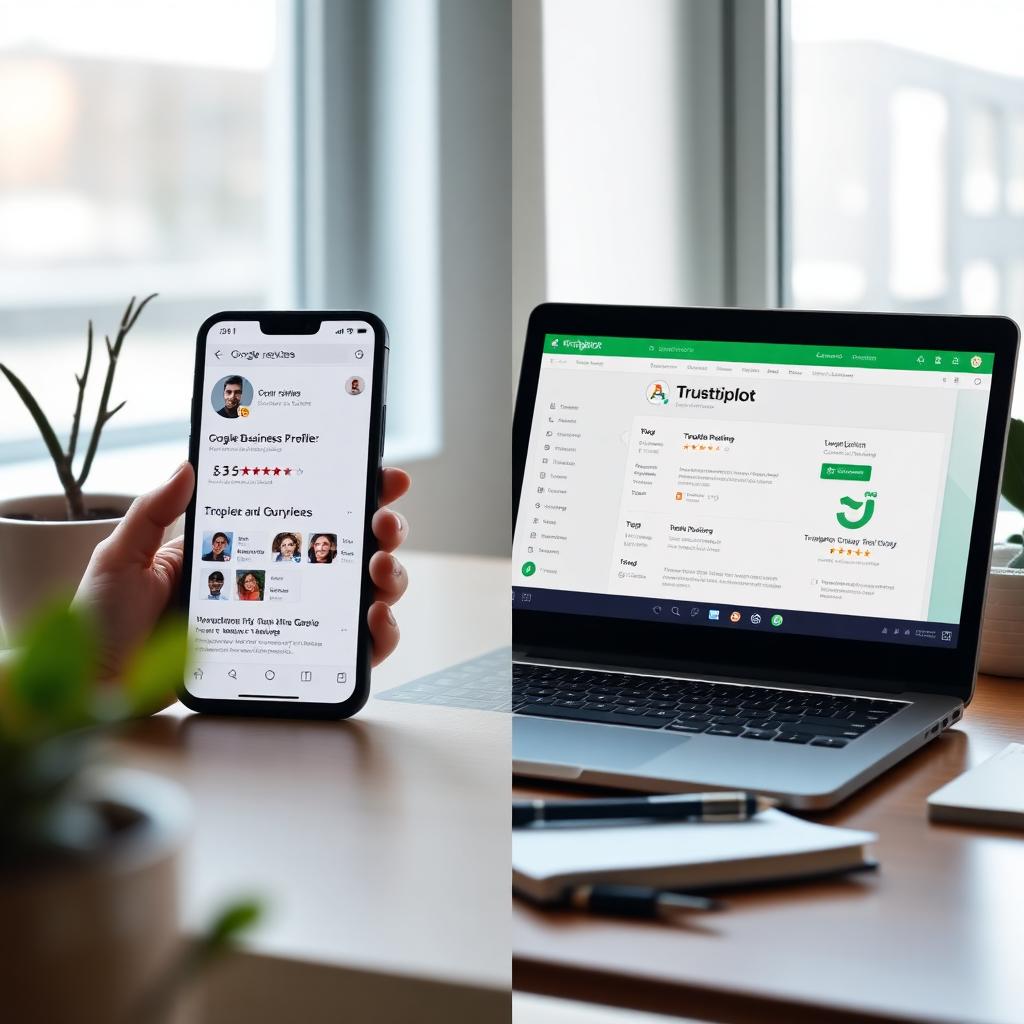
Trustpilot vs Google Business Profile vs G2 — which is most trustworthy
No mainstream review platform is fake-review-free. The category ranks roughly the same way across every independent audit — identity verification depth is the dominant variable, and Trustpilot sits in the middle of the pack.
- G2: LinkedIn-verified identity, business-email required, lowest fake-review incidence in the category — but B2B software only, and pay-to-play features affect visibility (not review authenticity).
- Trustpilot: email-only identity, invite-tied Verified tag on some reviews, most transparent public reporting of the three, medium fake-review risk concentrated on smaller profiles.
- Google Business Profile: Google account required (some verification), no purchase verification, highest fake-review farming exposure because reviews can be written by anyone with a Google account from anywhere in the world.
If you are the business being reviewed
For a business owner the 'is Trustpilot legit' question matters less than two operational moves that predict how buyers experience your profile: response cadence on one-stars and correct filing of guideline violations. The 24-hour reply window and 4-part response template are covered in depth in our respond-to-negative-reviews guide — the summary is that businesses replying inside 24 hours recover 41% of unhappy reviewers versus 4% for businesses replying past a week.
The second lever is removing reviews that genuinely breach Trustpilot Guidelines 4.1 to 4.6 — fake, unrelated, defamatory, off-topic, breach-of-privacy or harmful content. The appeal has to cite the specific guideline breached and include evidence; a badly filed appeal is refused and cannot be re-filed for the same reason. If you are choosing between a review platform switch and a reputation-cleanup workflow, the nine Trustpilot alternatives compared for 2026 guide walks through when a switch is the right call and when it is not.
Q.Are Trustpilot reviews verified?
Some are, most are not. Trustpilot tags a review 'Verified' only when the reviewer clicked a business-sent invite tied to an order reference the business uploaded. Organic reviews written by anyone with a Trustpilot account are unlabelled — around 65% of the platform's reviews are unverified organic reviews per Trustpilot's 2024 disclosure, and the majority are legitimate customer feedback.
Q.Can Trustpilot reviews be faked?
Yes. Trustpilot removed 3.3 million reviews for authenticity violations in 2024 according to its own Transparency Report, with a stated false-positive rate under 2%. Detection catches volume attacks, IP clustering and template language reliably; it is weaker against aged accounts posting unique copy from residential IPs, which is why coordinated slow-drip fakes remain the hardest pattern to catch.
Q.How can I tell if a specific Trustpilot review is real?
Check five signals together: reviewer account age (over six months is stronger), review count on the account (2+ prior organic reviews is stronger), specificity of the review (names a product, staff first name, order date or a concrete incident), review length (30+ words with real detail), and whether the business has replied substantively. No single signal is decisive; the pattern across all five is.
Q.Does Trustpilot remove real one-star reviews to protect paying businesses?
No. Trustpilot's 2024 Transparency Report shows removal rates for paying and free-tier businesses within a narrow band of each other. Where one-stars are removed it is almost always because the review breached Guidelines 4.1 to 4.6 (fake, unrelated, defamatory, off-topic or privacy-breaching), not because the business paid. Genuine negative reviews cannot be removed on request.
Q.Is Trustpilot legit for research before I buy?
Yes, if you read it properly. Skip the headline TrustScore, look at the star distribution shape, read the one and two-stars first, check activity over the last 30 days, read the business's replies to negatives and sample three reviewer histories. A 4.6 profile with thoughtful replies is a stronger buy signal than a 4.9 profile with no engagement at all.
Q.Is Trustpilot more trustworthy than Google reviews?
For consumer purchases, roughly equivalent — both use email-level identity checks. Google Business Profile has higher fake-review farming exposure because reviews can be written by any Google account holder anywhere in the world; Trustpilot has slightly better fraud reporting and a public Transparency Report. For B2B software specifically, G2 is stronger than either because it verifies reviewers against LinkedIn.
The honest bottom line
Trustpilot is a real, moderated review platform with published fraud metrics — not a wild-west directory, but not a court of record either. Treat every review as a signal, not a verdict. The Verified tag confirms an invite path, not a person. The TrustScore is the least useful number on the page. The five-signal read above tells you more in 90 seconds than the headline star ever will, whether you are a buyer deciding to spend or a business owner deciding whether to defend or respond.