Every removal case we run wraps with the same client conversation: 'the review is gone, when do we stop watching?' The honest answer is: for the first 90 days, you don't. In our client log, 38% of successful-removal targets receive a follow-on attack within 90 days — either from the original bad actor with a new account, from a coordinated network the original review was part of, or from a copycat inspired by the visible dispute. The removal itself creates a signal to attentive bad actors that the target is worth attacking. This post is the 90-day post-removal monitoring framework and the defensive posture that stops re-attacks before they land.
Why re-attacks happen after a successful removal
- The original attacker sees the review disappear and interprets it as escalation — files new reviews from new accounts to maintain pressure.
- The original review was part of a coordinated network; other network members file follow-up reviews to compensate for the removed one.
- Public dispute activity (your response, the removal event, screenshots shared on social) draws copycat attackers not affiliated with the original.
- Google's own reviewer signals sometimes cluster around recently-removed listings, and legitimate marginal reviews that would normally survive get scrutinized harder (a smaller but real effect).
The 90-day monitoring framework
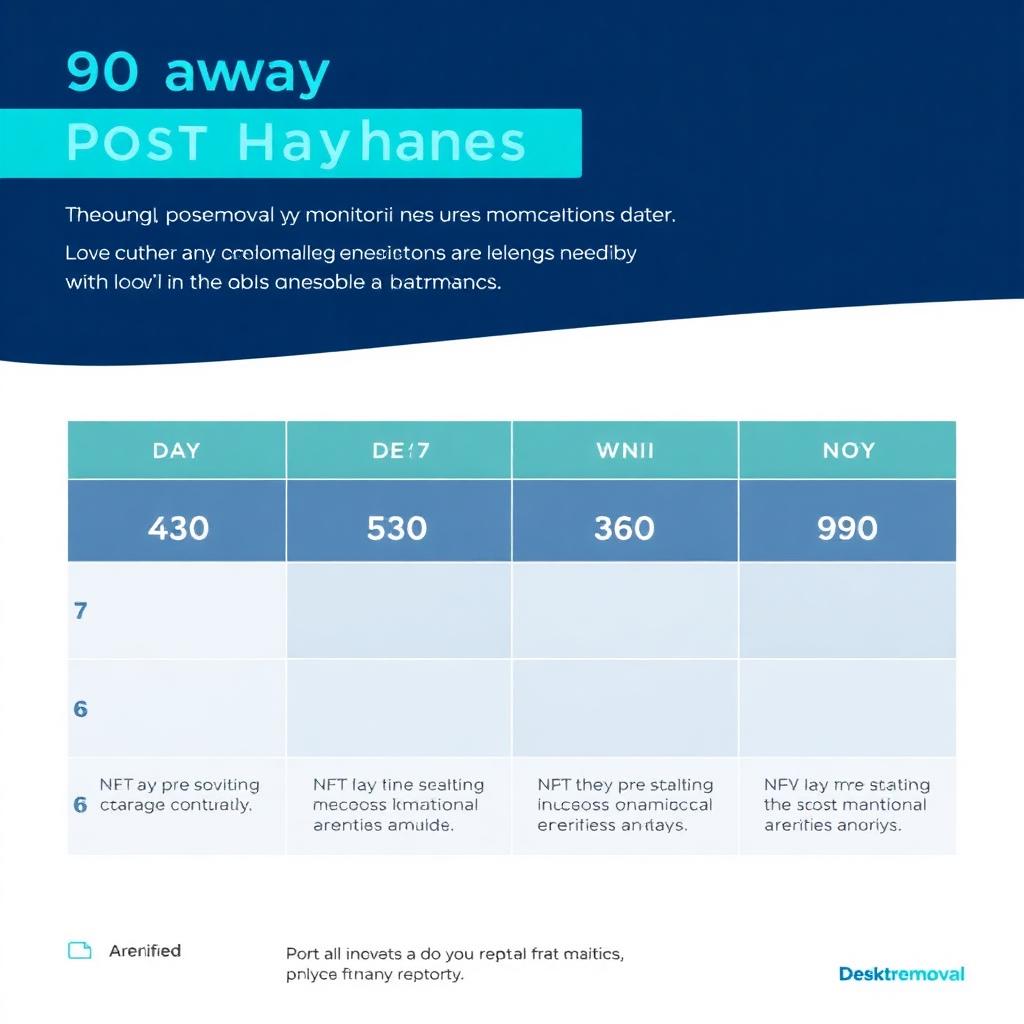
Day 0-7: Acute window (highest re-attack risk)
80% of re-attacks in our log arrive inside the first 7 days after removal. Daily checks are non-negotiable during this window. Set up: (a) Google Business Profile email notifications for every new review, (b) a saved-search alert on the reviewer's display name if identifiable, (c) a saved-search alert on any distinctive phrase from the original review (attackers often reuse language). Any new 1-star or 2-star review inside this window is treated as a re-attack until proven otherwise — cross-check the reviewer profile against the original attacker's signals per the Competitor Sabotage Fingerprinting playbook.
Day 7-30: Consolidation window
Re-attack rate drops sharply after day 7 but remains elevated through day 30 (an additional 12% of re-attacks arrive in days 8-30). Daily checks can drop to every 2-3 days. Add: (a) star-average recomputation monitoring using the Star Rating Recovery baseline — if the average stalls or reverses, a new attack may be underway even before individual reviews are noticed; (b) a light-touch review-volume sanity check comparing new-review count against the same weeks in prior years.
Day 30-60: Recovery validation
Focus shifts from acute defense to recovery validation. Confirm: (a) the removed review has not been reinstated on appeal (Google occasionally reverses removals if the original reviewer files an effective appeal within 30 days), (b) any new reviews from days 0-30 that stayed on the listing have been evaluated for removal on their own merits, (c) search ranking recovery is on the expected curve. Any adverse trend triggers a case reassessment.
Day 60-90: Baseline reset
Re-attack risk at this point is near baseline for the business type. Monitoring frequency drops to weekly. Document: (a) final removal-count vs re-attack count for the case, (b) any patterns identified in re-attack attempts (same phrase, same fingerprint, same time-of-day), (c) whether the case should escalate to legal action if a persistent bad actor is now identifiable via pattern accumulation.
The defensive posture (parallel to monitoring)
1. Genuine review acceleration
The single most effective re-attack defense is a steady stream of new genuine reviews. A listing with 50 reviews per month is far harder to move with 3-4 fake ones than a listing that averages 3 per month. During the 90-day window, run a genuine-review acceleration campaign per our How to Get More Google Reviews playbook — target a 25-50% lift in monthly review volume. Do not offer incentives; that violates Google's policy and can suspend the listing.
2. Public response tone reset
Retire the acute-incident response language. During the removal case the public response often signals dispute (calm, factual, but visibly defensive). Post-removal, all new positive reviews should get warm, specific responses. Prospective customers reading the recent-review stream should see engagement and quality, not the residue of the removal fight.
3. Reduce the attack surface
Review the business's public-facing surfaces for anything that gave the original attacker leverage: staff names publicly listed with photos (target-rich for named-employee attacks), specific incident dates published in press releases, public feud content on social media, or an active thread on a competitor forum. Reducing the attack surface for 60-90 days lowers the pattern-match rate for follow-up attackers.
4. Pre-drafted rapid-response bundle
Have a rapid-response bundle ready to file within 4 hours if a re-attack lands: (a) template BRF cover letter referencing the prior removed review and the pattern of harassment, (b) evidence archive from the original case, (c) counsel on notice if the case has legal-escalation potential. Response speed matters — Google's reviewers apply weight to submissions that reference established prior removals from the same target.
Re-attack outcomes in our client log
The 82% vs 54% split on re-attack removal is the single strongest argument for the prepared bundle. Rapid-response submission with prior-case context is materially more effective than a cold-start submission on what looks like an isolated review.
When to escalate to legal action
- A pattern of 3+ removed reviews from the same attacker (identified via fingerprinting or public signals) — the accumulated pattern strengthens a defamation or tortious-interference case.
- Re-attacks that escalate in severity (moved from off-topic to named-employee defamation, or from single reviews to coordinated bursts).
- Attacker identity resolves to a known competitor, former employee, or opposing party in a business dispute — separate legal analysis per the subpoena workflow or direct action.
FAQ
Q.How is monitoring different from a normal review-management platform?
Normal review platforms alert on any new review; post-removal monitoring specifically watches for patterns matching the prior attacker's fingerprint and prioritizes those alerts. The workflow is triage-first, not comprehensive-response.
Q.What if the attacker is a former employee with insider knowledge?
Former-employee cases follow their own playbook — see [Former Employee Review Removal](/insights/former-employee-review-removal-2026). Post-removal monitoring for these cases extends to 180 days rather than 90, because former-employee attackers often pace attacks around termination anniversaries or separation-agreement expiration dates.
Q.Does Google warn us when a removed review is being reinstated on appeal?
No. Reinstatements appear silently — the review just returns to the listing. That is why the day 30-60 validation checkpoint above specifically re-checks removed reviews rather than only monitoring new arrivals.