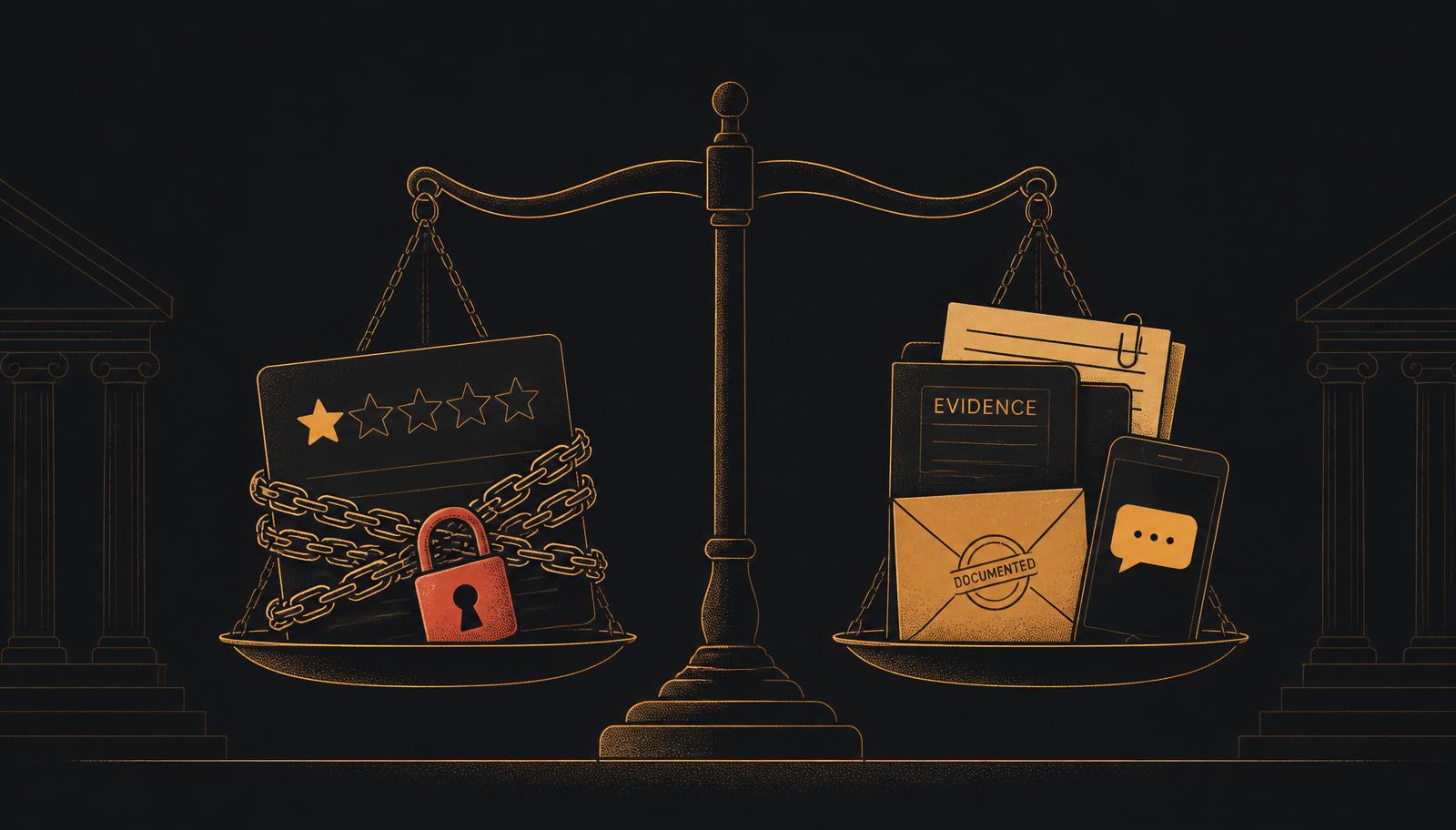
Attorneys responding to Google reviews operate under a stricter set of constraints than most professional services. ABA Model Rule 1.6 (Confidentiality of Information) prohibits disclosing information relating to the representation of a client without informed consent — including whether a person is or was a client at all. Model Rule 8.4(c) prohibits conduct involving dishonesty or misrepresentation in the response itself. State bar advisory opinions in CA (Opinion 2018-196), NY (Opinion 1032), and TX (Opinion 662) have specifically applied these rules to online review responses, with several attorneys publicly reprimanded or suspended for review responses that disclosed representation status. This post is the ethics-compliant response framework and the removal paths that work under these constraints.
What bar rules block in a review response
- Confirming the reviewer is or was a client of the firm (Rule 1.6 disclosure).
- Denying the reviewer is or was a client — same disclosure problem in reverse.
- Discussing case-specific facts, strategy, outcomes, or communications, even to correct a false statement in the review.
- Attacking the reviewer's credibility using information the firm learned in the course of representation.
- Responding on behalf of the firm to a review that references an opposing party (the opposing party is not the firm's client, but discussing case facts still implicates the firm's client's confidential information).
The ethics-compliant response template
Thank you for your feedback. Our professional obligations of confidentiality prevent us from discussing the specifics of any matter or the details of anyone who may or may not have consulted with our firm. If you have a concern you would like our firm's managing partner to address, please contact us at [phone] or [email] so we can respond appropriately.
This four-sentence template mirrors the healthcare HIPAA response (Healthcare Review Removal) but is drafted specifically to satisfy Rule 1.6 review-response advisory opinions. It (a) acknowledges the reviewer without confirming representation, (b) publicly states the ethical constraint so future readers understand silence is not agreement, (c) offers a compliant private channel, (d) avoids any implicit confirmation. Post this template verbatim on every review the firm cannot otherwise remove. Do not vary per reviewer — variation risks drifting into disclosure.
The response decision tree
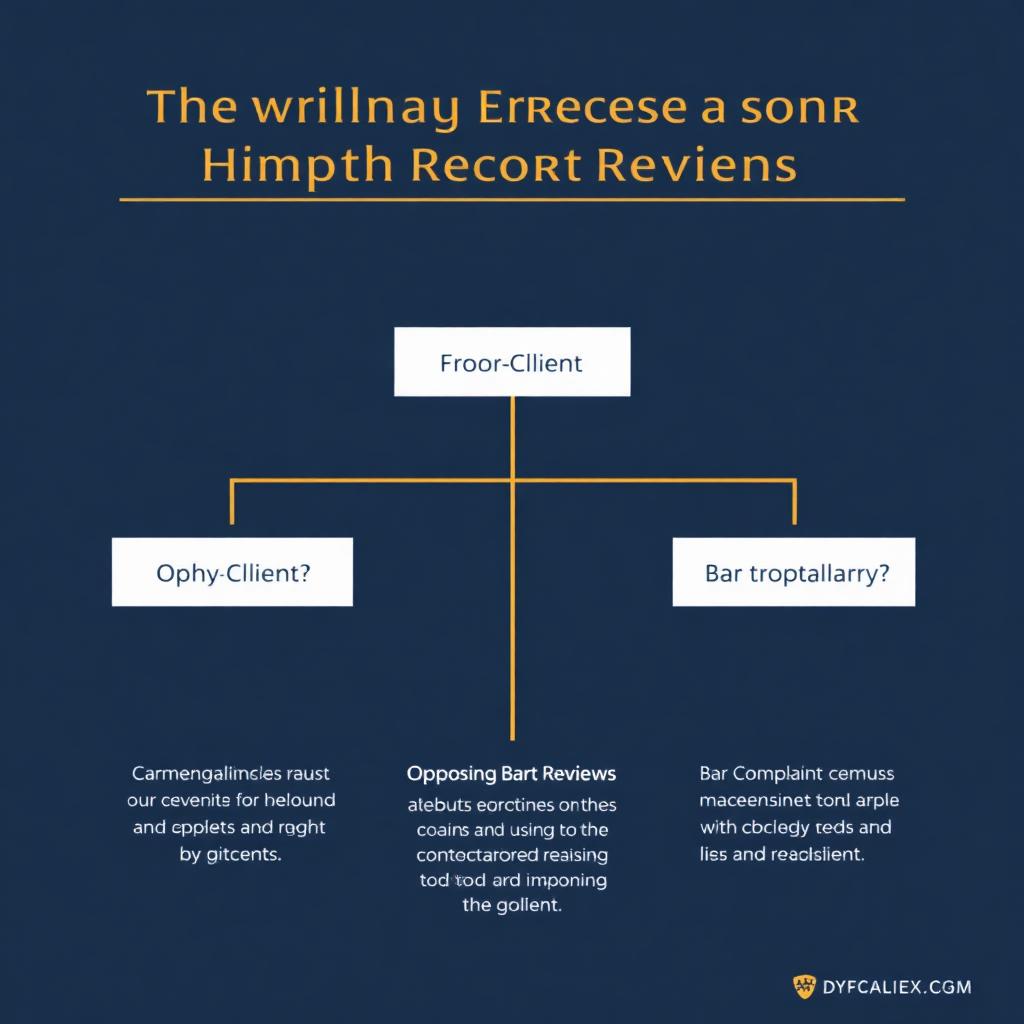
Branch 1: Reviewer appears to be a client
Use the standard template above. Do not confirm, do not deny. Do not respond with case-specific rebuttals no matter how false the review is. Removal path: BRF under the standard Google policy channels; the ethics constraint applies to the public response but not to the removal submission (which is not public). Submission to Google can include client information under Google's confidential-evidence handling as long as counsel confirms the disclosure is authorized.
Branch 2: Reviewer is clearly not a client (never consulted)
Someone leaving a review for a firm they never contacted — a competitor, a family member of an opposing party, a scam reviewer. Post the standard template response publicly, then file for removal under Wrong Company Confusion or as an Off-Topic violation. Because there was no representation, Rule 1.6 does not apply to the removal submission and the firm can state directly in the BRF cover letter that no client relationship exists. Removal rate 73% in our law-firm client log.
Branch 3: Reviewer is an opposing party from a resolved case
Opposing counsel, opposing party, or a family member of the opposing party leaving a retaliatory review. Rule 1.6 still applies because responding requires referencing the firm's client's matter. Use the standard template publicly. For removal, the strongest path is Named Employee Defamation if the review defames a specific attorney by name (accusations of incompetence, ethical misconduct, or malpractice framed as fact). Attorneys have standing to defend their professional reputation without disclosing client information, so the defamation removal path works here where the direct-response path is blocked. Removal rate 58%.
Branch 4: Reviewer alleges a bar-complaint-level violation
The review accuses the attorney of a specific ethical violation (theft of client funds, missed statute of limitations, conflict of interest) framed as fact. Two-track response: (a) public template response only, (b) immediately notify the firm's malpractice carrier and consider proactive bar self-reporting depending on jurisdiction. Bar accusations posted publicly can trigger informal bar inquiry regardless of the review's truth; the malpractice carrier needs early notice per most policies. Removal path is BRF + potential defamation counteraction if the accusation is factually false — but the counteraction requires the firm to be prepared to prove the accusation false, which may itself require Rule 1.6 disclosure with client consent.
Removal rates by branch
Branch 1 has the lowest removal rate because Google's reviewers generally protect client speech about actual client experiences — this is by policy design, and firms should not expect BRF success on genuine client complaints. The ethical response combined with a strong pipeline of new positive reviews from other clients is the realistic path for Branch 1, not removal.
What NOT to do — real bar-discipline examples
- Do not respond with the client's case number, court, or opposing party's name to 'prove' the review is inaccurate — this is the fact pattern that generated the CA and NY published advisory opinions on review responses.
- Do not have a paralegal or associate post a response 'as themselves' with case-specific details — the ethical duty extends to the entire firm and its agents.
- Do not offer a fee reduction publicly in exchange for review removal — this is a fee arrangement disclosed publicly and may trigger separate Rule 7 issues.
- Do not respond to a review from a jurisdiction where the firm is not licensed by referencing the underlying matter — an unauthorized-practice implication has emerged in several bar opinions.
FAQ
Q.What if the client waives confidentiality and asks me to respond publicly?
Informed written consent to a specific disclosure is a valid Rule 1.6 waiver, but the safer practice is to still route through the private channel — a public response with confidential detail, once posted, cannot be un-posted, and future reviewers see the firm as one that will publicly discuss client matters. Advisory opinions in most states recommend against public detailed responses even with consent.
Q.Can we sue the reviewer for defamation and use the discovery to identify them?
Yes — see the [Doe subpoena workflow](/insights/subpoena-google-reviewer-identity-workflow). For law firms this is more common than for other business types because the underlying professional-reputation harm is easier to quantify. Cost-benefit is the same analysis as any defamation matter.
Q.Does the ethics constraint apply to solo practitioners the same way?
Yes — Model Rule 1.6 applies to the individual attorney regardless of firm size. Solo attorneys sometimes assume 'I'm my own firm, I decide' — the bar disagrees, and solos have been disciplined for the same review-response patterns as large firms.