


Quick answer
E-E-A-T matters in AI-generated search results because systems such as AI Overviews prefer sources they can attribute, verify and quote safely, rather than pages that simply repeat keywords. Google added the extra E for Experience to its Search Quality Evaluator Guidelines in December 2022, and that matters more when a model summarises your brand without sending a click. For most business sites, the quickest gains come from named authors, first-hand proof, consistent third-party reviews, and pages structured to answer one question clearly. Weak authorship, thin evidence and messy review signals lower citation eligibility fast.
This page comes from the side of the market that has to fix the mess after visibility drops: weak Google profiles, thin bios, conflicting Trustpilot and Yelp details, and review flags filed with nothing beyond the basic report button. Across 12,000+ negative review cases logged by BGR Review from June 2025 to June 2026, most rejected requests arrived with minimal evidence, which is the same problem that makes ai-search systems hesitant to cite a brand in the first place.
BGR Review sells review growth and negative review removal, so the commercial angle is obvious; the useful part is the process detail. A removal case that has a clear policy issue, a dated screenshot, the review URL, and matching profile evidence is handled very differently from a vague complaint, and that same evidence discipline is what makes a page easier for AI systems to trust and quote.
Why does E-E-A-T change AI search visibility more than generic optimization advice?
E-E-A-T matters in AI search because answer systems judge more than the words on your page. They compare your claims with author transparency, brand reputation signals, and third-party confirmation before they decide whether your page is safe to cite in an answer or surface in an AI overview.
Most generic guides reduce E-E-A-T to better copy: clearer headings, fresher dates, tighter intros. That fails because a polished page can still sit beside a thin Google Business Profile, weak Trustpilot activity, no named author credentials, and no consistent mentions elsewhere. For a business weighing reputation help, that gap is obvious in practice: a page says “trusted by clients”, but the author bio is vague, the review platform profiles are sparse, and the only visible proof is self-published. AI systems treat that as citation risk, especially on money-adjacent topics where trust errors can damage click-through rate, calls, and form fills.
The first fixes usually span three layers at once.
| Layer | Weak version | What works better |
|---|---|---|
| Page | Claims with no evidence block | Named sources, dates, and checkable proof beside the claim |
| Author | “Admin” or a thin bio | Real author, role, relevant experience, and visible contact trail |
| Brand | Patchy review profiles and inconsistent business details | Aligned profiles, recent verified reviews, and consistent third-party mentions |
That is why E-E-A-T changes visibility more than generic optimisation advice. In BGR Review’s work, the practical version is straightforward: tighten the bio, add evidence blocks, then clean up the off-page footprint where buyers actually check you. If you also use a review service, keep the proof honest and platform-compliant; BGR Review’s packages carry a 30-day free replacement guarantee, and removal work runs on a pay-after-success model at $449 per removed review link with $0 upfront, which gives you verifiable commercial detail an AI system can cross-check instead of marketing fog.
How does AI search actually judge whether a source is trustworthy enough to cite?
AI search usually cites pages that make precise claims, show who wrote them, link those claims to checkable sources, and line up with what other reliable documents say. Pages with vague copy, missing authors, no dates, or no evidence sit lower on citation eligibility even when they rank.
Most guides treat ranking as the prize. That fails in AI search because a page can hold a decent organic position and still be skipped if the answer block is hard to verify. Citation systems compare claim clarity, source quality, and corroboration across multiple documents: if your page says “we remove bad reviews fast” while another page states “pay after success, $0 upfront, $449 per removed review link” and matches a clear policy discussion, the second page is safer to quote.
The trust threshold rises on sensitive topics. Google’s Search Quality Evaluator Guidelines set a higher bar for YMYL sensitivity, which covers advice that can affect money, health, safety, or major decisions; reputation management sits close to that line because you are asking someone to spend money and trust compliance claims. A page about review removal or paid review services needs plain attribution, current dates, and policy-aware wording, or the system treats it as a hallucination risk.
If you want better citation eligibility, tighten the page the way an editor would. Add a real byline and role, stamp the article with the last reviewed date, cite primary sources such as Google Search Central or the FTC where the claim comes from, and put evidence blocks next to commercial claims. On a BGR Review service page, that means stating the fixed terms exactly — 30-day free replacement on review packages, or removal billed only after success — instead of hiding them three clicks deep behind generic marketing copy.
Why can a strong page still be ignored if your brand reputation looks weak elsewhere?
A strong page can still miss AI visibility when your wider brand footprint looks thin, inconsistent or distrusted. Reviews, third-party profiles and corroborating mentions help answer engines decide whether your claims are safe enough to surface, quote or paraphrase.
Most guides treat page quality as if it operates alone. That fails because ai-search systems work more like entity-based search than old keyword matching: they try to resolve your brand across the web, then check whether the page belongs to an entity with believable brand reputation signals. If your Google reviews are active, your Trustpilot page is half-filled, and your Clutch profile shows outdated staff or services, the model has to reconcile conflicting evidence before it cites you. Weak confidence usually means no mention.
This is where good content gets filtered out. A page can be accurate, fresh and well structured, yet still lose citation eligibility because the surrounding review platform profiles do not support the same story. In BGR Review's dataset of 1,485 businesses observed from February to July 2026, agencies and digital service firms often built reviews more slowly and spread them across Google, Clutch, Yelp and Trustpilot rather than one profile; that wider profile mix helped confirm the business was real, but only when the details matched across platforms. Mixed ratings, inconsistent addresses, vague authorship and empty company bios do the opposite.
The fix is boring and effective. Tighten profile consistency, make authors real, keep service descriptions aligned, and close obvious reputation gaps before you expect AI Overviews or other answer engines to trust the page. That work also tends to lift click-through from branded search and the map pack because the reader sees the same business everywhere, not three slightly different versions.
How is AI search different from traditional search when rankings and citations diverge?
Traditional search leans on page-level ranking signals. AI search, including Google AI Overviews, leans harder on citation readiness and entity trust, so a page with modest rankings can be quoted while a top-10 result gets ignored.
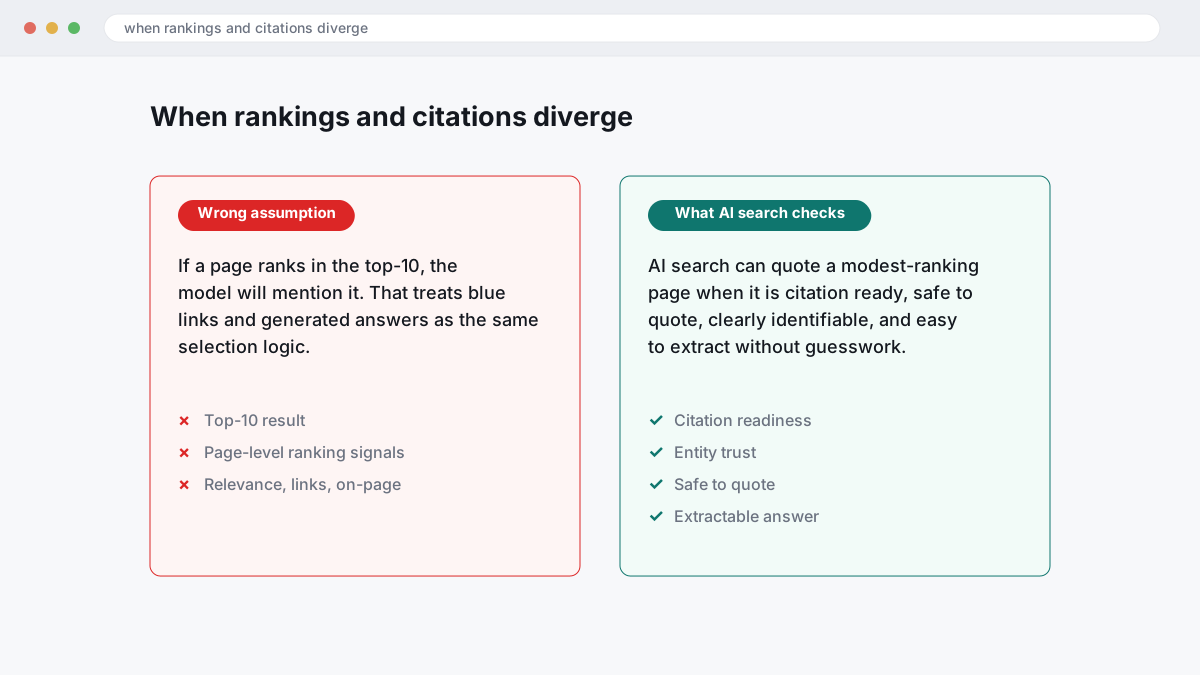
The wrong assumption is simple: if your page ranks, the model will mention it. That fails because blue links and generated answers use different selection logic. Traditional search can reward a strong page for relevance, links and decent on-page optimisation; AI Overviews still ask whether the page is safe to quote, whether the author and brand are clearly identifiable in an entity-based search system, and whether the answer is extractable without guesswork. In BGR Review audits for companies improving Google, Trustpilot, Yelp, Clutch and TripAdvisor reputation signals, the pages skipped most often are the ones with vague authorship, weak third-party profile consistency and long paragraphs that never answer the query cleanly.
This comparison is easier to see side by side.
| System | Main job | What gets rewarded |
|---|---|---|
| Traditional search | Rank pages in order | Relevance, links, page quality, query match |
| AI search / AI Overviews | Assemble an answer from multiple sources | Citation eligibility, entity clarity, answer formatting, lower hallucination risk |
The right approach is to treat ranking and citation as related but separate targets. A service page can sit in the top 10 and still miss generated results if your brand entity is thin, your review platform profiles conflict on names or descriptions, or your best evidence sits inside banners and sales copy instead of a quotable answer block. Tight author bios, consistent business details, review-backed reputation signals and short evidence-led sections usually improve citation eligibility first; they also tend to lift click-through from branded search and, if you depend on local intent, support map-pack trust once the user checks your profile.
Which E-E-A-T improvements usually lift AI search visibility first?
The quickest E-E-A-T gains usually come from visible author proof, source-backed claims and answer-first formatting that an AI system can quote safely. After that, fix third-party brand signals and tighten the conversion path so a mention turns into calls, bookings or form fills instead of a dead click.
Most guides tell you to start with schema markup. That usually fails because markup can label a weak page, but it cannot supply author transparency, first-hand evidence or a source for a hard claim. The stronger order is simpler: add a named author, a short bio with relevant role details, dated references to primary sources such as Google Search Central or the Google Search Quality Evaluator Guidelines, and concise answer blocks near the top of the page. AI Overviews and other answer engines are far more willing to cite a page when the claim, the source and the person behind it sit in the same screen view, and content freshness helps when the policy or platform behaviour changed recently.
Your next lift usually comes from brand consistency across three core profiles and the citations around them. If your site says one thing, your Google Business Profile says another, and your Trustpilot or Clutch profile is half-filled, citation eligibility drops because the entity looks unstable. Use the same trading name, category, location details, review platform links and service wording across those profiles, then carry that same wording into key directory mentions.
The last fix is commercial. If an AI mention lands on a page with no clear next step, lead quality suffers even when visibility improves.
What proof of first-hand experience makes AI search trust your content more?
AI search trusts first-hand experience when you show the work, not when you call yourself an expert. Original screenshots, dated examples, process detail and accountable author bios give both readers and machines something concrete to verify under E-E-A-T.
The weak approach is a byline that says “SEO expert” or “reputation specialist” with no role, no subject exposure and no named editor responsible for accuracy. That fails because AI systems can read the page, the author box and the wider brand context, then find nothing specific to quote safely. If you write about review removal, a stronger proof block is a dated screenshot of a policy-violation report, a redacted evidence checklist, and the actual decision path: identify the platform rule, collect supporting material, submit, then log the outcome.
Author transparency needs plain facts. Name the writer’s role, what they handle, and who edited the piece. A bio such as “Senior reputation writer; covers Google Business Profile, Trustpilot and Yelp review disputes; edited by the BGR Review editorial team for policy accuracy” gives AI Overviews more trust than a vague founder-style bio. Experience proof works best when it ties to a process or result, like a before-and-after author bio update, a dated workflow image, or a documented review-package standard such as BGR Review’s 30-day free replacement guarantee.
How do you make a page easy for AI search to quote without stripping out depth?
Pages are easier for AI systems to quote when each section starts with a self-contained answer, each claim is tied to visible proof, and comparisons sit in clean tables. Schema markup can improve interpretation, but citation eligibility in AI Overviews usually depends more on formatting, evidence and clear authorship than on code alone.
The weak approach is to add FAQ schema markup and wait. That fails because machines can parse the page yet still find nothing safe to extract: no standalone answer, no source-backed claim, no dated evidence block, no author transparency. Google Search Central describes structured data as a way to help Google understand content and enable some search features; it does not promise that AI Overviews will quote you.
If you want depth without making the page hard to cite, separate the answer from the explanation. That gives retrieval systems a clean extract and gives the reader enough substance to trust it.
This is the formatting pattern that usually makes the difference.
| Page element | Weak version | Quotable version |
|---|---|---|
| Section opener | Soft intro with no direct answer | One 25-45 word answer sentence |
| Evidence | Opinion or generic advice | Dated policy, source, or fixed operational fact |
| Comparisons | Dense prose list | Compact table for signals, actions, timelines, impact |
| Schema markup | FAQ schema added alone | Schema plus answer-first formatting and author proof |
Depth stays intact when the explanation sits under the extractable answer instead of hiding inside it. That structure helps AI Overviews lift the precise line, and it helps your conversion path too, because the reader can verify the claim before they call, book or fill in a form.
Can AI search repeat inaccurate or fake sources even when the answer looks confident?
Yes. AI search can repeat weak or inaccurate sources when corroboration is thin, entities are mixed up, or the topic shifts faster than the source set updates. Treat any generated answer as provisional until you can verify the claim against named, reliable sources.
The wrong approach is to trust the tone. A polished answer can still stitch together an old forum post, a scraped directory profile and a vague author page, which raises hallucination risk fast when the source pool is shallow. Google’s Search Quality Evaluator Guidelines set a higher bar on YMYL sensitivity for topics that can affect money, health, safety or legal decisions, because bad advice there can cause real harm. If your page discusses reviews, removals or endorsement compliance, confident wording still needs checking against a current platform policy, an identifiable author and a visible conversion path that does not hide who is responsible for the claim.
The failure point is usually verification, not prose quality. Rules vary by country and platform: the US FTC targets undisclosed endorsements and fake reviews, the UK CMA enforces action against misleading review practices, and EU consumer-protection standards also apply where commercial claims can mislead. That is general information, not legal advice.
The safer approach is simple. Verify every high-stakes claim against the primary source, date the policy where possible, and make your own author transparency and review-platform profiles consistent so AI systems have cleaner entities to resolve. That lowers citation risk, protects conversions from bad advice, and gives readers a clearer reason to trust the brand behind the answer.
What should your team check first when AI search ignores your site completely?
When AI search leaves your site out, check entity consistency, citation-ready structure, and visible proof before you publish anything new. Pages get skipped less because they read badly and more because entity-based search cannot match your brand cleanly, verify authorship, or quote the page with low hallucination risk.
The common mistake is to push out five more articles and hope one sticks. That usually fails because the same trust defects repeat across every page: your company name differs from your Google Business Profile or Clutch profile, the phone number on the footer does not match your review platform profiles, and one page tries to answer three questions at once. AI Overviews and other answer engines prefer pages with one clean query, one clear author, one stable brand entity, and evidence blocks they can summarise without guessing.
Set a 30-day audit window and fix the basics first: stale dates, thin citations, missing bylines, and weak proof. If the page says “updated” but cites no primary source such as Google Search Central or Google Business Profile Help, its citation eligibility drops fast; if the author bio is vague, the model has little reason to trust first-hand experience. Then compare the competitors that do get cited. Check whether they use compact tables, named policies, screenshots, reviewer-response examples, and third-party support from Google, the FTC, or platform help pages. That diagnosis usually beats publishing volume, and it lifts click-through, branded search demand, and conversion paths once your pages start getting quoted.
What does a practical AI-search trust workflow look like from audit to live improvement?
A practical AI-search workflow starts with a trust audit, improves a small set of pages, then measures mentions and lead quality for four to six weeks. That gives you a clear read on which trust fixes change citation visibility fastest for your brand.
The wrong move is a full site redesign. It fails because AI systems do not need fifty prettier pages; they need a few pages they can quote safely, backed by clear brand reputation signals around them. If your Google Business Profile has thin recent review activity, your Trustpilot or Clutch profile is half-complete, and your author bios say little beyond a job title, a redesign hides the real problem.
Start with three priority pages tied to revenue: one service page, one comparison page, and one proof-heavy article that already sits somewhere in your conversion path. In week 1, map the queries you want to win, log where your brand is already mentioned in AI Overviews or answer engines, and note the missing trust elements: weak authorship, unsourced claims, stale screenshots, inconsistent business details, or review-platform profiles that do not match the site.
This is the workflow we use before suggesting any paid reputation work, because weak review signals and vague authorship often suppress citation eligibility before rankings visibly drop.
| Window | What to change and what to watch |
|---|---|
| Week 1 | Map target queries, current AI mentions, review-platform consistency, and missing trust signals on priority pages. |
| Week 2 | Upgrade 3 pages with named authors, first-hand experience blocks, source citations, and compact tables that make claims easy to extract. |
| Weeks 3-6 | Track brand mentions, assisted leads from forms and calls, changes in citation patterns, and whether visitors move further down the conversion path. |
Week 2 is where most of the lift happens. Replace “our team” bylines with a real author, add a short bio that proves first-hand experience, tighten unsupported statements, and use one table where comparisons matter; AI systems lift structured, sourced lines more readily than padded copy.
Weeks 3 to 6 tell you whether trust work is changing visibility or just making the page look better to your own team. Watch for new branded-search demand, map-pack clicks, calls mentioning an AI answer, and form fills landing on the upgraded pages. If mentions increase but leads stay weak, your citation improved while your conversion path still leaks.
What should you do after AI search starts mentioning your brand?
Once your brand starts appearing in AI Overviews or other AI answers, track where those mentions send people, which pages get cited again, and whether the visits turn into stronger leads. Treat the mention as the start of measurement, not the win, because answer visibility grows when the source stays useful, current and easy to act on.
The wrong move is to celebrate screenshots and stop there. That fails because a cited page can still leak demand if the conversion path is weak: no clear call button, no booking step, thin author proof, stale evidence, or review platform profiles that look neglected when the reader checks your brand name next. In BGR Review’s dataset of 1,485 businesses observed February–July 2026, trades firms with complete enquiry-source data attributed 70–80% of calls and bookings to a Google Business Profile or Yelp listing, which is a reminder that branded search and the local pack often finish the journey after the AI mention.
The better move is to reinforce the pages already earning citations. Update them with fresher evidence, tighten next actions, and expand supporting assets around the cited entity within 2-4 weeks: author bio, service proof, comparison page, review profile consistency, and one cleaner route to a form fill or call.
Where should you start this week if you want measurable ai-search progress?
Pick three commercial queries, record which sources AI search cites today, and fix the clearest trust gap first. For most brands, the fastest starting point is poor entity consistency, thin first-hand proof, or brand reputation damage that makes your business look unsafe to cite.
Use one branded query, one high-intent service query, and one comparison query. For each, log the cited domains, your average review sentiment on Google and Trustpilot or Yelp, and whether your name, address, phone, service descriptions and social profiles match across your site, Google Business Profile and key review platforms. That gives you a baseline for click-through rate, branded search demand and map-pack visibility before you change anything.
Run the next four weeks like this: week one, clean entity consistency; week two, add quoteable first-hand proof such as job photos, expert bylines or case evidence; week three, improve weak review recency and reply quality; week four, fix the citation source that keeps outranking you. If false reviews are dragging visible sentiment down, escalate negative review removal early rather than waiting for content tweaks to carry the load.
Where to go from here
Audit the pages that ask for money first: service pages, pricing pages, location pages and your main brand profiles on Google, Trustpilot, Yelp, Clutch or TripAdvisor. Check for named authors, clear bios, dated evidence, review consistency, matching business details, working contact points and a clean conversion path from quote request to call or form fill. If an AI system cannot verify who is speaking, what you have done and whether third parties trust you, your page is harder to cite, your map pack click-through rate stays weaker and branded search demand grows more slowly.
Fix the highest-impact gaps before you publish another article. Thin review proof and vague authorship usually drag down citation eligibility faster than an outdated blog post. In practice, that means tightening author transparency, adding first-hand evidence blocks, updating schema markup and cleaning up review platform profiles so your entity signals line up. If reputation proof is still light, start there. Expect cleaner trust signals first, then better qualified clicks, calls and form fills.