


Quick answer
Pay after success means you owe nothing before the work starts and only pay when the agreed outcome happens. For negative review removal, that should mean payment only after the review link is actually gone from the platform, not after a report is filed or an appeal is sent. At BGR Review, the model is $0 upfront and $449 per removed review link. That cuts your risk, but only if the provider defines success, states the exclusions, and tells you what evidence a platform such as Google or Trustpilot will require.
Generic guides sell the slogan. They do not explain what triggers payment, which cases get rejected at screening, or how platform rules cap what any provider can promise.
We handle review disputes across Google, Trustpilot and Yelp, and the same bottlenecks keep showing up: missing proof of customer records, screenshots with no timestamps, and review links sent without the exact profile URL or business ID.
When does pay after success actually trigger a bill?
If the terms do not define the invoice trigger, exclusions and proof of outcome in writing, the offer is too vague to trust.
Most slogan-first offers fail at the same point: they call a report submission, an escalation email or a drafted owner reply a “success fee” event. That shifts the risk back onto you. A usable definition is narrower.
You can match spend to outcome, which makes budgeting simpler and stops vague “case progress” fees creeping in before anything has changed on your profile.
Provider incentives matter here. If payment starts when a case is merely opened, the provider gets paid for activity. If payment starts only after the review is gone, the incentive stays tied to the outcome you actually need: cleaner star ratings, stronger map pack click-through rate and fewer trust objections before a call or form fill.
Exclusions should sit in the service terms before work starts. That usually means the provider names what will not count: reviews left online after a failed challenge, complaints that do not appear to breach platform rules, and cases where you cannot supply the basic evidence needed to support the claim.
Why do some cases qualify for pay-after-success while others get rejected first?
Weak disputes get rejected early because they waste time, create false expectations, and cannot honestly be sold as a legitimate no-win-no-fee outcome.
” That fails because negative review removal depends on case acceptance criteria, not owner annoyance. Google review policy, Trustpilot’s reporting flow, and Yelp content disputes all draw a hard line between removable policy breaches and ordinary complaints.
False factual claims sit in the first group only when the evidence pack is concrete. A review saying “we were never refunded on 12 March” can be challenged with the refund receipt, message trail, booking record, and the date mismatch. A review saying “staff were rude” usually stays up because platforms treat that as opinion. In BGR Review’s dataset of negative review cases with prior self-filed attempts, logged June 2025 to June 2026, roughly 90% had used only the basic in-platform report button with no supporting documentation, and 70–80% of those initial requests had been rejected. That is why selective acceptance works and any-review promises do not.
How does pay after success work from first flag to final outcome?
If a provider cannot name those steps and tell you exactly when the invoice is triggered, treat the offer with caution.
The weak version is a mystery process: you send a review link, someone says they will “handle it”, and you hear nothing until they ask for money. That fails because negative review removal depends on what the platform can actually verify under its own rules, and the window for useful evidence closes fast if you edit your profile, delete replies, or lose the original screen view. A practical workflow starts with an audit of the review URL, reviewer profile, profile history and the likely policy angle, then freezes the record with screenshots before any edits or profile changes happen.
The next step is the evidence pack. That usually means dated screenshots, order or booking records, message history, staff notes, and anything that supports false factual claims, impersonation, or undisclosed paid endorsements rather than a vague “this is unfair” complaint. In BGR Review’s case file of 12,000+ negative review cases logged June 2025 to June 2026, roughly 90% of businesses who came to us after a failed attempt had used only the basic in-platform report button, with no supporting documentation; in that group, 70–80% of initial requests had been rejected.
After that, the case is reported under the right platform route, followed once if the review stays live and the evidence still fits the rule cited. The appeal timeline is usually days to weeks rather than hours, and it varies sharply between Google review policy disputes, Trustpilot’s reporting process and Yelp content disputes.
What evidence gives a removal request its best chance of working?
The strongest evidence pack links the review to a specific policy breach that a moderator can check quickly. Screenshots on their own rarely move a case; dated transaction records, identity gaps, and direct communications usually carry more weight.
The weak approach is a generic screenshot with “this is fake” typed over it. That fails because Google review policy, Trustpilot’s reporting process and Yelp content disputes all ask the platform to judge evidence they can verify, not your suspicion. Across negative review cases with prior self-filed attempts in BGR Review’s records, period June 2025 to June 2026, roughly 90% had used only the basic in-platform report button with minimal support, and 70–80% of those initial requests had been rejected.
The better approach is a rule-linked file: screenshot of the live review, receipt history, booking logs, CRM records, staff rota, and any account lookup showing no matching transaction, visit, or user record on the date claimed. Identity mismatch matters most where the reviewer alleges a visit or purchase but you cannot verify a name, phone number, email, order ID, or appointment. If the review contains false factual claims, add the narrow record that disproves that fact rather than a long narrative.
Undisclosed paid endorsements need different proof. Moderators respond faster when the evidence pack includes payment confirmations, affiliate links, coupon-for-review messages, or chat logs offering an incentive, because those documents show the commercial relationship directly.
Which platform rules decide whether a negative review can come down?
Whether a negative review can be removed depends on the platform’s rules, not the provider’s confidence. Google, Trustpilot and Yelp use different standards, so a review that comes down on one site may stay live on another.
The wrong approach is a one-size-fits-all promise: “we remove bad reviews everywhere”. That fails because each platform defines abuse differently and gives you a different reporting route. The right approach is to test the review against the exact policy first, then file on the ground that matches the platform’s own language.
| Platform | What can trigger removal | What usually stays live |
|---|---|---|
| Google review policy covers spam, fake engagement, conflicts of interest, impersonation, harassment and other prohibited content under Google Business Profile Help. | A harsh opinion with no clear policy breach. Google wants a policy issue, not a fairness argument. | |
| Trustpilot | The Trustpilot reporting process works when you challenge a review on a consumer-guideline ground and support it with documents, such as proof the reviewer was never a customer or made false factual claims. | Reviews that describe a real experience, even if the tone is hostile. |
| Yelp | Yelp content disputes have tighter limits. Yelp separates content moderation from its recommendation software, so a business cannot force removal just because a review hurts conversions or map-pack click-through. | Most first-person opinions that do not break Yelp’s content rules. |
Google usually gives you more room on impersonation, undisclosed paid endorsements and conflict-based reviews. Trustpilot usually turns on whether your documented challenge fits its consumer-guideline categories.
How does pay after success compare with upfront fees or monthly retainers?
Upfront project fees and monthly retainers can cost less across the full engagement when you need review responses, monitoring, staff guidance, or help with complaints that do not meet a platform’s removal rules.
The wrong comparison is to look only at the first invoice. That fails because provider incentives change with the pricing model: a success fee rewards a provider only when a review is actually removed, while an upfront fee or monthly retainer gets paid whether the outcome is removable, unresolved, or pushed into a long appeal timeline.
The right comparison is to match the fee model to the job in front of you. A retainer can be the cheaper route if your real problem is wider profile drag across Google, Trustpilot, or Yelp content disputes, because you may need response drafting, monitoring, escalation logs, and location-by-location triage to protect map pack click-through, branded search demand, and conversions from calls or form fills. A removal-only success fee works better when you have a clear policy breach and you want the provider carrying more of the risk.
This table shows where each model usually fits.
| Pricing model | What you usually pay for | Where the cost risk sits |
|---|---|---|
| Success fee | Fixed price per removed link | More on the provider |
| Upfront fee | Case review, drafting, submission, follow-up, regardless of removal | More on you |
| Monthly retainer | Ongoing monitoring, responses, escalation, reporting, broader reputation work | Shared, but you keep paying while work continues |
Replacement guarantee terms need the same scrutiny. Review packages often use a 30-day replacement guarantee, including BGR Review’s 30-day free replacement window, but eligibility is usually narrow: removed reviews may qualify for replacement, while filtered reviews, profile suspensions, policy violations, or losses caused by platform clean-ups usually do not. Read the trigger, the exclusions, and the invoice point before you sign.
Is pay after success worth it for one bad review or a wider profile problem?
It makes less sense when your real issue is broader reputation repair that needs new reviews, response work and profile cleanup as well as negative review removal.
The wrong move is paying to chase every bad review. That burns budget on low-impact complaints while the real damage sits elsewhere: a branch page with only a handful of reviews, a review alleging fraud or unsafe work, or a multi-location reputation risk where one location starts poisoning branded searches for the whole brand and drags down lead flow from maps.
The better approach is triage. A single removal often matters most when review count is low, because one severe allegation can dominate click-through from the local pack and suppress calls before a prospect even reaches your site. In BGR Review's dataset of 1,485 businesses observed February-July 2026, trades businesses with complete enquiry-source data attributed 70-80% of calls and bookings to a Google Business Profile or Yelp listing, so profile-level damage hits conversions directly.
How can you tell whether a pay-after-success offer is legitimate?
Hidden setup charges, blanket guarantees, or pressure to report truthful reviews are signs the model is being sold dishonestly.
That fails because provider incentives drift fast when success is undefined. You should also see exclusions in writing. A provider who claims they can remove every negative post is ignoring platform limits, and Google review policy does not allow removal simply because a review hurts conversions, branded search demand, or map-pack click-through.
The right approach is transparent terms tied to named policy grounds. A credible provider will tell you that false factual claims, impersonation, or undisclosed paid endorsements may qualify, while genuine opinion usually will not. Rules vary by country and platform: Google, Trustpilot and Yelp apply different reporting standards, and legal issues such as FTC endorsement rules or UK consumer-protection rules sit alongside platform policy. This is general information, not legal advice. If the offer skips those limits, the promise is the product.
What should a fast vetting checklist include before you sign anything?
A useful screening checklist asks six things fast: what counts as success, what gets excluded, which platforms are covered, what evidence you must supply, when billing starts, and what happens if the case fails.
Sales-call reassurance fails because you cannot compare it line by line. Ask for written answers you can stack against another provider: the case acceptance criteria, the exact invoice trigger, the appeal timeline, and the platform list covering Google, Trustpilot, Yelp, or anything else they claim to handle. If “success” means a review is merely reported, or “timeline” means “varies”, you still do not know what you are buying.
Use this short checklist before you sign anything.
- Define success in one sentence. Payment should trigger only after the review link is actually removed, not after submission or escalation.
- Ask what gets rejected before filing. Strong providers state exclusions, such as no policy breach, no evidence pack, or unclear authorship.
- Ask which platforms are included and whether the process differs for Google review policy issues, Trustpilot reporting, or Yelp content disputes.
- Request sample terms showing evidence requirements, expected appeal timeline, and any replacement guarantee. For review packages, BGR Review offers a 30-day free replacement guarantee; removal work is separate.
What usually happens if the review is not removed on the first route?
If the first removal attempt fails, repeating the same weak flag rarely helps. The sensible move is to check for new proof, a stronger policy ground, or a public-response plan that protects clicks and conversions better than endless re-reporting.
The wrong approach is to hit the same report button every few days with no added context. That usually fails because Google review policy and the Trustpilot reporting process both work better when your evidence pack changes the facts: dated screenshots, order records, staff logs, location mismatch, or proof of undisclosed paid endorsements. Google and Trustpilot can both take another look when genuinely new proof appears, but the appeal timeline stretches if you resubmit the same bare claim.
The better route is one follow-up with stronger documentation, or a switch to another reporting ground if the first one was weak. At that point, the practical fallback is mitigation: post a calm response, fix review request timing, and generate fresh verified reviews so your map-pack click-through, branded search demand, calls and bookings are not held hostage by one unresolved post.
What does a practical pay-after-success removal workflow look like in real life?
Freeze the evidence first, then test the review against one solid policy ground before you file anything.
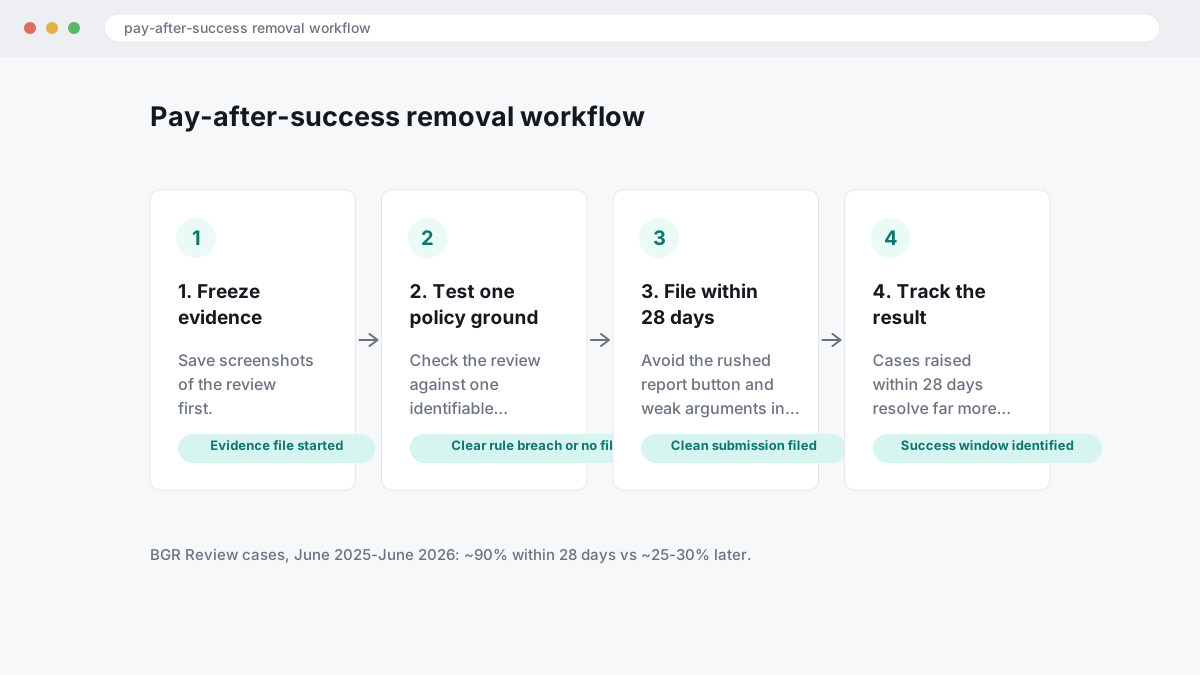
The rushed approach is to hit the in-platform report button within minutes, paste three weak arguments into one box, and hope one sticks. That usually fails because negative review removal depends on a clear rule breach, not on how unfair the review feels. Across 12,000+ negative review cases logged by BGR Review from June 2025 to June 2026, reviews raised within 28 days of posting and backed by an identifiable policy issue resolved successfully in roughly 90% of cases, while comparable cases raised beyond 28 days fell to approximately 25-30%.
A workable file starts with screenshots of the review, the reviewer profile, the business profile URL, and the visible timestamp before edits, deletions or profile changes muddy the record. Then build an evidence pack: order history, message logs, booking records, staff notes, and any proof of false factual claims or reviewer non-customer status. If you are filing under Google review policy, choose one defensible ground such as spam, conflict of interest, or prohibited content; three weak theories dilute the report.
If the proof is still thin after 24 hours, pause. Do not file a guess. Recheck whether the case actually meets your provider’s case acceptance criteria, gather missing records, and only then submit the first report.
Where to go from here
Use a success-fee model only after you have three things in writing: the payment trigger, the exclusions, and the case acceptance criteria. The weak point usually appears before submission. A review with no policy angle, no evidence pack, or no way to show false factual claims or an undisclosed paid endorsement will often stall before a flag is ever filed.
Your next step is simple: list each review link, note the platform, posting date, profile location, and the exact policy issue you think applies. Then separate links with evidence from links that are only upsetting or unfair. That short audit will tell you whether you need negative review removal, a public reply, or an internal fix because the damage is really coming from low review volume, poor response handling, or multi-location reputation risk affecting map pack clicks, conversions and branded search demand.
Expect a yes, no, or needs-evidence answer before any invoice is triggered.