
Single-location businesses have a straightforward removal workflow: identify the review, gather evidence, submit through the right channel, appeal if rejected. Franchises and multi-location chains face five compounding challenges that break that simple workflow — cross-location contamination (a review meant for one location lands on another), brand-vs-location complaint routing (a complaint about corporate policy filed against a local franchisee), franchisee coordination (100 owners with different priorities and access levels), per-listing suspension pacing (aggregate submission volume across the network can trigger suspensions on individual listings), and aggregate reporting across dozens of listings that senior management actually needs. This post is the workflow we run inside our Google review removal service for chain and franchise clients — the same clients where per-location workflows fail at scale.
The five multi-location challenges
Percentages are the share of multi-location cases in our 2025-2026 log where each challenge was the primary blocker to successful removal (rather than the review itself).
1. Cross-location contamination (23%)
The most common multi-location issue. A reviewer visits the Chicago location, has a bad experience, searches for the brand on Google, clicks the first result — which happens to be the Denver location — and leaves the review there. Removal path: Off-Topic channel (see Off-Topic Reviews playbook) with cross-location evidence. Attach: (a) screenshot of the reviewer's complaint referencing details specific to the other location (staff names, menu items, address); (b) screenshot of the correct location's Google Business Profile showing the referenced details; (c) short cover: 'This review describes an experience at our [Chicago] location; the review is filed against our [Denver] location. Requesting Off-Topic removal.' First-pass removal 84% in our log — one of the highest rates in the multi-location workflow.
2. Brand-vs-location complaint routing (18%)
A customer angry at corporate policy (a national return policy, a franchisor decision, a brand-level advertising campaign) files a 1-star review against their local franchisee. The franchisee had no role in the decision. Removal path: Off-Topic under 'commentary about a business or its products that is not the reviewer's own experience with the business.' Attach evidence that the complaint is about the brand-level policy and not the specific location's service. Removal rate 72% — lower than cross-location because Google's reviewers sometimes rule these as 'still about the business.'
3. Franchisee-access coordination (31%)
The single biggest operational blocker. Franchisees own their Google Business Profile listings; corporate does not have direct BRF submission access unless it is a listing manager. Coordination options: (a) corporate adds itself as a listing manager on all franchisee listings — cleanest but requires franchisee cooperation; (b) corporate provides templated submission packages to franchisees who file themselves — cheaper but wildly inconsistent execution; (c) corporate engages a third-party removal service authorized as manager on all listings — the fastest scale option. In our client base, option (c) with a per-location authorization + a shared submission audit trail is the standard for chains with 25+ locations.
4. Per-listing suspension pacing (16%)
See our GBP Suspension After Review Disputes playbook — Google tracks submission volume per listing, not per submitter organization. A corporate team filing 4 cases per location per week across 60 locations = 240 submissions/week across the network, but only 4 per listing, so no individual listing triggers the volume flag. That is the correct pacing model. The failure mode is a single location under active attack receiving 15+ submissions in a week — that individual listing can suspend even when the network-wide submission rate is safely paced. Cap per-listing submissions at 4/week regardless of case backlog on that specific listing.
5. Aggregate reporting (12%)
Franchisors and multi-location operators need to see network-wide health: submissions filed by location, removal rate by location, pending cases by age, per-location star average trend. Individual BRF submissions produce no aggregate view. The reporting layer is entirely on the operator (or their agency). A functional dashboard shows at minimum: 30-day submission count per location, 30-day removal count per location, current pending case count per location, star average delta over 90 days per location, and flag on any location above the 4-per-week submission pace.
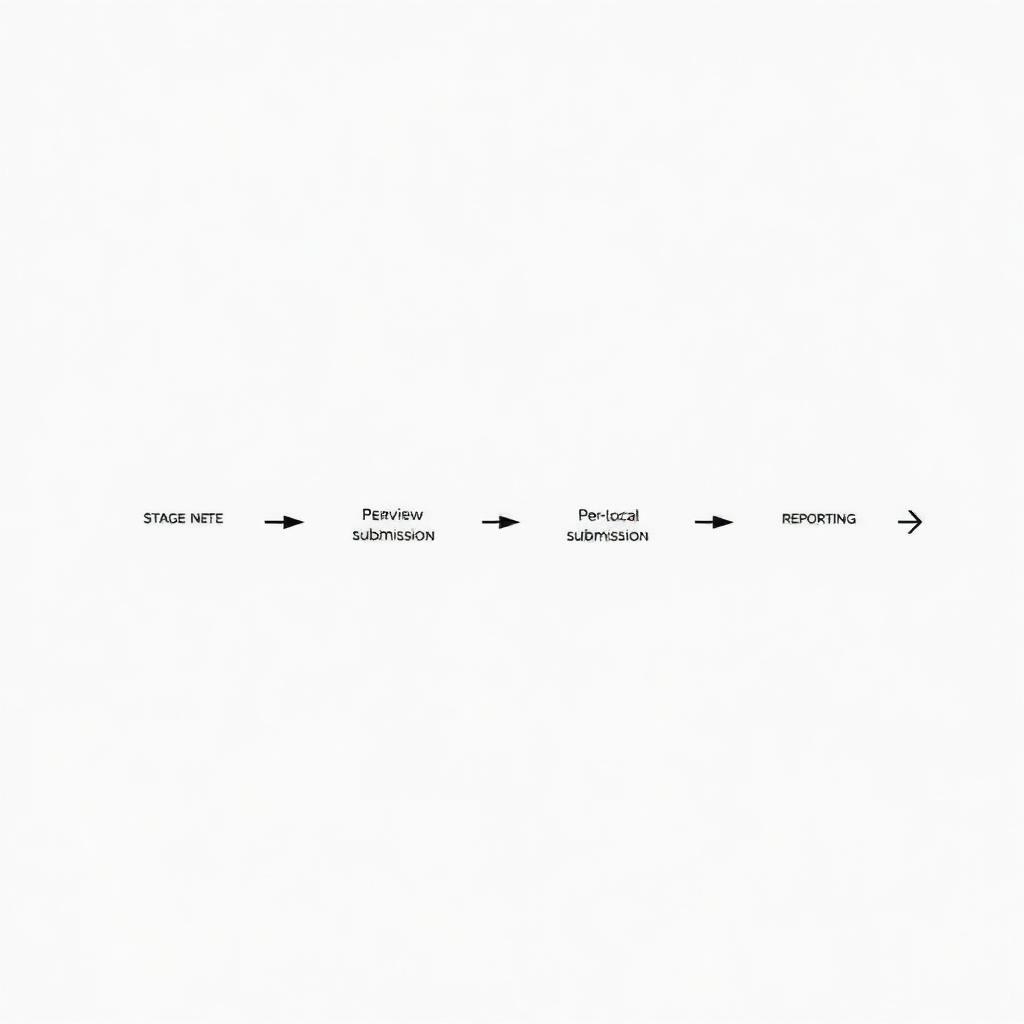
The 4-stage multi-location workflow
The authorization step franchises get wrong
Corporate cannot legally file BRF cases on behalf of a franchisee without being a listing manager on that franchisee's Google Business Profile. Attempting to do so is a Terms of Service violation for the submitting account and can trigger review of the corporate account's standing across all listings it manages. The correct setup: each franchisee adds corporate (or the third-party removal service) as a manager on their Google Business Profile. This takes 90 seconds per location but requires franchisee login. Rolling out this authorization across 100+ locations is the largest one-time setup task in the multi-location removal workflow — allow 2-6 weeks for full network coverage depending on franchisee responsiveness.
The reporting layer executives actually use
Most franchise operators start by asking for 'a list of removals per week.' What they actually need to run the program is different: (a) which specific locations are attracting the most removal candidates (early signal of a service quality issue or a coordinated attack); (b) which locations are producing removal candidates that are systematically rejected (early signal of a franchisee complaining about legitimate criticism); (c) which locations are approaching the 4-per-week submission cap; (d) network-wide star average trend versus vertical benchmark. Deliver those four views weekly and the removal program becomes a strategic input to franchise operations, not a background admin task. See our Reputation Management for Executives guide for the executive-level reporting model.
Multi-location removal isn't scaled single-location removal. It's a different workflow — centralized triage, per-listing pacing, aggregate reporting — and single-location workflows break at 25+ locations.
Case walkthrough: a 47-location fitness franchise
In April 2026 a 47-location fitness franchise engaged us after 6 months of running removal in-house with per-franchisee submissions. Pre-engagement state: 340 submissions filed over 6 months, 18% removal rate, 2 franchisee listings soft-suspended for volume violations. Post-engagement state (90 days in): 218 submissions filed with centralized triage, 61% removal rate, zero suspensions, per-location dashboard delivered weekly to franchisees + monthly to corporate. Why the removal rate jumped: centralized triage caught that ~35% of the franchisees' original submissions were misclassified (legitimate criticism filed as spam), which had suppressed the removal rate AND consumed submission-per-week budget on cases that could not succeed. Correct classification alone recovered ~28 percentage points of removal rate. Correct pacing eliminated the suspension risk. The setup work (manager authorization on all 47 listings, centralized intake email routing) took 4 weeks; the operating benefit began accruing week 5.
When to move to a centralized workflow
- 5+ locations: still manageable per-location if each franchisee is disciplined; centralized triage optional but improves consistency.
- 10-25 locations: centralized triage strongly recommended; per-location submission still fine if authorization is in place.
- 25+ locations: centralized triage + centralized submission + aggregate reporting is required; per-location workflows systematically break at this scale.
- 50+ locations: additional need for per-region reporting layer and dedicated case managers by region.
Want us to run centralized multi-location removal for your network?
Centralized intake, per-location submission, and network-wide aggregated reporting is the workflow we run for franchise and chain clients inside our Google review removal service — pay-after-win, so cost scales with successful removals, not with location count. Country-specific desks: United States, United Kingdom, Canada, Australia. Verticals we run at franchise scale: restaurants and QSR chains, dental groups, med spa chains, fitness franchises, and auto service chains.
Q.Does corporate need franchisee permission to file removal cases on their listings?
Yes — corporate must be added as a listing manager on the franchisee's Google Business Profile. Without manager access, corporate cannot legitimately file BRF cases for that listing. The alternative (corporate files under its own account referencing the franchisee listing) is a ToS violation and can trigger enforcement action against the corporate account.
Q.What if a franchisee refuses to add corporate as a listing manager?
That franchisee stays outside the centralized workflow and files their own cases (usually poorly). Franchise agreement language for new contracts typically includes a reputation-management clause requiring corporate listing-manager access — worth adding at contract renewal. Cannot be retroactively enforced on existing franchisees without their consent.
Q.How do we handle a review that's clearly about corporate policy but was filed against a local franchisee?
File as Off-Topic with evidence that the complaint is about the brand-level policy (attach the specific corporate policy the reviewer references) and not the franchisee's actual service. 72% first-pass removal. See challenge #2 above for the full workflow.
Q.Does per-listing pacing mean high-volume attacks on a single location can't all be submitted?
The 4-per-week cap applies to individual submissions. For an active coordinated attack on one location, bundle 5+ reviews into a single Conflict of Interest case (see [Competitor Sabotage playbook](/insights/competitor-sabotage-review-fingerprinting)) which counts as ONE submission regardless of how many reviews it covers. Bundling is how the cap accommodates active attack situations without triggering suspension.