

Quick answer
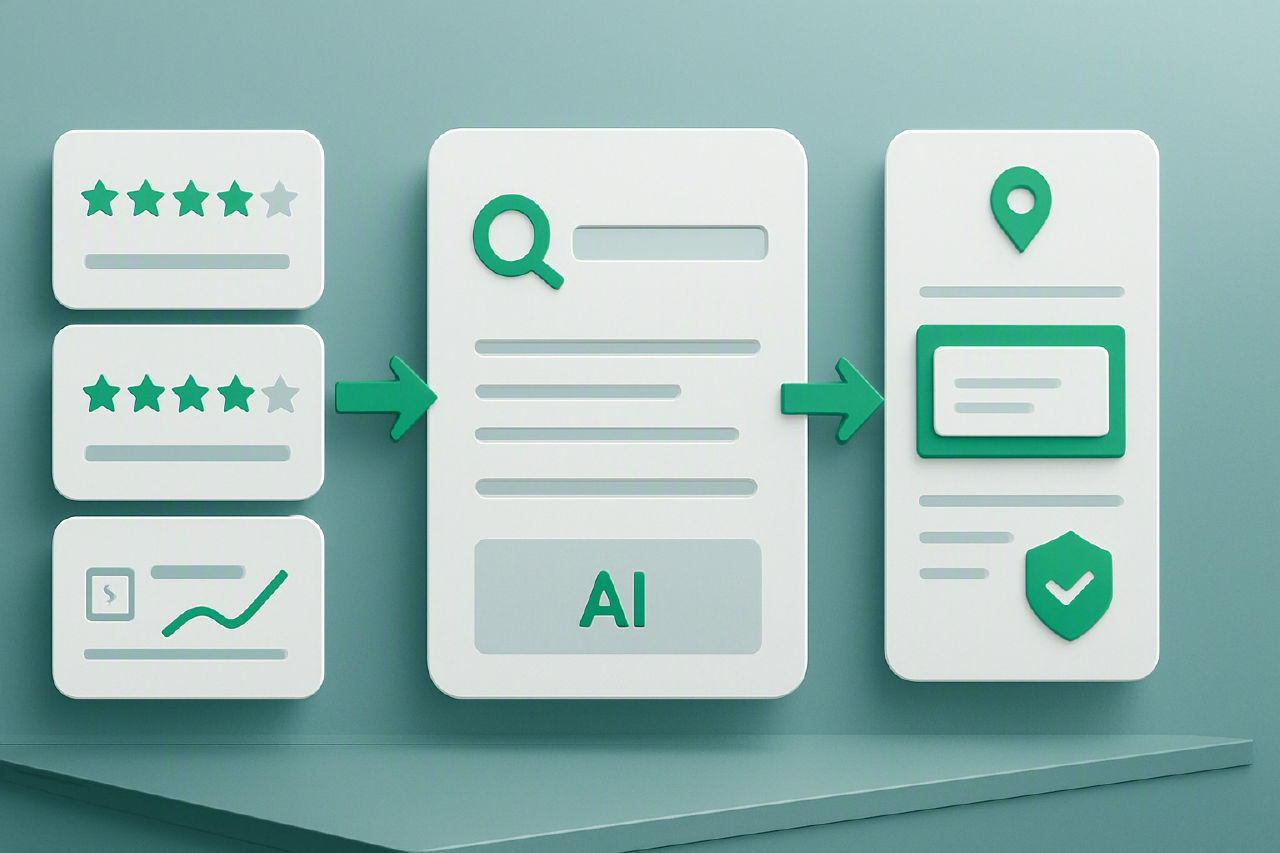
AI search uses machine learning and large language models to interpret intent, choose sources, and often generate a direct answer instead of showing only blue links. For your business, visibility now depends on how consistently your brand appears across your website, Google Business Profile, review platforms, and trusted third-party citations. Google began the broad US rollout of AI Overviews in May 2024, so source quality, review sentiment, schema markup, and factual consistency carry more weight when a system summarises your company, location, services, and reputation in one answer.
This page is written from live reputation and review operations, not from abstract SEO commentary. At BGR Review, we track what happens after a harmful review is flagged, what evidence a platform actually asks for, and where answer quality usually improves first after a profile cleanup.
That matters because ai search pulls from more than your pages. We have served 15,000+ businesses, logged 12,000+ negative review cases between June 2025 and June 2026, and we see the same bottleneck repeatedly: owners update their site, but the stale citation source, unresolved review thread, or mismatched Google Business Profile data keeps feeding poor brand summaries.
Why does AI search change visibility even when your rankings still look stable?
AI search changes visibility because the answer often appears before the blue links. Your page can hold similar positions in Google Search and still lose attention when AI Overviews summarise the query first and place cited sources above the classic results.
The wrong read is “rankings are steady, so visibility is fine”. That fails because answer-first layouts change click-through before they change position: a searcher gets the short list, the comparison, or the recommendation inside the results page, then clicks the source that looks most trustworthy or does not click at all. Google AI Overviews can cite several pages at once, so visibility now includes being mentioned, being quoted, and being selected as a citation, even if your old rank tracker shows little movement.
The better approach is to measure where your brand appears inside the answer layer and what that does to calls, bookings, and branded search demand. In BGR Review’s dataset of 1,485 businesses observed from February to July 2026, trades businesses with complete enquiry-source data attributed 70–80% of calls and bookings to a Google Business Profile or Yelp listing rather than a website visit. That is why unchanged rankings can sit beside weaker traffic: the attention moved first.
Why do reviews and reputation now shape AI answers, not just your website content?
AI search treats your brand as a web-wide entity, not a single page on your site. Its summaries can reflect review sentiment, third-party profiles, and unresolved complaints, so trust cues often form before anyone reads your service page. That matters because a polished homepage can sit beside a 4.2-star Google Business Profile, a weak Trustpilot page, or a Yelp listing full of unanswered criticism, and the answer layer may blend all of them into one brand reputation snapshot.
Most guides push content-only optimisation: publish better landing pages, add schema markup, refresh copy, wait. That fails when review signals say something different from your site, because large language models and AI Overviews pull from external citation sources as well as your own content, and negative sentiment across those sources gives the model an easy caution signal. In BGR Review’s case file of 12,000+ negative review cases logged June 2025 to June 2026, outcomes were recorded as removal success, unresolved, or unknown; unresolved complaints stayed visible long enough to keep shaping how a brand looked across search surfaces.
The stronger approach is trust-signal optimisation. Clean up your third-party profiles, answer complaints properly, fix inconsistent business details, and deal with policy-breaching reviews where a platform allows it under rules such as the Google Business Profile review policy or Trustpilot’s flagging flow. That works because aligned sources give the model less contradictory material to summarise, which improves click-through from branded searches and the map pack before your website copy does much of the lifting.
How does AI search actually build an answer from sources across the web?
AI search usually pairs retrieval with answer generation: the system fetches relevant passages, identifies the brand and related entities in them, checks whether multiple sources line up, then writes a summary. Accuracy depends on your site, your Google Business Profile, and the wider evidence around your brand on review platforms BGR Review works with every day, including Trustpilot, Yelp, Clutch and TripAdvisor.
Most guides treat this like a one-page ranking problem. That fails because large language models do not simply lift the top organic result and repeat it; they assemble an answer from citation sources that match the query intent, so a “best roofer near me” prompt can pull from local listings, reviews, map data and third-party profiles even when your core service page still ranks steadily. If those sources disagree on your service area, business name, or review sentiment, the model has conflicting inputs before it writes a line.
Entity understanding is the part that connects those scattered mentions. It helps the system decide that “BGR Review London”, “BGR Review UK”, the +44 7761 248539 contact line, and the same brand name on a profile are one entity rather than separate businesses; the same logic applies to your aliases, old names and merged locations. Across 12,000+ negative review cases logged by BGR Review from June 2025 to June 2026, cases filed with fuller evidence outperformed basic report-button attempts, which is a useful proxy here: clearer, more consistent evidence produces better decisions, whether a platform moderator or an AI system is evaluating your brand.
Source selection then comes down to relevance, consistency, freshness and the question being asked. A current Google Business Profile with matching categories, recent review text and consistent citations usually gives retrieval better material than an outdated About page, while a stale directory entry or unresolved defamatory review can keep being cited until the source refreshes. That is why answer quality often improves first when you fix the evidence around the brand, not when you publish another general blog post.
How is AI search different from traditional web ranking when someone chooses a provider?
Traditional web ranking orders pages. AI search often weighs evidence before pages, then compresses that evidence into a short answer where one weak reputation signal can keep you out of view even if your blue links still hold steady.
The wrong approach is to treat provider selection as a pure ranking job: push one landing page higher, watch positions, assume discovery follows. That fails because SERP features already interrupt broad queries, and AI answers compress choices further, so fewer organic clicks reach the old list of ten links. A summary can cite your category pages, third-party reviews, Google Business Profile details and forum discussions in the same breath, then send the click to the brand that looks safest to choose rather than the page that ranked first.
The right approach is to build citation-worthy proof across the web and make your brand query stronger. When someone searches your name plus “reviews”, “pricing” or “near me”, high-intent visits still turn into calls and form submissions because the user has moved past discovery and is checking trust. In BGR Review’s dataset of 1,485 businesses observed February to July 2026, trades firms with complete enquiry-source data attributed 70–80% of calls and bookings to a Google Business Profile or Yelp listing rather than a website, which tells you where trust gets decided first.
That changes what you optimise. Traditional ranking still matters for pages you want indexed, but provider choice now depends on whether your reviews, profile completeness, reply quality and third-party sentiment give AI systems enough consistent evidence to mention you at all. If that evidence is messy, broad-query visibility can look stable in rank trackers while demand shifts away in the live results.
Which signals most often decide whether your brand gets cited or ignored in AI Overviews?
AI Overviews usually cite the brand with the clearest, freshest and most corroborated evidence across its site, Google Business Profile and third-party directories, because large language models need aligned facts before they risk showing your name in source citations.
Most guides push you to publish more content. That fails when your company name, phone, service area or category wording changes from your site to Yelp, Trustpilot, Clutch or your Google Business Profile, because the model has a disambiguation problem before it has a content problem. Clearer, corroborated content works better: one canonical brand format, one primary phone number such as BGR Review's +1 561 461 0399 for the US or +44 7761 248539 for the UK, matching organisation details everywhere, and pages written to the query intent behind the search rather than padded blog copy.
Freshness changes what recrawlers can trust. If your core service page still says one thing, your profile says another, and your latest review replies mention a third, AI Overviews often lean on older publisher pages with cleaner evidence. Update the source pages first, then the profiles, then the directories; schema markup on your site helps machines parse organisation details, FAQ content and review context, but it works best when the visible page copy and off-site references already agree.
Does AI search change clicks, leads, and reporting enough to justify a new priority list?
Yes. AI search often changes traffic quality more than traffic volume. Informational click-through can fall as zero-click behaviour rises, but branded searches, calls, and high-intent visits usually become more valuable when Google cites your business as the trusted answer.
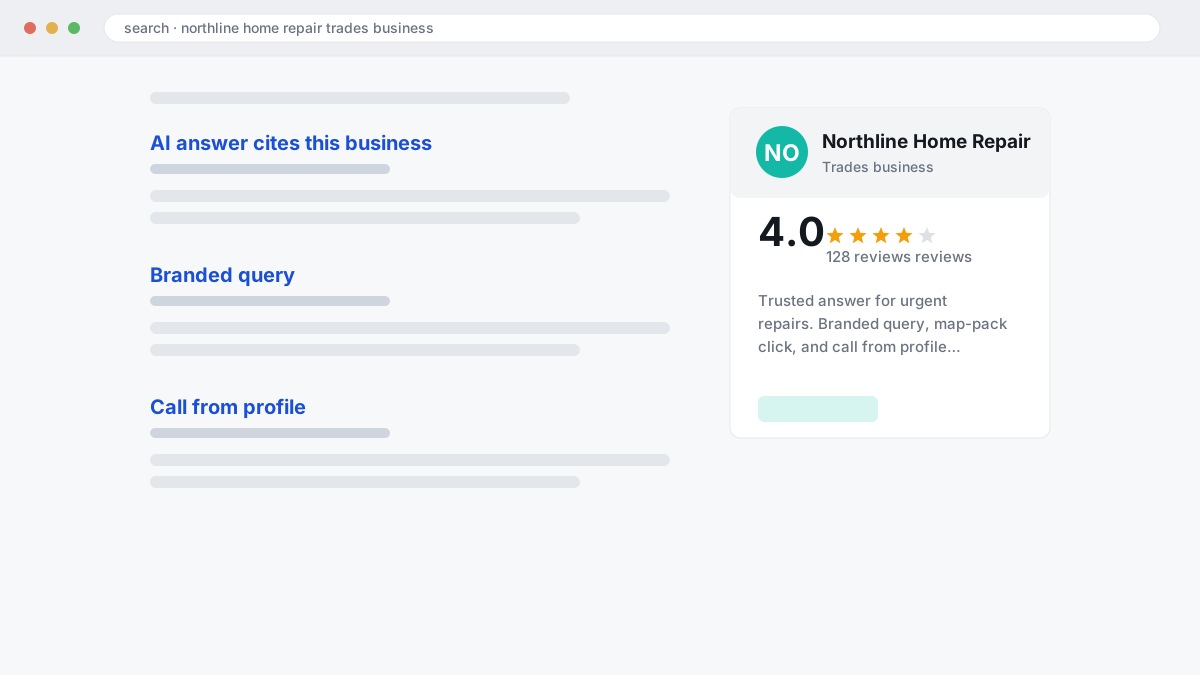
The wrong approach is to watch sessions and panic when an explainer page loses clicks while your rankings still look stable. That fails because AI Overviews can answer the basic question on the results page, then send the ready-to-buy searcher straight into a branded query, a map-pack click, or a call from your profile. In BGR Review's dataset of trades businesses with complete enquiry-source data, observed February-July 2026, 70-80% of calls and bookings were attributed to a Google Business Profile or Yelp listing rather than a website, which is why conversion intent matters more than raw visits.
The better priority list is simple: track branded search demand, calls, form fills, booked jobs, and assisted conversions before you judge whether AI search helped or hurt. A cited answer can reduce page clicks and still lift lead quality because the searcher arrives pre-sold by reviews, third-party sentiment, and entity understanding pulled from citation sources beyond your site. If you want cleaner reporting, tag contact forms, use call tracking on your profile links, and compare branded-query growth against lead volume over 30-day windows, which matches the same practical cadence we use for BGR Review's review-package replacement guarantee.
What matters most for local businesses when AI search summarizes who to trust nearby?
Local AI search leans hardest on profile accuracy, review credibility and location-specific proof. If you run a service business or a multi-location brand, thin profile data or mixed location signals can suppress visibility even when your main site is strong.
The wrong approach is to treat local SEO like national SEO and keep polishing broad service pages while your Google Business Profile stays half-filled. That fails because nearby-provider answers pull heavily from the profile layer: primary category, opening hours, phone, photos, service list, business description, review text and whether your service areas match the cities you actually mention elsewhere. In BGR Review's dataset of 1,485 businesses observed from February to July 2026, trades businesses that shared complete enquiry-source data attributed 70-80% of calls and bookings to a Google Business Profile or Yelp listing rather than a website, which tells you where trust gets formed first.
If you are a service-area business, tighten the location evidence before you chase more blog content. Your city pages, profile categories, service areas, review mentions and citation sources need to agree; if your profile says one coverage area and your site implies three others, AI summaries often default to safer competitors in the map pack. The right approach is boring but effective: complete every field you can verify, add location-specific proof on the page linked from each profile, and make sure reviews mention the actual town or job type where appropriate.
Multi-location brands need separate landing pages and separate review management at profile level. A generic “locations” page weakens entity understanding, while location pages with unique staff, services, directions and local testimonials give AI systems a clean source to cite. Manage each branch as its own trust object, because one strong head office profile does little for a weaker branch when someone searches nearby.
What should you fix first if AI search is showing weak, outdated, or wrong brand answers?
Fix factual errors on the pages AI systems trust most before you publish anything new. Your name, location, phone, primary category, official URLs, review sentiment and other recent proof usually shift weak brand answers faster than another blog post.
Publishing more articles is the wrong first move when the core evidence is wrong. It fails because large language models and AI Overviews reuse the strongest, most consistent sources they can find, and publisher authority still beats volume. If your Google Business Profile shows an old phone number, your About page points to the wrong location, or your LinkedIn and directory listings use mismatched categories, content freshness on a new article will not repair that conflict. Fix the records that define the entity first, then push updates outward.
Use this order if you want the fastest recovery.
| Priority | Fix first | Why it moves answers |
|---|---|---|
| 1 | Website homepage, contact page, About page, Google Business Profile | These usually carry the clearest official facts and the highest authority for your brand entity. |
| 2 | Major third-party profiles: Trustpilot, Yelp, Clutch, TripAdvisor, Apple Maps, Bing Places | AI systems often reuse these citation sources when they summarise trust and brand reputation. |
| 3 | Secondary directories and old press mentions | They matter when they keep inconsistent legacy details alive. |
Then add recent corroboration and wait for refresh. In practice, give the web 2 to 6 weeks after you update the strongest source pages, recent reviews, and key citations, then recheck the answer set. If sentiment is the weak point, review growth or a false-review removal can change brand reputation before rankings move; BGR Review handles removals on a pay-after-success basis at $449 per removed link with $0 upfront, and review packages include a 30-day free replacement guarantee.
What does a practical AI-search repair workflow look like when reputation issues are involved?
A workable AI-search repair process starts by saving the exact answer, every cited source, and each repeated false claim, then fixing the source categories in order and checking weekly for 4 to 8 weeks because AI-cited pages rarely refresh on the same day.
Generic SEO advice tells you to rewrite a service page and wait. That fails because AI answers pull from mixed citation sources: your site, Google Business Profile reviews, directory listings, and old editorial mentions that still rank for your brand. The repair file needs first-hand evidence instead: screenshots of the answer, URLs of every source it cites, dates, and a short log of what is wrong on each source. That evidence also helps when a review removal request needs more than the in-platform flag button; across 12,000+ negative review cases logged by BGR Review from June 2025 to June 2026, cases raised within 28 days and backed by an identifiable policy issue resolved successfully in roughly 90% of cases, while comparable cases raised later fell to approximately 25–30%.
Group the fixes by source type before you start changing anything.
| Source type | Typical issue | Repair action |
|---|---|---|
| Reviews | Defamatory, fake, or unresolved negative sentiment | Reply, gather policy evidence, file removal where the platform policy supports it |
| Directories | Wrong phone, hours, category, duplicate listings | Correct core citations first so AI systems stop repeating stale business facts |
| Editorial mentions | Old awards, old ownership, outdated service claims | Request corrections and publish a clearer source with named author credibility |
| Your pages | Thin bios, weak schema markup, no proof | Add E-E-A-T signals: real author pages, update dates, review evidence, and sourceable claims |
The order matters. Review and directory fixes usually change answer quality before a blog rewrite does, especially for local pack and map pack queries where trust signals sit close to the click. If a harmful review clearly breaches platform rules, BGR Review handles removal on a pay-after-success basis at $449 per removed link with $0 upfront; if the review is harsh but policy-compliant opinion, the practical move is profile correction, stronger replies, and weekly rechecks until the answer wording shifts.
Can fake or defamatory reviews distort AI search, and how do you respond safely?
Yes. Fake, undisclosed, or false-fact reviews can distort AI search when they stay live on trusted platforms and get reused as citation sources. The safe response is evidence-led: preserve the review, identify the rule breach, file platform appeals, and treat legal action as country-specific rather than automatic.
Most owners try to remove reviews they dislike. That fails because platform policies decide negative review removal, not annoyance, lost business, or a harsh opinion. Google Business Profile Help, Trustpilot's flagging flow, and Yelp's recommendation software each look for policy issues such as impersonation, conflicts of interest, undisclosed incentives, hate speech, or claims of fact that can be checked and disproved; a one-star review saying "slow service" usually stays up, while "I was charged on 14 May and never received the product" can be appealed with invoices, delivery records, and account logs if it is false.
If you're dealing with a harmful review, screenshot the full text, profile, date, URL, and any edits before you start flagging. Across 12,000+ negative review cases logged by BGR Review from June 2025 to June 2026, outcomes were tracked as success, unresolved, or unknown, and reviews raised within 28 days with an identifiable policy issue resolved successfully in roughly 90% of cases; comparable cases raised after 28 days fell to approximately 25-30%. The bottleneck is usually evidence quality.
Appeals work best when you stick to verifiable facts and keep the legal point narrow. Rules vary by country and platform: the US FTC's 2024 rule on fake reviews targets undisclosed endorsements and review suppression, defamation standards depend on false statements presented as fact rather than opinion, and UK or EU consumer-protection rules can apply to misleading commercial practices, including manipulated reviews. That is general information, not legal advice. If the review does not breach a platform rule, the safer move is a factual public reply and stronger recent review volume so AI-cited sentiment has newer material to pull from.
What should an AI search optimisation checklist include in the first 30 days?
Use the first 30 days to lock your brand facts, strengthen the pages answer engines cite, improve review and profile trust signals, and then watch whether AI summaries change their wording and source mix. That order works because AI search will keep repeating stale third-party claims if your site, profiles and citations disagree.
The wrong approach is a one-off optimisation pass: tweak a homepage, add FAQ schema everywhere, then wait. That fails because large language models pull from multiple citation sources, and a stale Google Business Profile, weak organisation schema, thin service pages or unresolved sentiment gap can keep the old answer alive even while your rankings look stable. The right approach is proof-building with follow-up. In BGR Review's dataset of 12,000+ negative review cases logged June 2025 to June 2026, reviews raised within 28 days of posting and supported by an identifiable policy issue resolved successfully in roughly 90% of cases; beyond 28 days, the observed success rate fell to approximately 25–30%.
Use this 30-day sequence.
- Week 1: audit NAP, opening hours, service areas, owner name, booking links and top citations; compare Google, Trustpilot, Yelp, Clutch and key directories against your site; note recurring review themes and unanswered negative reviews.
- Week 2: tighten service pages with specific evidence, named sources, organisation schema and selective FAQ schema only where the page genuinely answers buyer questions; update timestamps where content freshness matters because policies, prices and locations changed.
- Weeks 3–4: update profiles, publish proof such as case photos, policies, team details and review replies, then track whether AI Overviews and other answer engines swap cited pages, improve branded summaries and send stronger map-pack clicks, calls and form fills.
If a harmful review appears during that window, deal with it early.
What belongs on an AI search optimisation checklist you can use this week?
A useful AI search checklist covers your entity, profiles, reviews, third-party citations, structured data, content freshness and monitoring prompts. If you cannot assign a task to one owner this week, it does not belong near the top.
The wrong approach is a theory-heavy audit that produces twenty pages of notes and no asset changes. That fails because AI answers pull from retrieval signals first, so stale pricing on your site, a mismatched phone number on your Google Business Profile, or inconsistent categories across directories will keep hurting click-through rate, map pack visibility and conversions even if your SEO deck looks tidy.
The right approach is owner-based. Give one person your site, one your Google Business Profile and directories, and one your review platforms. This week, check entity consistency across your site footer, contact page, GBP, main directories and high-visibility profiles such as Google, Trustpilot, Yelp or Clutch, then refresh three revenue pages with current pricing, current FAQs, and valid schema markup so AI systems can read the offer cleanly under local intent.
Finish with monitoring, not guesswork. Run five branded prompts once a month on desktop and mobile, save screenshots, and note which sources the answer cites.
Where to go from here
Fix the sources AI systems read before you publish another page. Start with your Google Business Profile, review platforms that rank for your brand name, and any third-party pages carrying stale or harmful claims. Flag reviews that appear to breach platform policy, add evidence instead of using only the basic report button, update your core business details, and then build steady verified-review coverage on the profiles that already surface in branded search and the map pack.
Expect the sequence to feel uneven. Profile edits can go live fast, but AI-cited sources refresh on their own schedule, and a bad review can keep shaping click-through rate, calls and form fills until the source page changes or the review is removed. In our work, answer quality usually improves first where review sentiment, reply quality and profile completeness improve first.
The practical next step is simple: list the top 10 branded search results and fix the trust signals those pages are feeding into AI answers.