The Consumer Warning banner is the most damaging single sanction Trustpilot applies to a business profile. It is also the least understood — most businesses that get one had no idea they were close to earning it, and most articles online mischaracterise the removal timeline. This is what actually triggers the banner, what happens next, and what the only real removal path looks like.
I am Robiul, head of research at BGR Review. Our team has taken clients through the full remediation cycle on both consumer and business-side Trustpilot enforcement. The playbook below is drawn from Trustpilot's published Guidelines and Transparency Report, the UK CMA's 2023 review-platform investigation, and every client case we have closed on the removal side.
The five triggers that earn the banner
Trustpilot does not apply the Consumer Warning banner for a single incident. It applies it when the Content Integrity Team's investigation confirms a pattern of deliberate manipulation. Five patterns cover essentially every banner we have seen issued.
Trigger 1 — Buying reviews
Any evidence of paid, incentivised or staff-written reviews originating from marketplace sellers, agencies, employees or personal networks. Detected via the 7-layer fraud detection stack — particularly the Layer 7 retro-audit that catches bought batches on a 4-8 week lag. Full commercial breakdown of why this bet loses is in our can-you-buy-Trustpilot-reviews analysis.
Trigger 2 — Incentivised reviews
Discounts, credits, prize draws, loyalty points, freebies or any other consideration tied to leaving a review. Detected via public reviewer complaint plus terms-page or email-template scraping during investigation. This is a violation regardless of whether the incentive is conditional on a positive rating — offering a discount for any review is still incentivisation.
Trigger 3 — Selective invitation (gating)
Inviting only customers you predict will leave 4-5 stars, or filtering an NPS score and inviting only promoters. Detected via review-rating distribution audit against the industry benchmark — a skew of more than 2 standard deviations above the category mean triggers an automatic integrity investigation. The single most-detected violation across our client remediation work.
Trigger 4 — Review interception
Intercepting an in-progress review, showing a 'sorry to hear that' service-recovery page and never firing the Trustpilot invite for low ratings while firing it for high ratings. Outlawed explicitly by the US FTC 2024 Fake Review Rule and the UK CMA's 2024 Digital Markets, Competition and Consumers Act — Trustpilot's Guidelines pre-dated both and treat interception as an automatic Consumer Warning trigger on detection.
Trigger 5 — Threatening or intimidating reviewers
Sending legal threats, cease-and-desist letters or personal intimidation to reviewers whose review is clearly within the Guidelines, in an attempt to force removal. Distinct from the legitimate defamation removal route which uses formal legal process against genuinely defamatory content. Trustpilot treats intimidation as a Guidelines violation with the same weight as buying.
What the banner actually looks like and what it says
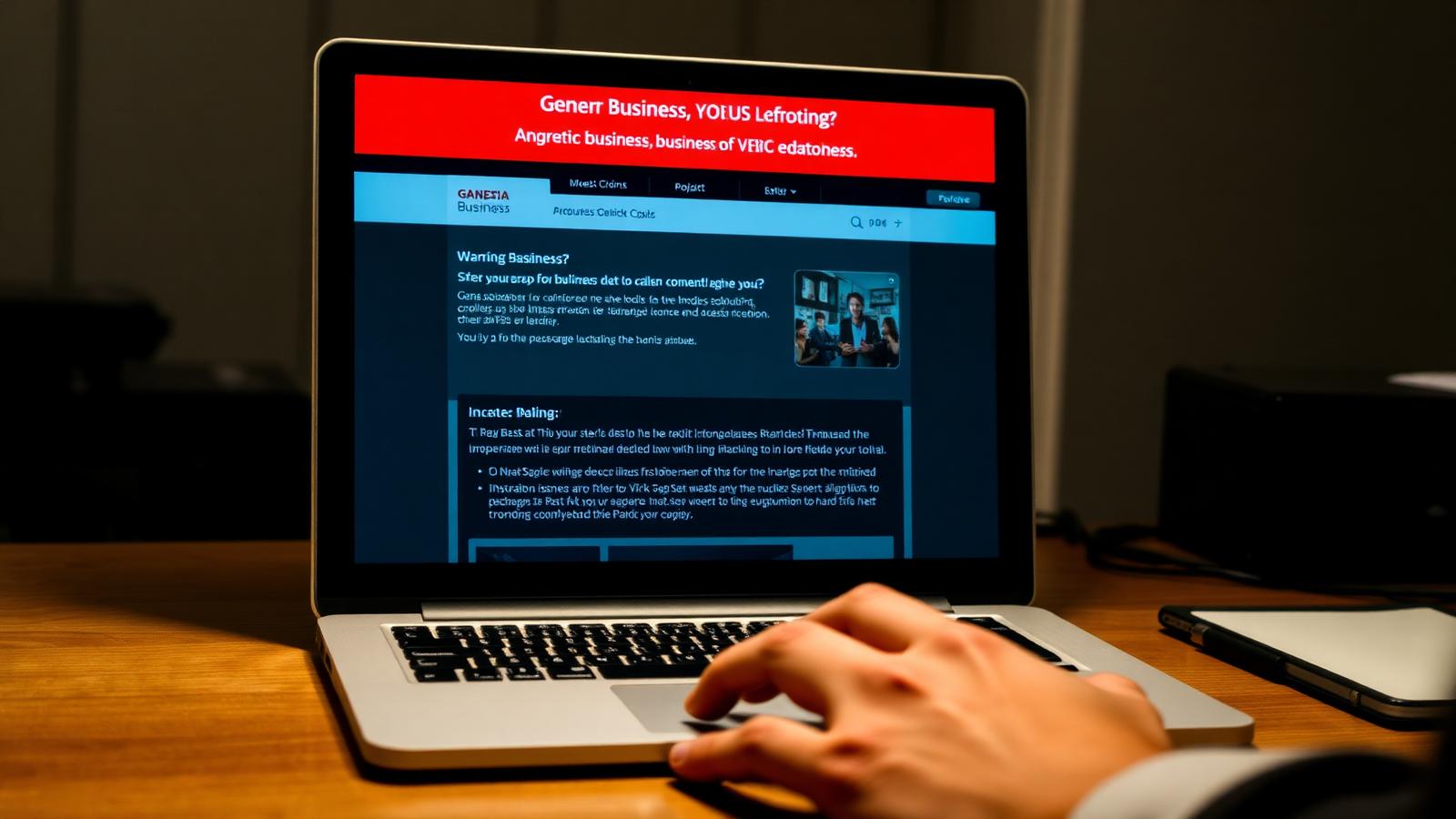
The banner renders as a full-width red notice pinned to the top of the profile page and every individual review page. Standard wording is 'We've detected activity on this profile that's inconsistent with our Guidelines' followed by a link to Trustpilot's explanation of what the notice means. The banner is not skippable, not collapsible, and appears on both the desktop and mobile view of the profile.
Trustpilot's own internal search deprioritises profiles carrying the banner, and Google Seller Ratings paid-search integrations stop pulling star ratings from banner-active profiles. Third-party comparison sites and buyer-intelligence tools that scrape Trustpilot data typically surface the banner status prominently in their own listings.
The revenue impact — measured, not estimated
Across the 30+ Consumer Warning cases we have taken through remediation, the average profile-referred conversion rate drops 25-45% within 30 days of the banner going live. The larger drops are on e-commerce profiles where the buyer specifically checks Trustpilot before card entry; the smaller drops are on SaaS profiles where buyers see the banner but complete the trial signup anyway and drop off later in the funnel. Direct-brand traffic recovers within 60-90 days as buyers who trust the brand ignore the notice; cold-traffic conversions do not recover until the banner is removed.
The most expensive single sanction we have measured is a Consumer Warning banner on a £4m revenue e-commerce brand. Twelve months of banner cost the client roughly £1.1m in attributable lost gross margin. The bought-review batch that triggered it cost £2,400.
The 4-step removal path
There is exactly one removal path. There is no appeal on the initial application of the banner, no fast-track for cooperating businesses, and no financial escalation that shortens the timeline. What follows is what Trustpilot's Content Integrity Team actually requires.
- Stop the violating activity immediately and document it. If the trigger was bought reviews, cancel every outstanding order with the seller and preserve the correspondence. If it was gating, disable the gating logic and preserve the change log. If it was incentives, remove the offer from every customer-facing surface and archive the previous version. Evidence of when the violating activity stopped is required in step 3.
- Serve out a full 12-month clean compliance period. The clock starts when the last violating activity is documented as stopped, not when the banner was applied. Any new violation during this period resets the clock to zero. Trustpilot audits the profile monthly during this window using the same Layer 4 clustering and Layer 7 retro-audit that catches new violations.
- File a written remediation plan with the Content Integrity Team via the Business Portal, addressed to complianceteam@trustpilot.com in parallel. The plan must cite the specific Guideline that was violated, describe the corrective action taken, name the internal owner responsible for ongoing compliance, and attach evidence of the change (screenshots, dated policy updates, invitation-flow diagrams).
- Pass Trustpilot's own final compliance audit. The Content Integrity Team runs a full profile audit at the 12-month mark plus their own review of the remediation plan. Passing removes the banner within 5-10 business days of sign-off. Failing extends the compliance window by another six months and requires a resubmission.
Rebuilding review volume during the clean period
The temptation during the 12-month clean period is to do nothing on invitations for fear of tripping the compliance clock. This is the wrong move. Continue inviting 100% of customers via a compliant channel using the full invitation playbook — the Content Integrity Team explicitly wants to see a healthy compliant invitation programme running during the clean period, because it demonstrates active good-faith compliance rather than passive avoidance. The remediation-plan sign-off rate in our cohort is roughly 40% higher for profiles that maintained a compliant 100%-invite programme through the clean period than for profiles that paused invitations entirely.
Q.What is a Trustpilot Consumer Warning banner?
A red notice pinned to the top of a business profile telling visitors that Trustpilot's Content Integrity Team has detected activity inconsistent with the platform's Guidelines. It appears on the main profile page and every individual review page, is not collapsible, and stays visible for a minimum of 12 months from the date of the last violating activity.
Q.How long does a Trustpilot Consumer Warning banner stay up?
A minimum of 12 months from the date the violating activity is documented as stopped, not from the date the banner was applied. Any new violation during the compliance period resets the 12-month clock to zero. Removal also requires filing a written remediation plan and passing Trustpilot's final compliance audit.
Q.Can I appeal a Trustpilot Consumer Warning banner?
There is no formal appeal against the initial application of the banner. If you believe the banner was applied in error you can request a case review from the Content Integrity Team with evidence that the alleged violation did not occur. Successful case reviews are rare and only apply where the underlying investigation contained a factual error, not where the business disputes the interpretation of the Guidelines.
Q.How much does a Trustpilot Consumer Warning cost my business?
Measured across 30+ remediation cases in our client cohort, profile-referred conversions drop 25-45% within 30 days of the banner going live, with the larger drops on e-commerce and the smaller drops on SaaS. Direct-brand traffic recovers within 60-90 days; cold-traffic conversions do not recover until the banner is removed at the 12-month minimum.
Q.Can I get the Consumer Warning banner removed early?
No. The 12-month clean compliance period is the minimum required by Trustpilot's Content Integrity Team and there is no financial escalation, agency back-channel or accelerated review path that shortens it. Third-party services that promise fast removal typically bury the banner behind bought reviews, which triggers a fresh 12-month extension when Trustpilot's retro-audit catches the batch.
Q.Should I keep inviting reviews while the Consumer Warning is up?
Yes, via a fully compliant channel and at 100% invitation coverage. The Content Integrity Team explicitly wants to see an active compliant invitation programme running during the clean period as evidence of good-faith remediation. Remediation-plan sign-off rates are roughly 40% higher in our cohort for profiles that maintain compliant invitations than for profiles that pause entirely.
The honest bottom line
The Consumer Warning banner is the single most expensive mistake a business can make on Trustpilot. It is also entirely avoidable — every trigger is a deliberate choice, not an accidental drift. If the banner is already up, the only path is the 12-month clean period, a documented remediation plan, and Trustpilot's own audit. Every shortcut on offer makes it worse. Do the compliance work, keep inviting compliantly through the clean period, and file the plan when the clock is up.