

Quick answer
The safest way to handle negative reviews is to triage them before you type a reply: real service issue, misunderstanding, abuse, or likely fake. If it is a genuine complaint, post a calm public owner reply within 24-72 hours, acknowledge the problem, give one clear next step, and move account details offline. If the review looks false or abusive, save screenshots, dates and order records first, then check the platform rule you may need for escalation. On Google Business Profile, your reply shows publicly in Search and Maps, so it affects both the reviewer and the next customer comparing you in the local pack.
We handle live review disputes, reply strategy and removals across Google, Trustpilot, Yelp, Clutch and TripAdvisor, so this page follows the same sort-first workflow we use in active cases. One detail generic guides miss: the first in-platform report often fails because it includes no evidence pack, and in our log of 12,000+ negative review cases from June 2025 to June 2026, cases raised within 28 days and backed by an identifiable policy issue resolved successfully in roughly 90% of cases.
That is also why we separate reply, recovery and takedown instead of throwing the same template at every complaint. If a removal route exists, we document it first; if it does not, we focus on a public response that protects click-through rate, conversions and branded search rather than arguing in public.
When should you not reply at all, and choose recover, escalate, or remove instead?
Not every negative review needs a public answer. Use four lanes instead: reply when the facts are clear, recover when your service failed, escalate when the risk is high, and pursue removal when the review likely breaks platform policy.
The common mistake is replying to every bad post the minute it lands. That fails because public owner replies stay visible on your Google Business Profile, can amplify a false allegation in the map pack, and can turn a removable review into a public argument that hurts click-through rate before you have checked the facts. Google Business Profile and Trustpilot both let you report a review on policy grounds before you engage, so your first move should be triage, not wording.
This is the simplest way to choose the lane before you draft anything.
| Lane | Use it when | First action |
|---|---|---|
| Reply | The reviewer is real, the facts are mostly clear, and a calm public answer could protect conversions. | Post a short acknowledgement and move the issue offline. |
| Recover | Your team made a service mistake and you can fix it quickly. | Contact the customer directly, solve the issue, then invite an updated review. |
| Escalate | The review includes threats, legal risk, staff safety issues, or serious false factual claims. | Freeze public replies, preserve evidence, and follow your internal review escalation path. |
| Remove | The post looks like impersonation, a non-customer allegation, spam, or another policy breach. | Report first through Google or Trustpilot, then decide whether to pursue a formal takedown route. |
Skip public owner replies altogether for impersonation, threats, doxxing, or claims from someone who was never a customer. In BGR Review's dataset of 12,000+ negative review cases logged June 2025 to June 2026, reviews raised within 28 days of posting and backed by an identifiable policy issue resolved successfully in roughly 90% of cases; beyond 28 days, the observed success rate fell to approximately 25-30%. If you need outside help, BGR Review handles removals on a pay-after-success basis at $449 per removed review link with $0 upfront, which makes sense when the review can damage branded search demand and local pack clicks more than a standard complaint would.
How do you respond to a negative review step by step without sounding scripted?
A solid reply to a bad review follows five moves in order: verify what happened, acknowledge the customer’s experience, avoid arguing facts in public, offer one offline next step, and close calmly. For high-visibility complaints, your response time should be measured in hours, not days, and 24 hours is a sensible ceiling for most public owner replies.
Most guides tell you to apologise fast. The mistake is defending yourself even faster. A defensive first reply usually turns one complaint into a longer thread, gives other readers a reason to doubt you, and weakens service recovery because the customer now wants to win in public. The better sequence is verify, acknowledge, then route the issue to resolution. That works because the review page is not a courtroom; it is a trust signal that affects click-through rate from the map pack and whether the next person calls you or keeps scrolling.
Use this five-step process every time you decide a reply is the right route.
- Verify the record before you type. Check the booking, invoice, staff notes, call log, or delivery record so your public reply does not guess.
- Acknowledge the experience in plain English. “Sorry you had a poor experience with the delay” is enough; you do not need a long template response.
- Clarify without debating. Add one neutral fact if needed, then stop. Do not post timelines, screenshots, or internal blame in public owner replies.
- Move it offline with one concrete action. Offer a callback today, a refund review, or a named contact at team@bgrreview.com style specificity rather than “please contact us”.
- Close politely. End with a calm invitation to resolve it, because readers judge tone as much as outcome.
If the customer updates or deletes the review after the offline fix, good. If they do not, you still showed control, speed, and a credible process.
How fast should you answer, and which reviews need a same-day response?
Speed matters when a review points to harm, legal exposure, or high public visibility. Handle safety, discrimination, fraud, or media-attracting complaints the same day; for ordinary 1- and 2-star service complaints, a 24-hour response time is usually enough.
First come, first served fails because the oldest review in the queue is often not the riskiest. A one-star post alleging unsafe work on your Google Business Profile can damage map-pack click-through and calls faster than a routine complaint buried on a low-traffic profile, so your review escalation path should sort by severity first, then recency, then platform visibility.
Use three lanes. Same-day goes to safety, discrimination, fraud, threats, doxxing, or anything a journalist could screenshot. Within 24 hours covers most 1- and 2-star reviews that describe a real service issue. Lower-priority items can wait for normal handling, but still need an owner in your multi-location review management system so no branch ignores a live complaint.
Recency matters for removal decisions as well as replies. Across 12,000+ negative review cases logged by BGR Review from June 2025 to June 2026, reviews raised within 28 days of posting and backed by an identifiable policy issue resolved successfully in roughly 90% of cases; beyond 28 days, observed success fell to approximately 25-30%.
What should a negative review response actually say line by line?
The safest reply is brief and specific: acknowledge the experience, take ownership for the next step, move the conversation offline, and avoid adding facts the reviewer did not post publicly. Keep public owner replies to about 80 to 120 words so they read like service recovery, not a legal statement.
Most guides hand you generic template responses such as “We’re sorry you feel this way.” That fails because it sounds pasted, dodges the issue, and gives the next reader no reason to trust you with their booking, call or form fill. A better approach uses the same short structure every time, then swaps in the issue-specific line: acknowledgement, ownership, next step, sign-off. The structure stays stable; the wording changes with the complaint.
Use wording like this. Delay: “Sorry your order arrived later than promised.” Rude staff: “I’m sorry your interaction with our team felt dismissive.” Billing: “I’m sorry the charge was unclear.” Quality: “I’m sorry the work did not meet the standard you expected.” Then add ownership: “I’d like to review this personally.” Next step: “Please email team@bgrreview.com with your order or booking details so we can fix it.” Sign-off: a real first name and role.
Do not turn template responses into mini-investigations. Public owner replies should not argue timestamps, quote internal notes, or imply the reviewer is lying unless you are moving into removal or escalation. Short, adapted replies work because they show control, protect conversions in the local pack or map pack, and give you a clean path to resolve the issue off the profile.
Which phrases calm the situation, and which ones usually inflame it?
Use wording that recognises the reviewer’s experience without arguing disputed facts in public. Escalation risk rises when public owner replies sound defensive, dismissive, or too detailed about an event you cannot verify in a review thread.
Most guides imply firmness shows confidence. What actually happens is that lines like “you are wrong”, “our policy was followed” or any sarcastic sign-off keep the argument alive, hurt customer trust, and give the next reader a reason to doubt you even if the review is unfair. Safer template responses say, “We’re sorry this left you frustrated” or “We take this seriously and want to review the details”, because those phrases acknowledge impact without confirming disputed facts.
A better reply replaces blame with a verifiable next step and a named contact route. Say who should contact you, where, and what to send: “Please email team@bgrreview.com with the review date and booking name” is useful; “contact us offline” is weak. Template responses work when they sound specific, stay brief, and move the issue out of the public thread fast.
When can a review reply accidentally admit liability or create a compliance problem?
A review reply creates legal risk when it confirms fault, reveals private details, or makes claims you cannot prove. Rules vary by country and platform; this is general information, not legal advice.
The wrong move is a fast, specific apology that accepts a disputed version of events: “You are right, our technician damaged your property, so we have issued a refund.” That reads like customer care, but it can also read like an admission of liability, especially if the facts are still contested, the refund was only a goodwill offer, or the review mentions an incident your team has not verified from the job record, call log or CCTV. The safer reply is narrower: acknowledge the concern, say you are reviewing the matter, and move the discussion offline without confirming the disputed event in public.
Regulated sectors need tighter controls. If you run a clinic, law firm, accountant or financial service, a public owner reply can expose patient, client or case details, create confidentiality issues, or conflict with your insurer’s reporting rules and approval process. In those sectors, the draft should usually clear a named approver before posting, and if the review alleges negligence, discrimination or a safety breach, escalation often beats improvising in the dashboard.
The same caution applies to endorsements. The FTC endorsement guides bar misleading endorsement practices, which is why staff cannot pose as customers in replies, and incentivised testimonials need clear disclosure. If you buy review support from any provider, including BGR Review, keep the public response separate from anything that could imply a reviewer was independent when compensation, staff involvement or another material connection existed.
How do Google Business Profile and Trustpilot change what a good response looks like?
Platform rules change both the reply format and the escalation path. Google Business Profile puts your response directly in Search and Maps beside the review, while Trustpilot combines public owner replies with a clearer breach-reporting route when you can support the claim.
The wrong approach is to paste one script everywhere. It fails because Google Business Profile is a high-visibility storefront: your reply sits next to the star rating in the local pack and on the Maps listing, so a stiff template can depress click-through rate before the reader even reaches your site or booking form. Trustpilot has the same public owner replies problem, but it also gives the reviewer, future buyers and Trustpilot's moderation team more context around timelines, order details and whether the reviewer can be verified.
A short comparison makes the difference clearer.
| Platform | What the public sees | What a good response does |
|---|---|---|
| Google Business Profile | Owner reply appears publicly in Google Search and Google Maps beside the review | Keep it brief, specific and local. Acknowledge the issue, offer an offline route, and avoid stock phrases repeated across locations. |
| Trustpilot | Public reply on the review page plus a separate breach-reporting path | Reply for readers first, then use the Trustpilot response workflow to report policy breaches with supporting evidence such as order records, contact logs or proof the reviewer was never a customer. |
The right approach is to match the platform. On Google, write for scan speed because those public owner replies affect map-pack trust, branded search clicks and calls. On Trustpilot, write a calm public response, then decide whether the content also meets a reporting threshold under Trustpilot's rules; repetitive canned text weakens credibility on both platforms and can make a managed profile look evasive rather than responsive.
What if the review is fake, defamatory, or from someone who was never a customer?
If a review looks fake, start with evidence rather than a public argument. Prove that the person was never a customer, identify the likely policy breach on Google Business Profile or the relevant platform, and report that first before you post any detailed rebuttal.
Collect your records before you touch the reply box: transaction logs, staff rosters, CCTV availability, booking history, call logs, direct messages and email threads. Fake review evidence wins when it shows a clean mismatch in date, name, location or service history; a vague “we can’t find this customer” usually fails. In BGR Review’s case file of 12,000+ negative review cases logged June 2025 to June 2026, reviews raised within 28 days of posting and backed by an identifiable policy issue resolved successfully in roughly 90% of cases, while comparable cases raised later fell to approximately 25–30%.
The wrong move is to accuse the reviewer publicly, call them a liar and paste private account details into your owner reply. That fails twice: it rarely helps the platform moderator, and it can damage click-through rate and conversions if the review stays live in the map pack while prospects read the argument. The better move is a precise report: “No matching booking, invoice or message history for the stated date; likely impersonation or fabricated experience,” with screenshots and timestamps attached through the platform route.
Defamation and false factual claims sit in a different bucket. If the review says “they took payment and never delivered” when your records show the job was cancelled and refunded, that may support escalation outside the platform report, subject to local law; rules differ by country and platform, and this is general information rather than legal advice. If visibility risk is high and your evidence pack is still incomplete, post a brief holding reply only: state that you cannot match the reviewer to a transaction, invite offline contact, and avoid arguing facts until the reporting or legal route is underway. If you want help on the removal side, BGR Review handles takedowns on a pay-after-success basis at $449 per removed link with $0 upfront.
Do review replies actually improve leads, or just make the profile look managed?
Negative review replies usually pay off through customer trust and conversion, not dramatic ranking gains. The clearest return comes from answering recent, high-visibility complaints on profiles where an undecided buyer is already comparing you with close alternatives.
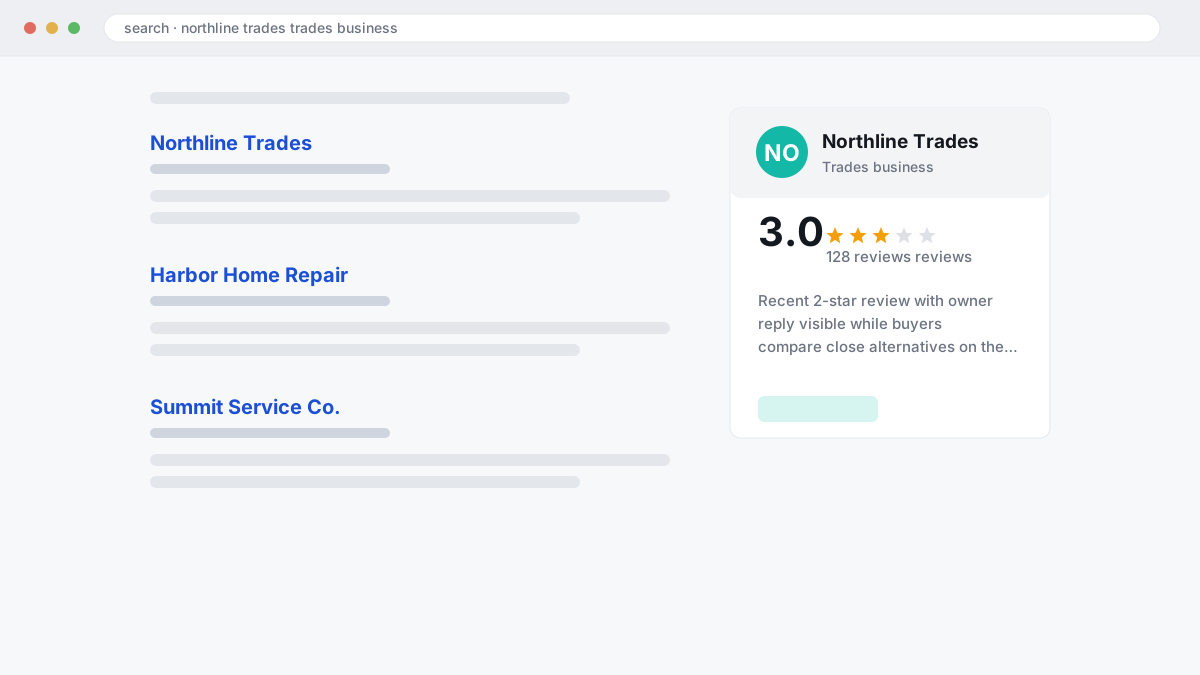
The wrong approach is treating every reply as an SEO task and spreading effort evenly across old and low-intent reviews. That fails because review visibility and buyer intent vary by platform: in BGR Review's dataset of trades businesses with complete enquiry-source data, observed February-July 2026, 70-80% of calls and bookings were attributed to a Google Business Profile or Yelp listing, so a fresh 2-star review there can suppress click-through, calls and form fills before it changes any map pack position. A tidy owner-reply history can help a profile look managed, but the stronger effect is conversion protection once the review is already visible.
The better approach is to answer recent 1- to 3-star posts first on Google Business Profile, Yelp, Trustpilot or any profile that already drives bookings, then track lead quality for 8-12 weeks after you change your response process. Keep response time tight on those profiles, because a reply posted while the complaint is still near the top does more for trust than a polished answer added a month later.
Should you handle replies in-house or use a reputation management service?
Handle replies yourself when the volume stays manageable, the risk is low, and one person can approve responses quickly. Bring in outside support when you need faster triage, tighter controls, removal expertise, or oversight across multi-location review management.
The wrong call is sending everything out or keeping everything in-house. Full outsourcing fails when the reply needs branch-level facts for service recovery, such as who attended the job, what was offered, and whether the customer already accepted a fix; a generic public owner reply reads hollow and can hurt conversions. Full DIY fails when a review may need a review escalation path instead of a reply, especially on Google Business Profile or Trustpilot, where policy breaches, false factual claims, or fake review evidence need documentation rather than tone.
This split usually works better:
| Model | Best fit | Where it breaks |
|---|---|---|
| DIY | Low review volume, simple approval chain, one or two locations | Slow replies, inconsistent tone, missed escalation windows |
| Outsourced | Many locations, regulated categories, frequent platform disputes | Weak local detail unless your team feeds facts quickly |
| Hybrid | Local team supplies facts; specialist handles triage, drafting and takedowns | Needs a clear owner and approval deadline |
Hybrid gives you the cleanest control.
How does a real review workflow run from complaint to recovery or takedown?
A usable review workflow starts with evidence capture, not copywriting. In the first few hours, you sort the case to reply, service recovery, escalation, or removal, then log the result so the same complaint pattern does not keep hitting your profile.
Treating reviews as isolated comments fails because the public owner reply becomes the whole process. At hour 0, save a screenshot, copy the platform link, note the posting time, and check your customer record before anyone writes back. If the name, date, job type, or location does not match, preserve fake review evidence first; if the review names a real failed job, move it into service recovery; if it alleges false factual claims or prohibited content, put it on the review escalation path instead of posting a rushed apology.
By hour 4, one person should own the lane. The reply owner writes a short public response in plain English, refers to the actual issue, and moves the conversation offline. The recovery owner contacts the customer with a concrete fix. The escalation owner prepares platform evidence. In BGR Review's case file of 12,000+ negative review cases logged June 2025 to June 2026, reviews raised within 28 days of posting and backed by an identifiable policy issue resolved successfully in roughly 90% of cases; for comparable cases raised later, the observed success rate fell to approximately 25-30%.
Day 7 is where most teams drop the ball. Update the outcome log with edit, deletion, unresolved, or escalation status, record the root cause, and add one repeat-risk control such as a job-completion call script, clearer delivery window, or multi-location review management check if the same branch keeps attracting the same sentiment patterns. That is how replies improve conversions, branded search demand, and map-pack click-through over time: you fix the operation behind the complaint, not just the wording under it.
Where to go from here
Your next move is to stop treating every bad post the same. Classify it first: genuine service complaint, misunderstanding, spam, competitor attack, or a review that may breach platform rules through abuse, false factual claims or off-topic content. That decision changes everything, including whether a public owner reply helps your click-through rate in the map pack or keeps the damage visible for longer.
Set a simple 24-hour triage rule for your team. Capture the review URL, screenshot the profile, pull the job record or customer history, check the platform policy, then choose one lane: reply publicly, move the issue into service recovery, or prepare an escalation pack. If the review looks fake, abusive or policy-breaching, skip generic template responses and assess removal properly before you post anything that could read like an admission of liability.
Expect a yes, no, or evidence-gap answer first, not a blanket promise.