

Quick answer
AI Overviews are Google-generated summaries shown in search results, built from multiple cited sources rather than one ranking page. Google launched them in the US in May 2024 after testing Search Generative Experience. If you want your business to appear in them, your content needs clear query intent, your site needs source pages worth citing, and your brand needs trust signals Google can verify across reviews, citations, structured data and business profile details. Generic SEO work helps, but weak review profiles, inconsistent local listings and thin evidence usually keep brands out.
We wrote this from the operational side, where the work starts with a live query set and ends with evidence, citations and review profiles that can stand up to scrutiny. In BGR Review's own process, the audit order is fixed: query mapping, source-page quality, brand mention gaps, review strength, citation consistency, then tracking. That order matters because weak entity consistency and thin third-party proof usually block AI Overviews before title tags or another blog update make any difference.
BGR Review handles review acquisition across Google, Trustpilot, Yelp, Clutch and TripAdvisor, and negative review removal on a pay-after-success model at $449 per removed link with $0 upfront. The practical detail most generic guides miss is simple: a business with clean copy but mismatched profile data, stale reviews and no corroborating mentions is hard for Google to trust, so it gets cited less and clicked less.
Why do some brands show up in AI Overviews while others stay invisible?
Brands appear in Google AI Overviews when Google can verify the business behind the page, not only read well-optimised copy. Reviews, third-party brand mentions, entity consistency across profiles, and clean source citations often decide whether your brand gets cited or ignored.
Most generic SEO advice tells you to tighten headings, add FAQs and expand topical coverage. That helps a page rank, but it often fails citation eligibility because AI Overviews pull from multiple sources at once, not only the page sitting at position one. If your site says one trading name, your Google Business Profile shows another, and your Trustpilot or Companies House entry carries an old address or phone number, Google has a weaker entity match and less confidence attaching your brand to the answer.
The stronger approach is dull but effective: make the business easy to verify everywhere it appears. That means consistent business details across your site, Google Business Profile, Yelp, Clutch, Trustpilot, Apple Maps and major directory citations, plus review signals that look real, recent and tied to the same entity. A page with average on-page SEO but strong third-party corroboration often has a better shot at source citations than a polished blog sitting on top of a messy footprint.
This is the layer generic guides miss, and it is the first layer we audit at BGR Review before suggesting more content. If your branded search results show mixed addresses, duplicate listings, thin review profiles or weak brand mentions from independent sites, a new article usually does very little; fixing the entity record usually moves first.
How do AI Overviews actually build an answer from search results?
Google AI Overviews pull relevant pages from Google Search, identify the entities and facts that match the query, then write a composite answer with linked source citations. The mix changes by query intent: one search may lean on publisher pages, another on product pages, local profiles or brand evidence.
The common mistake is chasing one “winning” page as if AI Overviews work like an old featured snippet. That fails because the answer is usually assembled from several retrieved documents, each supplying a different piece: definition, comparison, brand proof, pricing context or location data. Search Generative Experience previews in 2023 made this visible early; the current format still behaves like a multi-source answer layer, only with tighter citation handling and sharper query-specific formatting.
The source mix changes fast enough that you need to read the result type before you change the page.
| Query type | What Google Search tends to assemble | What usually gets cited |
|---|---|---|
| Informational | Explanations, definitions, step-by-step summaries | Publisher articles, documentation, reference pages |
| Commercial | Comparisons, options, trust signals, next-step actions | Service pages, review platforms, brand pages, local profiles |
That matters in practice. When BGR Review audits visibility before a review package with a 30-day free replacement guarantee or a $449 pay-after-success removal case, the first read is always the live SERP: if the query pulls comparison and trust evidence, another blog post rarely changes anything; clearer entity matching, stronger brand corroboration and pages that answer the exact search intent usually do.
When is an AI Overview more likely to appear for your query?
AI Overviews are most likely on queries with layered intent, where Google has to combine several source types into one answer, and least likely on simple navigational searches where a standard result, local pack, or direct website click already resolves the task.
Most guides act as if every query can trigger an overview. That fails because overview eligibility depends on the search journey. A search like “BGR Review Trustpilot” is navigational, so Google usually serves organic results and other SERP features that send you straight to the brand or profile. A search like “best review platform for plumbers Google vs Trustpilot” is comparative and multi-step, so Google has more reason to generate a summary with publisher citations, local signals, or product-style comparisons.
If you are deciding where to optimise first, check the live results before you change content. Commercial investigation terms often blend summaries with shopping modules, map results, and standard listings, so the right target is the whole result page, not one blue link.
How are AI Overviews different from featured snippets when you want visibility?
Featured snippets usually lift one answer block from one page, while Google AI Overviews build a generated response from several cited sources. A snippet win depends on clean extraction into position zero; overview visibility depends on breadth, corroborating sources, and whether your brand entity looks trustworthy across the wider SERP layout.
The wrong approach is to optimise every page as if Google still wants one neat paragraph and one neat list. That works for some featured snippets because Google can quote a tight block, then send a direct click to the page that supplied it. It fails for AI Overviews because Google is comparing multiple source citations at once, looking for agreement between your page, third-party mentions, review signals, and other pages that confirm the same claim.
This comparison is easier to act on when you separate extraction from synthesis.
| Format | What usually gets rewarded | Click pattern |
|---|---|---|
| Featured snippets | Concise formatting, clear headings, one extractable answer block | Often one dominant click path from position zero |
| Google AI Overviews | Source breadth, entity trust, consistent facts across citations | Visibility spreads across several cited sources |
The better approach is to keep snippet-friendly formatting on key pages, then add the evidence layer generic SEO guides skip. On BGR Review audits, that means checking whether your service page says the same thing as your Google Business Profile, review profile, and third-party citations before touching schema. Structured data helps machines parse the page. It rarely fixes a weak brand footprint on its own.
Which on-page fixes make your content easier for AI Overviews to cite?
Pages get cited in AI Overviews when Google can extract a direct answer, identify who published it, and verify that the page is current, well-structured, and easy to attribute back to a real entity.
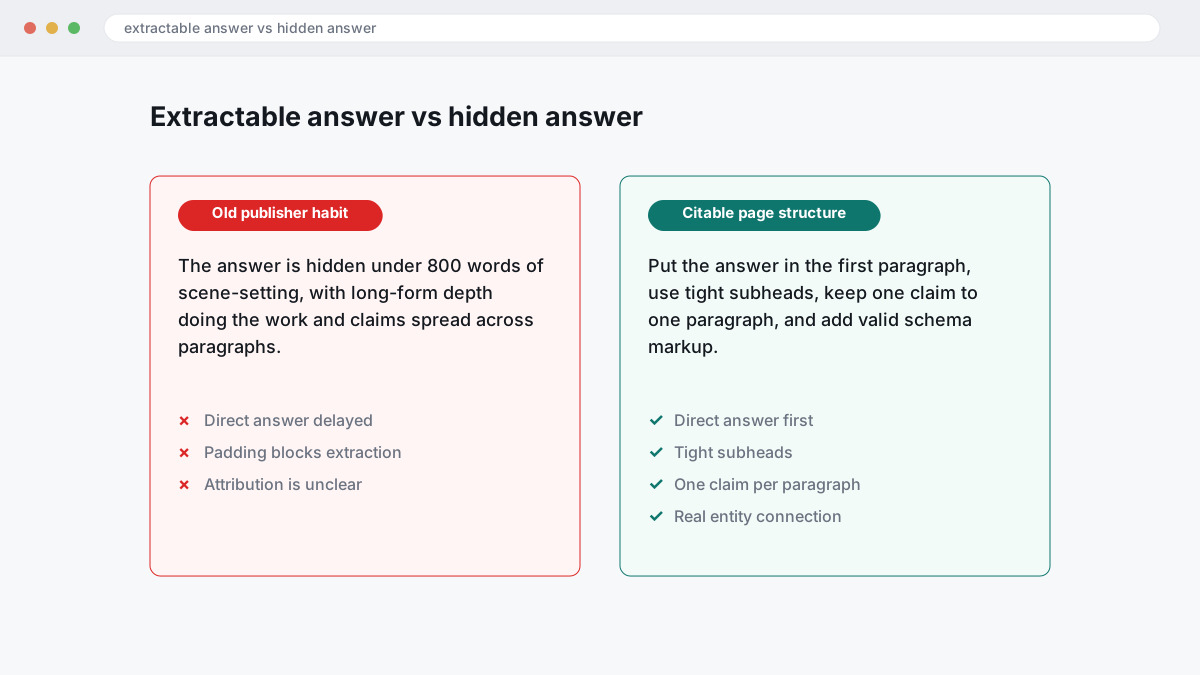
The wrong approach is the old publisher habit of hiding the answer under 800 words of scene-setting and hoping long-form depth wins on its own. That fails because AI systems look for extractable passages and clean source citations, not padding. Put the answer in the first paragraph, use tight subheads, and keep one claim to one paragraph so the model can lift it without guessing what your sentence refers to.
Valid schema markup helps Google connect the page to a known entity, but only when the markup matches what the reader can actually see. Use FAQ schema for real question-and-answer sections, Article for the page itself, Organization for your business details, and clear author information on-page and in markup so authorship is attributable. If your business is also working on review acquisition or removal through BGR Review, this is the same discipline we push in evidence packs: make every claim easy to verify.
Content freshness matters more than most generic guides admit. Refresh examples, dates, screenshots and policy references after visible Google or platform changes, because stale interfaces and old guidance weaken trust even when the core advice is sound. In the page audits we run before review-growth campaigns start delivering in 24-48 hours, updated screenshots and current examples usually help extractability faster than adding another 1,500 words.
How do reviews, mentions, and evidence packs strengthen AI Overview eligibility?
AI Overviews favour claims they can verify across the web. Reviews, third-party mentions and a clean evidence pack help Google connect your page to a real, trusted entity with corroborating source citations, rather than a lone article making claims about itself.
Most guides push self-asserted authority: add an author box, write a credentials paragraph, mark it up with structured data and move on. That fails when the rest of the web does not back you up. E-E-A-T signals harden when your Google Business Profile, Trustpilot, Clutch or Yelp profile carries consistent review signals, your company name appears on relevant directories or press coverage, and those brand mentions line up with the claims on your site. If your page says “top-rated” but the profiles are thin, stale or contradictory, Google has little reason to surface you in an AI-generated answer.
The stronger approach is to build one evidence pack and use it everywhere. Ours usually includes review screenshots and live profile links, trade memberships, licences, awards, case examples, before-and-after work, founder bios, and the citation sources that confirm your address, phone and service area. That gives your content team, PR team and local SEO work the same source of truth, which reduces entity confusion across the map pack, branded search results and publisher mentions.
A practical detail matters here. When a business asks us to clean up weak reputation signals, the first pass is rarely “write more blog posts”; it is usually fix inconsistent citations, strengthen review recency, and collect proof that an editor or Google can verify. That matters because independently corroborated evidence lifts trust before it lifts click-through, and improved click-through usually shows up before any obvious gain in conversions or branded search demand.
Can local businesses influence AI Overviews without publishing endless blog posts?
Local businesses can influence AI Overviews without running a heavy blog calendar. Strong Google Business Profile data, consistent local citations, and recent review signals give Google clearer proof of location, category, and service relevance for branded search and local-intent queries.
Most guides push more blog posts first. That fails on local SEO because a new article does little if your entity consistency is weak: your business name varies across directories, your phone number changed on one listing, or your primary category on Google Business Profile does not match the services named on your site and citations. Google can crawl the content and still hesitate to surface the brand in an answer or the local pack because the underlying entity looks messy.
The better order is duller and works faster. Lock your NAP across the main directories, tighten your Google Business Profile categories and service areas, then strengthen review-backed prominence with recent, detailed Google reviews that mention the actual job or service. In BGR Review’s dataset of 1,485 businesses observed February–July 2026, trades businesses with complete enquiry-source data attributed 70–80% of calls and bookings to a Google Business Profile or Yelp listing rather than a website. That does not mean blogs are useless. It means local entity proof often lifts click-through rate, map-pack visibility, and conversions before a new article does.
Do AI Overviews increase traffic, or just change where the click happens?
Google AI Overviews do not promise more clicks. They often cut click-through impact on simple informational queries, yet repeated brand citations can lift consideration, branded search demand and assisted conversions later in the journey.
The wrong approach is treating this like a pure organic traffic play and judging it after a week. That fails because zero-click searches absorb the early answer, especially when the query is basic and the user has no buying intent. The better approach is to measure whether your brand keeps appearing when buyers refine the search, compare providers, or look you up by name. In BGR Review's own dataset of 1,485 businesses observed February-July 2026, trades firms with complete enquiry-source data attributed 70-80% of calls and bookings to a Google Business Profile or Yelp listing rather than a website, which is a useful reminder: visibility can create conversions before it creates site sessions.
If you're assessing payoff, track three things for 8 to 12 weeks: clicks from overview-cited pages, lift in branded search, and assisted conversions such as calls, bookings and form fills. Google AI Overviews can depress direct organic traffic on top-of-funnel searches while still helping the sale by making your name familiar before the map pack click, profile visit or branded query. That is usually where managers misread ROI.
Can AI Overviews hurt your website traffic enough to change your strategy?
Yes. AI Overviews can cut clicks to informational pages when the answer is satisfied on the results page, especially on broad queries with weak buying intent. The practical response is to protect high-intent URLs, build branded search demand, and rebuild content around proof, local evidence and the next action.
The wrong move is treating every traffic drop as a site-wide emergency. That fails because query intent decides the click-through impact: zero-click searches hit “what is”, “how to” and other top-of-funnel pages first, while comparison pages, service pages with reviews, and local proof pages still earn clicks from people who want a shortlist, a phone number or a booking slot. In BGR Review’s dataset of 1,485 businesses observed from February to July 2026, trades firms attributed 70–80% of calls and bookings to a Google Business Profile or Yelp listing rather than a website, which is why map-pack strength often protects conversions after blog traffic slips.
If impressions rise but non-brand clicks decline for 6 weeks in Search Console, change the budget. Cut low-yield informational content production first, then put spend into review velocity, citation cleanup and conversion pages that carry sourceable proof. That usually lifts branded search, local pack response and form fills faster than publishing another generic explainer.
The triage is usually this:
| Page type | Risk from AI Overviews | Defensive action |
|---|---|---|
| Broad informational article | High zero-click risk | Add original evidence, local examples, and a stronger next-step CTA |
| Comparison or alternatives page | Moderate | Refresh proof, pricing context, and third-party mentions |
| Service or location page | Lower | Strengthen reviews, citations, calls, bookings and form paths |
What should an AI Overview optimisation checklist include first, second, and third?
Start with the queries in your category that already trigger AI Overviews, then fix extractability, corroboration and entity consistency in that order. For most sites, citation quality and evidence gaps deserve attention before you publish more net-new articles.
Use this order because adding ten more articles rarely helps if Google cannot verify the brand behind them. That is the same reason we tell review clients not to buy volume before the profile basics are clean; BGR Review can replace review-package losses for 30 days, but replacement does nothing for a broken evidence layer.
-
Map the query set first. Check the commercial, local and comparison searches you already care about, then log which ones show AI Overviews, featured snippets, map pack results and source citations. AI Overview tracking tools are useful here, but a manual check still matters because the citation mix changes by query intent and location.
-
Audit corroboration second. Review the pages Google is already citing, then compare your reviews, third-party mentions, structured data, content freshness and entity consistency across your site, Google Business Profile, Trustpilot, Clutch and major citations. If your phone, brand name or service wording shifts between profiles, the model has less confidence joining those signals.
-
Rewrite weak sections third. Turn vague paragraphs into answer-first blocks, add named evidence, and cite the source directly: policy page, service page, Google Business Profile, case study, or pricing page. Publishing more pages first usually fails because you multiply thin claims; repairing citation gaps first works because the next crawl finds clearer answers and stronger brand proof.
How should you track AI Overview visibility after making changes?
Track AI Overviews with a fixed query set, saved screenshots, citation logs, and Google Search trend checks. For stable queries, checks every 2 to 4 weeks are usually enough; local and volatile categories often need weekly manual checks with device and location notes saved beside each result.
The wrong approach is a one-off ranking check in an AI Overview tracking tool. It fails because Google Search changes the layout, source citations and trigger queries constantly, so position data alone misses whether your brand was cited, mentioned nearby, or dropped from the answer while your blue-link rank stayed flat. The right approach is a repeatable citation-monitoring workflow: use the same query set each round, note desktop or mobile, record the city or postcode used, save screenshots, and log whether your page, your Google Business Profile, or a third-party mention appeared.
Track four things together: citation presence, ranking overlap, click-through shifts in Search Console, and branded search movement. That gives you a clean before-and-after line. Tools help, but screenshots stay essential because SERP features move faster than most rank tracking catches.
Where to go from here
Treat AI Overviews as a trust and visibility problem first. If Google cannot match your brand cleanly across your site, your Google Business Profile, third-party profiles and review signals, more content rarely fixes the gap. Start with the pages closest to revenue: service pages, location pages and comparison pages that already earn impressions or map-pack clicks. Then check the evidence around them in order: source-page quality, brand mentions, review profile strength, citation consistency and only then new content production.
Your next move is simple: build a query set of the searches that drive calls, bookings and form fills, then audit whether the sources Google can cite actually support your claims. The first changes you usually see are cleaner branded search results, steadier click-through from local pack listings and fewer mismatched citations. AI Overview inclusion moves slower.
If you want outside help, BGR Review handles this as a reputation and entity audit rather than a blog-only SEO job, including review profile gaps, citation clean-up and evidence issues that stop a business being surfaced. Expect a clearer fix list first, not a promise that one article will solve it.