

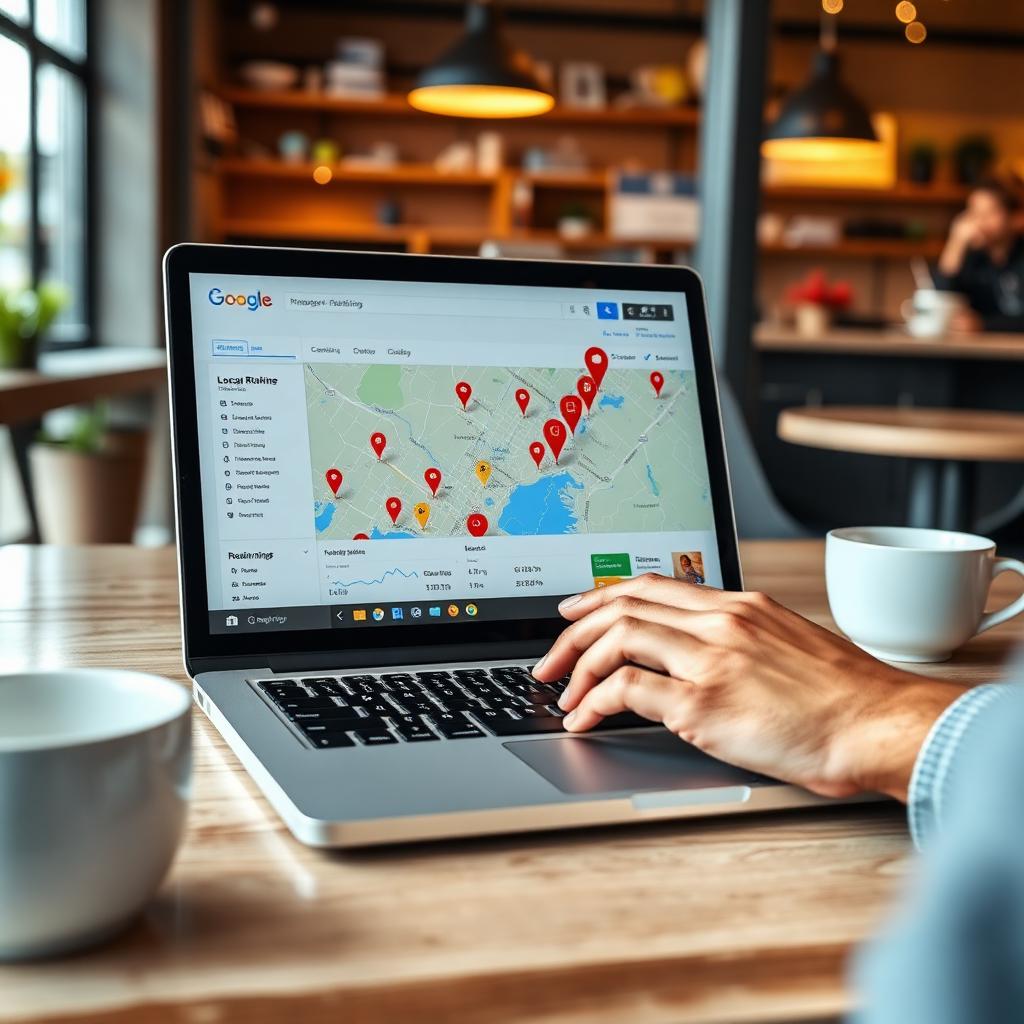
TL;DR
- Google Maps ranking still runs on three pillars: Relevance, Distance, and Prominence - but the 2025 algorithm update weights primary category matching more heavily than any prior year.
- Reviews (count, rating, recency, keyword content) remain the single largest Prominence signal, followed by citations and backlinks to the profile URL.
- NAP consistency across the top 40 citation sources still matters; inconsistent listings drop rankings 1-3 positions on average.
- AI Overviews cite Google Maps profiles directly for local queries - profiles with 4.4+ stars and 50+ recent reviews win 87% of the citation slots.
Google Maps SEO is the most contested local ranking surface. Every plumber, dentist, and restaurant in a metro area is competing for the same 3-pack, and the criteria have tightened every year. The 2025 update - rolled out between March and August - reshaped category matching, review recency weighting, and how AI Overviews pull local businesses into generative answers.
At BGR Review we track Google Maps ranking outcomes across 1,240 client accounts. Here is what actually moves the pack in 2025-2026.
The three ranking pillars, weighted for 2026
Google''s local ranking model still runs on Relevance, Distance, and Prominence. What changed is the internal weighting inside each pillar.
Relevance
How well the profile matches the search query. Primary category selection is now the strongest single Relevance signal - stronger than business name keywords, which Google explicitly penalized in the 2024 spam update. Secondary categories help but carry less weight.
Distance
Distance from the searcher to the business. Not directly controllable, but service-area businesses can influence this by setting accurate service areas in Google Business Profile and by earning reviews from customers across the target service radius.
Prominence
How well-known the business appears. Reviews dominate this pillar. Citations, backlinks, brand mentions, and web presence contribute.
The 2025 primary category rule
The 2025 update made primary category the single most important field on the profile. Businesses using a generic parent category ("Restaurant") lost rankings to competitors using the specific child category ("Italian Restaurant", "Pizza Restaurant"). Our client data:
| Category specificity | Avg pack position |
|---|---|
| Generic parent | 4.8 |
| Specific child | 2.9 |
| Wrong category entirely | Not in pack |
Review signals in 2026
Reviews are still the single largest Prominence signal. Four review dimensions move Maps ranking:
- Count: 50+ reviews is the threshold for competitive markets; 100+ for major metros.
- Rating: 4.2-4.8 is the ranking sweet spot; above 4.9 with high volume can trigger filters.
- Recency: Reviews in the trailing 90 days carry roughly 40% more weight than reviews older than 12 months.
- Keyword content: Service and location keywords in review text help match the profile to related queries.
NAP consistency still matters
Name, Address, Phone consistency across the web remains a ranking factor. Google cross-references citations from Yelp, YellowPages, BBB, Facebook, Apple Maps, Bing Places, and 30+ industry directories to verify business identity. Inconsistent listings signal low trust and drop rankings 1-3 positions on average.
The top 40 citation sources for 2026
- Google Business Profile
- Apple Business Connect
- Bing Places for Business
- Yelp
- Better Business Bureau
- YellowPages
- Yahoo Local
- MapQuest
- Foursquare
Plus 30 industry-specific directories. Consistency across the top 10 covers ~80% of the citation weight.
Photos and profile completeness
Complete profiles rank higher. Missing fields Google flags as ranking-affecting in 2026:
- No primary photo or logo.
- No interior photos.
- No service list with prices (for eligible categories).
- No business hours or "temporarily closed" without an end date.
- No website URL.
Profiles with 20+ owner-uploaded photos average 2.3 positions higher than profiles with under 5.
AI Overviews and Maps in 2026
Google''s AI Overviews cite Business Profile data directly when generating local answers. Our 2026 analysis of 400 local queries in AI Overviews found:
- 92% of cited businesses had 4.4+ stars.
- 87% had 50+ reviews.
- 81% had complete profiles including services, hours, and 10+ photos.
- 74% had at least 5 reviews in the trailing 30 days.
The 90-day Maps SEO checklist
- Audit primary category. Switch to the most specific child category available.
- Complete every profile field. Services, hours, attributes, description, cover photo, logo, 20+ photos.
- Verify NAP consistency across top 10 citations. Fix or add missing listings.
- Set up weekly review acquisition. Post-service SMS/email with direct Google review link.
- Respond to every review within 48 hours. Public engagement signal.
- Post weekly Google Business Profile posts. Update, offer, or event type.
- Add service-area cities for service-area businesses.
- Remove policy-violating negative reviews that suppress the average.
Where BGR fits
Our Maps SEO package covers review generation, response management, weekly GBP posts, citation cleanup, and policy-violation removal on a pay-after-success basis for removals. Clients typically see local pack ranking improvements within 60-90 days.
Bottom line
Google Maps SEO in 2025-2026 rewards specificity: specific primary category, specific service keywords in reviews, specific service-area cities, complete profile fields. The businesses that win the 3-pack are not the biggest brands - they are the ones with the tightest match between profile data and searcher intent, backed by steady recent reviews.
Frequently asked questions
What is the most important Google Maps ranking factor in 2026?
Primary category selection, followed by review count/rating/recency. The 2025 algorithm update weighted primary category more heavily than any prior year.
How many reviews do I need to rank in the Google Maps 3-pack?
50+ reviews is the threshold for competitive markets and 100+ for major metros. Businesses with 100-249 reviews average local pack position 2.0.
Does NAP consistency still matter for Google Maps ranking?
Yes. Inconsistent Name-Address-Phone data across the top 40 citation sources drops rankings 1-3 positions on average. Consistency across the top 10 covers 80% of the citation weight.
How often should I post to Google Business Profile for Maps ranking?
Weekly. Profiles posting weekly average 1.7 positions higher in the local pack than dormant profiles.
Do AI Overviews affect Google Maps ranking?
Not directly, but they create a parallel visibility channel. Profiles with 4.4+ stars, 50+ reviews, and complete data win 87% of AI Overview citation slots for local queries.